Homestyle chicken noodle soup has a way of tasting like it’s doing more than feeding you. The broth comes out deep and savory, the noodles stay tender without turning mushy, and the chicken shreds into soft, generous pieces that make every spoonful feel complete. The best versions don’t taste thin or flat. They taste like someone paid attention from the first simmer to the last pinch of salt.
This version starts with the chicken itself, which gives the broth its body before anything else goes in. A whole chicken or bone-in pieces add enough collagen and flavor to make the broth taste rounded instead of watery, and the peppercorns, bay leaves, and thyme build that classic soup backbone without taking over. The carrots and celery are split between broth-making and the final simmer so the finished soup still has texture and color instead of cooking down to nothing.
Below you’ll find the timing that keeps the noodles from going soft, why fresh dill belongs at the end, and a few swaps that still keep the soup tasting like the real thing.
The broth had so much more flavor than the canned version I usually use, and the noodles held their shape even after sitting for dinner. My husband went back for seconds and asked if I could make it again next week.
Love the rich broth, tender chicken, and wide egg noodles? Save this homestyle chicken noodle soup for the nights when you want a bowl that tastes like it simmered all afternoon.
The Broth Needs the Chicken Before It Needs the Noodles
A good chicken noodle soup starts with extraction, not assembly. The chicken, onion, carrots, celery, garlic, bay leaves, peppercorns, and thyme go into cold water together so the broth has time to slowly pull out flavor as it heats. If you dump everything into already-boiling water, the broth can taste flatter because the solids tense up before they’ve given much back.
The other big mistake is rushing past the skim. Foam at the beginning is normal; it’s proteins lifting out of the chicken. Skimming it off keeps the broth clear and cleaner tasting. Once the chicken is tender enough to pull apart easily, the broth should smell savory and rounded, not raw or watery. That’s your cue that the base is ready for the vegetables and noodles.
What the Carrots, Celery, and Dill Are Really Doing Here
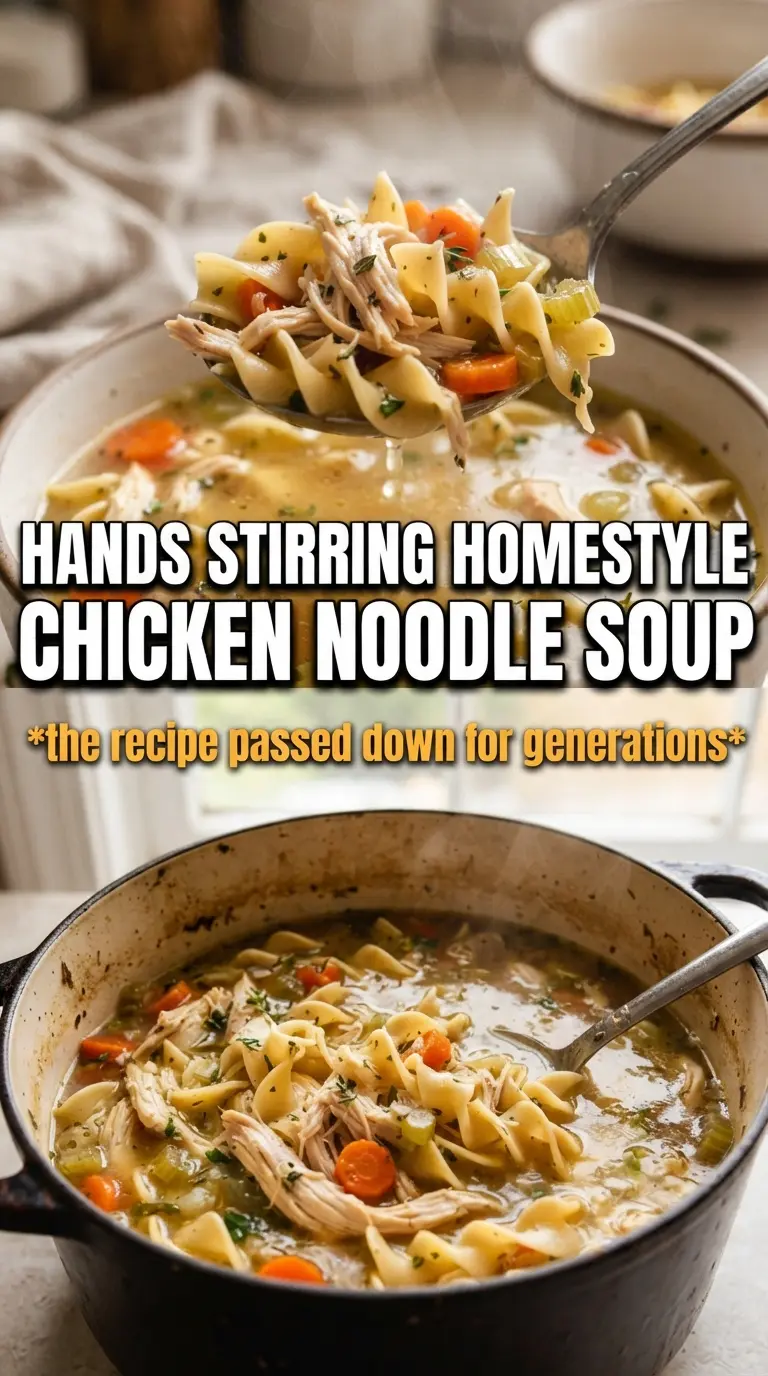
- Whole chicken or bone-in pieces — This is what gives the broth body. Boneless chicken breasts can work in a pinch, but they won’t give you the same rich, silky broth. If you need a shortcut, use rotisserie chicken for the meat and simmer a few bone-in thighs in the broth for depth.
- Whole carrots and celery for the broth, sliced vegetables for the finish — The whole vegetables flavor the broth, then get discarded because they’ve given up everything they have. The sliced carrots and celery are the ones you want to keep; they hold their shape and give the finished soup texture.
- Wide egg noodles — These are the right shape for a soup like this because they catch broth without disappearing into it. If you swap in thinner noodles, cut the simmering time down and serve the soup sooner so they don’t break apart.
- Fresh dill — Add it at the end, not during the long simmer. Dill turns muddy and loses its brightness if it cooks too long. Stirring it in right before serving gives the soup that fresh, slightly grassy finish that makes the whole pot taste alive.
Build the Pot in Stages So Nothing Turns Soft or Muddy
Starting the Broth Cold
Put the chicken, whole carrots, whole celery, onion, garlic, bay leaves, peppercorns, and water in the pot before heating it. Bring it up gradually so the chicken can release flavor into the broth instead of tightening up immediately. Once it boils, drop it down to a gentle simmer. Hard boiling makes the broth cloudy and can dry out the meat before it’s tender.
Pulling the Chicken at the Right Moment
Simmer until the chicken falls apart easily when you lift it out, usually 45 to 60 minutes depending on the size of the pieces. The meat should shred with little resistance, and the broth should taste noticeably deeper than it did at the start. Strain the broth and discard the spent vegetables and peppercorns. If the broth seems greasy, skim the fat from the surface before moving on.
Cooking the Vegetables and Noodles Separately in the Same Pot
Return the strained broth to a simmer, then add the sliced carrots, celery, diced onion, and remaining garlic. Let them cook until the carrots are just tender, about 10 minutes, before adding the noodles and shredded chicken. The noodles need that shorter finish to stay plump. If they go in too early, they’ll keep absorbing broth and turn bloated by the time you serve the soup.
Finishing with Dill and Seasoning
Stir in the dill at the end, then season with salt and pepper until the broth tastes full and balanced. This is the point where the soup goes from “good” to tasting finished. If it tastes flat, it usually needs more salt, not more herbs. Salt wakes up the chicken, the vegetables, and the broth all at once.
How to Adapt This Soup Without Losing the Homemade Taste
Use Rotisserie Chicken for a Faster Pot
If you need speed, use shredded rotisserie chicken and simmer the broth with the vegetables, bay leaves, peppercorns, and thyme for at least 30 minutes before adding the noodles. You’ll lose some of the body that comes from cooking the chicken in the broth, but you’ll still get a solid homemade result if you season carefully.
Gluten-Free Version
Swap the egg noodles for a gluten-free noodle that holds up to simmering, or serve the soup over rice. Gluten-free noodles can get fragile fast, so cook them just until tender and serve the soup right away to keep them from breaking apart.
Extra-Hearty Version
Add more sliced carrots and celery, or stir in a handful of chopped parsley with the dill for a brighter finish. If you want a more filling bowl, use an extra half-pound of noodles, but keep the broth generous because the pasta will keep soaking up liquid as it sits.
Storage and Reheating
- Refrigerator: Store in an airtight container for up to 4 days. The noodles will continue to absorb broth, so the soup gets thicker by the next day.
- Freezer: Freeze the broth, chicken, and vegetables without the noodles for the best texture. Noodles turn soft and grainy after freezing, so cook a fresh batch when you reheat.
- Reheating: Warm gently over medium-low heat until steaming, then add a splash of water or broth if needed. Don’t boil it hard, or the chicken can dry out and the noodles can break down.
Answers to the Questions Worth Asking
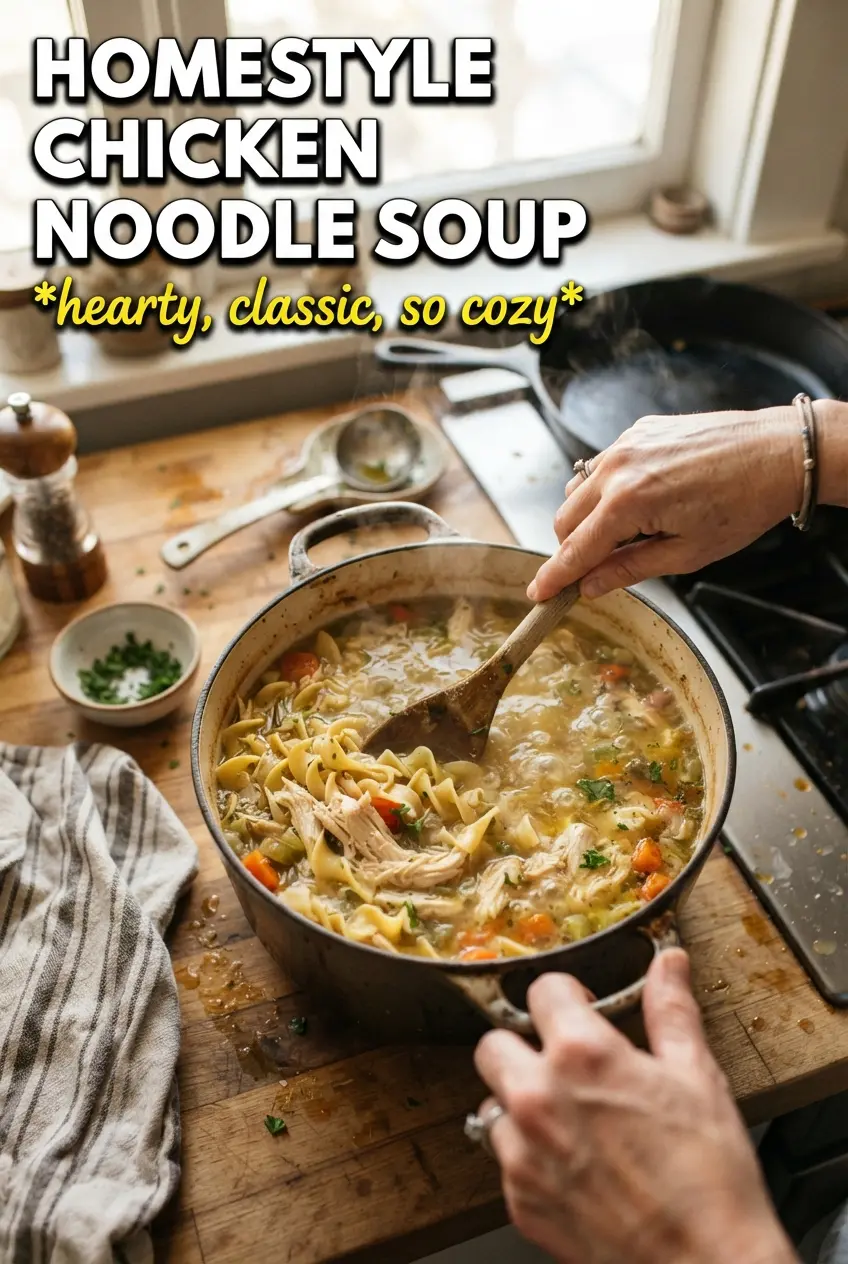
Homestyle Chicken Noodle Soup
Ingredients
Equipment
Method
- Place the whole chicken (or 3 lb bone-in pieces), 2 whole carrots, 2 whole celery stalks, the whole onion, 4 garlic cloves, bay leaves, and whole peppercorns into a large pot with 10 cups water.
- Bring to a boil over high heat, then skim off foam to keep the broth clear.
- Reduce heat to maintain a gentle simmer and cook 45-60 minutes, until the chicken is very tender and easily pulls apart.
- Strain the broth and discard the vegetables and peppercorns, then shred the chicken meat.
- Return the strained broth to the pot and bring it back to a simmer, setting a steady simmer for the add-ins.
- Add the sliced carrots, sliced celery, diced onion, and remaining garlic, then simmer 10 minutes until vegetables start to soften.
- Add the wide egg noodles and shredded chicken, then cook 6-8 minutes until noodles are tender and the soup is hot throughout.
- Stir in the chopped fresh dill, then season generously with salt and pepper to taste.


