Chewy wild rice, tender chicken, and mushrooms in a creamy broth make this soup the kind of dinner that feels steady and comforting without tasting heavy. The broth stays silky, the rice keeps its bite, and the mushrooms bring an earthy depth that makes each spoonful taste like it simmered all day, even though most of the work is hands-off.
What keeps this version from turning bland or gluey is the order of operations. The vegetables soften first, the mushrooms cook long enough to lose their raw edge, and the flour gets a minute or two with the butter so the soup thickens smoothly instead of tasting pasty. Wild rice needs a full simmer to open up, and the cream goes in at the end so it stays lush instead of separating.
Below, I’ll show you how to keep the broth balanced, how to avoid overcooking the chicken, and the small timing cue that tells you the rice is done without turning mushy.
The broth thickened up beautifully and the wild rice kept its texture instead of going soft. I made it on a Sunday and the leftovers were even better the next day.
Save this creamy mushroom chicken and wild rice soup for the nights when you want a rich, cozy bowl with chewy rice and a silky broth.
The Part That Keeps This Soup Creamy Instead of Heavy
Wild rice soup can go wrong fast when the thickener and dairy are handled like they’re interchangeable. They’re not. Flour needs time in the butter with the vegetables so it loses its raw taste and disperses evenly once the broth goes in, and the cream needs low heat at the end so the soup stays smooth instead of turning grainy or greasy.
The other trap is rushing the rice. Wild rice blend takes longer than white rice, and that’s part of the point. You want the grains split open and chewy, not chalky in the center. The chicken also benefits from simmering in the broth instead of being cooked separately and added later; it picks up flavor and stays tender as long as you don’t let the soup boil hard.
- Butter — This carries the flour and gives the soup a rounder base than oil would. It also helps the onions, carrots, and celery soften without browning too aggressively.
- Mixed mushrooms — Cremini are sturdy and savory, and shiitakes add a deeper, woodier note. A cheaper all-cremini mix works fine, but don’t skip the mushrooms altogether or the soup loses its backbone.
- Wild rice blend — A blend cooks more evenly than straight wild rice and gives you a mix of chewy and tender grains. If you use pure wild rice, expect a longer simmer and a darker, nuttier broth.
- Heavy cream — This is what gives the soup its satin finish. Half-and-half can work, but the broth will be lighter and a little less stable when reheated.
What Each Ingredient Is Actually Doing in This Recipe

- Primary ingredient (the star) — Quality matters most. Choose the best you can find.
- Cooking medium (oil, butter, or broth) — This carries flavors and prevents dryness.
- Seasonings (salt, pepper, spices, herbs) — Layer flavors so nothing overpowers. Build depth gradually.
- Aromatics (garlic, onion, herbs) — Cook with fat to bloom flavors. Become the foundation.
- Supporting ingredients — Complement the main ingredient without overpowering it.
- Sauce or liquid (if applicable) — Brings flavors together. Balance richness with acid.
- Acid (lemon, vinegar, wine, or other) — Brightens and prevents flat-tasting results.
- Final finish (garnish, glaze, or sauce) — Prevents one-dimensional taste and adds visual appeal.
Building the Soup in the Right Order
Softening the Aromatics
Start with the butter, onion, carrots, and celery and cook them until the onion looks translucent and the carrots are just starting to lose their raw edge. That first five minutes builds sweetness into the soup and keeps the vegetables from tasting flat later. If the pan starts to brown too fast, lower the heat; you want soft, not scorched.
Cooking the Mushrooms Until They Shrink
Add the garlic and mushrooms and keep them moving until the mushrooms release their moisture and the pan looks less crowded. That shrinkage matters because watery mushrooms thin the broth and mute the flavor. Once the liquid cooks off, the mushrooms start taking on a deeper color and taste more like themselves.
Making the Broth Thick Enough to Coat a Spoon
Sprinkle in the flour and stir it for a minute or two before adding the broth. The mixture should look pasty but not dry, and the flour should smell a little nutty rather than raw. When you pour in the broth, whisk well so there aren’t any pockets of flour hiding at the bottom of the pot.
Letting the Rice and Chicken Finish Together
Simmer the soup until the wild rice has split and the chicken reaches 165°F, then pull the chicken out to shred it. If you shred it too early, it dries out while the rice finishes cooking. Return it to the pot only after the cream goes in so it stays juicy and doesn’t spend extra time overcooking.
Finishing with Cream and Seasoning
Turn the heat down before stirring in the cream. That lower temperature is what keeps the broth smooth. Taste at the end and add salt and pepper after the cream goes in, because dairy softens seasoning and the soup usually needs a little more salt than people expect.
How to Adapt This Soup for Different Kitchens and Different Leftovers
Make it dairy-free
Swap the butter for olive oil and use full-fat canned coconut milk or an unsweetened oat-based cooking cream in place of the heavy cream. Coconut milk makes the soup a little sweeter and adds its own background note, while oat cream stays closer to the original flavor and still gives you a silky finish.
Use rotisserie chicken instead of raw chicken breast
Stir in shredded rotisserie chicken after the rice is tender and just before the cream goes in. This cuts the cook time and gives the soup a deeper roasted flavor, but it won’t absorb broth the way raw chicken does, so the texture stays a little firmer.
Make it gluten-free
Skip the wheat flour and thicken the soup with a slurry made from cornstarch and cold broth near the end of cooking. The texture comes out a little glossier and less velvety than a roux-thickened soup, but it still gives you body without changing the flavor.
Storage and Reheating
- Refrigerator: Store in an airtight container for up to 4 days. The rice will keep soaking up broth, so expect the soup to thicken as it sits.
- Freezer: Freeze for up to 2 months, but the cream can separate a little after thawing. For the best texture, freeze before adding the cream, then stir it in when you reheat.
- Reheating: Warm it gently over medium-low heat and add a splash of broth or water if it has tightened up. Don’t boil it hard, or the cream can break and the chicken can turn dry.
Answers to the Questions Worth Asking
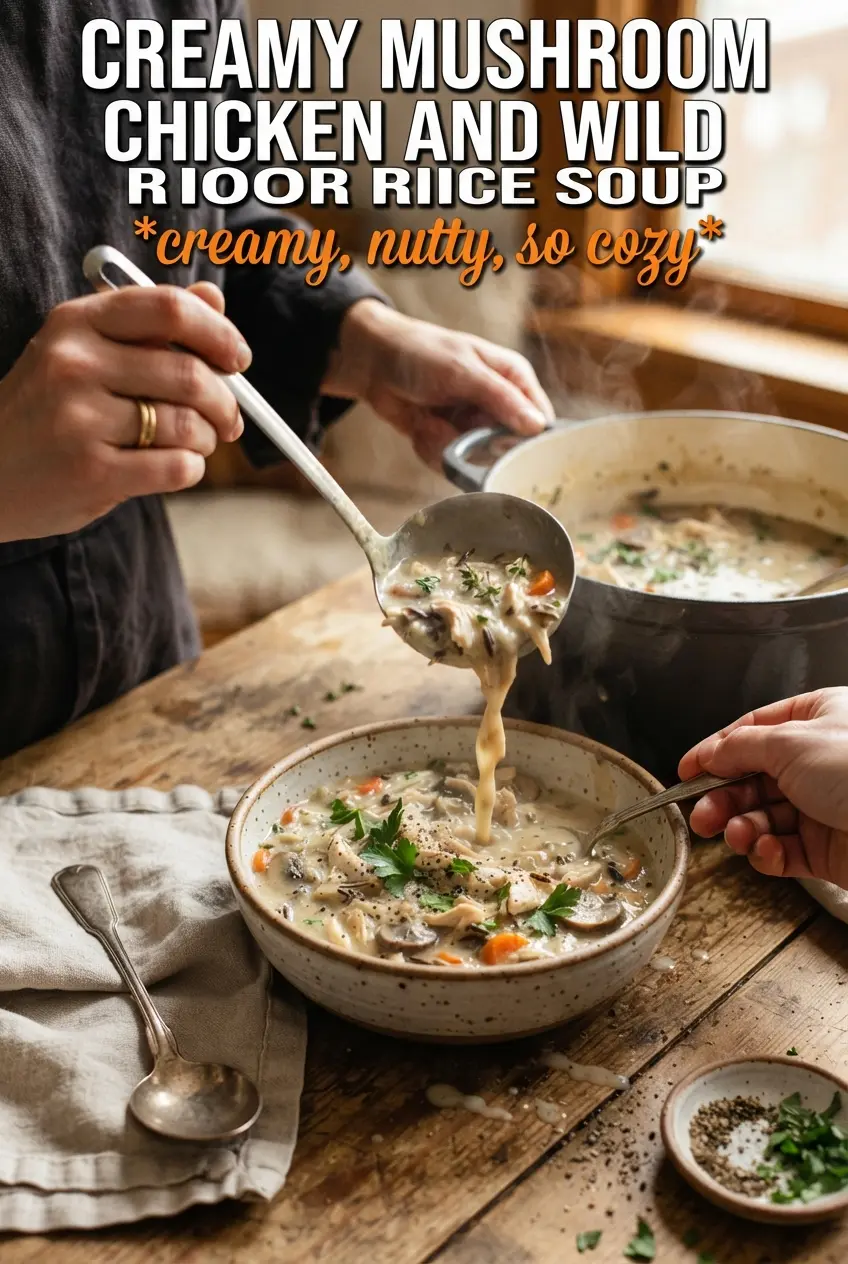
Creamy Mushroom Chicken And Wild Rice Soup
Ingredients
Equipment
Method
- Melt 4 tablespoons butter in a large pot over medium heat, then sauté onion, carrots, and celery for 5 minutes until the onion looks glossy and softened.
- Add garlic and sliced mixed mushrooms, cooking for 4 minutes until the mushrooms release moisture and begin to brown at the edges.
- Whisk in 3 tablespoons flour and cook for 1-2 minutes, stirring constantly, until the mixture looks slightly golden and smooth.
- Add chicken broth, wild rice blend, chicken breast, dried thyme, and bay leaf, stirring to combine and scrape up any browned bits.
- Simmer for 40 minutes at a gentle boil until the wild rice is tender and the chicken is cooked through.
- Remove the chicken, shred it, and discard the bay leaf.
- Stir in 1-1/2 cups heavy cream, return the shredded chicken to the pot, and simmer for 5 minutes until hot and creamy.
- Season with salt and pepper to taste, then serve while the broth is silky and thick.


