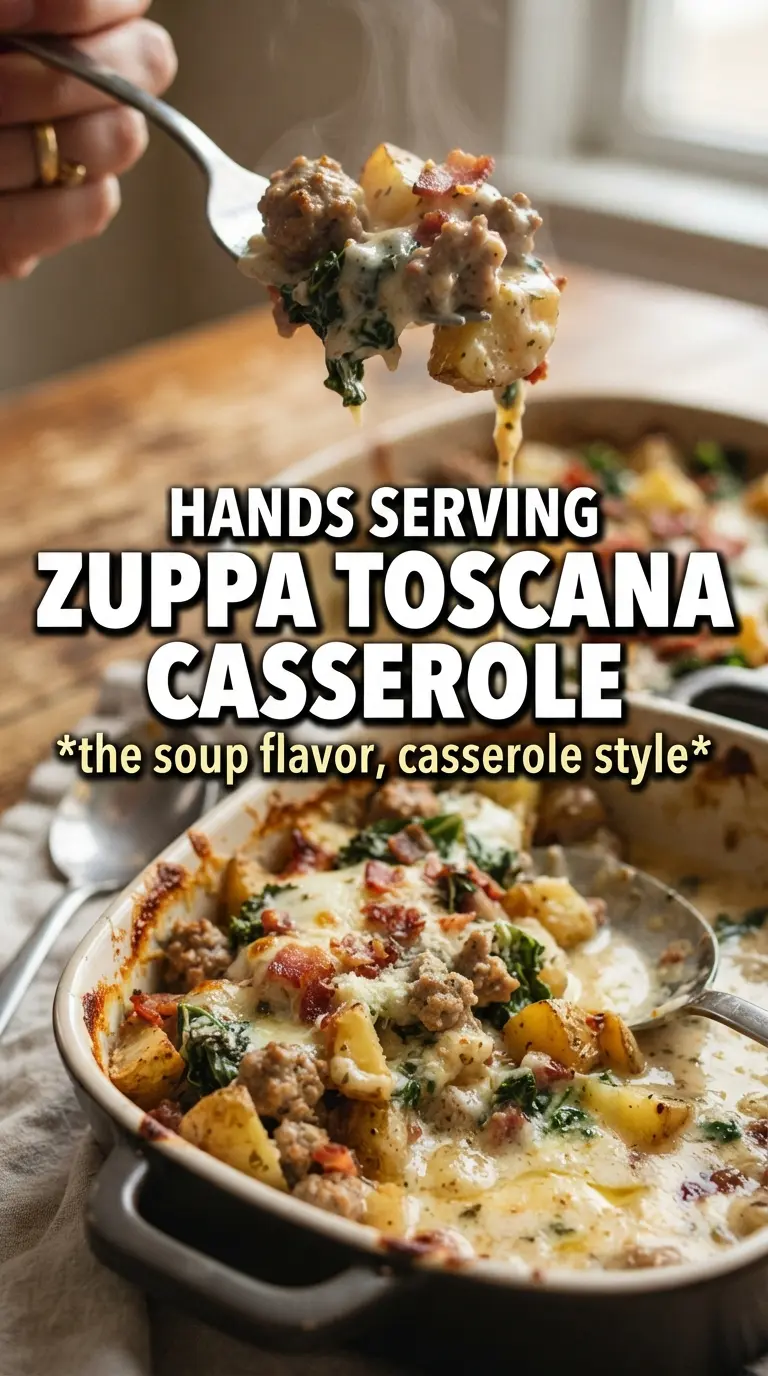
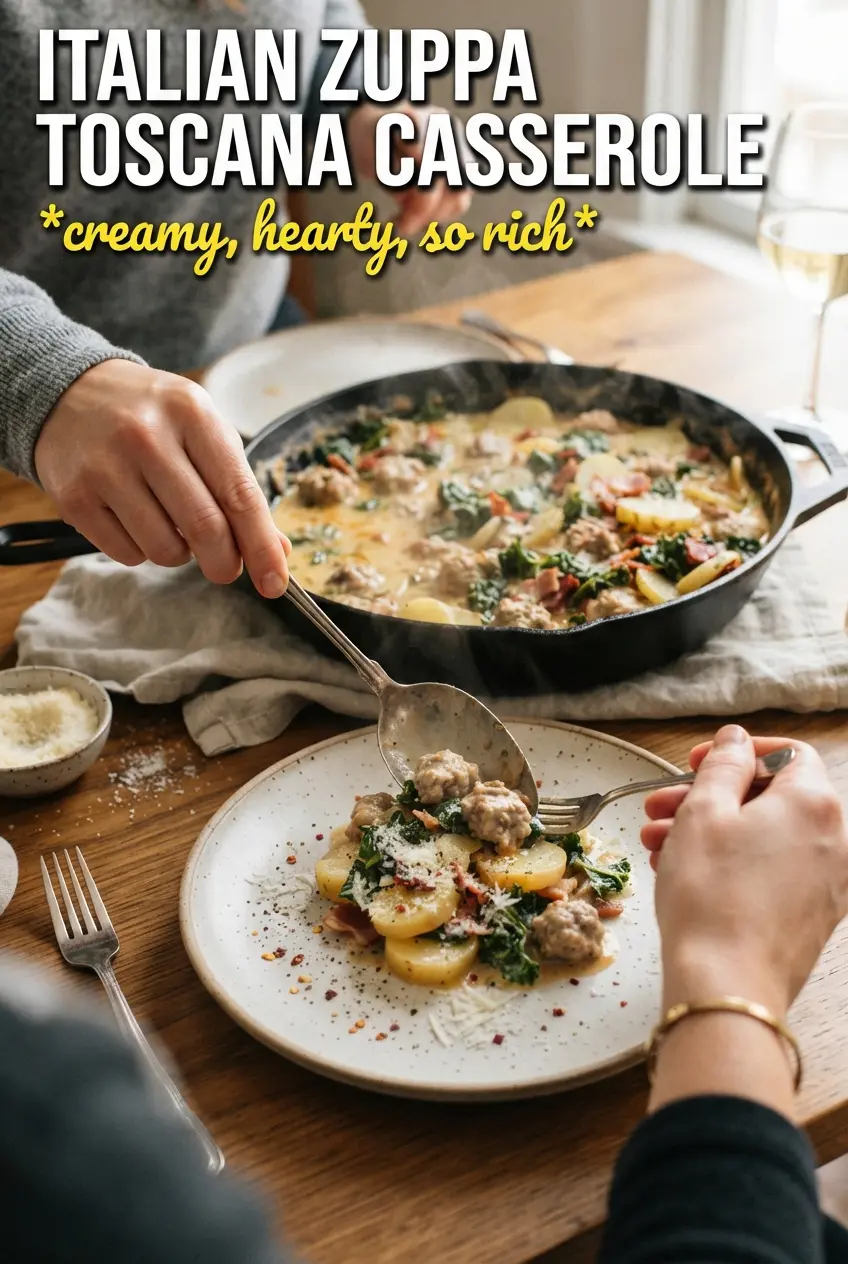
Italian Zuppa Toscana casserole takes everything people love about the soup and turns it into a bubbling baked dinner with more texture in every bite. The potatoes soften into the creamy base, the sausage brings savory depth, and the kale stays just sturdy enough to keep the dish from feeling heavy. Then the cheese on top bakes into a golden lid that catches around the edges and gives each scoop a little pull.
What makes this version work is the way the potatoes are partially cooked before baking. If they go into the oven completely raw, the cream can thin out while the potatoes still need time, which leaves you with an uneven casserole. Browning the sausage first also matters because those browned bits season the base before the broth and cream even go in. That’s where the flavor starts.
Below, I’ve included the details that keep the sauce from splitting, the best way to handle the potatoes, and a few swaps that actually hold up in this kind of baked dish.
The potatoes turned tender without falling apart, and the top baked up with the best cheesy crust. I used pancetta, and my husband went back for seconds before I even sat down.
Love the creamy potatoes, smoky bacon, and cheesy top on this Zuppa Toscana casserole? Save it to Pinterest for an easy baked dinner with real comfort built in.
The Potato Layer That Keeps This Casserole Creamy Instead of Watery
The biggest mistake in a dish like this is rushing the potatoes. Thin slices are the right move, but they still need a head start in the creamy broth so they can soften before the casserole goes into the oven. If you bake raw potatoes in a milk-and-cream mixture, the top can overcook while the center still tastes starchy.
Yukon gold potatoes are the best fit here because they stay tender and hold their shape without turning mealy. They release just enough starch to thicken the sauce naturally, which helps the casserole set up instead of pooling around the edges when you serve it.
- Yukon gold potatoes — Their waxy texture keeps the slices intact after simmering and baking. Russets work in a pinch, but they break down more and make the casserole looser.
- Heavy cream and whole milk — This mix gives you richness without turning the dish into something greasy or dense. Using all cream makes it heavier than it needs to be; using all milk makes it thinner.
- Italian sausage — This is the backbone of the dish, so choose one with good seasoning. Hot or mild both work; just know that hot sausage plus red pepper flakes will bring noticeable heat.
- Kale — Add it near the end so it softens without disappearing. If you use it too early, it can turn drab and lose the little bit of bite that keeps the casserole interesting.
What Each Ingredient Is Actually Doing in This Recipe
- Primary ingredient (the star) — Quality matters most. Choose the best you can find.
- Cooking medium (oil, butter, or broth) — This carries flavors and prevents dryness.
- Seasonings (salt, pepper, spices, herbs) — Layer flavors so nothing overpowers. Build depth gradually.
- Aromatics (garlic, onion, herbs) — Cook with fat to bloom flavors. Become the foundation.
- Supporting ingredients — Complement the main ingredient without overpowering it.
- Sauce or liquid (if applicable) — Brings flavors together. Balance richness with acid.
- Acid (lemon, vinegar, wine, or other) — Brightens and prevents flat-tasting results.
- Final finish (garnish, glaze, or sauce) — Prevents one-dimensional taste and adds visual appeal.
Building the Sausage, Cream, and Cheese Layer Without Breaking It
Brown the sausage and save the fat
Cook the sausage first until it has real color, not just a gray crumble. That browning gives the casserole its savory base, and a little of the rendered fat helps carry the onion and garlic. If there’s a lot of excess grease, drain some off, but don’t wipe the pan clean. Those browned bits are part of the flavor.
Cook the potatoes until they’re just tender
Once the broth, cream, milk, and red pepper flakes go in, add the potatoes and let them simmer until a knife slips in with a little resistance. They should not be falling apart at this stage. If they’re too firm when they go into the oven, the sauce can reduce too much before the potatoes finish cooking.
Finish with the kale and the cheese
Fold the kale and sausage in after the potatoes are mostly tender, then transfer everything to the baking dish if needed. The kale will wilt in the oven, so it only needs a brief head start. Scatter the mozzarella and parmesan over the top in an even layer, then bake until the surface is bubbling and the cheese has a deep golden color at the edges. Pull it when the center is hot and the top has set, because the casserole will thicken more as it rests.
How to Adapt This Italian Zuppa Toscana Casserole for Your Kitchen
Dairy-Free Version
Use unsweetened coconut milk or a full-fat oat cream in place of the heavy cream and whole milk. The casserole will still be creamy, but the flavor gets a little less rich and the sauce won’t set quite as thick. Skip the parmesan or use a dairy-free topping that melts well.
Gluten-Free Without Changing the Method
This recipe is naturally gluten-free as long as your sausage and broth are certified gluten-free. The texture doesn’t change, which is a nice bonus. Check the seasoning labels if you’re cooking for someone with a sensitivity, because broth and sausage are the usual hidden source of gluten.
Swap the Bacon for Pancetta
Pancetta gives a cleaner pork flavor and a little less smoke, while bacon brings a sharper, more familiar breakfast-style note. Either one works, but if you use bacon, pick a brand that crisps well and isn’t overly sweet. You want crunchy bits on top, not chewy ribbons.
Make It a Little Lighter
You can cut the heavy cream down and replace part of it with extra chicken broth, but the casserole will finish looser and less rich. That works if you want a brothier bake, not a thick creamy one. Don’t reduce the liquid too aggressively or the potatoes won’t have enough room to soften evenly.
Storage and Reheating
- Refrigerator: Store covered for up to 4 days. The sauce will thicken as it chills, and the potatoes will absorb a little more liquid.
- Freezer: It freezes, but the cream sauce can separate a bit after thawing. For the best texture, freeze in portions and reheat gently rather than freezing the whole baked casserole.
- Reheating: Warm it covered in a 325°F oven until hot, or reheat single portions in the microwave at medium power. High heat is what turns the sauce grainy and makes the potatoes dry at the edges.
Questions I Get Asked About This Recipe
Italian Zuppa Toscana Casserole
Ingredients
Equipment
Method
- Preheat oven to 375°F, then brown the Italian sausage in a large oven-safe skillet until cooked through. Drain the fat and set the sausage aside.
- Cook the diced bacon or pancetta in the skillet until crispy, then remove and set aside.
- Sauté the diced onion and minced garlic in the reserved fat for 4 minutes. Stir often so the onion softens but doesn’t brown too much.
- Add the chicken broth, heavy cream, whole milk, and red pepper flakes, then stir to combine. Bring the mixture to a gentle simmer.
- Add the thinly sliced Yukon gold potatoes, then simmer for 12-15 minutes until just tender. Stir occasionally to keep the potatoes evenly coated.
- Fold in the chopped kale and the browned Italian sausage, then season with salt and pepper to taste. Cook just until the kale wilts.
- Transfer the mixture to a 9x13 baking dish if needed, then scatter the shredded mozzarella and grated parmesan over the top.
- Bake at 375°F for 20-25 minutes until golden and bubbling. Top with the crispy bacon or pancetta right before serving.


