Tuscan chickpea soup lands in that sweet spot between hearty and light: a garlicky, tomato-rich broth, tender chickpeas, and kale that softens just enough to take the edge off without losing its bite. The best bowls have a little body, not a thin broth, and that comes from mashing part of the chickpeas at the end instead of relying on flour or cream.
Fresh rosemary and a parmesan rind do a lot of the heavy lifting here. The rosemary perfumes the pot without turning woody, and the rind melts just enough into the broth to give it a savory depth that makes the soup taste like it simmered all afternoon, even though it comes together fast. A final squeeze of lemon keeps the whole thing from feeling heavy.
Below, I’ll show you the small details that keep the broth bright and the chickpeas creamy, plus a few smart swaps if you need to make it dairy-free or use what’s already in the pantry.
I loved how the chickpeas got creamy without turning the soup into puree, and the lemon at the end kept the broth bright. The parmesan rind gave it such a deep, savory taste that my husband went back for a second bowl right away.
Save this Tuscan chickpea soup for the nights when you want a brothy, garlic-rich bowl with creamy chickpeas and plenty of kale.
The Reason This Soup Stays Thick Without Cream
Most chickpea soups end up tasting thin because everything gets added to the pot and left there. The trick here is giving part of the chickpeas a second job at the end. Once the soup has simmered and the flavors have settled, mashing or blending about a third of the chickpeas turns the broth silky and full without making it heavy.
That small move matters more than adding extra tomatoes or reducing the broth longer. You keep enough whole chickpeas for texture, but the broken ones thicken the liquid naturally. If the soup still looks brothy after you add the kale, let it simmer for a few extra minutes before seasoning. Kale can cool a pot down just enough to slow everything else.
What Each Ingredient Is Actually Doing in the Pot
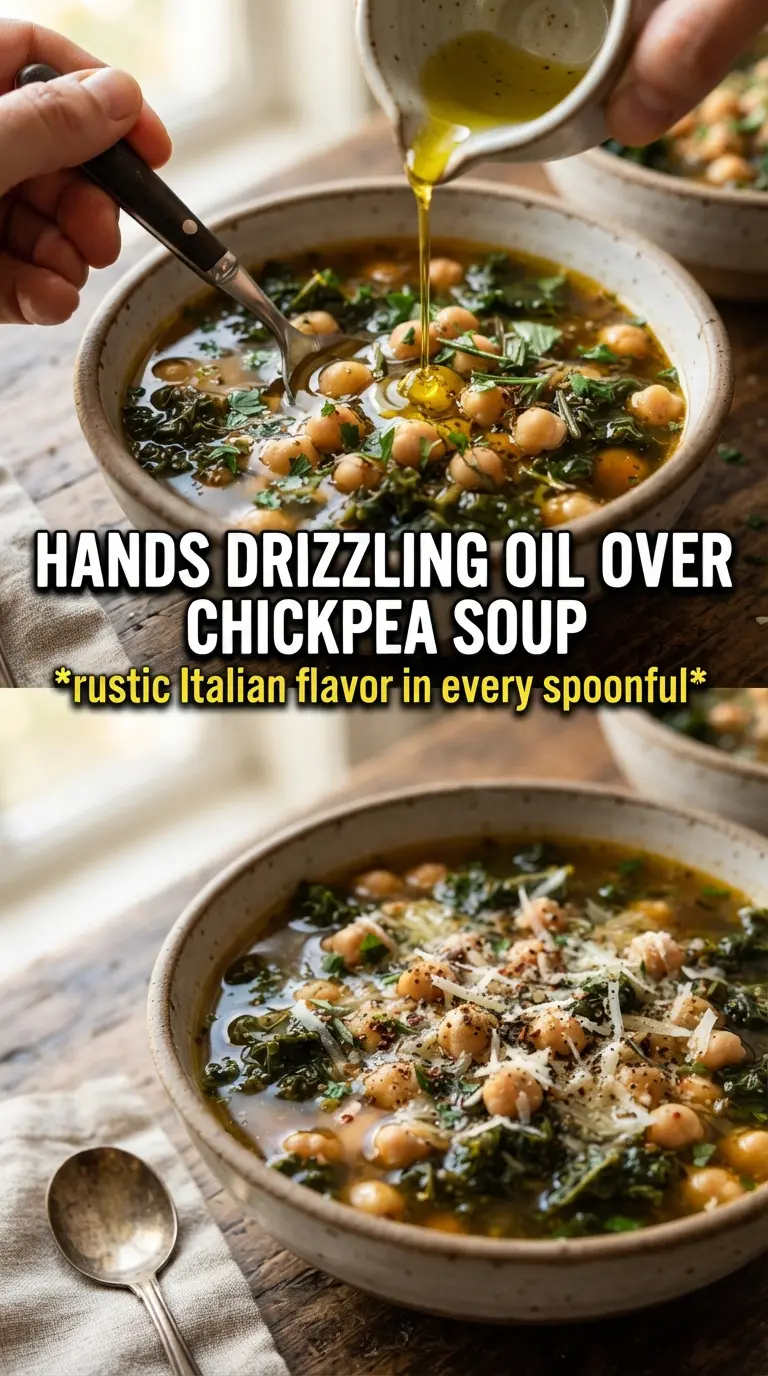
- Chickpeas — These give the soup its body and staying power. Canned chickpeas work well here because they’re already tender, and some of them can be mashed without turning mushy. If you use home-cooked chickpeas, hold them on the firmer side so they don’t disappear in the simmer.
- Fresh rosemary — Rosemary brings the Tuscan note that dried herbs can’t quite match. Use the sprigs whole so you can fish them out cleanly before serving. If you only have dried rosemary, use less than you think; it gets sharp fast.
- Parmesan rind — Optional, but worth using if you have it. It melts slowly into the broth and adds the kind of savory depth that salt alone can’t copy. If you leave it out, finish the soup with a little extra parmesan at the table.
- Fire-roasted tomatoes — These add sweetness, acidity, and a little smokiness. Regular diced tomatoes will work, but the fire-roasted version gives the broth a deeper edge without any extra effort.
- Kale — Add it near the end so it stays bright and tender instead of turning drab. Chop it into bite-size pieces and strip out the thick stems; those stems stay chewy long after the leaves are done.
Building the Broth in the Right Order
Softening the Onion First
Start the onion in olive oil and give it the full five minutes until it turns translucent and starts to smell sweet. If the heat is too high, the edges will brown before the center softens, and the soup will taste more sharp than rounded. You’re not looking for color here. You’re building a gentle base that can support the garlic and rosemary without letting either one turn harsh.
Blooming the Garlic and Red Pepper Flakes
Add the garlic and red pepper flakes and stir for about two minutes, just until the garlic smells fragrant and the pan looks glossy. If the garlic starts to brown, lower the heat immediately; browned garlic takes on a bitter note that can carry through the whole pot. The pepper flakes should warm the broth, not dominate it, so don’t rush this part with the heat cranked up.
Simmering Until the Broth Has Body
Once the chickpeas, tomatoes, broth, rosemary, seasoning, and parmesan rind go in, bring everything to a boil and then drop it back to a steady simmer. You want small bubbles, not a hard boil, so the chickpeas stay intact and the broth reduces evenly. After about 20 minutes, the tomatoes should look softened and the broth should smell full and savory. Remove the rosemary and rind before the next step so the finished soup stays clean and balanced.
Finishing with Texture and Greens
Mash or blend about a third of the chickpeas right in the pot. An immersion blender works fast, but a potato masher gives you more control if you want some chickpeas left whole. Stir in the kale last and cook it just until wilted and bright green. Season with salt, pepper, and lemon at the very end so the broth tastes alive instead of flat.
How to Adapt This Soup Without Losing the Best Part
Make It Dairy-Free
Skip the parmesan rind and finish with extra olive oil plus a little more lemon. You’ll lose some of the savory depth, but the soup still tastes layered because the rosemary, garlic, and tomatoes do most of the work. A pinch of nutritional yeast can add back a little of that rounded, cheesy note if you want it.
Use Spinach Instead of Kale
Spinach works if that’s what you have, but it softens almost immediately and gives the soup a softer finish. Stir it in for just the last minute or two so it stays fresh-tasting. The bowl will be lighter and less rustic than with kale.
Make It Heartier
Add cooked pasta, small potatoes, or browned Italian sausage if you want a fuller meal in the bowl. Pasta will soak up broth as it sits, so add a splash more broth before serving leftovers. Potatoes need to simmer until tender before the kale goes in, while sausage should be browned first and added back with the broth.
Storage and Reheating
- Refrigerator: Store for up to 4 days. The broth thickens as it sits because the chickpeas keep breaking down.
- Freezer: Freezes well for up to 3 months. Leave a little space at the top of the container since the liquid expands.
- Reheating: Warm it slowly on the stove over medium-low heat with a splash of broth or water. Don’t boil it hard or the kale will turn dull and the chickpeas can split apart.
Questions I Get Asked About This Soup
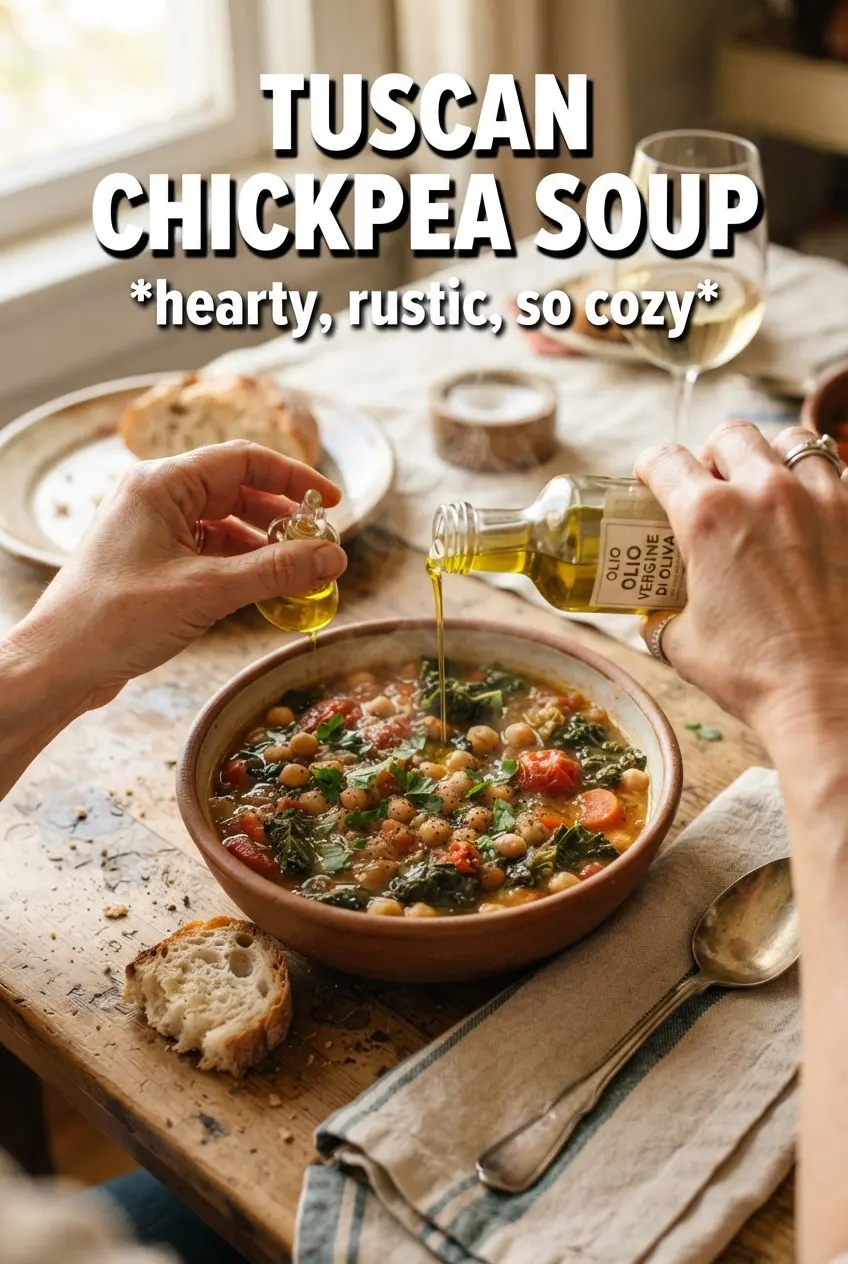
Tuscan Chickpea Soup
Ingredients
Equipment
Method
- Heat the olive oil in a large pot over medium heat until shimmering, then sauté the diced onion for 5 minutes, stirring occasionally, until softened.
- Add the minced garlic and red pepper flakes and cook for 2 minutes, stirring, until fragrant and lightly toasted.
- Add the drained chickpeas, fire-roasted diced tomatoes, vegetable broth, rosemary sprigs, Italian seasoning, and parmesan rind (if using), then bring the mixture to a boil.
- Reduce to a steady simmer and cook for 20 minutes, with gentle bubbling visible around the edges.
- Remove the rosemary sprigs and the parmesan rind, then mash or blend about a third of the chickpeas so the soup thickens.
- Add the chopped kale and cook for 5 minutes, stirring until the leaves turn dark green and wilt.
- Season with salt and pepper, then squeeze in lemon and drizzle with olive oil and parmesan right before serving.


