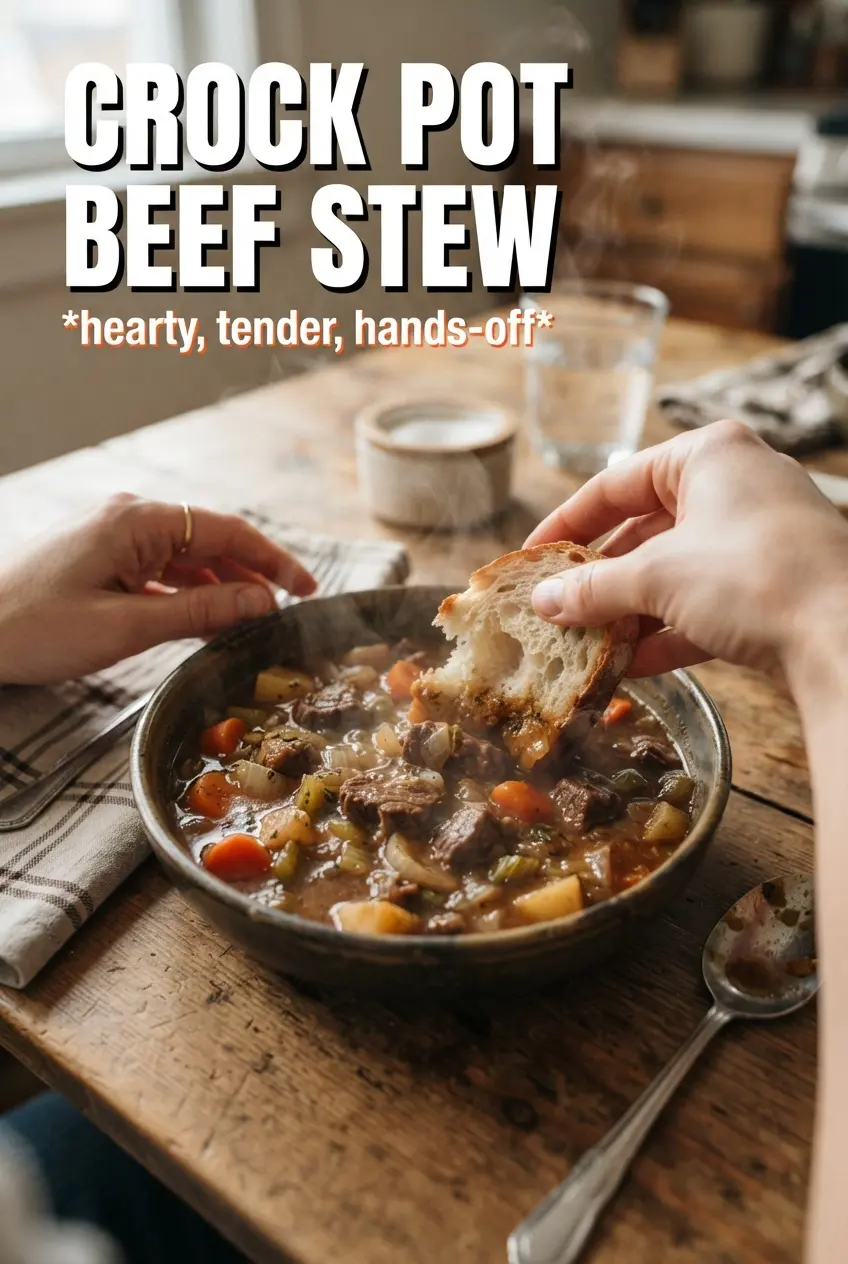
Deep, slow-simmered Crock Pot beef stew lands with tender beef, spoon-soft potatoes, and a broth that turns rich and glossy by the time dinner rolls around. The long cook does the heavy lifting here, but the flavor still starts with a few smart choices: chuck instead of a lean cut, tomato paste for body, and Worcestershire for the kind of savory depth that tastes like you worked harder than you did.
The trick is putting the vegetables under the meat so they stay in the broth instead of drying out on top. The cornstarch goes in at the end, after the beef has already softened, which keeps the stew from turning gluey or dull. That last 20 minutes on High is where the broth goes from thin to properly spoon-coating.
Below you’ll find the little details that matter most, from the cut of beef to the best way to thicken the broth without losing that slow-cooked texture.
The beef broke apart with a spoon and the broth thickened up exactly after that last cornstarch step. I served it over mashed potatoes and my husband went back for seconds before I even sat down.
Save this Crock Pot Beef Stew for the nights when you want fall-apart beef, tender vegetables, and a rich broth with almost no hands-on time.
The Reason Slow Cooked Stew Stays Tender Instead of Turning Dry
The slow cooker is doing more than heating food here. It gives chuck roast time to relax its tough connective tissue, which is what turns chewy cubes into beef that falls apart when you press it with a spoon. The low, steady heat matters more than speed; rushing this stew on High can work, but Low gives you a deeper, more even texture.
The other thing that protects the stew is the order. Potatoes, carrots, celery, and onion go in first, then the beef sits on top with the liquid and seasonings around it. That keeps the vegetables from floating into a dry zone and helps the broth stay concentrated instead of watered down by the meat.
What Each Ingredient Is Actually Doing in the Pot

- Beef chuck — This is the right cut because it has enough marbling and connective tissue to turn tender during a long cook. Lean stew meat will dry out before it gets silky.
- Red wine — Wine gives the broth a deeper, rounder flavor, but extra beef broth works if that’s what you have. If you use wine, let the stew cook long enough for the sharp alcohol edge to mellow out.
- Tomato paste and diced tomatoes — Together they build body and a little acidity, which keeps the stew from tasting flat. The paste is especially important because it thickens and deepens the broth as it cooks.
- Worcestershire sauce — This is one of the easiest ways to add savory depth without making the stew taste like Worcestershire sauce. It blends into the background and makes the beef taste beefier.
- Baby potatoes — Baby potatoes hold their shape better than big russets and don’t turn mealy as quickly. Halving them gives the broth a little more surface area to soak into.
Building the Stew So the Broth Thickens at the Right Time
Starting with the Vegetables
Scatter the potatoes, carrots, celery, and onion across the bottom of the slow cooker. They act like a rack for the beef and keep it from sitting directly on the hot insert, which helps it cook more evenly. If you pile everything into one tight mound, the center can stay under-seasoned and the vegetables on the edges can go soft before the beef is done.
Seasoning the Beef and Loading the Cooker
Season the beef generously before it goes in. That first layer of salt matters because the meat is cooking for hours and needs seasoning from the inside out, not just from the broth at the end. Add the garlic, broth, wine, tomatoes, tomato paste, Worcestershire, thyme, rosemary, and bay leaves, then tuck the beef into the liquid without stirring aggressively. The goal is a gentle, even mix, not a mashed-potato situation.
Letting Time Do the Work
Cook on Low for 8 to 10 hours until the beef yields easily when pressed with a fork. If it still feels tight or stringy, it needs more time; stew beef isn’t done when it’s merely hot, it’s done when the connective tissue has broken down. Remove the bay leaves before thickening so you don’t accidentally leave a bitter leaf fragment in the bowl.
Thickening Without Turning the Stew Pasty
Stir the cornstarch slurry in during the last 20 to 30 minutes on High. If you add it earlier, the stew can turn too thick and lose that rich, brothy texture by the time dinner is ready. The broth should go from loose to glossy and lightly coating the back of a spoon; if it still seems thin, give it another 10 minutes instead of dumping in more slurry right away.
How to Adapt This Stew for Different Kitchens and Schedules
Make It Without Wine
Use the extra beef broth in place of the wine and add a splash of extra Worcestershire if you want to replace some of the missing depth. The stew will still be rich, but it will taste a little rounder and less sharp.
Gluten-Free Version
This recipe is already close to gluten-free, but check your Worcestershire sauce and broth labels before you start. If you need a substitute for the cornstarch slurry, arrowroot works too, though it can thicken a little more quickly than cornstarch.
Vegetable Swaps That Still Hold Up
You can swap the carrots for parsnips or add mushrooms for a deeper, earthier stew. Just keep the total volume similar so the slow cooker doesn’t get overcrowded, or the broth won’t reduce and concentrate the way it should.
Storage and Reheating
- Refrigerator: Keeps well for 4 days. The broth thickens as it chills, so expect it to look a little tighter the next day.
- Freezer: Freezes well for up to 3 months. Cool it completely first and store it in airtight containers, leaving a little room at the top for expansion.
- Reheating: Warm it gently on the stove over medium-low or in the microwave in short bursts, stirring between rounds. Add a splash of broth or water if it has tightened up in the fridge, and don’t boil it hard or the beef can get stringy.
Answers to the Questions Worth Asking
Crock Pot Beef Stew
Ingredients
Equipment
Method
- Season the beef chuck generously with salt and pepper, coating all sides so it tastes through as it braises.
- Place the potatoes, carrots, celery, and onion in the bottom of the slow cooker in an even layer for steady cooking.
- Nestle the seasoned beef on top, then add garlic, beef broth, red wine, diced tomatoes, tomato paste, Worcestershire sauce, dried thyme, dried rosemary, and bay leaves.
- Cook on Low for 8-10 hours, or High for 4-5 hours, until the beef is fall-apart tender and the vegetables are easily pierced with a fork (visible cue: beef shreds when nudged).
- Remove the bay leaves, then stir the cornstarch slurry (cornstarch mixed with water) into the stew to prevent lumps.
- Cook on High for 20-30 minutes until the broth thickens (visual cue: it coats the back of a spoon).
- Season with salt and pepper to taste, then serve hot.


