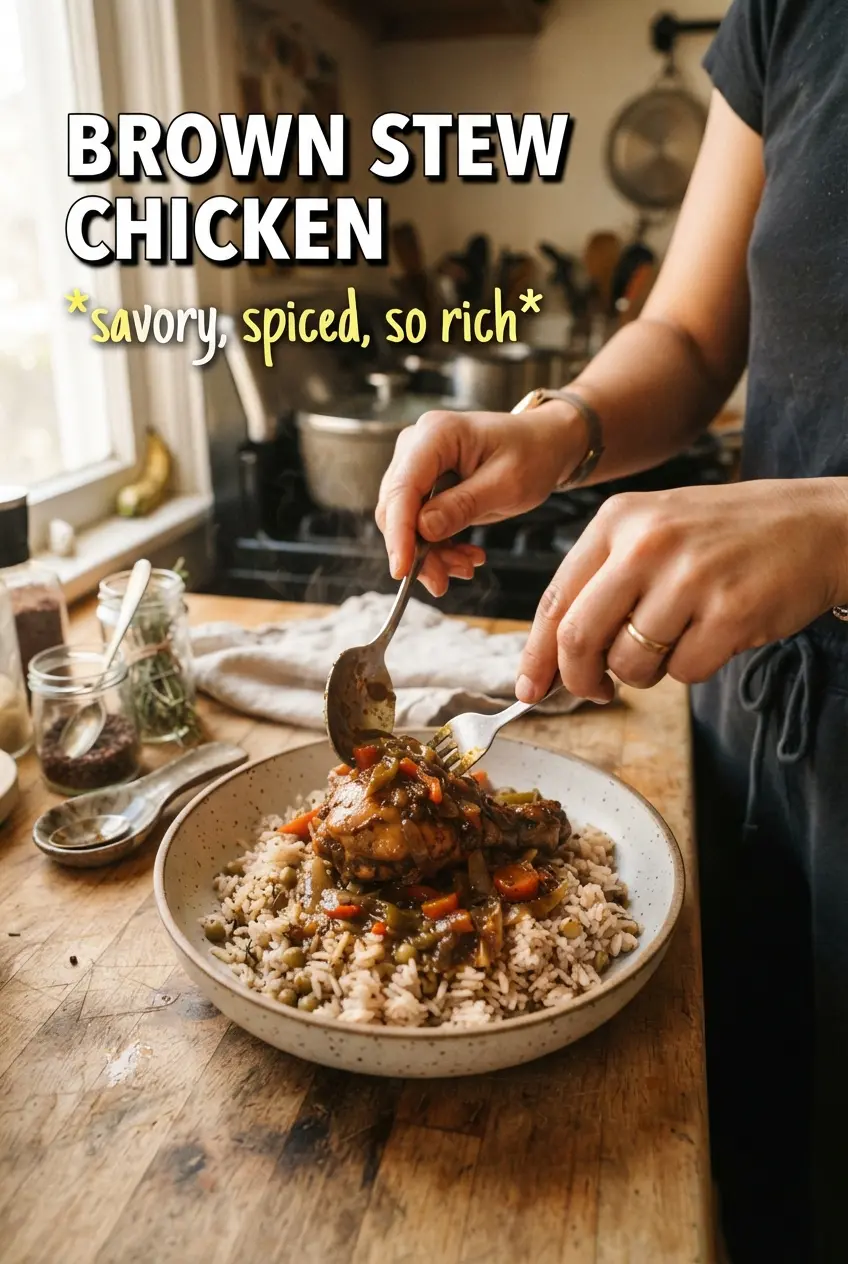
Brown stew chicken earns its place on the table when the gravy turns deep mahogany, the chicken goes tender enough to pull apart with a spoon, and the peppers and thyme settle into a sauce that clings to rice instead of running all over the plate. The best version has layers of flavor built in stages: a seasoned marinade, a proper brown on the chicken, then a slow simmer that turns broth and drippings into something rich and glossy.
The part that matters most is the browning step. Sugar and browning sauce both push the color in the right direction, but they work differently, and neither should be rushed. The sugar needs time to caramelize before the chicken goes in, or it stays pale and tastes flat. The chicken then needs enough space to sear instead of steam, because the dark crust is what gives the gravy its depth once everything simmers together.
Below, I’ll show you the small details that keep the sauce from tasting one-note, plus the best way to handle the heat from scotch bonnet if you want the flavor without the fire.
The gravy turned out thick and glossy, and the chicken was tender all the way through after simmering just under 40 minutes. I loved how the peppers stayed soft but didn’t disappear into the sauce.
Brown Stew Chicken with that deep mahogany gravy is the kind of dinner you’ll want to keep for the nights when rice and a rich pan sauce are the whole point.
The Browning Step That Gives the Gravy Its Depth
The biggest mistake with brown stew chicken is treating the browning step like a shortcut instead of the foundation. If the sugar only turns light amber, the gravy stays thin and sweet in the wrong way. Let it reach a true golden brown before the chicken goes in, then let the chicken sit long enough to pick up color instead of just warming through.
Marinating ahead matters here because the seasoning needs time to work into the meat, especially around the bone. The chicken should smell seasoned before it hits the pan. If it still tastes flat after marinating, the issue is usually under-salting, not the simmer.
What Each Ingredient Is Actually Doing in This Dish

- Chicken thighs and drumsticks — Bone-in pieces hold up during the long simmer and give the gravy more flavor than boneless chicken can. Thighs stay juicy, and drumsticks add even more richness to the pot.
- Browning sauce — This is what gives the stew its signature color fast, but it can’t do the whole job alone. Use a little; too much makes the sauce look dark before it tastes balanced.
- Sugar — The caramelized sugar is what gives the stew that deep, slightly smoky base. Let it go past pale gold and stop before it burns, because burned sugar turns bitter fast.
- Bell peppers, onion, garlic, and green onion — These soften into the gravy and round out the sauce so it tastes complete instead of just brown. Slice them evenly so they cook at the same pace and don’t disappear.
- Scotch bonnet or habanero — This adds heat and a fruity pepper note, but it’s optional if you want the stew milder. Leave it out for a gentler pot, or mince it finely for more heat spread through the sauce.
- Chicken broth — Broth turns the browned bits at the bottom of the pan into gravy. Water works in a pinch, but the stew tastes fuller with broth.
Building the Stew So the Gravy Turns Rich, Not Watery
Marinate Until the Chicken Tastes Seasoned
Combine the chicken with the browning sauce, all-purpose seasoning, garlic powder, onion powder, thyme, salt, and pepper, then let it sit for at least 2 hours. Overnight gives the deepest flavor, especially around the bone. If you rush this step, the stew will still work, but the seasoning sits mostly on the surface instead of sinking in. Keep the chicken covered and chilled while it marinates.
Caramelize the Sugar Before the Chicken Goes In
Heat the oil first, then add the sugar and watch it closely until it melts and turns golden brown. Stir only if needed to keep it from scorching. If it goes black, start over; bitter sugar will dominate the whole pot. As soon as the caramel is ready, add the chicken pieces carefully so they sizzle instead of stick.
Brown the Chicken for Real Color
Let the chicken cook in the caramel oil until deeply golden on several sides. Don’t crowd the pan, or the pieces will steam and the gravy won’t have that dark, layered flavor. This step is about building the base of the stew, not cooking the chicken through. Pull the pieces out once they’re well colored.
Soften the Vegetables, Then Bring It All Together
Sauté the onion, bell peppers, garlic, green onions, and scotch bonnet for about 4 minutes, just until they start to soften and smell sweet. Scrape up the browned bits as they release from the pan. Return the chicken, add the broth, and bring the pot to a boil before lowering the heat. That boil helps start the gravy, but the real tenderness comes from the slow simmer.
Simmer Until the Sauce Clings to the Spoon
Cover and cook for 35 to 40 minutes, or until the chicken is fall-apart tender and the gravy has thickened. If the sauce still looks thin near the end, uncover the pot and let it bubble gently for a few minutes. The finished gravy should coat the back of a spoon and settle around the chicken instead of pooling like broth. Fresh thyme at the end keeps the whole dish bright.
How to Adapt This Brown Stew Chicken Without Losing the Point
Make It Milder Without Losing the Jamaican Flavor
Leave out the scotch bonnet and keep the rest of the seasoning the same. You’ll still get the thyme, garlic, onion, and browning flavor that define the stew, just without the heat riding on top of it.
Use Skinless Chicken Thighs for a Lighter Finish
Skinless thighs still stay juicy and simmer well, but the gravy will be a little less rich because you’re losing some fat from the skin. Brown them carefully so they still pick up good color in the caramel oil.
Make It Gluten-Free With No Other Changes
This recipe is naturally close to gluten-free, but the all-purpose seasoning needs a label check. Use a gluten-free seasoning blend and broth, and the texture and simmer time stay the same.
How to Make It Ahead for Better Flavor
Marinate the chicken overnight, then cook it the next day and chill it with the gravy. The flavor deepens after a night in the fridge, and the sauce thickens more cleanly when it cools before reheating.
Storage and Reheating
- Refrigerator: Store in an airtight container for up to 4 days. The gravy thickens as it chills.
- Freezer: It freezes well for up to 2 months. Cool it completely first, then freeze with some gravy so the chicken doesn’t dry out.
- Reheating: Reheat gently on the stove over low heat with a splash of broth. High heat can tighten the chicken and make the sauce break around the edges.
Questions I Get Asked About This Recipe
Brown Stew Chicken
Ingredients
Equipment
Method
- Combine all marinade ingredients with the chicken pieces in a bowl and mix until evenly coated. Marinate at least 2 hours or overnight for the best flavor penetration.
- Heat the vegetable oil in a large skillet or Dutch oven. Add the sugar and cook until it caramelizes to a golden-brown color with an amber sheen.
- Add the marinated chicken pieces to the caramel oil and brown on all sides until deeply golden. Remove chicken once the surface is well caramelized.
- Sauté the onion, bell peppers, garlic, green onions, and scotch bonnet for 4 minutes. Stir until fragrant and slightly softened.
- Return the browned chicken to the pot, add the chicken broth, and bring everything to a boil. Ensure the liquid covers most of the chicken.
- Reduce heat to a gentle simmer, cover, and cook for 35-40 minutes. Simmer until the chicken is fall-apart tender and the gravy thickens visibly.
- Serve hot with rice and garnish with fresh thyme. Spoon the thick mahogany gravy over the chicken for maximum coating.


