Apple crisp cheesecake gives you the best kind of contrast in one dessert: a sturdy graham crust, a smooth vanilla-cinnamon cheesecake layer, tender spiced apples, and a buttery oat topping that stays crisp instead of disappearing into the filling. The first slice usually tells you everything you need to know. It holds together cleanly, but the top still gives that familiar crumble-and-custard combination that makes people go back for a second piece.
The trick is treating each layer like it has its own job. The apples are cooked just enough to soften them before they go into the oven, which keeps them from turning watery under the cheesecake. The water bath matters too. It slows the bake so the filling sets without cracking, and that gives you a smoother texture once the cake chills. The oat topping also gets mixed separately and scattered on at the end so it bakes into little crisp clusters instead of sinking.
Below, I’ll walk through the one step that keeps the cheesecake from getting grainy, plus a few swaps that still preserve the texture that makes this dessert work.
The cheesecake stayed creamy, the apples kept their shape, and the oat topping stayed crisp even after a night in the fridge. My husband asked if I could make it again for Thanksgiving.
Save this apple crisp cheesecake for the dessert table, with the creamy center and crisp oat topping you want every time.
The Step That Keeps the Cheesecake Smooth Instead of Grainy
Most cheesecake problems start with the filling, not the bake. If the cream cheese is even a little lumpy, those lumps stay in the batter and bake into a dense, uneven texture. Softened cream cheese should beat into a smooth base before anything else goes in, and the eggs need to be added one at a time so the mixture stays glossy instead of overworked.
The other place people lose the texture is heat. A cheesecake like this should never get rushed in a hot oven. The center needs to stay just slightly wobbly when it comes out, because carryover heat finishes the set as it cools. If you wait until the middle looks fully firm in the oven, the cheesecake usually turns dry by the time it chills.
What Each Layer Is Doing in This Dessert
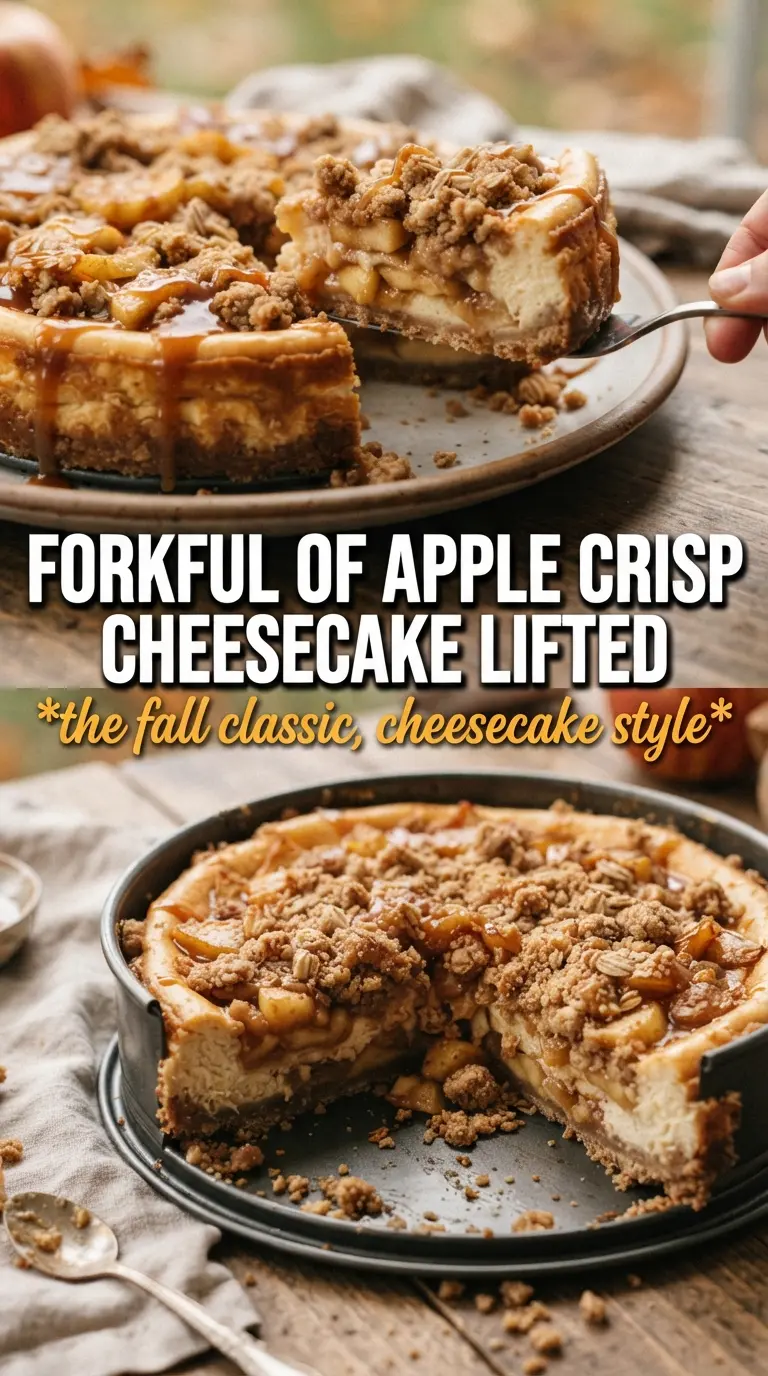
- Graham cracker crumbs — They give the base a dry, sandy structure that bakes into a crust sturdy enough to hold the filling. Fresh crumbs from whole crackers taste a little better than pre-crumbled ones, but either works fine if you pack them firmly and bake them first.
- Cream cheese — This is the backbone of the dessert, and it needs to be fully softened so it blends without specks. Cold cream cheese is the fastest way to end up with a lumpy batter.
- Sour cream — It lightens the filling and adds a little tang so the cheesecake doesn’t taste flat next to the apples and crumble. Full-fat sour cream gives the best texture, but plain full-fat Greek yogurt can work in a pinch.
- Apples — These need a quick pre-cook so they soften before baking. A firm apple like Granny Smith, Honeycrisp, or Braeburn holds its shape better than a mealy variety.
- Rolled oats — They create the crisp top and keep the topping from reading like plain streusel. Quick oats can work, but the texture is finer and less nubby.
- Cold butter for the topping — Cold butter is what makes the crumble stay in clumps instead of melting into a paste. Once the butter softens too much, you lose the crisp, pebbly texture that makes the topping worth having.
Building the Layers So They Bake Cleanly Together
Pressing and Pre-Baking the Crust
Mix the graham crumbs, sugar, and melted butter until the texture looks like damp sand. Press it into the springform pan firmly enough that it holds together, especially around the edges where the filling can pull away. Bake it for the full 8 minutes so it sets before the wet layers go on. If the crust is underbaked, it can turn soft under the cheesecake and make slicing messy.
Softening the Apples Without Turning Them Mushy
Cook the diced apples with butter, brown sugar, and cinnamon until they’ve lost their raw crunch but still keep their shape. Five minutes is usually enough. You’re not making applesauce here. Let them cool before layering them into the pan, or they can warm the cheesecake batter and throw off the bake.
Mixing the Filling Without Adding Air
Beat the cream cheese and sugar until completely smooth, then add the eggs one at a time. Stop as soon as each one disappears. Too much mixing at this stage adds air, and air bubbles can cause cracks or a puffy top that collapses later. Stir in the sour cream, vanilla, and cinnamon just until the batter looks uniform and silky.
Finishing with the Crumble and Water Bath
Scatter the apple layer over the cheesecake filling, then add the oat topping in clumps so it bakes into a crisp crown. Set the pan in a water bath and bake until the center is just set. The middle should still have a slight wobble when you nudge the pan. Cool it completely before chilling, because rushing the chill can cause condensation and soften the topping.
How to Adapt This Cheesecake Without Losing the Texture
Gluten-Free Version
Use certified gluten-free graham crackers for the crust and swap the flour in the topping for a 1:1 gluten-free baking blend. The texture stays close to the original, though the crumble may be a little more delicate once chilled.
Lighter Tang with Greek Yogurt
Plain full-fat Greek yogurt can replace the sour cream if that’s what you have. The filling will taste a little brighter and less rich, but it still bakes up smooth as long as the yogurt is full-fat and not watery.
Different Apple Combinations
A mix of tart and sweet apples gives the best balance. Granny Smith brings structure, while Honeycrisp or Fuji adds a softer, sweeter bite. Using only very soft apples makes the fruit layer slump and blend into the cheesecake instead of staying distinct.
Storage and Reheating
- Refrigerator: Store covered for up to 5 days. The topping will soften a little, but the flavor stays excellent.
- Freezer: This cheesecake freezes well. Chill it fully first, then wrap slices tightly and freeze for up to 2 months. Thaw in the refrigerator so the filling doesn’t weep.
- Reheating: Serve it cold or let slices sit at room temperature for 20 to 30 minutes. Don’t microwave it; the filling can turn soft and the crumble loses its texture fast.
Answers to the Questions Worth Asking
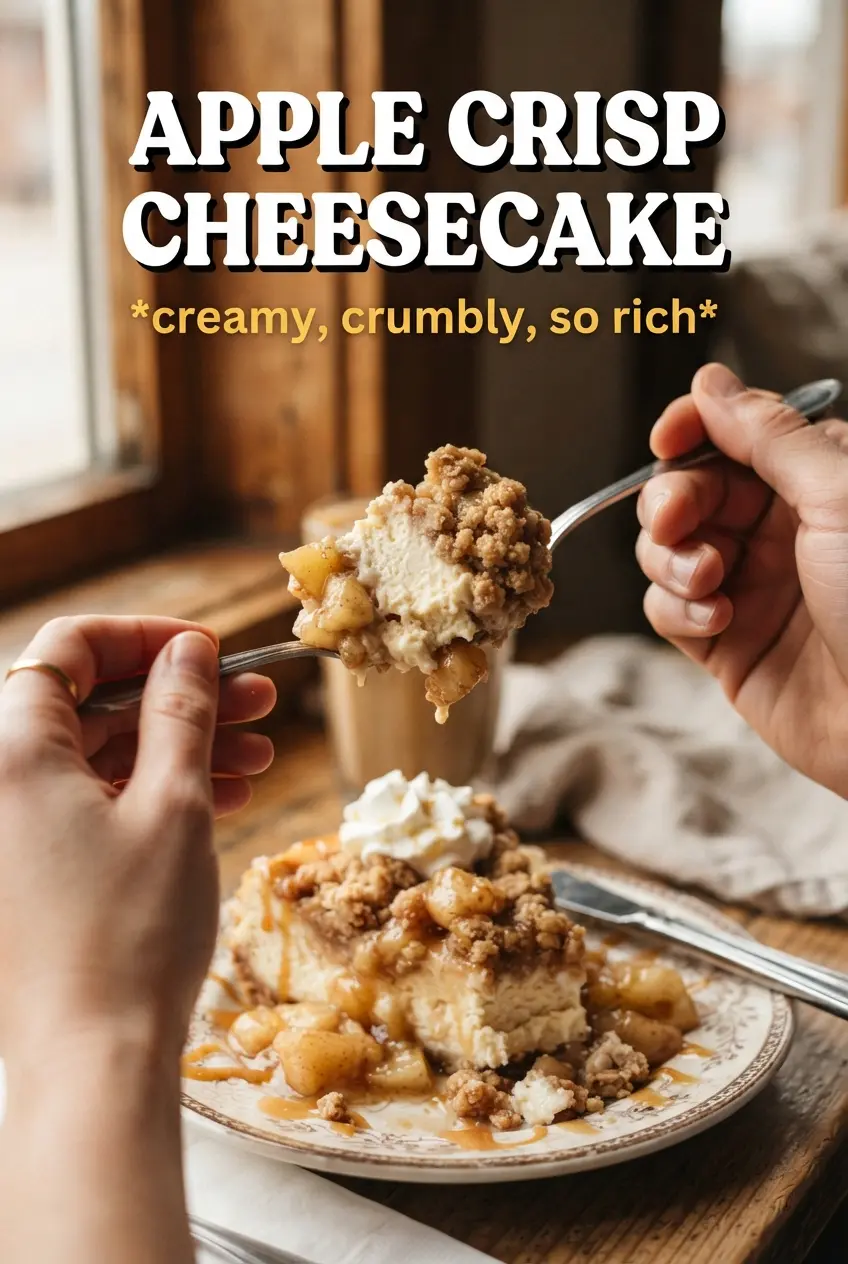
Apple Crisp Cheesecake
Ingredients
Equipment
Method
- Preheat oven to 325F. Press graham cracker crumbs mixed with sugar and melted unsalted butter into a 9-inch springform pan and bake for 8 minutes.
- Let the crust cool slightly while you prepare the filling and apples. The crust should look set and fragrant with a lightly golden surface.
- Cook diced apples with 1 tablespoon butter, brown sugar, and cinnamon for 5 minutes over heat until softened. You should see the apples turn glossy and slightly jammy.
- Cool the cooked apples to room temperature before adding to the cheesecake. This helps prevent the batter from curdling.
- Beat cream cheese and granulated sugar until smooth. Stop and scrape the bowl so the batter looks creamy with no lumps.
- Add eggs one at a time, beating just until each egg disappears into the batter. The mixture should stay thick and smooth, not foamy.
- Mix in sour cream, vanilla, and cinnamon until fully combined. The batter should look uniform and silky.
- Pour cheesecake filling over the baked crust and spoon the cooled apples on top. Spread gently so the apples sit in an even layer.
- Make the oat topping by combining rolled oats, flour, brown sugar, and cinnamon, then cutting in cold cubed butter until clumpy. The topping should resemble coarse crumbs with visible butter lumps.
- Scatter the oat crisp topping over the apples. Aim for full coverage, leaving small gaps for crisp edges.
- Bake in a water bath at 325F for 60–65 minutes until the center is just set. The middle should jiggle slightly like thick pudding when the pan is tapped.
- Cool the cheesecake completely on the counter. It should reach room temperature with no steaming.
- Refrigerate for 6 hours before releasing and slicing. The filling should feel firm and the oat topping should hold its crunch.


