Chicken noodle soup gets a different kind of depth when the broth starts from chicken pieces instead of a carton. The broth turns deep gold, a little glossy, and full of body from the bones and vegetables, while the noodles stay tender without taking over the bowl. It tastes like the version people remember from a good kitchen, not the thin, one-note kind that needs extra help to feel complete.
The difference here is patience in the first pot. A slow simmer pulls out flavor and collagen, and the apple cider vinegar helps that extraction along without making the broth taste sour. Straining and seasoning the broth before the noodles go in matters too, because noodles can dull the flavor if you wait until the very end to adjust the salt.
Below, you’ll find the timing that keeps the noodles from going mushy, plus the small broth trick that gives this soup its rich, homemade finish.
The broth turned out rich and golden, and the noodles stayed perfectly tender instead of falling apart. I used the leftover shredded chicken from the pot and the soup tasted even better the next day.
Save this homemade chicken noodle soup for the nights when you want a deeply golden broth and tender noodles in one bowl.
The Part That Makes Homemade Broth Taste Like It Took All Day
Most chicken noodle soups come down to one mistake: the broth never gets enough time to taste like anything. A quick simmer will cook the chicken, but it won’t pull out the body from the bones or the sweetness from the vegetables. That’s why this soup starts with cold water, a slow boil, and then a long, gentle simmer. Cold water gives the broth a chance to extract flavor as it heats, and a bare simmer keeps it clear instead of cloudy and harsh.
The apple cider vinegar is there for a reason. It doesn’t make the broth taste acidic; it helps loosen collagen from the chicken pieces, which is what gives homemade broth that fuller mouthfeel. If the broth tastes flat after straining, it usually needs salt more than it needs more simmering. Season the broth before building the soup, and the noodles and chicken will taste like they belong there instead of sitting in plain liquid.
What Each Ingredient Is Actually Doing in the Pot

- Chicken pieces — Backs, necks, or a whole chicken give you the bones and connective tissue that make the broth rich. If you use only boneless chicken, the soup will still taste good, but it won’t have the same body.
- Apple cider vinegar — This small amount helps pull collagen and minerals from the chicken while the broth simmers. Don’t skip it if you want that fuller homemade texture.
- Carrots, celery, and onion — These are doing double duty: building the broth first, then adding fresh flavor to the finished soup. The second round of vegetables keeps the soup from tasting like it was cooked down too far.
- Wide egg noodles — They hold up better than thin noodles and give the soup that classic, sturdy bite. If you swap them, choose a noodle that can handle simmering without turning soft too fast.
- Fresh parsley — Add it at the end so it stays bright and fresh instead of disappearing into the broth. It lifts the whole pot right before serving.
Building the Soup in Two Layers
Making the Broth First
Start with the chicken pieces, chopped vegetables, garlic, bay leaves, vinegar, and cold water in a large pot. Bring it up to a boil, then lower it to a gentle simmer and skim off the foam that rises at the top. That foam isn’t bad, but leaving it in makes the broth taste muddy. After 1 1/2 to 2 hours, the broth should taste deep and rounded, and the chicken should be tender enough to pull apart cleanly.
Straining and Seasoning Before the Noodles
Strain the broth and season it with salt before anything else goes back in. This is the point where flavor gets set, and if you wait until the end, the noodles can mute the seasoning. Pull any usable chicken from the bones while it’s still warm, because it comes away more cleanly before it cools. If the broth seems thin, keep simmering it uncovered for a few minutes rather than trying to fix it with extra vegetables.
Cooking the Fresh Vegetables and Noodles
Bring the strained broth back to a simmer, then add the fresh carrots, celery, and onion. Let them cook until they’ve softened but still hold their shape, about 10 minutes. Add the egg noodles only after the vegetables are almost tender; if they go in too early, they’ll soak up too much broth and turn soft before the soup even reaches the table. Cook them just until they’re tender with a little bite left in the center.
Finishing With Chicken and Herbs
Stir in the shredded chicken and parsley at the end, just long enough to warm the chicken through. This keeps the meat from drying out and preserves the fresh green flavor of the herbs. Taste again and add more salt and pepper than you think you need, because noodles absorb seasoning fast. The finished soup should taste clean, rich, and layered, not bland and watery.
How to Adapt This Soup Without Losing What Makes It Good
Use a whole chicken for the richest broth
A whole chicken gives you meat for the soup and bones for the broth, which is the easiest way to build depth in one pot. You’ll need to pull the meat off the carcass after simmering, but the payoff is a broth with more body and a more balanced chicken flavor.
Make it gluten-free with rice noodles or gluten-free pasta
Wide egg noodles can be swapped for gluten-free noodles, but add them with extra care because they can soften faster than wheat pasta. Cook them separately if you want the cleanest texture, then add them to each bowl before ladling in the broth.
Turn it into a lighter version with extra vegetables
If you want a lighter bowl, increase the carrots and celery and reduce the noodles slightly. You’ll keep the same broth-driven flavor but get a soup that feels more vegetable-forward and a little less heavy.
Storage and Reheating
- Refrigerator: Store for up to 4 days. The noodles will keep absorbing broth, so the soup thickens as it sits.
- Freezer: Freeze the broth and chicken without the noodles for the best texture. Egg noodles get mushy after thawing, so cook fresh noodles when you reheat.
- Reheating: Warm gently over medium-low heat until steaming. If it looks too thick, add a splash of water or broth and heat just until hot; boiling hard will break up the noodles and overcook the chicken.
Questions I Get Asked About This Recipe
Chicken Noodle Soup With Homemade Broth
Ingredients
Equipment
Method
- Combine chicken pieces, carrots, celery, onion, garlic, bay leaves, apple cider vinegar, and cold water in a large Dutch oven; bring to a boil over high heat and keep it actively bubbling. Skim off foam as it rises so the broth stays clear-looking.
- Reduce heat to low so the liquid maintains a gentle simmer. Simmer 1.5-2 hours until the broth looks deeply golden.
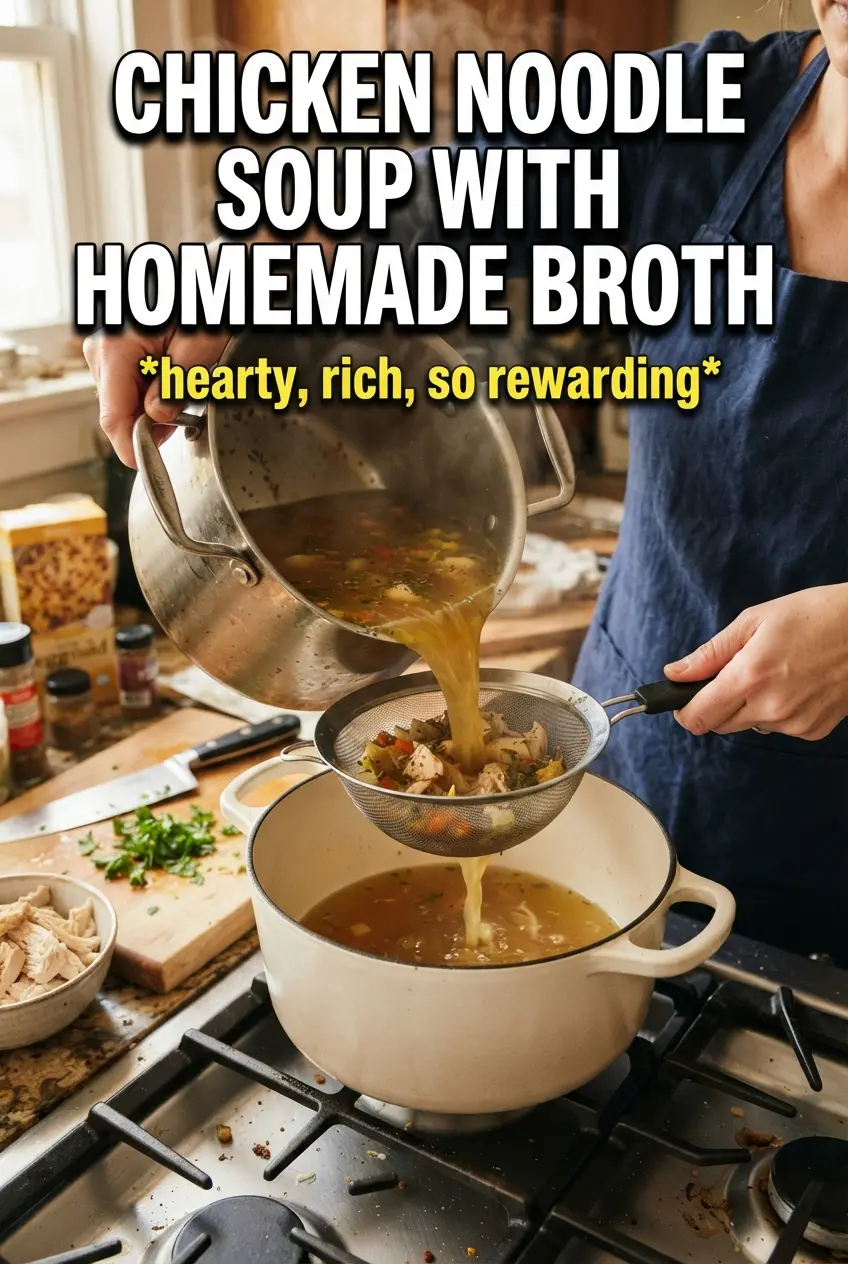
- Strain the broth through a fine sieve into a clean pot, then season with salt. Reserve any shredded chicken from the broth bones.
- Return the strained broth to a Dutch oven and bring it back to a simmer. Add sliced carrots, celery, and diced onion and cook until the vegetables begin to soften.
- Add wide egg noodles and cook 6-8 minutes at a steady simmer until tender but still springy. The surface should show small, active bubbles around the noodles.
- Stir in shredded chicken and fresh parsley, then season generously with salt and pepper. Cook 1-2 minutes just to heat through and let the herbs look bright.


