Beef carbonnade stew turns tough chuck into spoon-tender beef in a dark, onion-rich gravy that tastes like it simmered all day for a reason. The broth gets a deep mahogany color from Belgian ale, but the real payoff is the sweetness from slowly cooked onions balanced by vinegar and Dijon. Every bite lands somewhere between savory, tangy, and a little malty, with crusty bread made for dragging through the sauce.
The trick is giving the onions enough time to collapse and turn golden before anything else happens in the pot. That step builds the base of the stew, and it keeps the finished broth from tasting flat or one-note. A quick flour cook after the garlic helps the sauce thicken without turning pasty, and the beer needs a good scrape of the pot so all that browned flavor ends up in the stew instead of stuck to the bottom.
Below, I’ve laid out the small details that matter most: how dark to brown the beef, what to look for when the onions are ready, and the one storage trick that keeps the leftovers even better the next day.
The sauce turned silky after the long simmer, and the onions practically melted into the broth. I served it with bread, and even the leftovers were deeper and better the next day.
Save this Belgian beef carbonnade for the nights when you want deep beer-braised beef, caramelized onions, and crusty bread in one pot.
The Reason the Onions Need the Full 20 Minutes
Carbonnade lives or dies on the onions. If they stay pale and sharp, the stew tastes like beef in beer. When they cook slowly until soft, glossy, and golden at the edges, they give the broth its body and a gentle sweetness that balances the ale and vinegar. That long onion cook also keeps the finished sauce from needing extra sugar to cover up a thin base.
The beef browns best in a hot pan with space around each piece. Crowd the pot and it starts steaming, which means less crust and less flavor in the stew. Once the onions go in, keep the heat moderate and give them time; if they start catching, splash in a spoonful of water and scrape the bottom so the fond stays in the pot instead of turning bitter.
What Each Ingredient Is Doing in the Pot
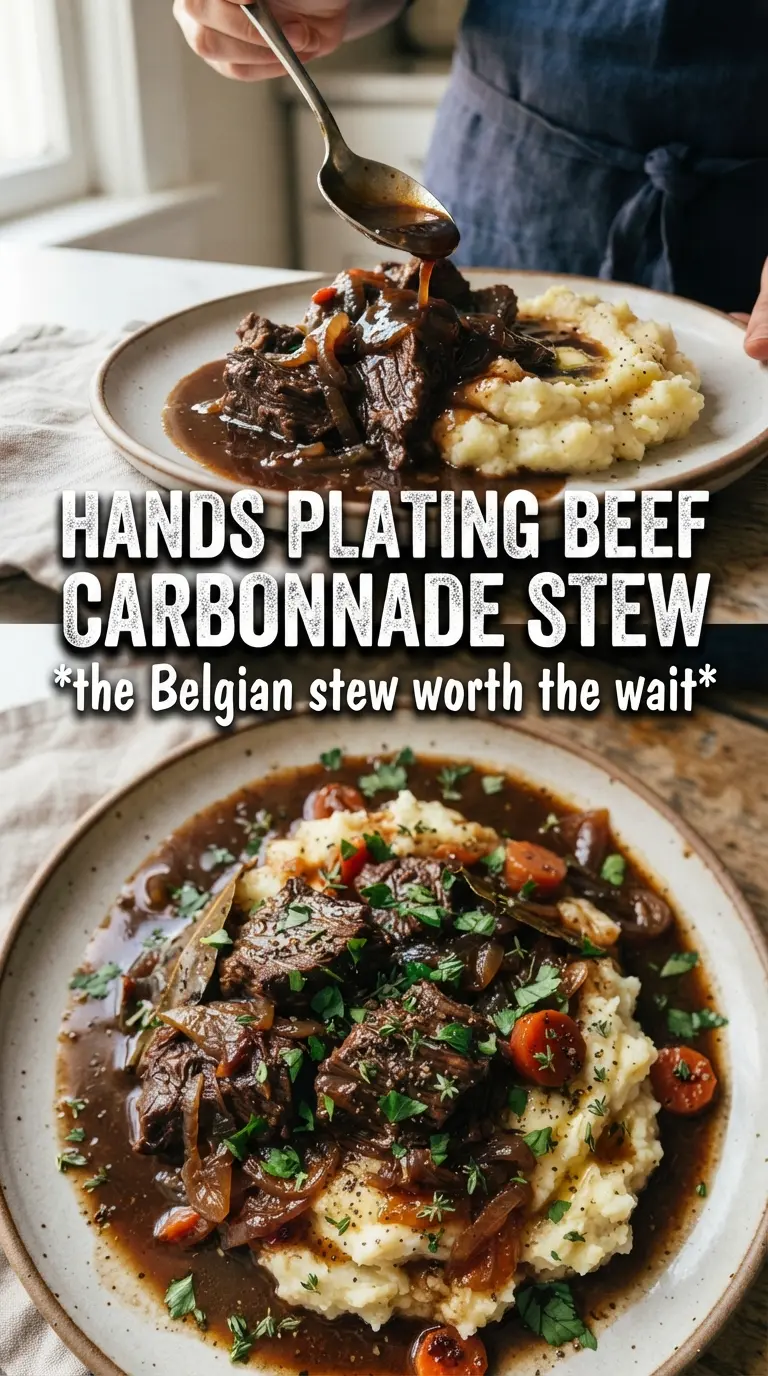
- Beef chuck — This cut is built for braising. The connective tissue melts over the long cook and gives you tender beef instead of dry slices. Trim off only the thickest exterior fat; a little marbling helps the stew stay rich.
- Dark Belgian ale or stout — This is where the stew gets its signature depth. Use something you’d actually drink, because the beer flavor stays in the finished dish. If you need a substitute, use a dark non-alcoholic beer plus an extra tablespoon of vinegar for brightness.
- Onions — They’re not a background note here. They practically become part of the sauce, so slice them thinly and give them enough time to soften all the way through before you move on.
- Dijon mustard and red wine vinegar — These keep the stew from leaning too sweet. Dijon also helps the broth taste fuller and more rounded, especially after the long braise.
- Flour — It lightly thickens the braising liquid. Cook it for a minute with the garlic so the finished gravy doesn’t taste raw or dusty.
Building the Stew So the Beef Stays Tender
Getting a real crust on the beef
Season the beef well and sear it in hot oil in batches. You want a deep brown crust, not just a gray surface, because that crust is where the stew gets its roasted flavor. If the pot looks crowded or wet, pull some pieces out and finish them separately. Move the meat out once it’s browned on all sides; it’ll finish cooking in the braise.
Turning the onions sweet and jammy
Add the onions to the same pot and cook them over medium heat until they’re soft, golden, and collapsing into the bottom of the pan. This takes patience, but it’s the part that gives carbonnade its depth. If the onions start scorching before they’ve softened, lower the heat and add a splash of water to loosen the browned bits.
Building the braising liquid
Stir in the garlic and flour, then pour in the ale and scrape up every browned spot stuck to the bottom. That deglazing step is non-negotiable. Add the broth, tomato paste, vinegar, brown sugar, mustard, thyme, and bay leaves, then return the beef and any juices to the pot. The liquid should come partway up the meat, not drown it completely.
Simmering until the beef yields
Bring the pot to a boil, then drop the heat to a gentle simmer and cover it. You’re waiting for the beef to go from firm to easily pierced with a fork, which usually takes about 2 hours. If it’s still chewy, it needs more time, not more heat. A hard boil tightens the meat and leaves the sauce muddy.
Three Ways to Make It Fit Your Table
Gluten-Free Carbonnade
Swap the all-purpose flour for a gluten-free flour blend or use 1 tablespoon cornstarch mixed with 2 tablespoons cold water near the end of cooking. The stew still thickens, but the texture will be a touch glossier and a little lighter.
No Alcohol Version
Use a dark non-alcoholic beer or replace the ale with more beef broth plus 1 to 2 teaspoons of Worcestershire sauce and an extra splash of vinegar. You’ll lose a little of the beer’s malty edge, but you’ll keep the deep savory backbone.
Make It Ahead for Better Flavor
This stew tastes even better the next day once the beef and onions settle into the sauce. Cook it a day ahead, cool it fully, then chill overnight and reheat gently before serving. The sauce thickens as it rests, so add a splash of broth when warming it back up if needed.
Storage and Reheating
- Refrigerator: Store for up to 4 days. The sauce thickens and the flavor deepens as it rests.
- Freezer: Freezes well for up to 3 months. Cool completely before freezing in airtight containers, leaving a little room for expansion.
- Reheating: Rewarm gently on the stove over low heat with a splash of broth or water. A hard simmer can tighten the beef and make the sauce look greasy before it comes back together.
Questions I Get Asked About This Recipe
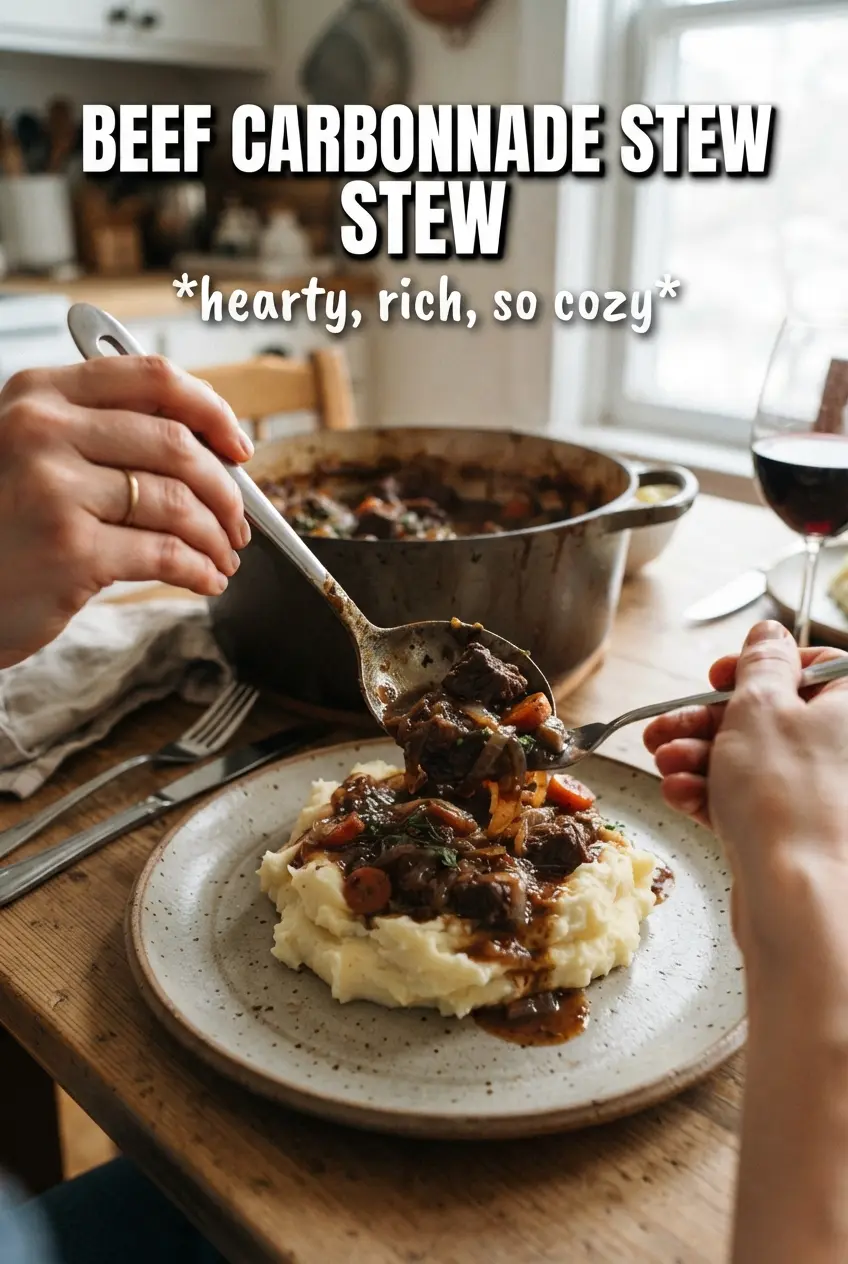
Beef Carbonnade Stew
Ingredients
Equipment
Method
- Season the beef chuck cubes with salt and pepper, then heat vegetable oil in a Dutch oven over high heat until shimmering.
- Sear the beef in the Dutch oven until deeply browned, about 6-8 minutes, then remove to a plate.
- Cook the thinly sliced onions over medium heat until very soft and golden, 20-25 minutes, stirring often.
- Add the minced garlic and cook for 1 minute, then whisk in the all-purpose flour and cook for 1 minute.
- Deglaze with the dark Belgian ale or stout beer, scraping up all browned bits from the bottom of the Dutch oven.
- Whisk in the beef broth, tomato paste, red wine vinegar, brown sugar, Dijon mustard, fresh thyme, and bay leaves, then return the seared beef to the pot.
- Bring the stew to a boil, then reduce heat to low, cover, and braise for 2 hours until the beef is very tender.
- Remove bay leaves and thyme, season to taste with salt and pepper, and serve hot with crusty bread.


