Honey garlic kielbasa comes out with crisp edges, sticky glaze, and vegetables that pick up just enough caramelization to taste roasted instead of steamed. The sausage turns deeply golden in the oven, and the honey garlic sauce clings to every bite instead of pooling on the pan. It’s the kind of sheet pan dinner that feels low-effort in the best possible way, because once everything is tossed together, the oven does the heavy lifting.
The trick is keeping the vegetables in a single layer so they roast instead of sweat. Kielbasa already brings salt, smoke, and fat, so the sauce doesn’t need much else to taste complete; honey handles the shine, soy sauce brings depth, Dijon sharpens it, and garlic keeps it from tasting one-note. A short roast at high heat gives you browned edges without drying out the sausage.
Below, you’ll find the small timing details that keep the broccoli tender, the zucchini from going limp, and the sauce from burning before the vegetables are done. There’s also a quick note on swaps and storage if you want to make this sheet pan dinner work with what’s already in your kitchen.
The glaze got sticky and glossy in the oven, and the kielbasa browned up around the edges without drying out. Even the zucchini held its shape instead of turning mushy.
Love the sticky honey garlic glaze and caramelized kielbasa? Save this sheet pan dinner for a fast, saucy dinner that roasts everything on one pan.
The One Thing That Keeps This Sheet Pan Dinner From Going Soft
Most sheet pan kielbasa dinners fail for one simple reason: the vegetables are crowded, so they steam in their own moisture before they ever get a chance to brown. Broccoli, zucchini, peppers, and onions all release water at different rates, which means a packed pan turns into a shallow braise instead of a roast. The fix is space. A single layer with a little breathing room gives the hot oven air a chance to do its job.
The second thing that matters is the glaze. Honey burns if you leave it too long on a bare pan, but when it coats sausage and vegetables together, it caramelizes instead of scorching. The Dijon doesn’t make the dish taste mustardy; it helps the sauce emulsify so it clings instead of sliding off. That’s why the finished pan looks glossy instead of wet.
- Single-layer spacing gives you browned edges instead of limp vegetables.
- Honey creates the sticky finish, but it needs the vegetables and sausage around it so it doesn’t burn.
- Dijon mustard helps the sauce hold together and adds a clean, sharp note.
- Broccoli needs the full roast time, while zucchini softens faster, so cutting it a little thicker helps it stay intact.
What the Sauce, Sausage, and Vegetables Are Each Doing Here
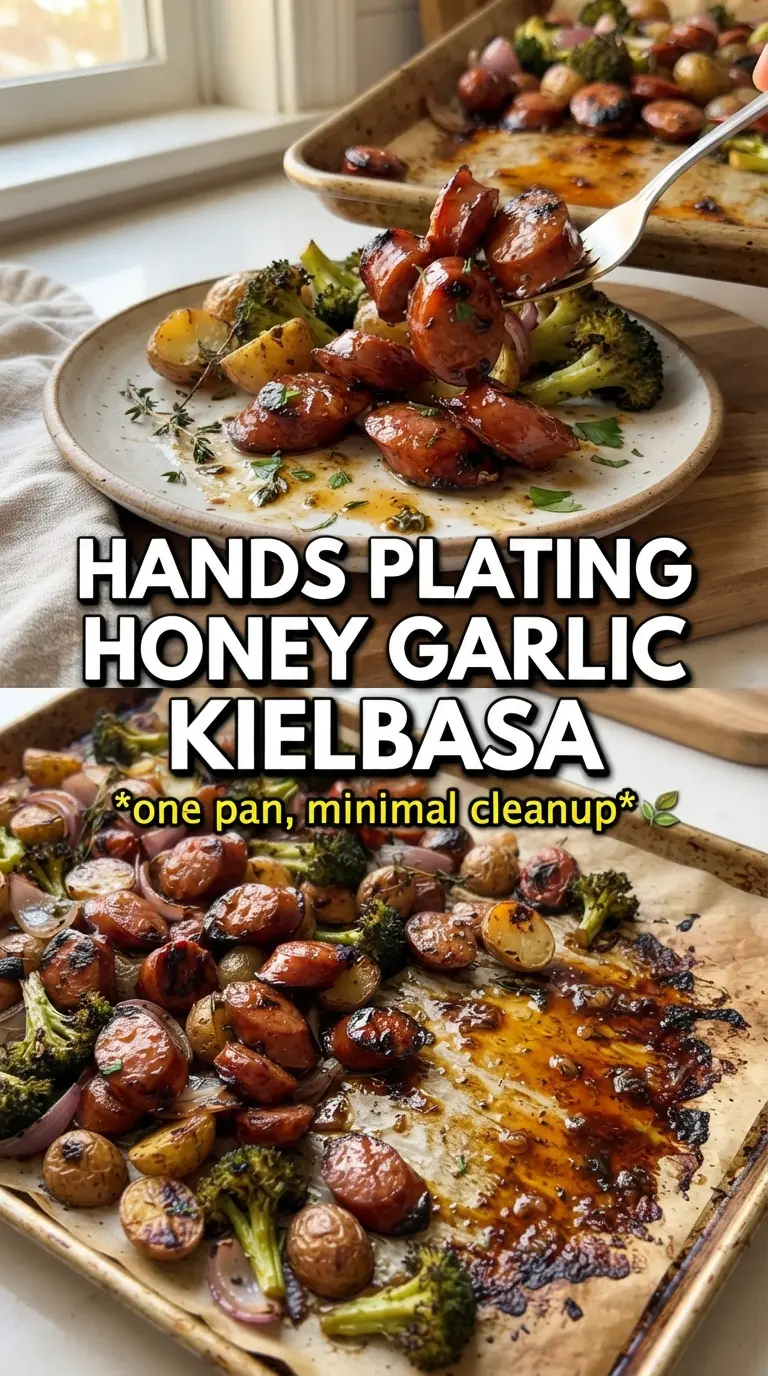
- Kielbasa brings built-in seasoning, smoke, and fat, so it browns beautifully without needing much help. Use a good-quality smoked kielbasa if you can; the flavor shows up in every bite.
- Honey is what gives the glaze its lacquered finish. Maple syrup can work in a pinch, but it tastes a little rounder and less sharp than honey.
- Garlic should be minced finely so it melts into the sauce and doesn’t burn in little bitter bits. If your garlic tends to scorch, stir it into the wet ingredients right before tossing instead of letting it sit in oil alone.
- Broccoli, peppers, zucchini, and onion each bring a different texture. The onion softens and sweetens, the peppers turn silky, the broccoli edges crisp, and the zucchini soaks up the glaze if it’s cut thick enough to hold shape.
Roasting It Hot Enough to Brown, Not Just Heat Through
Whisk the glaze until it looks smooth
Start with the honey, garlic, soy sauce, Dijon, olive oil, and red pepper flakes in a bowl and whisk until the mustard disappears into the rest of the mixture. You want the sauce glossy and fully combined, not streaky. If the honey is thick, warm the bowl in your hands for a minute or two; cold honey clings to the whisk and never coats the food evenly.
Toss everything until every piece is coated
Put the sliced kielbasa and vegetables in a large bowl, then pour the sauce over the top and toss until the pieces look lightly lacquered. Don’t dump the mixture directly onto the pan and hope for the best. If the pan gets the sauce before the food is coated, the honey sinks to the bottom and can scorch before the vegetables are done.
Roast on a roomy sheet pan
Spread everything out in a single layer on a large baking sheet. If your pan is crowded, use two pans. Roast at 400°F for 20 to 25 minutes, tossing halfway through so the sausage browns on more than one side and the zucchini doesn’t sit face-down long enough to soften too much. You’re looking for caramelized edges, tender broccoli, and kielbasa that has turned golden in spots.
Finish with sesame seeds and green onions
Once the pan comes out of the oven, scatter sesame seeds and sliced green onions over the top. That last-minute garnish adds a fresh bite and a little crunch that keeps the whole dish from tasting one-note. Serve it right away while the glaze is still glossy and the vegetables still have some texture.
How to Adapt This Honey Garlic Kielbasa for What’s in Your Kitchen
Make It Gluten-Free
Swap in tamari or certified gluten-free soy sauce. The dish stays sticky and savory, but check the kielbasa label too, because some brands use fillers that aren’t gluten-free.
Make It Dairy-Free and Egg-Free Without Changing Anything
This recipe already works well as written for both dairy-free and egg-free diets. The glaze depends on honey, mustard, garlic, and soy sauce, so there’s no creamy base or binder to replace.
Use Different Vegetables Without Losing the Roast
Carrots, Brussels sprouts, and cauliflower all roast well here, but cut them into similar-sized pieces so they finish with the sausage. Soft vegetables like mushrooms or cherry tomatoes can work too, but add them in the last 10 minutes or they’ll collapse and water out the pan.
Stretch It Into a Bigger Dinner
Add a second pound of vegetables and use two sheet pans instead of cramming one. The result is the same caramelized finish, just with enough room for everything to brown instead of steam.
Storage and Reheating
- Refrigerator: Store leftovers in an airtight container for up to 4 days. The vegetables soften a little, but the flavor holds well.
- Freezer: It freezes okay, but the zucchini turns softer after thawing. For best texture, freeze only if you don’t mind a looser vegetable texture later.
- Reheating: Reheat on a sheet pan in a 375°F oven until hot, about 10 to 12 minutes. The microwave works in a pinch, but it softens the vegetables and dulls the glaze.
Questions I Get Asked About This Recipe
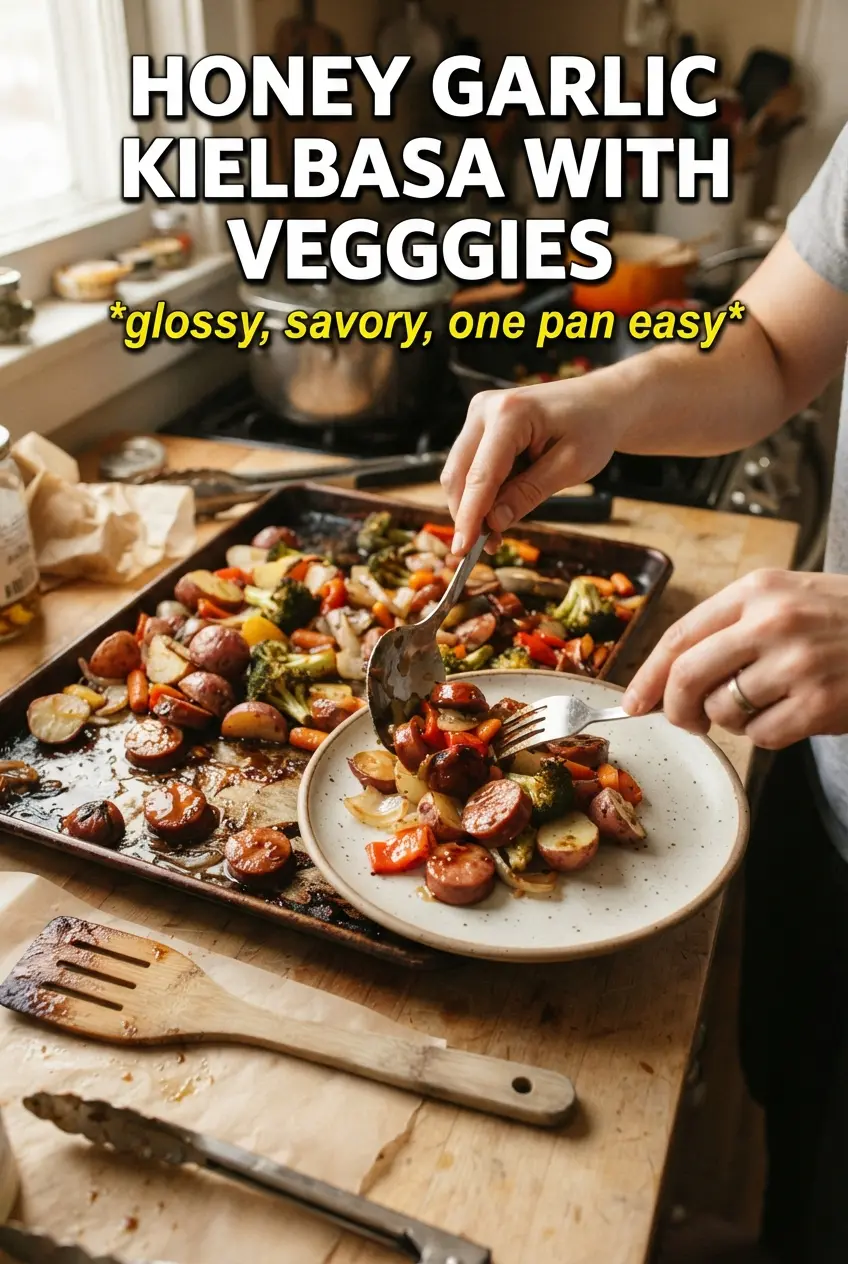
Honey Garlic Kielbasa With Veggies
Ingredients
Equipment
Method
- Preheat the oven to 400°F and line a large sheet pan with parchment or foil.
- Whisk together honey, minced garlic, soy sauce, Dijon mustard, olive oil, and red pepper flakes until the sauce looks smooth and uniform.
- Toss kielbasa rounds, broccoli florets, sliced red and green bell peppers, zucchini slices, and red onion wedges with the honey garlic sauce until evenly coated.
- Spread everything on the sheet pan in a single layer so the vegetables roast rather than steam.
- Roast for 20-25 minutes at 400°F, tossing halfway, until the vegetables are caramelized and the kielbasa is golden.
- Scatter sesame seeds and sliced green onions over the hot sheet pan and serve immediately.


