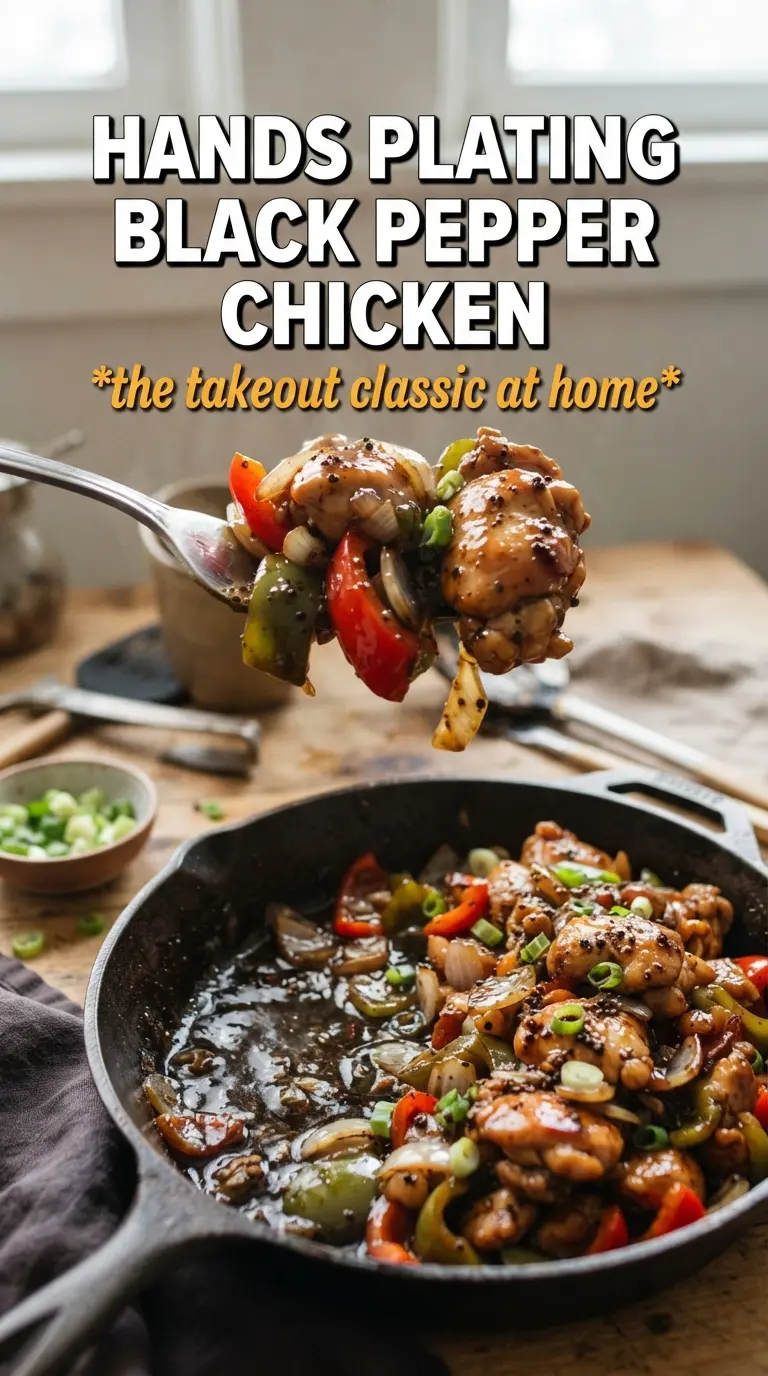
Black pepper chicken lands on the table with glossy sauce clinging to every piece of chicken, sweet onion, and crisp-tender bell pepper. The pepper hits first. Then the soy, oyster sauce, and a little brown sugar come through underneath, giving the dish that takeout-style balance people keep coming back for.
What makes this version work is the timing. The chicken is browned in batches so it sears instead of steaming, and the sauce is mixed ahead of time so it thickens fast the second it hits the hot pan. Freshly cracked black pepper matters here more than it would in a long-simmered dish; it stays sharp and fragrant instead of fading into the background.
Below, I’ve laid out the part that matters most: how to keep the chicken juicy while still getting that glossy, peppery coating. There’s also a useful note on swapping ingredients if you’re working with what’s already in the pantry.
The sauce thickened right when I added it back to the chicken, and the pepper stayed bold without tasting bitter. I served it over rice and my husband asked if there was enough for lunch tomorrow.
Save this black pepper chicken for the nights when you want glossy takeout-style sauce, tender chicken, and big peppery flavor over rice.
The Reason the Sauce Stays Glossy Instead of Going Watery
The biggest mistake with black pepper chicken is crowding the pan. Chicken breast throws off moisture fast, and if it piles up, that moisture has nowhere to go. You end up with pale chicken and a thin sauce instead of the deep, sticky coating you’re after.
The other thing that matters is the sauce mix itself. Cornstarch needs to be fully dissolved before it touches the heat, or you’ll get little cloudy clumps instead of a smooth glaze. Once the sauce goes into the pan, it should move from loose to glossy in a couple of minutes. If it still looks soupy after that, the heat was too low or the pan was overloaded.
- Chicken breast — Sliced thin, it cooks quickly and stays tender if you pull it as soon as it’s golden. Thicker pieces need a longer cook and dry out faster.
- Dark soy sauce — This is what gives the sauce its deeper color and a little caramel-like richness. Regular soy sauce alone won’t look or taste quite the same.
- Freshly cracked black pepper — Ground pepper from a shaker works in a pinch, but it tastes flatter. Crack it yourself for the sharp, fragrant bite that defines the dish.
- Cornstarch slurry — This is the difference between a sauce that clings and one that runs to the bottom of the bowl. Stir it again right before adding, because it settles fast.
What Each Ingredient Is Actually Doing in This Recipe
- Primary ingredient (the star) — Quality matters most. Choose the best you can find.
- Cooking medium (oil, butter, or broth) — This carries flavors and prevents dryness.
- Seasonings (salt, pepper, spices, herbs) — Layer flavors so nothing overpowers. Build depth gradually.
- Aromatics (garlic, onion, herbs) — Cook with fat to bloom flavors. Become the foundation.
- Supporting ingredients — Complement the main ingredient without overpowering it.
- Sauce or liquid (if applicable) — Brings flavors together. Balance richness with acid.
- Acid (lemon, vinegar, wine, or other) — Brightens and prevents flat-tasting results.
- Final finish (garnish, glaze, or sauce) — Prevents one-dimensional taste and adds visual appeal.
Building the Peppery Glaze Without Overcooking the Chicken
Whisk the sauce before the pan gets hot
Mix the soy sauce, oyster sauce, dark soy sauce, brown sugar, black pepper, and cornstarch slurry in a small bowl before you start cooking. That keeps the final step quick, which matters because the chicken and vegetables should already be waiting when the sauce goes in. If the cornstarch sits too long, it settles, so give the bowl one more stir right before you pour.
Brown the chicken in batches
Heat the oil until it shimmers, then add the chicken in a single layer. Let it sit long enough to pick up color before stirring, or it will turn gray and wet instead of golden at the edges. If your skillet looks crowded, split the chicken into two rounds; that extra minute pays off in better texture.
Cook the vegetables just until they still have bite
Add the bell pepper and onion after the chicken comes out. They only need a few minutes to soften and pick up some blistered edges. Garlic and ginger go in at the end of this stage because they burn fast over high heat; if they go in too early, the whole pan can taste bitter.
Let the sauce finish in the pan, not on the stove too long
Return the chicken, pour in the sauce, and toss constantly until everything is coated and the glaze tightens. It should look shiny and cling to the chicken, not pool underneath it. Once it reaches that point, pull the pan off the heat. Overcooking this last step is how the sauce gets sticky in the wrong way.
How to Adapt Black Pepper Chicken When You’re Missing an Ingredient
Swap chicken breast for chicken thighs
Boneless thighs stay juicier and are a little more forgiving if you’re cooking over high heat. They take an extra minute or two, and the sauce clings just as well, with a richer finished texture.
Make it gluten-free
Use tamari or a certified gluten-free soy sauce, and check that your oyster sauce is gluten-free too. The texture stays the same because the cornstarch is doing the thickening work, not the flour.
Use what vegetables you have
Broccoli, snap peas, or sliced mushrooms all work in place of the bell pepper and onion. Keep the total amount about the same so the pan doesn’t get crowded, and add mushrooms early enough for their moisture to cook off.
Storage and Reheating
- Refrigerator: Store in an airtight container for up to 4 days. The sauce thickens a little more as it chills.
- Freezer: It freezes well for up to 2 months, though the peppers soften after thawing. Freeze in portions for the easiest reheating.
- Reheating: Warm it in a skillet over medium-low heat with a splash of water to loosen the sauce. Microwaving works, but the chicken can dry out if it’s overheated in one long burst.
Questions I Get Asked About This Recipe
Black Pepper Chicken
Ingredients
Equipment
Method
- Whisk soy sauce, oyster sauce, dark soy sauce, brown sugar, and black pepper together, then whisk in cornstarch mixed with water and set aside.
- Slice the chicken breast thin, and slice the green bell pepper and onion, then mince the garlic and grate the ginger so everything is ready for fast stir-frying.
- Heat vegetable oil in a wok or large skillet over high heat until shimmering, then stir-fry the chicken in batches until golden, about 3-4 minutes per batch, and remove to a plate.
- Stir-fry bell pepper and onion for 3 minutes over high heat until slightly crisp-tender.
- Add garlic and ginger and cook for 1 minute, stirring constantly so the aromatics are fragrant and not burned.
- Return chicken to the skillet, pour the sauce in, and toss to coat everything evenly.
- Cook for 2-3 minutes until the sauce thickens to a glossy coating, then season with extra cracked black pepper and toss again for even coverage.
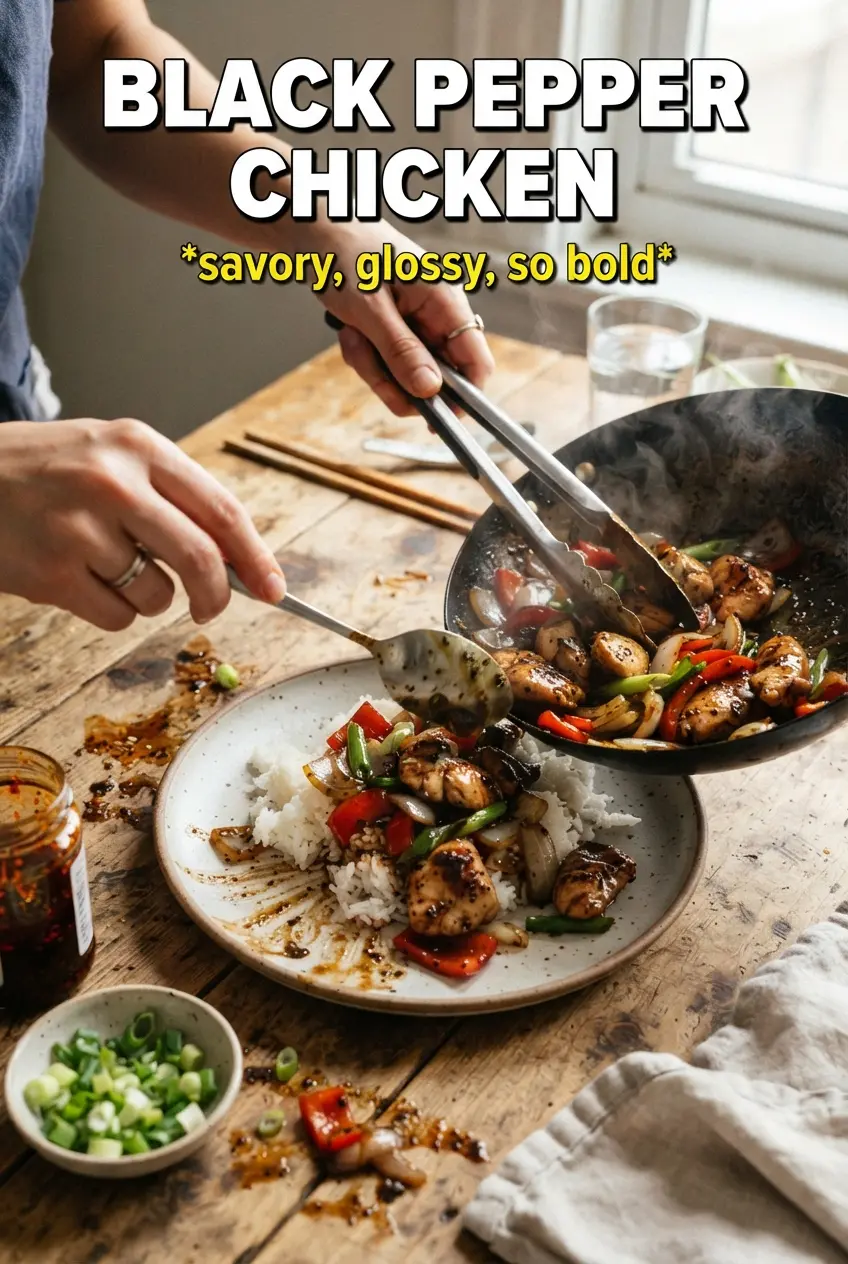
- Serve the black pepper chicken over steamed rice while hot, making sure each portion gets the pepper-speckled sauce.


