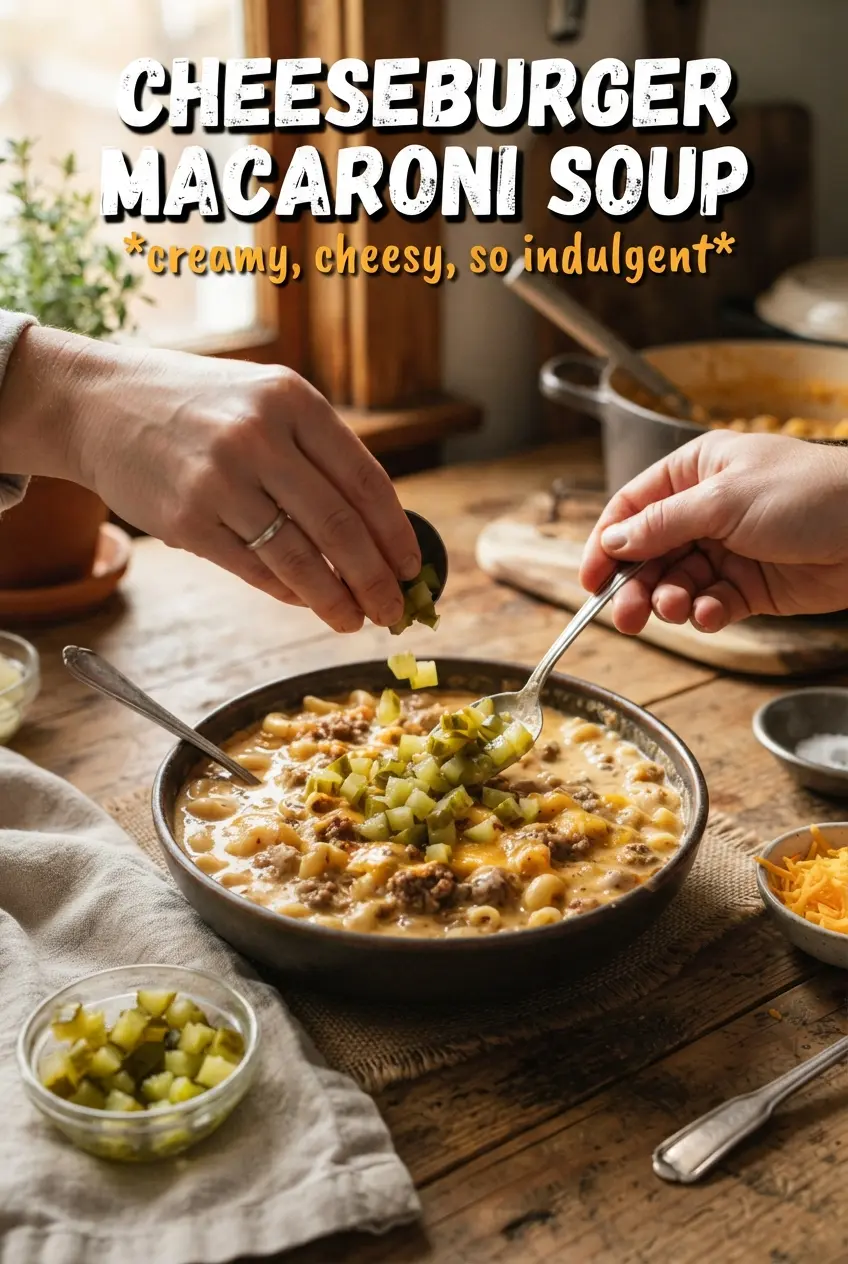
Cheeseburger macaroni soup lands in that sweet spot between comfort food and weeknight practicality: rich, beefy, and creamy, with just enough pasta to make it feel like a full meal. The broth turns thick and cheesy without becoming gluey, and the pickles on top wake everything up in a way that makes the bowl taste much bigger than the ingredient list suggests.
The key is building the soup in layers. Browning the beef first gives you the savory base, and the condensed cheddar soup helps the broth stay silky instead of splitting when the cream and shredded cheese go in. The mustard powder and Worcestershire sauce don’t shout, but they do the important work of making the whole pot taste like a cheeseburger instead of just beef and pasta in cheese sauce.
Below, I’ve added the one timing detail that keeps the macaroni from going mushy, plus a few simple swaps if you want to adjust the richness, the pasta, or the finish.
The broth got thick and creamy without curdling, and the macaroni stayed tender instead of falling apart. I added the pickles at the table like you suggested, and that little tang made the whole bowl taste like a cheeseburger.
Cheeseburger macaroni soup is the kind of bowl that gets even better with pickles, cheddar, and a second spoonful of broth.
The Key to Keeping This Soup Creamy Instead of Grainy
The biggest mistake with cheeseburger macaroni soup is rushing the cheese. If the pot is boiling when the cream and shredded cheddar go in, the dairy can seize or turn slightly grainy. Pull the heat down first, then stir in the cream and cheese off a lively boil so the broth stays smooth and glossy.
The other trap is overcooking the pasta. The macaroni keeps absorbing liquid as it sits, so it should come off the heat when the noodles are just tender with a little bite left. If you cook them to soft in the pot, they’ll keep swelling and the soup will turn heavy instead of spoonable.
- Ground beef — An 80/20 blend gives the best beefy flavor, and draining the excess fat keeps the broth from feeling greasy. Leaner beef works too, but you may want a small splash of oil in the pot if the pan looks dry.
- Condensed cheddar cheese soup — This is what helps the base stay stable. You can swap in another condensed cheese soup in a pinch, but the flavor will shift and the color won’t be as classic.
- Heavy cream — This gives the soup its silky finish. Half-and-half works if you want it lighter, though the broth will be a little thinner.
- Shredded cheddar — Freshly shredded cheese melts smoother than the prebagged stuff, which is coated to keep it from clumping. Pre-shredded will still work, but it’s more likely to leave tiny bits in the broth.
- Mustard powder and Worcestershire sauce — These are the quiet ingredients that make the soup taste like a cheeseburger instead of a generic cheese soup. Don’t skip them unless you’re intentionally changing the flavor direction.
What Each Ingredient Is Actually Doing in This Recipe

- Primary ingredient (the star) — Quality matters most. Choose the best you can find.
- Cooking medium (oil, butter, or broth) — This carries flavors and prevents dryness.
- Seasonings (salt, pepper, spices, herbs) — Layer flavors so nothing overpowers. Build depth gradually.
- Aromatics (garlic, onion, herbs) — Cook with fat to bloom flavors. Become the foundation.
- Supporting ingredients — Complement the main ingredient without overpowering it.
- Sauce or liquid (if applicable) — Brings flavors together. Balance richness with acid.
- Acid (lemon, vinegar, wine, or other) — Brightens and prevents flat-tasting results.
- Final finish (garnish, glaze, or sauce) — Prevents one-dimensional taste and adds visual appeal.
Building the Burger Flavor Before the Macaroni Goes In
Browning the Beef Well
Cook the ground beef until it has real browned bits, not just gray crumbles. Those little crusty pieces at the bottom are where the deeper flavor lives, and they’ll dissolve into the broth once the liquid goes in. Drain the fat if there’s a lot in the pot, but leave enough behind to carry the onion and garlic.
Softening the Onion and Garlic
Add the diced onion to the beef and cook until it turns translucent and smells sweet, about three minutes. Garlic goes in last because it burns fast; one minute is enough. If the garlic starts to brown hard, the soup will pick up a bitter edge that doesn’t belong here.
Letting the Broth Turn Savory
Stir in the broth, cheddar soup, Worcestershire sauce, mustard powder, and garlic powder, then bring the pot to a boil. This is where the soup starts tasting like the finished dish instead of separate ingredients. Keep the boil active enough to cook the pasta, but not so wild that it splashes and reduces too fast.
Cooking the Macaroni at the Right Stage
Add the uncooked macaroni and cook until it’s tender with a little resistance in the center. Stir often so the pasta doesn’t stick to the bottom of the pot, especially as the broth thickens. If the soup looks thicker than you want before the macaroni is done, add a splash of broth or water instead of turning up the heat.
Finishing with Cream and Cheddar
Lower the heat before adding the cream and shredded cheddar. Stir slowly until the cheese melts and the broth turns smooth and thick. Salt goes in last because the cheddar soup, broth, and cheese all bring salt with them; taste first, then season just enough to make the beef flavor pop.
How to Adjust the Bowl Without Losing the Cheeseburger Flavor
Make it a little lighter
Use half-and-half instead of heavy cream and choose a leaner ground beef. The soup will still taste rich, but the broth will be a bit less luxurious and slightly less thick. If you go this route, hold back a few tablespoons of pasta water or broth in case you need to loosen it at the end.
Gluten-free version
Swap the elbow macaroni for a gluten-free pasta that holds its shape well and check that your condensed cheddar soup and Worcestershire sauce are certified gluten-free. Gluten-free pasta softens faster, so start checking it a few minutes early and pull the pot as soon as it’s tender.
Extra cheesy and thicker
Add another half cup of cheddar at the end and let the soup sit off the heat for five minutes before serving. It will thicken as it rests, which gives you a heartier bowl, but the tradeoff is that the pasta will absorb more broth. Keep a little extra warmed broth nearby if you want to loosen leftovers later.
Pickle-forward topping bar
Serve it with chopped dill pickles, green onions, and a little extra cheddar, then add a squirt of ketchup or mustard if that’s how you like a burger. The soup itself stays mellow, while the toppings bring the sharp, salty contrast that makes each spoonful taste brighter.
Storage and Reheating
- Refrigerator: Store for up to 4 days. The pasta will keep absorbing liquid, so the soup gets thicker by day two.
- Freezer: It freezes, but the texture changes a bit because of the dairy and pasta. For best results, freeze without the pasta if you know ahead of time you’ll want to make it in batches.
- Reheating: Warm it gently on the stove over low heat with a splash of broth or milk. High heat can make the cheese separate and can turn the macaroni too soft before the soup is hot through.
Questions I Get Asked About This Recipe
Cheeseburger Macaroni Soup
Ingredients
Equipment
Method
- Brown the ground beef in a large pot, then drain the fat.
- Sauté the onion for 3 minutes, then add the garlic and cook for 1 minute.
- Add the beef broth, condensed cheddar cheese soup, Worcestershire sauce, mustard powder, and garlic powder, then bring everything to a boil.
- Stir in the elbow macaroni and cook for 8-10 minutes, stirring occasionally, until tender.
- Reduce heat to low, then stir in the heavy cream and shredded cheddar until melted and smooth.
- Season with salt and pepper to taste, then serve topped with pickles, green onions, and extra cheddar.


