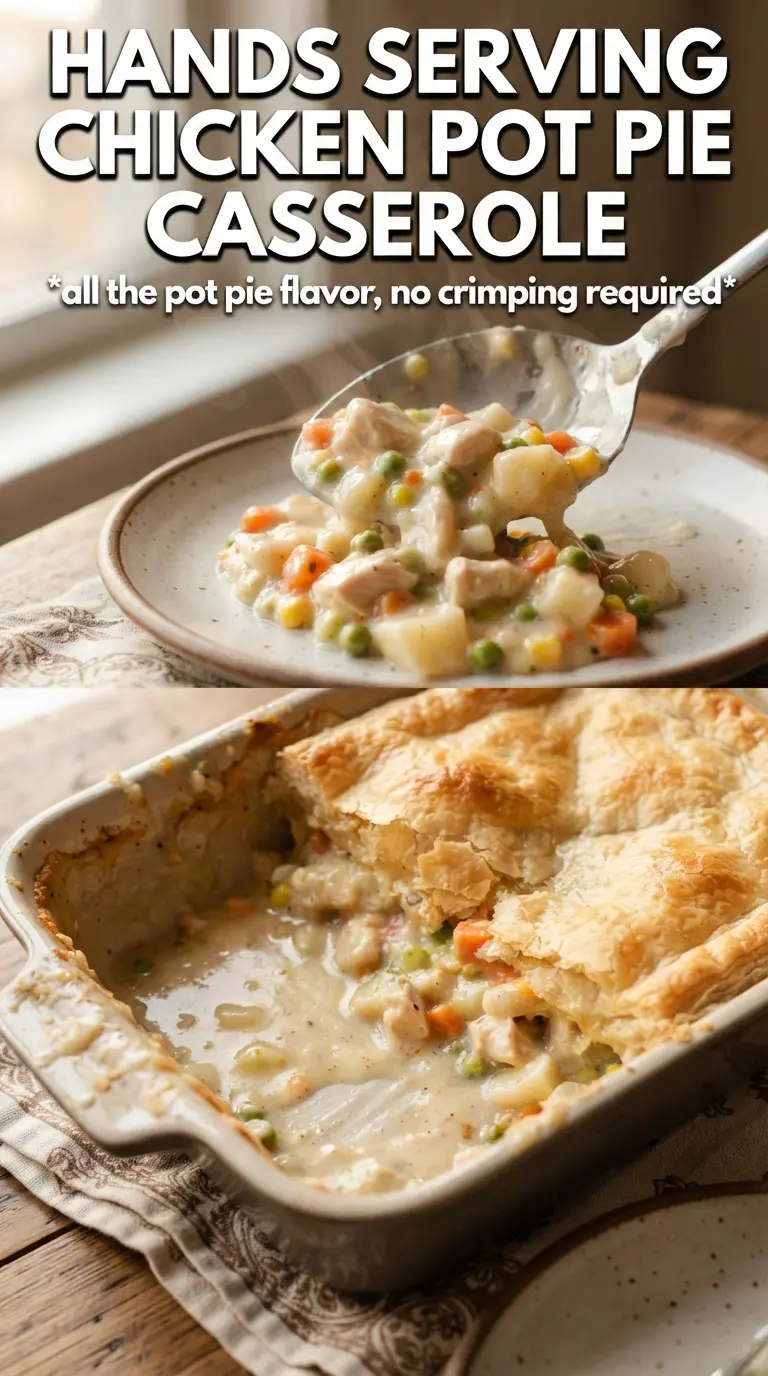
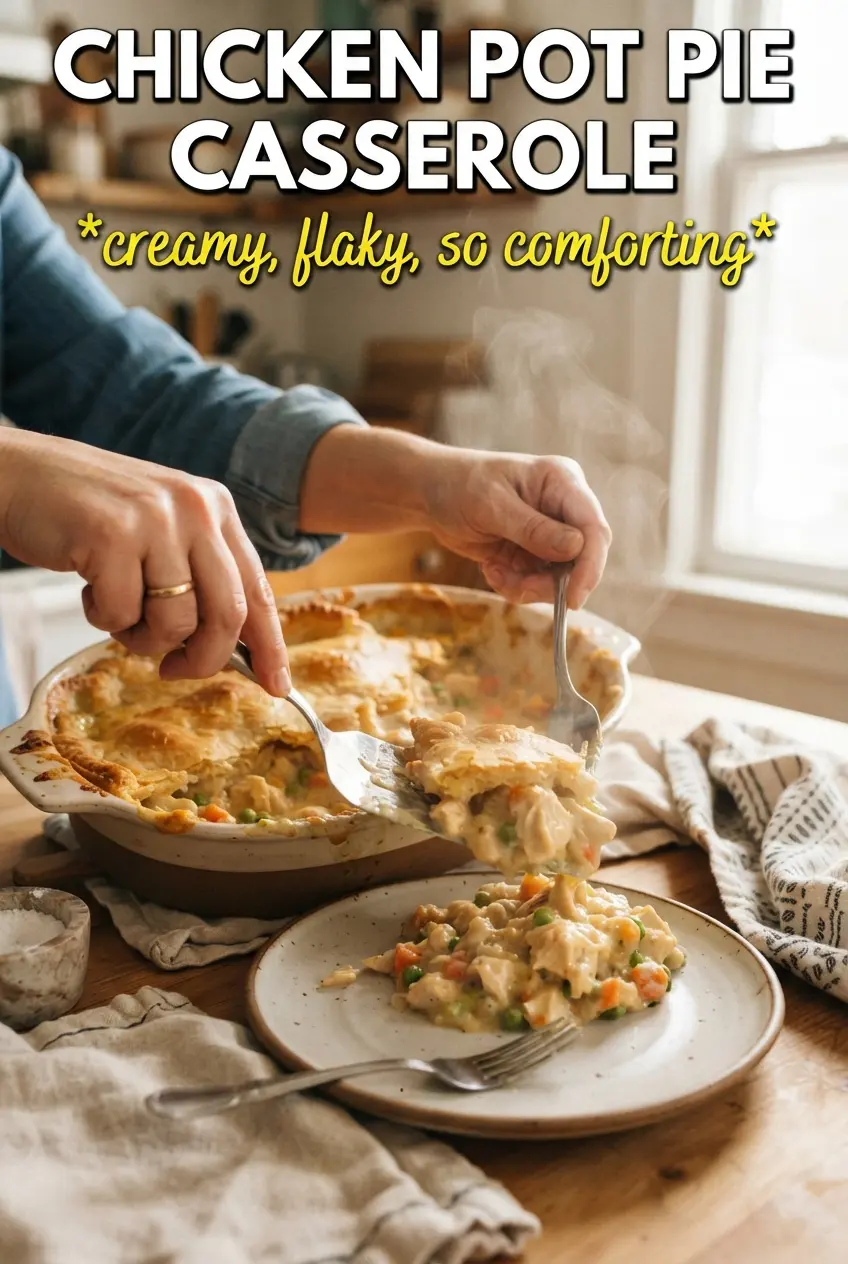
Chicken pot pie casserole lands on the table with the kind of comfort that makes people quiet down for the first few bites. The filling turns creamy and rich without going gluey, the chicken stays tender, and the biscuit or puff pastry top bakes into a golden cap that catches just enough steam from below to stay fluffy underneath. It’s the shortcut version of pot pie that still tastes like someone stood at the stove and built it carefully.
The key is cooking the vegetables long enough to soften and release their flavor before the flour goes in, then adding the broth and cream gradually so the sauce thickens smoothly instead of turning lumpy. I also like to let the filling simmer until it coats a spoon before it ever goes into the baking dish; that way, the casserole finishes in the oven instead of trying to thicken from scratch there. Frozen peas and corn go in at the end so they stay bright and sweet.
Below, you’ll find the small timing details that keep the sauce creamy, plus the best way to swap biscuits for puff pastry without losing that classic pot pie feel.
The filling thickened up perfectly and the biscuits stayed crisp on top instead of getting soggy. I used leftover rotisserie chicken and it tasted like I had cooked all day.
Save this chicken pot pie casserole for the nights when you want a creamy filling, a golden biscuit top, and one pan that feeds a crowd.
The Part That Keeps the Filling Creamy Instead of Gluey
Most chicken pot pie casseroles go sideways when the flour is dumped into a pan that’s too hot or the liquid goes in all at once. That’s when you get a sauce that tastes raw, turns lumpy, or tightens into a paste after baking. Here, the flour cooks in the butter for a full minute before any broth goes in, which takes the edge off the starch and gives you a smoother base.
The other thing that matters is thickness before baking. If the filling looks thin in the pan, it will usually stay thin in the oven and leak into the biscuit topping. You want it to coat the back of a spoon and leave a clear path when you drag a finger through it. That’s the point where it’s ready for the baking dish.
- Butter — This carries the vegetables and helps the flour toast just enough to lose that raw taste. Salted butter works in a pinch, but unsalted gives you better control over the final seasoning.
- Flour — All-purpose flour is the thickener here. Don’t skip the quick cook time, or the sauce can taste pasty instead of rich.
- Heavy cream — This gives the filling its plush finish. Half-and-half works, but the sauce will be a little looser and less velvety.
- Biscuits or puff pastry — Biscuits give you a more rustic, bread-like top; puff pastry bakes up lighter and more delicate. Either one works, but puff pastry needs the filling to be thick enough that it won’t sink.
What Each Ingredient Is Actually Doing in This Recipe
- Primary ingredient (the star) — Quality matters most. Choose the best you can find.
- Cooking medium (oil, butter, or broth) — This carries flavors and prevents dryness.
- Seasonings (salt, pepper, spices, herbs) — Layer flavors so nothing overpowers. Build depth gradually.
- Aromatics (garlic, onion, herbs) — Cook with fat to bloom flavors. Become the foundation.
- Supporting ingredients — Complement the main ingredient without overpowering it.
- Sauce or liquid (if applicable) — Brings flavors together. Balance richness with acid.
- Acid (lemon, vinegar, wine, or other) — Brightens and prevents flat-tasting results.
- Final finish (garnish, glaze, or sauce) — Prevents one-dimensional taste and adds visual appeal.
Building the Filling So the Top Stays Crisp
Softening the vegetables first
Start by cooking the onion, carrots, and celery in butter until the onion goes translucent and the carrots lose their raw edge. Five minutes is about right. If you rush this stage, the vegetables can stay crunchy in the finished casserole, which throws off the texture of the whole dish. The pan should smell sweet and buttery before you move on.
Thickening the sauce the right way
Sprinkle the flour over the vegetables and stir it for a minute so it coats everything evenly. Then add the broth slowly, whisking or stirring between splashes so the sauce stays smooth. Once the cream goes in, let the mixture simmer until it thickens enough to cling to a spoon; if it still looks watery, the oven won’t save it.
Adding the chicken and vegetables at the end
Stir in the chicken, peas, corn, thyme, garlic powder, salt, and pepper once the sauce is thick. The frozen vegetables only need the heat of the filling to warm through, so don’t cook them long enough to dull their color. If you’re using rotisserie chicken, pull it into bite-size pieces instead of chopping it too fine so the texture stays hearty.
Baking until the topping and filling finish together
Pour the filling into the baking dish and arrange the biscuits or puff pastry on top. The casserole is done when the top is deeply golden and the filling bubbles around the edges. Those bubbles matter; they tell you the center is hot enough and the sauce has set. If the top browns before the filling is bubbling, loosely cover it with foil for the last few minutes.
Three Ways to Make This Casserole Fit What’s in Your Kitchen
Gluten-Free Version with a Better Thickener
Swap the flour for a gluten-free all-purpose blend that includes xanthan gum, or use cornstarch slurry if that’s what you have. Cornstarch gives a glossier sauce, but it can turn a little slippery if overheated, so keep the simmer gentle once it thickens.
Dairy-Free Filling That Still Tastes Rich
Use olive oil or dairy-free butter in place of the butter, then swap the cream for unsweetened coconut cream or a plain oat-based cooking cream. The result won’t taste exactly the same, but it still gives you a creamy casserole instead of a brothy one.
Turkey Instead of Chicken
Leftover turkey works the same way as shredded chicken, especially after holidays. Use the same amount and stir it in at the end so it stays tender; overcooking turkey in the sauce can make it dry faster than chicken.
Storage and Reheating
- Refrigerator: Store covered for up to 4 days. The biscuit top will soften a bit, but the filling holds up well.
- Freezer: Freeze the filling without the topping for best results. The creamy sauce can separate slightly after freezing, so add fresh biscuits or pastry when you reheat.
- Reheating: Warm in a 350F oven until the center is hot and the edges are bubbling. Microwaving makes the topping soggy before the middle is fully heated.
Answers to the Questions Worth Asking
Chicken Pot Pie Casserole
Ingredients
Equipment
Method
- Preheat oven to 400F. In a cast iron skillet, sauté onion, carrots, and celery in butter for 5 minutes, until softened and glossy.
- Whisk in the flour and cook for 1 minute, stirring until it smells lightly toasted. This helps thicken the sauce.
- Gradually add the chicken broth and heavy cream while whisking. Simmer until thick enough to coat a spoon.
- Stir in the shredded chicken, frozen peas, frozen corn, fresh thyme, and garlic powder. Season with salt and pepper to taste.
- Pour the filling into a 9x13 dish. Top with refrigerated biscuits or puff pastry, arranging them evenly over the surface.
- Bake at 400F for 25-30 minutes, until the topping is golden and the filling is bubbling. Let rest briefly so the filling sets slightly before serving.


