Sticky, glossy honey mustard cocktail sausages disappear fast because they hit every note people reach for at a party: sweet, sharp, salty, and just a little savory from the browned sausages underneath. The glaze clings instead of pooling, and that matters. You want each bite to taste coated, not slicked down.
The trick is building the sauce in the skillet after the sausages have taken on some color. Browning gives the glaze something deeper to grab onto, and the butter helps the honey and mustards turn silky instead of grainy. Whole grain mustard brings texture, Dijon smooths everything out, and a splash of soy sauce keeps the sweetness from running away with the whole dish.
Below, I’ll walk through the part that matters most: getting the glaze thick enough to stay on the sausages without burning the honey. There’s also a quick note on make-ahead serving, plus a few easy variations if you want to adjust the heat, sweetness, or size of the batch.
The glaze thickened up beautifully and coated every sausage without turning runny. I served them straight from the skillet with toothpicks, and the pan was empty in minutes.
Save these honey mustard cocktail sausages for your next game day spread or party tray when you want a sticky skillet appetizer with almost no fuss.
The Glaze Has to Reduce, Not Just Warm Through
The biggest mistake with cocktail sausages is treating the sauce like a coating that can be poured on and served right away. Honey is thin when it’s hot, and if you stop too early, the sausages sit in a sweet puddle instead of getting lacquered. Let the glaze bubble gently until it tightens around the spoon and leaves a shiny trail in the skillet.
Medium heat is the sweet spot here. High heat can scorch the honey before the mustard has time to mellow, and low heat can leave you with a sauce that never fully clings. Stir often once the glaze goes in, especially around the edges of the pan, where sugar likes to catch first.
What Each Ingredient Is Actually Doing in the Skillet
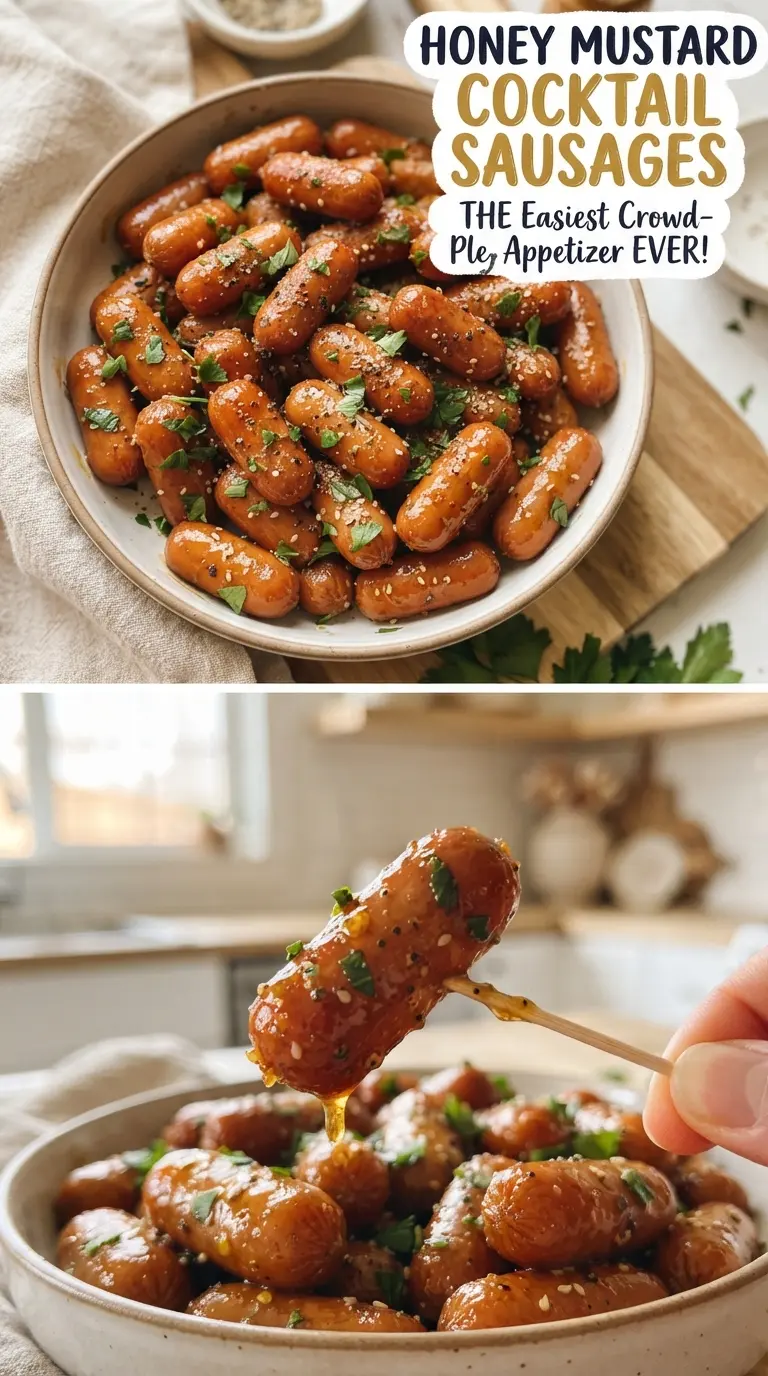
- Cocktail sausages — These bring the smoky, meaty base and hold up well to a sticky glaze. Browning them first adds flavor you can’t get back later. If you’re using mini smoked sausages, keep the same method and watch the pan a little more closely since they can brown faster.
- Honey — This is what makes the sauce glossy and clingy. A darker honey adds a deeper note, while a mild clover honey keeps the sauce clean and bright. Don’t swap in maple syrup unless you want a looser glaze with a different flavor.
- Whole grain mustard and Dijon — Together they build the sauce’s personality. The whole grain mustard gives body and those little pops of texture, while Dijon smooths the glaze and sharpens the finish. Using only one of them works in a pinch, but the balance won’t be as rounded.
- Soy sauce — A small amount keeps the glaze from tasting flat or candy-sweet. It adds salt and umami without making the sausages taste Asian-inspired or soy-forward. Use low-sodium if that’s what you keep on hand.
- Butter and garlic — Butter helps the glaze emulsify in the pan, and garlic gives the whole dish a savory edge. Let the garlic cook just until fragrant; once it browns, the sauce picks up bitterness fast.
- Sesame seeds and chives — These finish the dish with texture and a fresh bite. The seeds add a little crunch, and the chives cut through the sweetness so the whole pan tastes brighter.
Building the Sticky Coat Without Scorching the Honey
Browning the Sausages First
Melt the butter in a large skillet over medium heat, then add the sausages in a single layer. Let them sit long enough to pick up color before you start turning them, because pale sausages make a bland finished dish. You’re looking for golden-brown spots on the outside, not a full crust.
If the pan starts to look dry before they’ve browned, the heat is too high. Pull it down a notch. The butter should sizzle quietly, not spit.
Waking Up the Garlic
Once the sausages are browned, add the garlic and cook it for about 30 seconds. Stir constantly. Garlic goes from fragrant to bitter fast, and in a sweet glaze like this, even a hint of overcooked garlic stands out.
The smell should turn savory and warm, not sharp or toasted. If you catch it browning, move quickly to the sauce so it doesn’t keep cooking in the hot pan.
Reducing the Glaze
Whisk the honey, both mustards, and soy sauce together, then pour the mixture over the sausages. Keep the heat at a steady simmer and stir often so every piece gets coated. After 8 to 10 minutes, the sauce should look thick, glossy, and slightly sticky when you drag a spoon through it.
If it still looks thin, give it another minute or two. If it gets too thick before the sausages are fully coated, add a spoonful of water and stir it in. That loosens the glaze without washing out the flavor.
Finishing for the Table
As soon as the glaze clings to the sausages, turn off the heat and sprinkle on the sesame seeds and chives. That last step matters because the garnish stays fresh-looking and the chives keep their bite. Serve the sausages warm with toothpicks while the glaze is still shiny.
If they sit too long, the sauce firms up a bit, which is fine. Just warm the skillet over low heat for a minute and stir gently before serving.
How to Adjust These Cocktail Sausages for Different Crowds
Make Them Spicier
Add a pinch of crushed red pepper flakes or a little hot sauce to the glaze. That gives the sweetness some edge without changing the texture. Start small, because heat builds fast once the sauce reduces.
Gluten-Free Version
Use gluten-free cocktail sausages and replace the soy sauce with tamari or coconut aminos. Tamari gives the closest flavor to regular soy sauce, while coconut aminos tastes a little sweeter and softer. The glaze still thickens the same way.
Less Sweet, More Tangy
Cut the honey back by a tablespoon and add an extra teaspoon of Dijon. The result is a sharper glaze that tastes a little less candy-like and a little more grown-up. It’s a good move if you’re serving these alongside other rich appetizers.
Storage and Reheating
- Refrigerator: Store leftovers in an airtight container for up to 4 days. The glaze will tighten up as it chills.
- Freezer: These freeze well for about 2 months, though the glaze can lose a little shine after thawing. Cool completely before freezing and pack them with any sauce left in the pan.
- Reheating: Warm gently in a skillet over low heat with a splash of water to loosen the glaze. The common mistake is blasting them in the microwave, which can split the sauce and make the sausages rubbery.
Answers to the Questions Worth Asking
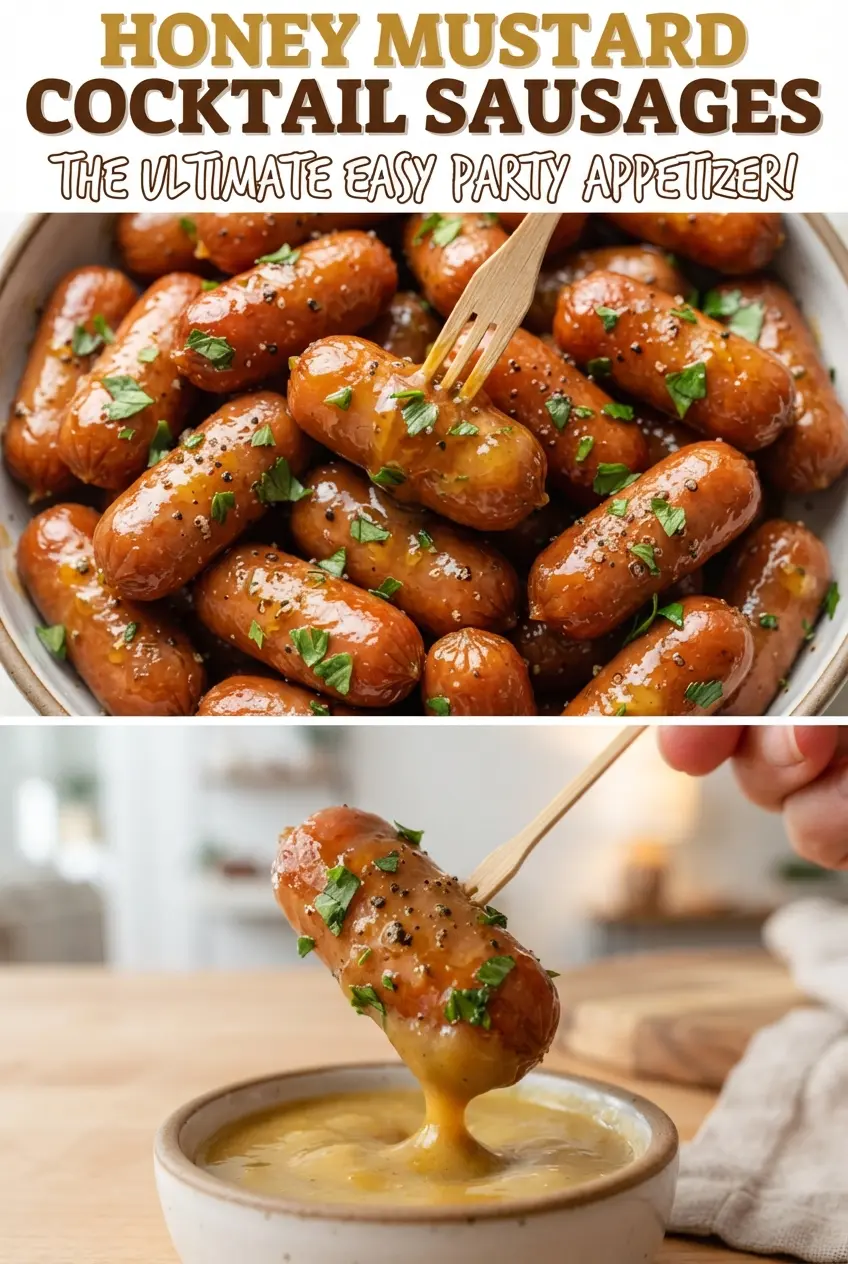
Honey Mustard Cocktail Sausages
Ingredients
Equipment
Method
- Melt butter in a large cast iron skillet over medium heat. Add cocktail sausages and brown for 5-6 minutes.
- Cook garlic in the skillet for 30 seconds until fragrant. Stir so the garlic doesn’t burn.
- Whisk honey, whole grain mustard, Dijon mustard, and soy sauce in a bowl, then pour over the sausages. Coat the sausages evenly so every piece gets glaze.
- Simmer the sausages for 8-10 minutes, stirring often, until the glaze is thick and sticky. Look for a glossy coating that clings to the meat.
- Sprinkle sesame seeds over the sausages and garnish with chopped fresh chives. Serve warm with toothpicks, with glaze visibly dripping from the surface.


