Candied pecans turn out best when the coating bakes onto the nuts instead of sliding off in sugary clumps. The finished nuts should be glossy, crisp, and lightly spiced, with just enough sweetness to keep you reaching back into the jar. This version gets that balance right: a thin egg-white wash helps the sugar cling, while a low oven dries everything into a crackly shell instead of melting it into candy shards.
The trick is patience. A hot oven will brown the sugar before the pecans have time to crisp, so the longer bake at 250°F does the important work slowly. Stirring every 15 minutes keeps the coating even and prevents the nuts on the edges from overcooking. Let them cool all the way on the pan, because that’s when the final crunch sets up.
Below, I’ll walk through the one step people rush most often, plus the best way to keep candied pecans crisp after they cool. If you’ve ever ended up with sticky nuts that never quite hardened, this method will help.
The coating baked on evenly and the pecans cooled into that perfect crisp shell instead of staying sticky. I stirred them every 15 minutes like you said and they came out glossy, crunchy, and not burnt at all.
Like this cinnamon-sugar candied pecans recipe? Save it to Pinterest for snack jars, salads, and holiday trays.
The Egg White Coating Is What Keeps These Pecans Glossy, Not Grainy
If you skip the frothy egg-white mixture, the sugar has a harder time gripping the nuts and tends to bake off in sandy patches. The egg white doesn’t make these taste eggy; it acts as the glue that holds the cinnamon sugar in a thin, even layer. That’s what gives you pecans that look lacquered instead of dusty.
The other key is low heat. At 250°F, the sugar has time to dry onto the surface while the pecans toast underneath. Higher heat sounds faster, but it usually leaves you with scorched sugar on the outside and a chewy center.
- Pecan halves — Halves bake more evenly than pieces and give you that nice crunchy snap. Broken pecans will still work, but they brown faster, so keep an eye on the last 15 minutes.
- Egg white — This is the ingredient that helps the sugar stick. Whisk it until frothy, not stiff; you want bubbles, not meringue.
- Cinnamon — Use fresh cinnamon if you can. Stale cinnamon reads flat once it’s baked into sugar.
- Vanilla — A little vanilla deepens the sweetness and rounds out the spice. Don’t use too much or the coating can get sticky.
How to Bake Them So They Crunch Instead of Clump
Build the Frothy Binder
Whisk the egg white, water, and vanilla until the mixture looks foamy and loose, like thin soap suds. If it’s still stringy, it won’t coat the pecans evenly. The goal is a light binder, not a thick foam.
Coat the Nuts Evenly
Toss the pecans in the egg white mixture first, then add the sugar, cinnamon, and salt. That order matters because the sugar sticks to the wet surface instead of falling to the bottom of the bowl. Keep tossing until every nut looks evenly dusted and a little clumpy in a good way.
Dry Them Low and Slow
Spread the pecans in a single layer on parchment and bake for 1 hour, stirring every 15 minutes. The pecans should look dry, lightly darkened, and glossy, not wet or syrupy. If the coating starts looking shiny and pooled, the oven is too hot or the nuts are crowded.
Cool Until They Snap
Leave the pecans on the pan until they’re fully cool. They’ll feel slightly soft when they first come out, and that’s normal. The crunch sets as the sugar cools, so don’t judge them too early or you’ll think they failed when they haven’t finished yet.
Three Ways to Use the Same Batch Without Changing the Method
Maple-Spiced Pecans
Swap 2 to 3 tablespoons of the sugar for maple sugar if you have it, or add 1/2 teaspoon maple extract in place of part of the vanilla. The flavor gets warmer and deeper, but the coating still dries properly because the structure of the recipe stays the same.
Gluten-Free, Dairy-Free Snack Jar
This recipe is naturally gluten-free and dairy-free as written, which makes it easy to pack for gatherings or gift tins. Just check your vanilla and spices if you’re shopping from a shared pantry, since that’s where cross-contact usually happens.
Salted Snack-Board Pecans
Increase the salt slightly to 3/4 teaspoon and add an extra pinch after baking if you want a sharper sweet-salty finish. That version works especially well when the pecans are going onto cheese boards or chopped over salads, where a little more salt helps them stand up to other flavors.
Storage and Reheating
- Refrigerator: Keep in an airtight container at room temperature for up to 2 weeks. The fridge can add moisture and soften the coating.
- Freezer: They freeze well for up to 2 months. Seal tightly and thaw at room temperature so condensation doesn’t make the sugar sticky.
- Reheating: If they lose a little crunch, spread them on a sheet pan and warm at 250°F for 5 to 8 minutes, then cool completely again. Don’t use the microwave — it melts the coating and makes the pecans chewy.
Answers to the Questions Worth Asking
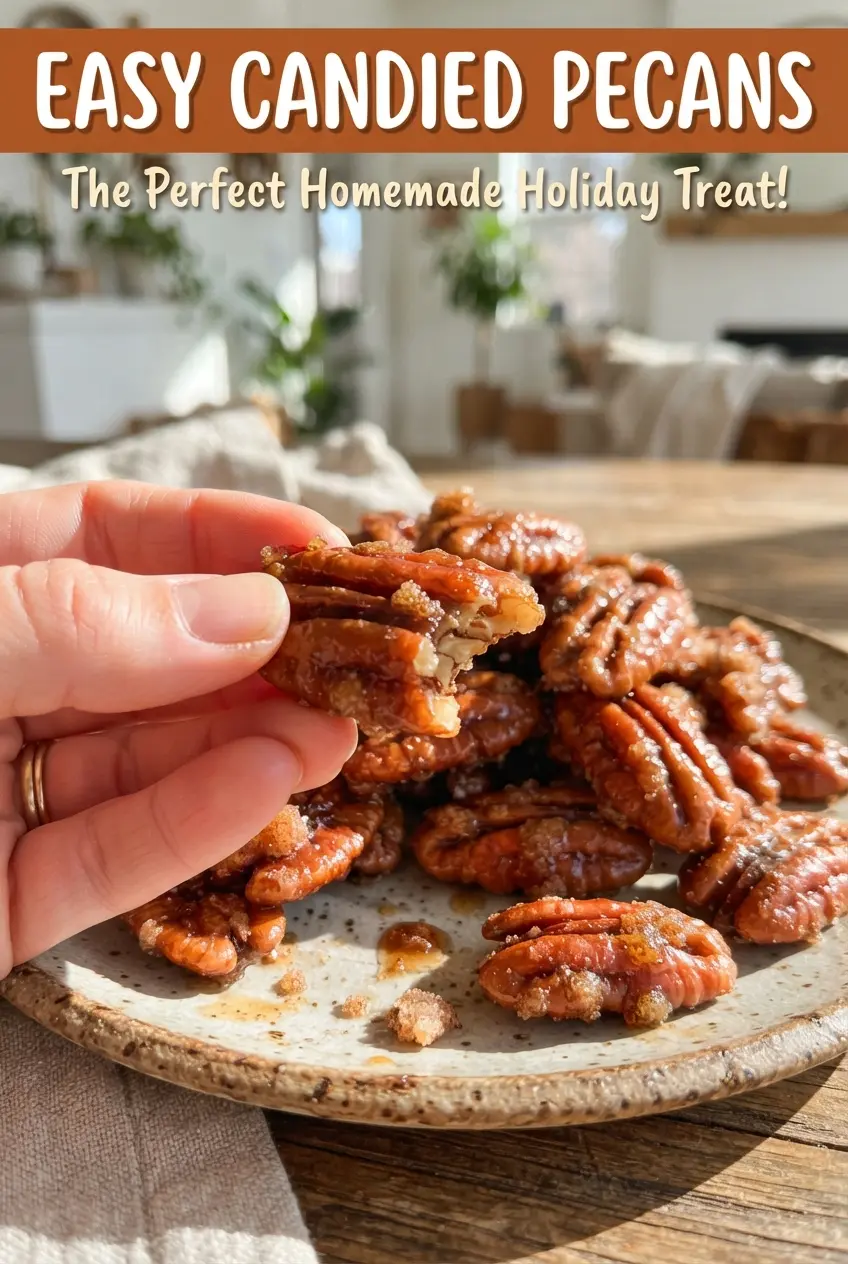
Easy Candied Pecans
Ingredients
Equipment
Method
- Preheat oven to 250F and line a sheet pan with parchment for easy release and even baking.
- Whisk large egg white, water, and vanilla extract until frothy to create a light coating that helps sugar cling.
- Toss pecan halves in the egg white mixture until evenly coated so every piece will glaze.
- Mix sugar, ground cinnamon, and salt, then toss with the pecans until the coating looks speckled and well combined.
- Spread the pecans in a single layer on the parchment so they bake without steaming.
- Bake for 1 hour, stirring every 15 minutes to keep the cinnamon sugar from clumping and to brown evenly.
- Cool completely on the pan until crunchy, then break apart to loosen pieces and finish crisping as they cool.
- Store airtight for freshness once fully cooled to keep the coating crackly.


