Bright green filling, silky yolks, and little olive spiders make these Halloween deviled eggs the first thing to disappear from the appetizer tray. They look playful, but the flavor stays classic: creamy, tangy, and rich enough that people come back for a second one even after they picked it up for the decoration.
The key is treating the eggs gently from the start so the whites stay neat and the filling stays smooth. A 12-minute covered rest off the heat gives you yolks that mash cleanly without turning chalky, and the ice bath stops the cooking before that gray ring can form. The mayonnaise and Dijon keep the filling soft enough to pipe, while just a few drops of green gel coloring give you that spooky shade without watering anything down.
Below, I’ll show you how to keep the whites tidy, how to get the filling bright without making it taste like food coloring, and how to build the little olive spiders so they stay put until serving time.
The filling turned out super smooth and the olive spiders actually stayed in place on the platter. I made them about two hours ahead and they still looked sharp when the guests arrived.
Save these Halloween deviled eggs for a spooky appetizer with bright green filling and olive spider tops.
The trick to keeping deviled eggs neat before the spiders go on
Deviled eggs get messy when the yolks are overcooked or the whites are peeled too aggressively. Both problems show up fast: the whites tear, the filling turns grainy, and the tops won’t hold a clean shape once you start piping. This version avoids that by using a hard boil followed by a covered rest, which gives the yolks enough heat to set without drying out. The ice bath matters too, because it loosens the shell and stops carryover cooking at the same time.
There’s another small detail that pays off here: halving the eggs lengthwise gives you steadier bases for the olive spiders. If the eggs wobble, the decoration slides around and the tray starts to look fussy instead of fun. A stable cut and a smooth filling make the spooky topping look intentional.
Why the green filling stays bright and creamy
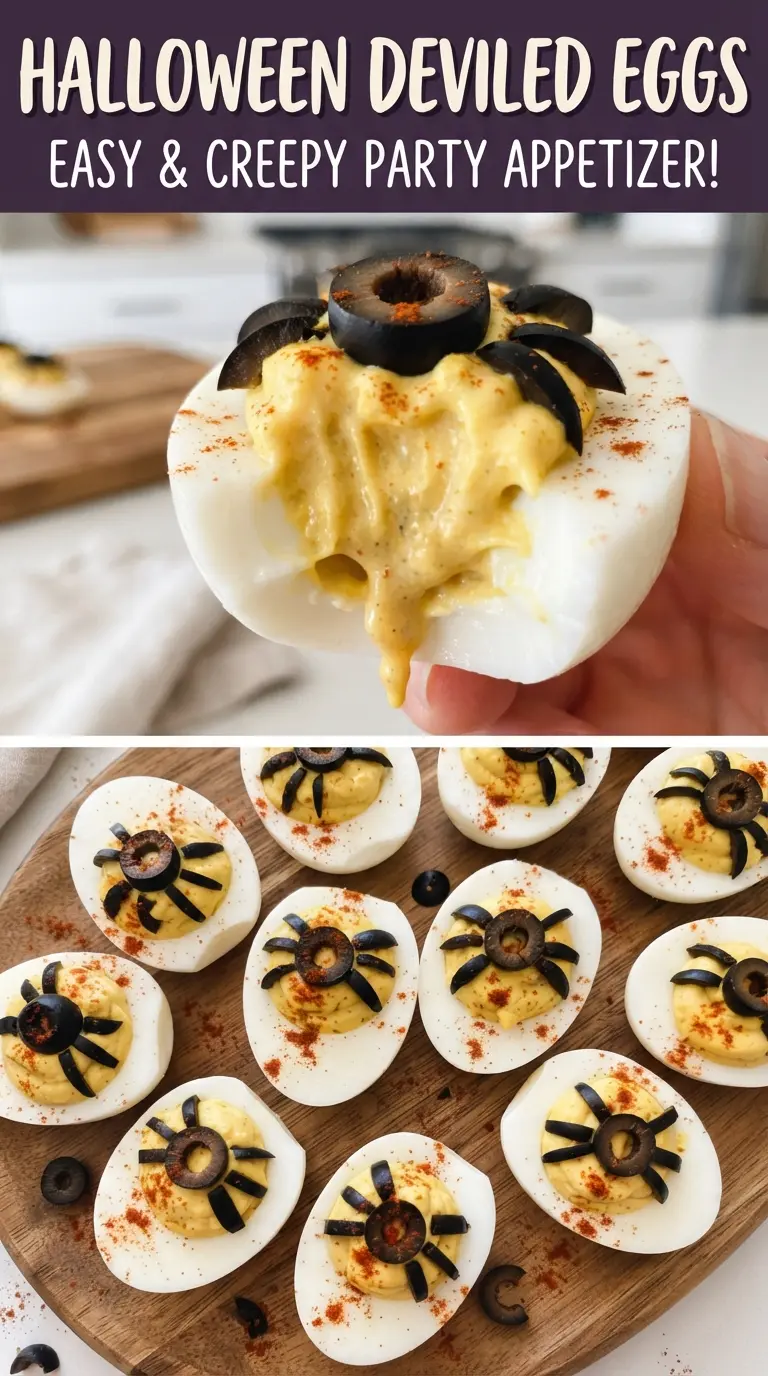
- Mayonnaise — This is what gives the filling its plush texture. A full-fat mayo keeps the yolks smooth and pipeable; light mayo can make the mixture loose and a little flat.
- Dijon mustard — Dijon gives the filling a sharper edge than plain yellow mustard and blends in without looking speckled. It doesn’t just add flavor; it keeps the richness from tasting one-note.
- White vinegar — The vinegar brightens the yolks and cuts through the mayo. Lemon juice can work in a pinch, but it reads a little different and can fight the color a bit more than vinegar does.
- Green gel food coloring — Gel coloring gives you a bold spooky color without thinning the filling. Liquid drops will work, but you’ll need more of them, and too much can loosen the mixture.
- Black olives — Pitted olives are easiest because you can slice them cleanly into a body and legs. If the olives are very wet, pat them dry first so they don’t slide around on the filling.
Building the filling before the spider legs go on
Cooking the eggs evenly
Start the eggs in cold water, then bring the pot up to a boil before covering and pulling it off the heat. That gentle finish gives you yolks that are set through the center without getting chalky around the edges. If the boil is too hard, the shells can crack and the whites can toughen before the yolks are ready.
Chilling and peeling cleanly
The ice bath is what makes the shells easier to remove and stops that green-gray ring from forming at the yolk. Peel the eggs under cool running water if the shells cling; the water slips under the membrane and helps the peel come away in larger pieces. Cracked or pitted whites are still usable, but the eggs look best if you work gently.
Mashing the yolks smooth
Mash the yolks first before adding the coloring so there are no dry lumps hiding in the mixture. Stir in the mayonnaise, Dijon, vinegar, and salt until the filling looks creamy and glossy. Add the gel coloring a drop or two at a time; the color gets stronger as it sits, and too much at once can make the shade look artificial.
Making the spider tops
Pipe or spoon the filling into the egg whites, then build the spiders right away while the surface is still soft. Set one olive half domed-side up for the body, then slice the remaining halves into thin strips for legs. Press the legs gently into the filling so they hold, but don’t bury them or the spider shape disappears.
How to change these for a different crowd
Extra-creamy filling
Add another tablespoon of mayonnaise if you want the filling softer and easier to pipe with a round tip. The eggs will taste richer and look smoother, but the filling may spread a little more under the olive spiders.
No food coloring version
Skip the green gel coloring and leave the filling pale yellow for a more classic deviled egg. The flavor stays the same, and the spider topping still gives you the Halloween effect without any dye.
Dairy-free by default
This recipe is already dairy-free as written, since the filling relies on mayonnaise instead of cream cheese or sour cream. Just check the label on your mayo if you’re serving someone who avoids certain oils or eggs from specific brands.
Make-ahead timing
You can boil, peel, and halve the eggs a day ahead, then store the whites and filling separately. Assemble the spiders close to serving so the olive pieces stay crisp and the surface of the filling doesn’t dry out.
Storage and Reheating
- Refrigerator: Store covered for up to 2 days. The olive legs can soften a little, but the flavor holds up well.
- Freezer: Don’t freeze deviled eggs. The whites turn watery and rubbery once thawed, and the filling separates.
- Reheating: No reheating needed. Serve these cold straight from the refrigerator, and keep them chilled until the last minute so the filling stays firm.
Answers to the questions worth asking
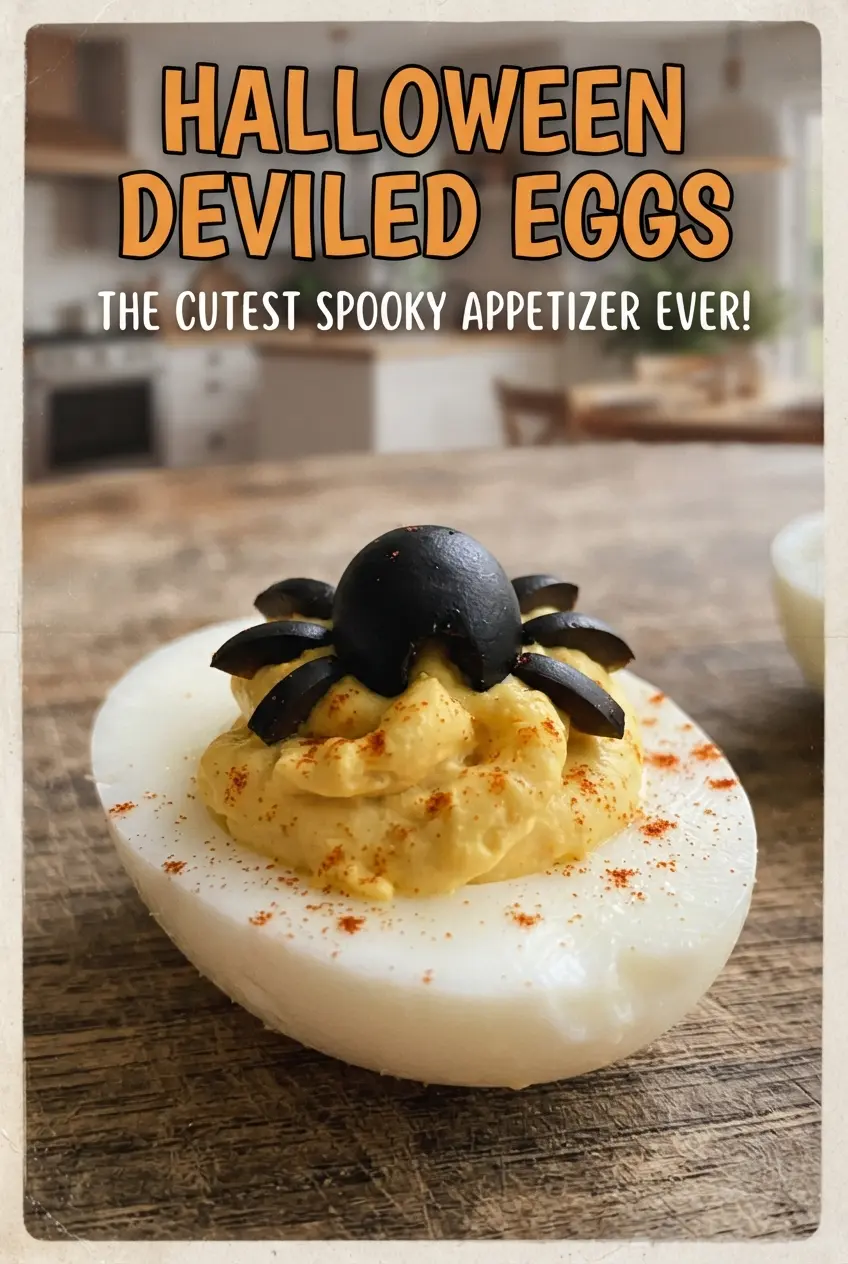
Halloween Deviled Eggs
Ingredients
Equipment
Method
- Place the large eggs in a pot, cover with cold water, and bring to a boil. Cover the pot, remove from heat, and let the eggs stand for 12 minutes.
- Chill the eggs in an ice bath for 10 minutes. Peel them, then halve each egg lengthwise.
- Mash the egg yolks with mayonnaise, Dijon mustard, white vinegar, and salt until smooth. Stir in the green gel food coloring until the mixture turns bright green.
- Pipe or spoon the filling into the egg white halves. Arrange them on a sheet pan for easy assembly.
- Halve the pitted black olives lengthwise. Place one olive half dome-side up on each egg for the spider body.
- Slice the remaining olive halves into thin strips. Arrange 8 legs around each body, then chill until serving.


