Jammy cranberry sauce with bright, clean sweetness and a spoonable texture belongs on the table because it does one thing better than the bottled version: it tastes like actual cranberries. The berries burst just enough to keep some shape, which gives you that glossy, ruby sauce with a little bite instead of a smooth gel that slides off the spoon. It’s the kind of side that wakes up everything else on the plate.
What makes this version work is the balance of water, sugar, and heat. The sugar fully dissolves before the cranberries go in, so you start with a clear syrup instead of grainy spots at the bottom of the pan. Then the simmer does the real work: the berries pop, the natural pectin thickens the liquid, and the sauce sets as it cools. If you’ve ever had cranberry sauce that stayed thin, it was probably pulled from the heat too early.
Below, I’ll show you how to judge the moment when the berries have burst enough, why the sauce always looks looser in the pan than it will in the fridge, and a few easy ways to adjust the sweetness without losing that fresh cranberry snap.
I kept mine on the stove the full 10 minutes and it thickened up perfectly once it cooled. The berries popped but didn’t turn to mush, and it tasted fresh instead of canned.
Like this jammy 3 Ingredient Cranberry Sauce? Save it to Pinterest for the holidays or any meal that needs a bright, ruby-red spoonful on the side.
The Part People Rush That Decides the Texture
The mistake with cranberry sauce is treating the simmer like a countdown timer instead of a visual cue. Once the cranberries go in, the sauce needs enough time for most of the berries to pop and for the liquid to take on that glossy, slightly thick look. If you pull it too early, it stays sharp and thin; if you cook it too hard, the skins split but the liquid can reduce before the berries release enough pectin, which gives you a looser set later.
The other detail that matters is cooling. Cranberry sauce thickens as it loses heat, so the pan always looks a little more fluid than the finished result. That’s normal. The sauce should coat a spoon while warm, then settle into a spoonable, jammy consistency once chilled.
- Boiling water and sugar — Dissolving the sugar first gives you a clean base and keeps the finished sauce from tasting gritty.
- Fresh cranberries — They bring the natural pectin that helps the sauce set. Frozen cranberries work too; don’t thaw them first, just add a minute or two to the simmer.
- Gentle simmer — This keeps the berries bursting evenly without scorching the syrup on the bottom of the pan.
What the Three Ingredients Are Really Doing Here
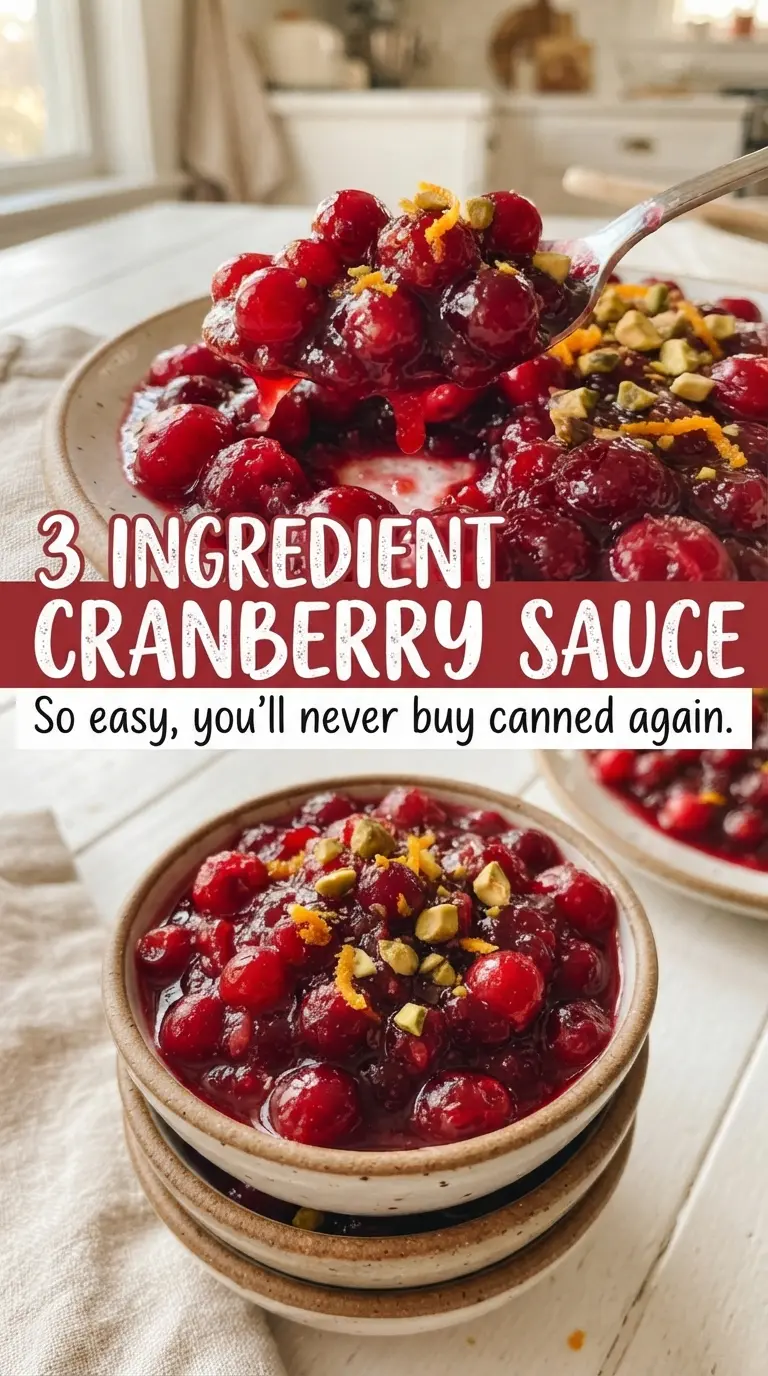
- Fresh cranberries — These are the whole point of the recipe. You want firm, plump berries with a deep red color and no soft spots. If your bag has a few wrinkled berries, pick those out because they tend to cook down unevenly.
- Granulated sugar — This does more than sweeten. It rounds out the tartness and helps the sauce turn glossy as it simmers. I wouldn’t swap in brown sugar unless you want a deeper molasses note, because it changes the clean cranberry flavor.
- Water — It starts the sauce as a syrup and gives the cranberries enough liquid to burst without sticking. You need the full cup here; less liquid can cause scorching before the berries have time to soften.
How to Go From Thin Syrup to Spoonable Sauce
Dissolving the Sugar First
Bring the water and sugar to a full boil and stir just until the sugar disappears. Don’t add the cranberries before that point or you’ll end up with undissolved sugar clinging to the berries instead of a smooth base. You want a clear syrup before the fruit goes in.
Cooking Until the Berries Pop
Add the cranberries and return the pan to a boil, then drop the heat to a steady simmer. Stir occasionally so the berries at the bottom don’t scorch, and watch for the skins to split open and the liquid to turn a little darker and thicker. If the heat is too high, the syrup can reduce before enough berries burst.
Cooling for the Final Set
Take the pan off the heat once most of the berries have burst and the sauce looks loose but slightly glossy. It will tighten as it cools, then thicken again in the fridge. If you serve it warm, it will be looser and more saucy; if you want that classic sliceable spoonful, chill it completely.
Ways to Adjust It Without Losing That Cranberry Bite
Less Sweet, Sharper Cranberry Sauce
Cut the sugar back to 3/4 cup if you like a brighter, tarter sauce. The texture will still set, but the flavor will lean more toward fresh cranberry instead of dessert-like sweetness. I wouldn’t reduce it much further or the sauce can taste harsh.
Orange Zest for a Brighter Finish
Add a strip of orange zest to the syrup while it boils, then remove it before serving. The citrus oils lift the cranberry flavor without making the sauce taste like marmalade. This works best if you want a fresher, slightly more aromatic side dish.
Using Frozen Cranberries
Frozen cranberries work straight from the freezer, and they’re a good stand-in when fresh berries aren’t around. Expect the simmer to take a minute or two longer because the pan has to come back up to temperature. The result is just as thick and glossy.
Make-Ahead Storage
Cranberry sauce is better the next day, once the flavors settle and the texture firms up. It’s a perfect make-ahead side for a busy menu, and it holds up well for several days in the fridge without losing its shine.
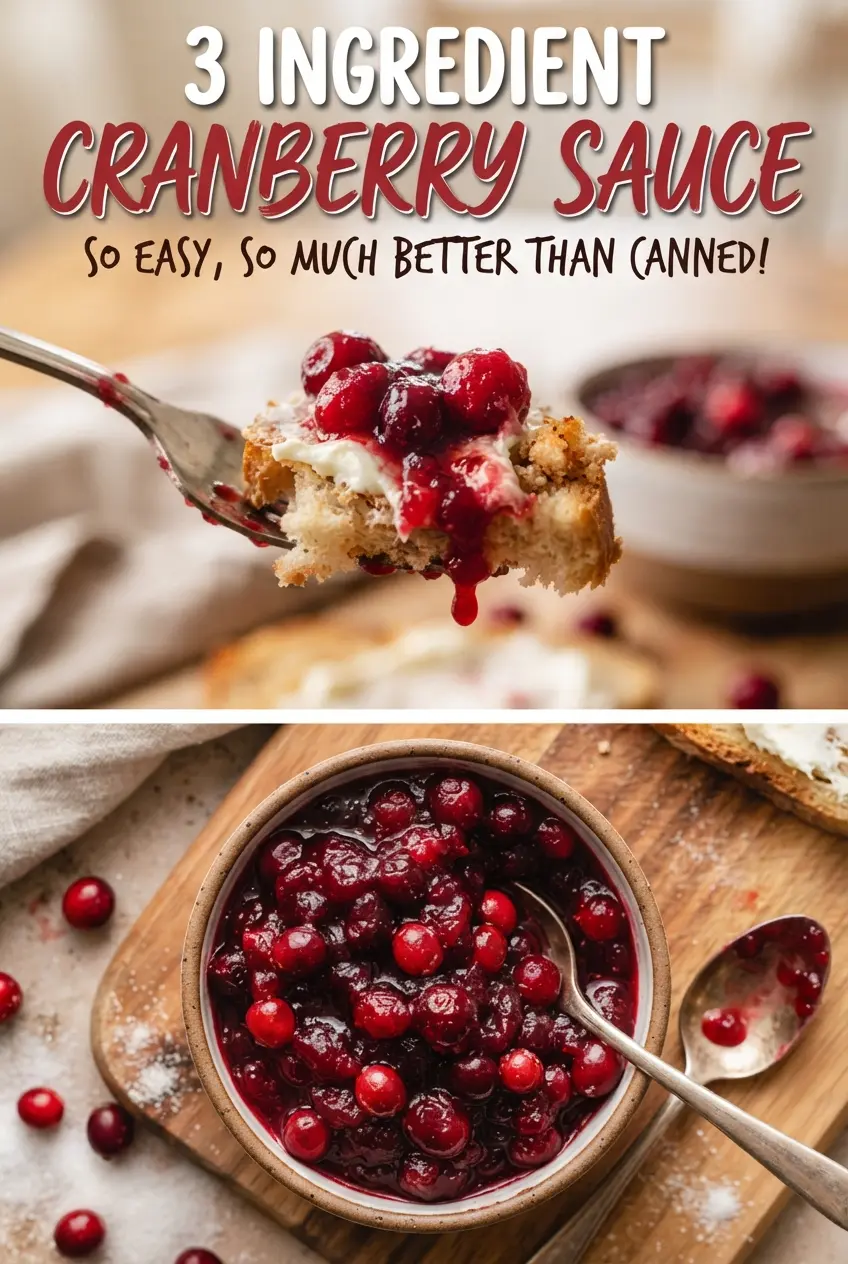
3 Ingredient Cranberry Sauce
Ingredients
Equipment
Method
- Bring granulated sugar and water to a boil in a saucepan over high heat, stirring until the sugar dissolves (about 1–2 minutes). You should see the liquid rapidly bubbling as the sugar fully disappears.
- Add fresh cranberries to the boiling liquid and return to a boil, stirring to coat. The berries should start to pop and look glossy as the surface bubbles.
- Reduce heat and simmer for 10 minutes, stirring occasionally, until the berries burst. Look for a thickening ruby sauce with visible popped cranberries throughout.
- Remove the saucepan from the heat and cool completely at room temperature. The sauce will look slightly looser at first, then begin to thicken as it cools.
- Chill the cranberry sauce until serving so it sets as it cools. Use a spoon to check for a jammy, spoonable consistency.


