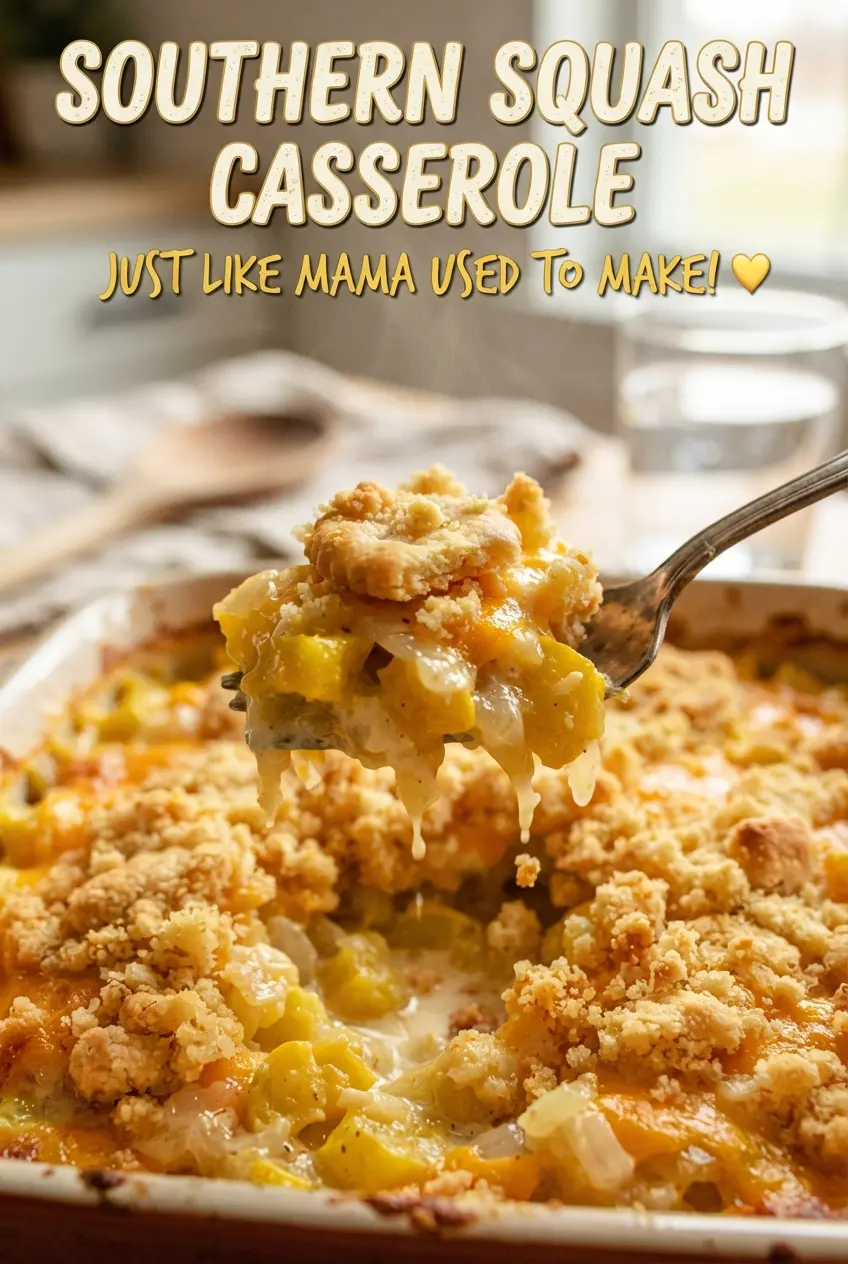
Southern squash casserole earns its place on the table when the squash turns tender, the filling sets up creamy instead of watery, and the buttery cracker top bakes into a crisp, golden crust. It’s the kind of side dish that disappears fast because it lands right between comforting and fresh: mellow yellow squash, sweet onion, sharp cheddar, and just enough tang from sour cream and mayonnaise to keep every bite interesting.
The difference between a good squash casserole and a soggy one comes down to moisture control. Squash holds a lot of water, and if you skip the drain step, the filling loosens as it bakes and the topping loses its crunch. Cooking the squash and onion before they go into the casserole softens them enough to blend with the cheese and custard, while the eggs help everything set into neat scoops instead of sliding apart on the plate.
Below, you’ll find the small details that matter most: how dry the squash needs to be, why the cracker topping goes on at the end, and a few easy ways to adapt it when you need a different cheese or a lighter finish.
I drained the squash longer than usual, and the casserole baked up set and creamy instead of soupy. The Ritz topping stayed crisp all the way to the last scoop.
Love the creamy squash filling and buttery Ritz crust? Save this Southern squash casserole for the next holiday meal or Sunday supper.
The Reason Squash Casserole Gets Watery Before It Gets Good
The biggest mistake in squash casserole is treating the squash like it will behave on its own. Yellow squash looks sturdy, but once it heats, it gives off a lot of liquid. If you fold that moisture straight into the filling, the eggs struggle to set and the finished dish goes loose in the center instead of slicing cleanly.
Cooking the squash with the onion first does two jobs at once: it softens the vegetables and starts driving off water before they ever meet the cheese mixture. Draining well matters more than squeezing every bit of squash dry; you just want the pieces to stop carrying a puddle into the bowl. The casserole should look thick and spoonable before it goes into the oven.
What Each Ingredient Is Actually Doing in This Dish

- Yellow squash — This is the base of the dish, and it needs to be cooked first so it softens without turning stringy or watery in the oven. Fresh, firm squash gives the best texture; older squash can be seedy and bland.
- Onion — Onion brings the savory backbone that keeps the casserole from tasting flat. A medium yellow or white onion works well, and chopping it small helps it melt into the filling.
- Sharp cheddar — Sharp cheddar gives the casserole its salty, tangy edge. Mild cheddar will work, but the flavor fades into the background, especially after baking.
- Sour cream and mayonnaise — Together they build the creamy body of the filling. Sour cream adds tang, mayonnaise adds richness, and neither one should be swapped for a low-fat version if you want the casserole to stay plush instead of thin.
- Eggs — The eggs are the set. They hold the squash mixture together so the casserole bakes into soft squares instead of collapsing when served.
- Ritz crackers and melted butter — This topping turns buttery and crisp in the oven. Crushed saltines can work in a pinch, but Ritz crackers give the signature rich, flaky crunch that makes this casserole stand out.
Building the Casserole So the Center Sets and the Top Stays Crisp
Softening the Squash and Onion
Cook the squash and onion in butter until the squash turns tender and the onion loses its raw bite, about 10 to 12 minutes. You’re looking for pieces that are soft enough to mash lightly with a spoon but not collapsed into mush. The pan will look wet at first; keep cooking until that liquid starts to evaporate. If you rush this stage, the casserole bakes up soupy because the vegetables finish releasing moisture in the oven instead of in the skillet.
Mixing the Filling Without Breaking It
Stir the cheddar, sour cream, mayonnaise, eggs, salt, and pepper together before folding in the squash. That keeps the seasoning even and prevents the eggs from clumping in one spot. Fold gently so the squash holds some shape; if you beat it hard, the filling can turn pasty instead of creamy. The mixture should look thick, glossy, and heavy on the spoon.
Adding the Cracker Crust at the Right Time
Toss the crushed Ritz crackers with melted butter and scatter them over the top right before baking. If the topping sits too long, the crackers absorb the butter and lose the crisp edge that makes the casserole worth serving. Spread the crumbs evenly, but don’t press them down; a loose layer browns better and stays lighter. Bake until the top is deep golden and the center is set with just a little give when the dish is nudged.
How to Adapt This for a Different Table
Gluten-Free Version
Swap the Ritz crackers for a gluten-free buttery cracker with a similar texture, then crush and butter them the same way. The casserole filling is already gluten-free, so the topping is the only real change. Expect a slightly different crunch, but the baked finish will still be rich and satisfying.
Dairy-Free Adjustment
Use a plant-based butter, dairy-free sour cream, and a good melting vegan cheddar. The flavor will be a little less rich and the top may brown a touch faster, but the casserole still holds together if you keep the egg base in place. Check the seasoning carefully, since dairy-free cheeses often need a little extra salt.
Extra-Cheesy, Less-Cracker Topping
Cut the cracker topping in half and add a little extra cheddar to the filling. You’ll get a softer top with less crunch, but the casserole tastes more like a cheesy gratin and less like a traditional bake. This is the right move when you want the filling to be the star.
Storage and Reheating
- Refrigerator: Store covered for up to 4 days. The topping softens a bit, but the casserole reheats well.
- Freezer: Freeze baked portions tightly wrapped for up to 2 months. The texture of the squash softens after thawing, so freeze it only if you don’t mind a slightly looser bite.
- Reheating: Warm in a 325F oven, covered loosely with foil for the first part of heating, then uncover to re-crisp the top. The common mistake is microwaving it straight through, which makes the squash release more moisture and turns the cracker crust soggy.
Answers to the Questions Worth Asking
Southern Squash Casserole
Ingredients
Equipment
Method
- Preheat oven to 350°F and grease a 9x13-inch baking dish. Clear enough space so the casserole can bake undisturbed.
- Cook yellow squash and onion in 2 tablespoons butter for 10-12 minutes until tender. Look for softened squash and translucent onion.
- Drain the squash mixture well in a colander. You should see minimal liquid pooling so the casserole sets cleanly.
- Mix shredded sharp cheddar, sour cream, mayonnaise, beaten large eggs, salt, and black pepper until smooth. Stir until no streaks of sour cream remain.
- Fold the drained squash mixture into the cheddar mixture. Keep folding just until the squash is evenly coated.
- Spread the mixture into the prepared baking dish. Level the top so it bakes evenly.
- Toss crushed Ritz crackers with melted butter and sprinkle over the top. Aim for an even, golden-cover layer across the casserole.
- Bake for 30-35 minutes at 350°F until golden and set. Watch for bubbling at the edges and a firm center that holds when you shake the pan gently.


