Roasted butternut squash and Brussels sprouts turn into something special when they hit a hot oven together. The squash softens into caramelized edges and a creamy center, while the Brussels sprouts pick up those crisp, browned leaves that make every bite interesting. A maple-balsamic finish pulls it all together with just enough sweetness to round out the bitter, nutty notes.
This version works because the vegetables roast at the same temperature and finish at the same time when they’re cut to the right size. The squash cubes need to be close enough in size to the halved sprouts that nothing overcooks before the rest is tender. The maple balsamic goes on after roasting, not before, so it coats instead of burning on the pan.
Below you’ll find the little details that matter here: how to get deep browning without soggy vegetables, when to add the cranberries so they stay chewy, and the best swaps if you’re missing one of the mix-ins.
The squash got those caramelized edges and the Brussels stayed crisp-tender, not mushy. I added the cranberries at the end like you said and they kept that nice chew instead of disappearing into the dish.
Save this roasted butternut squash and Brussels sprouts dish for a crisp-tender side with maple balsamic, pecans, and cranberries.
The Trick to Keeping the Squash Tender and the Brussels Sprouts Crisp
The biggest mistake with this kind of roasted vegetable dish is crowding the pan. When the vegetables sit on top of each other, they steam instead of brown, and you lose the contrast that makes the whole dish work. Spread everything into a single layer and use the biggest sheet pan you own if you want those caramelized edges.
Cut matters here, too. Butternut squash should be in evenly sized cubes so it softens at the same rate as the Brussels sprouts finish. If your sprouts are especially large, halve them through the stem so the pieces hold together and don’t fall apart while roasting.
- Butternut squash — Fresh squash gives you sweet, dense cubes that brown instead of collapsing. Pre-cut squash is fine if the pieces are clean and fairly even, but larger chunks take longer and smaller ones can turn soft before the Brussels are done.
- Brussels sprouts — Look for sprouts that feel heavy and tight. Loose outer leaves aren’t a problem; those little bits crisp up on the pan and add texture.
- Olive oil — This is what carries the heat and helps the vegetables caramelize. Use enough to coat every piece lightly, not so much that the pan pools with oil.
- Maple syrup and balsamic vinegar — Together they make a quick glaze that clings to the roasted vegetables. Add this after roasting so the maple stays glossy instead of scorching on the sheet pan.
What Each Ingredient Is Doing in the Pan
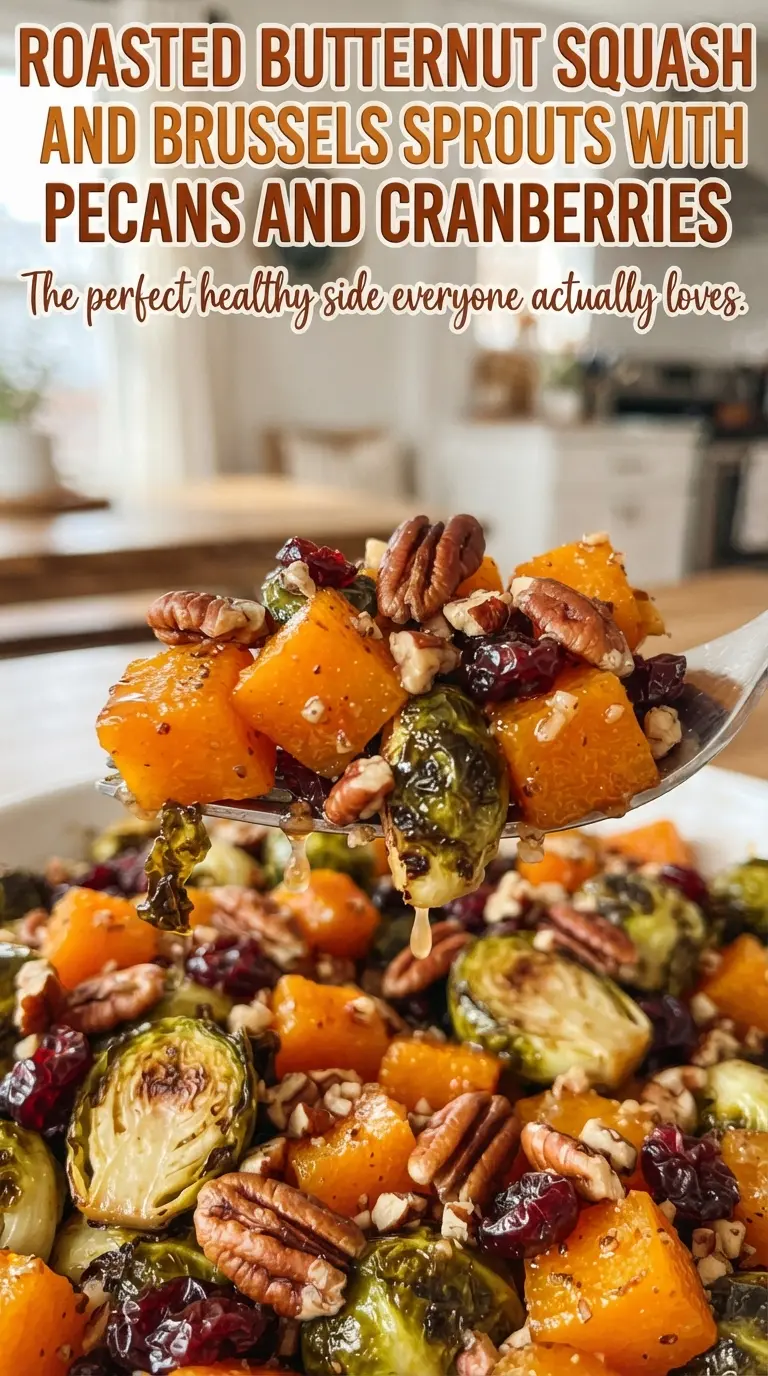
- Butternut squash — This brings the sweet, soft base of the dish. Its natural starches turn creamy inside while the edges caramelize in the oven.
- Brussels sprouts — These add a savory, slightly bitter note that balances the sweetness. The cut sides are where the good browning happens, so keep them dry before they hit the pan.
- Pecans — Toasted pecans add crunch and a buttery finish. If you use raw pecans, they’ll soften in the warm vegetables instead of staying snappy.
- Dried cranberries — These give the dish bursts of tart sweetness and a little chew. Stir them in after roasting so they don’t harden or disappear into the glaze.
- Maple syrup — Just enough sweetness to coat the vegetables without turning the dish syrupy. Honey works in a pinch, but maple has a deeper flavor that fits the squash and sprouts better.
- Balsamic vinegar — This sharpens the whole dish and keeps the maple from tasting flat. A decent grocery-store balsamic works fine here because it’s mixed with the syrup and isn’t reduced on its own.
Roasting, Glazing, and Finishing Without Losing the Crunch
Getting the Oven Hot Enough
Preheat the oven to 425°F before the vegetables go in. That heat helps the squash and sprouts brown instead of slowly softening, which is where roasted vegetable dishes often go wrong. If the oven isn’t fully hot, the vegetables release moisture before they can caramelize.
Coating the Vegetables Evenly
Toss the squash and Brussels sprouts with olive oil, salt, and pepper until every surface looks lightly glossy. Dry patches will roast pale, and overloaded spots will taste oily instead of crisp. Use your hands or a large bowl so the seasoning gets into the folds of the sprouts and onto the cut sides of the squash.
Roasting Until Brown, Not Just Tender
Roast for 25 to 30 minutes, tossing halfway through so the pieces on the edges of the pan don’t overbrown. The vegetables are done when the squash is tender enough to pierce with a fork and the sprouts have darkened at the edges. If they still look light and matte, they need more time; that browning is where the flavor comes from.
Finishing While Everything’s Still Warm
Whisk the maple syrup and balsamic vinegar, then toss it through the roasted vegetables with the cranberries and pecans right before serving. The warm vegetables loosen the glaze and help it coat without soaking in too fast. Add the pecans at the end so they stay crisp, not toasted twice.
Three Smart Ways to Adapt This Side Dish
Make it dairy-free and naturally gluten-free
This recipe already fits both needs as written, which makes it an easy side for mixed groups. Just keep an eye on the balsamic you buy if you’re serving someone with gluten concerns, since some flavored vinegars can include additives you don’t want.
Swap the pecans for walnuts or pumpkin seeds
Walnuts give you a softer, earthier crunch, while pumpkin seeds bring a firmer bite and a little less sweetness. Either one works if you don’t have pecans, but pecans stay the most buttery and pair best with the maple.
Use sweet potato instead of butternut squash
Sweet potato gives a softer, sweeter result and roasts on nearly the same timeline. Cut it into the same size cubes as the squash so it doesn’t turn mushy before the Brussels sprouts finish browning.
Storage and Reheating
- Refrigerator: Store leftovers in an airtight container for up to 4 days. The sprouts will soften a little, but the flavor holds up well.
- Freezer: You can freeze it, but the Brussels sprouts and cranberries both soften after thawing. If you do freeze it, cool completely first and pack it flat in a freezer-safe container for up to 2 months.
- Reheating: Reheat on a sheet pan in a 400°F oven until warmed through and the edges wake back up, about 10 to 12 minutes. The microwave works in a pinch, but it turns the vegetables soft instead of keeping that roasted texture.
Answers to the Questions Worth Asking
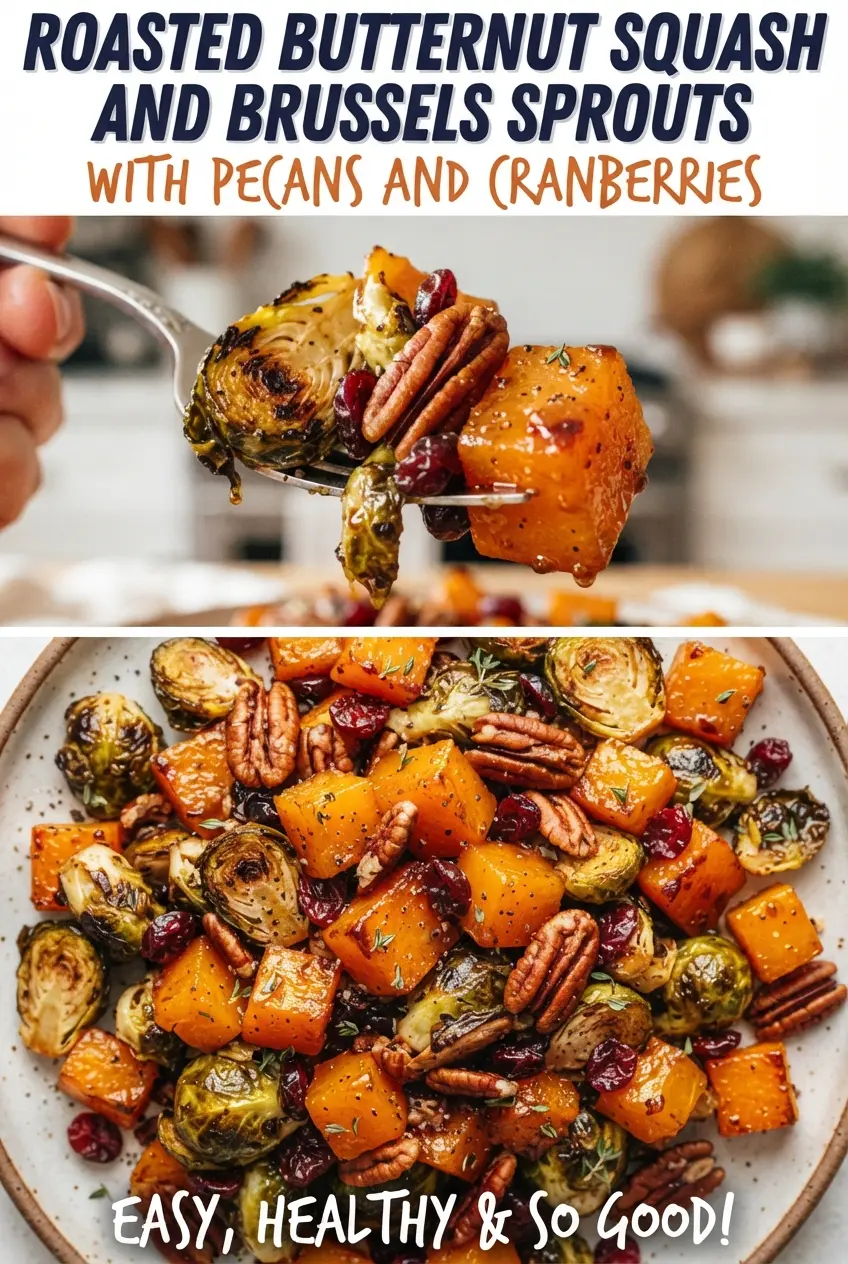
Roasted Butternut Squash and Brussels Sprouts with Pecans and Cranberries
Ingredients
Equipment
Method
- Preheat oven to 425F. Make sure the oven is fully heated before the tray goes in for the best caramelization.
- Toss butternut squash and Brussels sprouts with olive oil, salt, and black pepper on a large sheet pan. Spread into an even layer so the cut sides can brown.
- Roast for 25-30 minutes, tossing halfway, until tender and caramelized. Look for deep golden-brown edges on the squash and crisp-tender Brussels sprouts.
- Whisk maple syrup and balsamic vinegar together. Stir until the mixture looks smooth and glossy.
- Toss the roasted vegetables with the maple balsamic, dried cranberries, and pecans, then serve warm. The cranberries should soften slightly while the pecans stay crunchy.


