Deep, wine-braised beef stew like this earns its place in the rotation because the meat turns spoon-tender while the sauce cooks down into something glossy and dark, with sweet onions and carrots holding their shape instead of dissolving into mush. It tastes like it took all day, but the work is mostly in the early browning and then patience while the pot does the rest.
The difference here is the layering. The beef gets aggressively seared in batches, the onions cook in the same pot until they pick up all that fond, and the flour goes in before the wine so the sauce has body without tasting pasty. Red Burgundy gives the stew a round, earthy edge, but any dry red with decent acidity will still give you a sturdy braise.
Below you’ll find the part that matters most: how to keep the beef browned instead of steamed, how to get the sauce thick without over-reducing it, and what to change if you need to swap the wine or make it ahead.
The beef was fall-apart tender and the sauce came together beautifully after the flour and wine. I served it with crusty bread and ended up scraping the pot clean.
Save this beef stew for the night you want dark wine-braised beef, glossy sauce, and a pot that tastes even better the next day.
The Browning Stage Is Where the Whole Pot Gets Its Depth
The biggest mistake with beef stew is crowding the pan and calling it a sear. If the meat goes in all at once, it steams, the bottom of the pot stays pale, and the finished stew tastes flat no matter how long it simmers. Work in batches and wait for a real crust; you want the cubes to release cleanly before you turn them.
Those browned bits in the pot are not a mess to clean up later. They’re the backbone of the sauce once the wine hits the hot surface and loosens everything into the braise. The onions then pick up that same base and soften into the liquid instead of sitting on top like a separate layer.
What Each Ingredient Is Actually Doing in This Stew
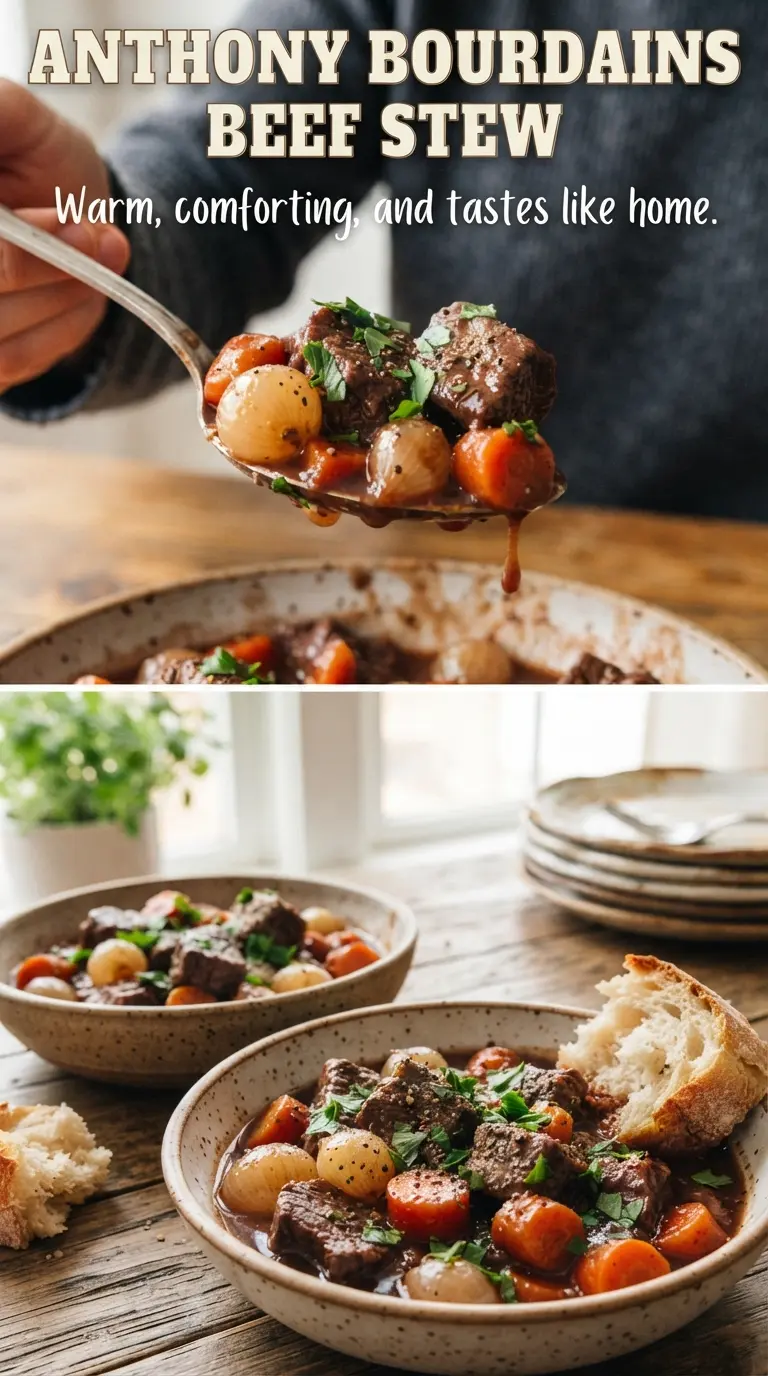
- Beef chuck — This is the cut that pays off after a long braise. It has enough connective tissue to turn silky and rich instead of dry. Lean stew meat can work in a pinch, but it won’t give you the same body.
- Red Burgundy wine — This brings acidity, color, and that deep braised flavor you want in a French-style stew. Use a dry red you’d actually drink; the wine doesn’t need to be expensive, but it does need to taste clean.
- Onions — Four onions may sound like a lot, but they melt down into the sauce and give it natural sweetness. Slice them thin so they soften evenly and disappear into the pot instead of staying sharp and chunky.
- Flour — The flour is what gives the braising liquid enough body to cling to the beef. Stir it onto the meat for a few minutes before adding liquid so it loses the raw taste and starts to color.
- Bouquet garni — Thyme, parsley stems, and bay leaf keep the broth savory without scattering herbs through the stew. Tie it tightly so you can pull it out cleanly at the end.
- Water or beef stock — Stock gives a deeper base, but water still works because the seared beef and wine do a lot of the heavy lifting. Use just enough to barely cover the meat; too much liquid makes the sauce thin.
Building the Braise So the Sauce Turns Glossy, Not Watery
Getting the Beef Properly Browned
Season the beef first, then sear it in very hot oil without moving it around. If the pieces stick at first, give them another minute; once the crust forms, they’ll release on their own. The goal is a dark, even exterior on several sides, not gray meat with a few tan spots.
Softening the Onions in the Same Pot
Once the beef is out, the onions go straight into the pot with all that rendered flavor left behind. Cook them until they’re soft and golden and the bottom of the pot starts to look sticky, which means they’re picking up the browned bits. If the pot looks dry, lower the heat instead of adding more oil right away; the onions will loosen the fond for you.
Thickening Before the Liquid Goes In
After the beef returns, sprinkle the flour over everything and stir for three to four minutes. That short cook time matters because it takes the raw edge off the flour and helps the final sauce set up instead of tasting dusty. When you pour in the wine, scrape the bottom thoroughly so every browned bit ends up in the braise.
Finishing the Long Simmer
Add the carrots, garlic, bouquet garni, and just enough water or stock to cover the beef. Keep the simmer gentle and partly covered; a hard boil will tighten the meat and reduce the liquid too fast. You’re done when the beef yields easily to a fork and the sauce coats a spoon in a thin, glossy layer.
Make It Without the Wine
Use extra beef stock plus a splash of red wine vinegar or balsamic at the end. You’ll lose some of the wine’s depth, but the stew will still be rich and balanced instead of flat.
Gluten-Free Version
Skip the flour and dust the beef lightly with cornstarch right before the braise, or thicken the finished stew with a small cornstarch slurry. The texture will be a little cleaner and less rustic, but it still lands with good body.
Use a Different Cut of Beef
Beef shank or short ribs can replace chuck if that’s what you have. Short ribs bring more richness, while shank gives a slightly leaner, beefier broth; both need the same low, slow simmer to turn tender.
Storage and Reheating
- Refrigerator: Keeps for 4 days, and the flavor gets deeper after a night in the fridge.
- Freezer: Freezes well for up to 3 months. Cool it completely first, then portion it into airtight containers so the sauce doesn’t pick up ice crystals.
- Reheating: Rewarm gently on the stove over low heat with a splash of water or stock. High heat can tighten the beef and make the sauce look greasy instead of glossy.
Questions I Get Asked About This Recipe
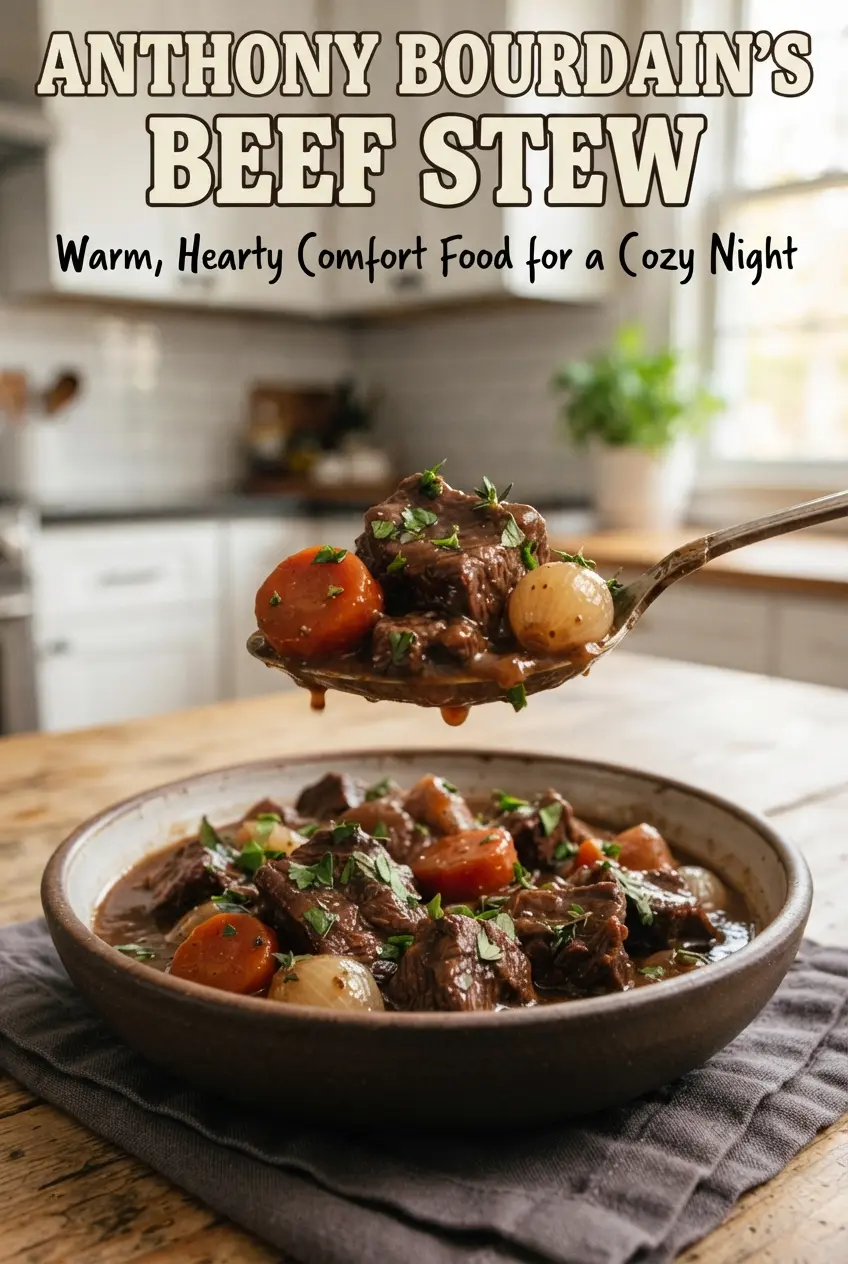
Anthony Bourdains Beef Stew
Ingredients
Equipment
Method
- Season the beef with salt and black pepper, then sear in very hot olive oil in batches until deeply browned and set aside.
- Cook the onions in the same pot for 10 minutes until soft and golden.
- Return the beef to the pot, sprinkle with all-purpose flour, and stir for 3-4 minutes until browned.
- Pour in the red Burgundy wine and scrape the bottom of the pot to release the browned bits.
- Add the carrots, garlic clove, bouquet garni, and enough water or beef stock to just cover the beef, then stir to combine.
- Simmer gently, partly covered, for 2 hours at a consistent low simmer until the beef is very tender and the sauce is thick (visual cue: clinging sauce coating the spoon).
- Remove the bouquet garni and stir in the chopped fresh parsley to finish.


