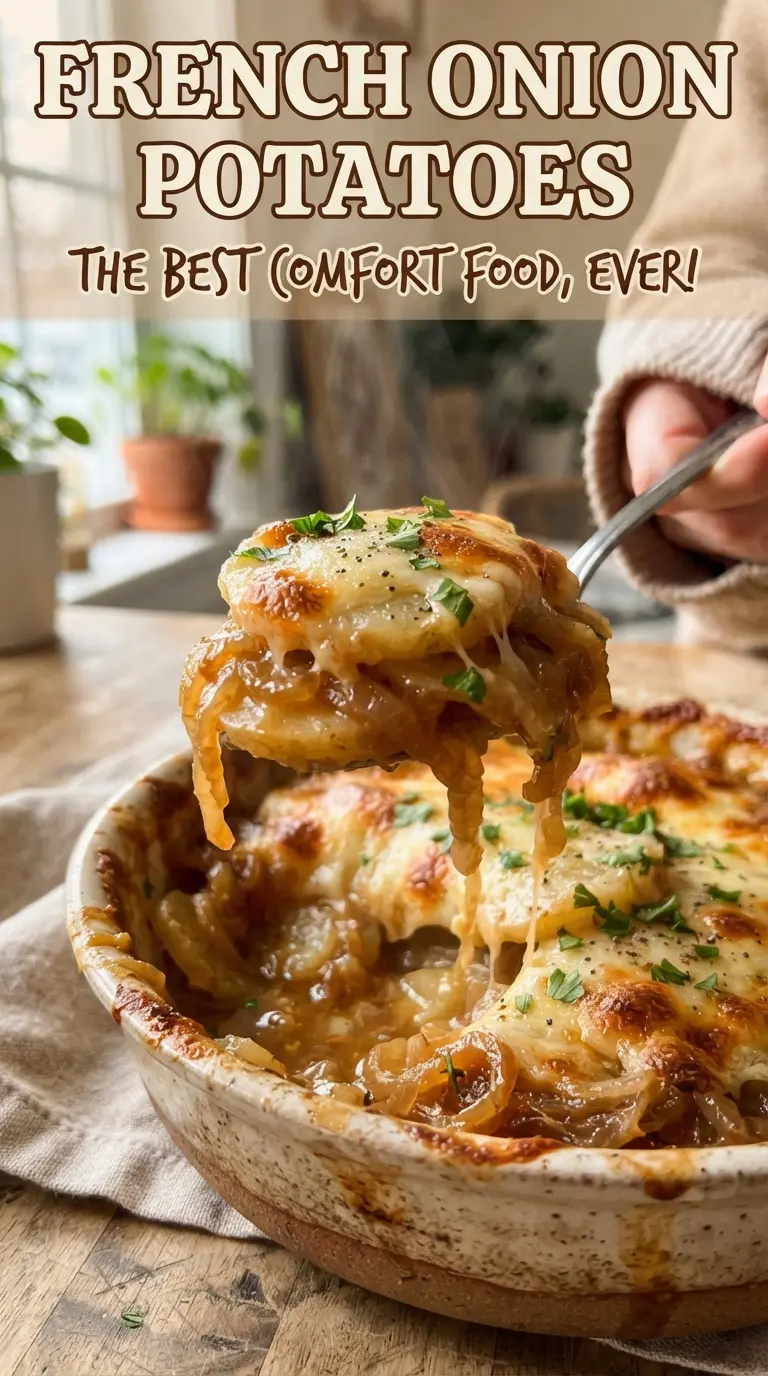
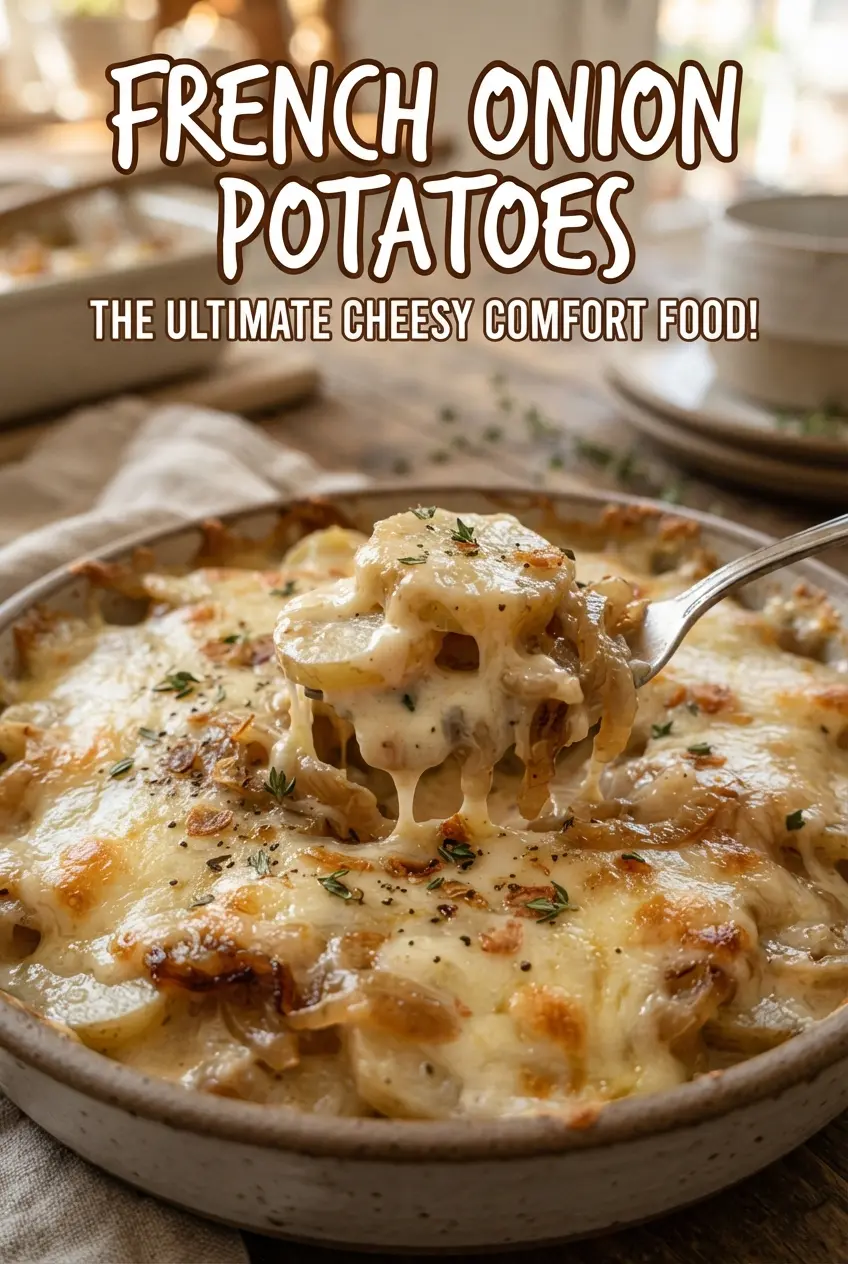
French Onion Potatoes bring the same deep, savory comfort of French onion soup to a pan of crispy roasted potatoes, and that combination gets dangerous fast. The potatoes stay golden at the edges, the onions turn jammy and sweet, and the melted Gruyere pulls everything together with just enough richness to make the whole skillet feel special.
What makes this version work is patience in two places: the potatoes need enough heat to crisp before the onions go on, and the onions need time over medium-low heat to soften, brown, and lose their sharp bite. That slow cook builds the flavor base, while a splash of broth and Worcestershire gives the onions the salty, savory finish they need before the cheese melts over the top.
Below, I’ve included the little timing details that keep the potatoes crisp and the onions deeply caramelized without burning. If you’ve ever had a skillet side dish turn soggy under the cheese, this method fixes that.
The onions got jammy instead of burnt, and the Gruyere melted into every little pocket between the potatoes. I served it with roast chicken and there wasn’t a spoonful left.
Save these French Onion Potatoes for the nights when you want crispy potatoes, sweet onions, and melty Gruyere in one skillet.
The Part Most People Rush: Crisp Potatoes Before the Onions Go On
The mistake with a dish like this is piling the onions onto potatoes that haven’t fully roasted yet. If the potatoes are pale and soft, the topping traps steam and everything turns heavy instead of crisp. Roasting them first gives you structure under the onions, so the bottom layer stays firm enough to hold all that melted cheese.
- Give the potatoes room in the skillet so they brown instead of steam.
- Let the cut sides sit against the hot pan long enough to pick up color before you stir them.
- Hold off on the onion mixture until the potatoes look deeply golden at the edges and feel tender when pierced.
What the Onions, Broth, and Gruyere Each Bring to the Pan
- Yellow onions — These are the backbone of the dish. Thin slices break down into a sweet, silky layer after a long cook; red onions won’t give you the same classic French onion depth.
- Butter — This is where the onions pick up richness and the first bit of browning. Olive oil alone works in a pinch, but the flavor won’t be as round.
- Fresh thyme — Use fresh if you have it. Dried thyme can turn dusty here, while fresh thyme keeps the onion mixture tasting bright and grounded.
- Beef broth and Worcestershire sauce — This is the savory bridge between sweet onions and rich cheese. The broth loosens the pan juices just enough, and Worcestershire adds a deeper, almost meaty note that makes the dish taste fuller.
- Gruyere — It melts smoothly and brings that nutty, French onion finish. Swiss cheese can stand in, but it won’t taste as bold.
Building the Skillet So the Cheese Melts Without Smothering the Crunch
Roasting the Potatoes First
Toss the halved potatoes with olive oil, salt, and pepper, then spread them in an oven-safe skillet with the cut sides in contact with the pan as much as possible. Bake until the edges are deep gold and the centers give easily to a knife. If they still look pale, keep them in a few more minutes; underdone potatoes will never recover once the onions and cheese go on.
Cooking the Onions Low and Slow
Melt the butter in a separate pan and cook the onions over medium-low heat until they collapse, deepen in color, and turn glossy and jammy. Stir now and then, but don’t keep them moving constantly or they’ll soften without browning. If they start catching too fast, lower the heat and add a splash of the broth to loosen the fond from the pan.
Finishing with Broth, Worcestershire, and Cheese
Stir the thyme, broth, and Worcestershire into the onions and let the liquid cook off until the mixture looks thick and almost sticky. Spoon it over the roasted potatoes, then cover everything with Gruyere and return the skillet to the oven just long enough for the cheese to melt and bubble. The dish is done when the cheese is glossy and the edges of the potatoes are still crisp, not when the whole pan looks wet.
How to Adapt These French Onion Potatoes Without Losing the Point
Make It Vegetarian
Swap the beef broth for a strong vegetable broth. You’ll lose a little of the deep, meaty backbone, so let the onions cook until they’re a shade darker before adding the liquid. The dish still lands in the same savory place if the broth is flavorful.
Use a Different Cheese
Swiss, Emmental, or even fontina will melt well if Gruyere isn’t in the fridge. Gruyere gives the most classic French onion flavor, though, so expect a milder, creamier finish with the swaps.
Make It Dairy-Free
Use olive oil instead of butter and skip the cheese or use a dairy-free meltable alternative. The onions will still be rich and savory, but you’ll lose the classic browned, stretchy top that makes the dish feel finished.
Storage and Reheating
- Refrigerator: Store in an airtight container for up to 4 days. The potatoes soften a bit, but the flavor stays strong.
- Freezer: I don’t recommend freezing this dish. The potatoes turn mealy and the onions lose their jammy texture after thawing.
- Reheating: Reheat in a 375F oven until hot and the cheese is remelted. The oven brings back some of the crispness; the microwave makes the potatoes soft and the top rubbery.
Questions I Get Asked About This Recipe
French Onion Potatoes
Ingredients
Equipment
Method
- Preheat the oven to 425F, then toss the baby potatoes with olive oil, salt, and black pepper in an oven-safe cast iron skillet until evenly coated.
- Roast for 30-35 minutes, until the potatoes are golden and crispy, keeping the skillet in the oven for the full roast time.
- In the skillet, cook the butter and sliced yellow onions over medium-low heat for 25 minutes until deep golden and jammy.
- Stir in the fresh thyme leaves, beef broth, and Worcestershire sauce, then simmer until absorbed.
- Spoon the jammy caramelized onions over the roasted potatoes, then top with shredded Gruyere in an even layer.
- Bake for 8-10 minutes at 425F until the cheese is melted and bubbling.


