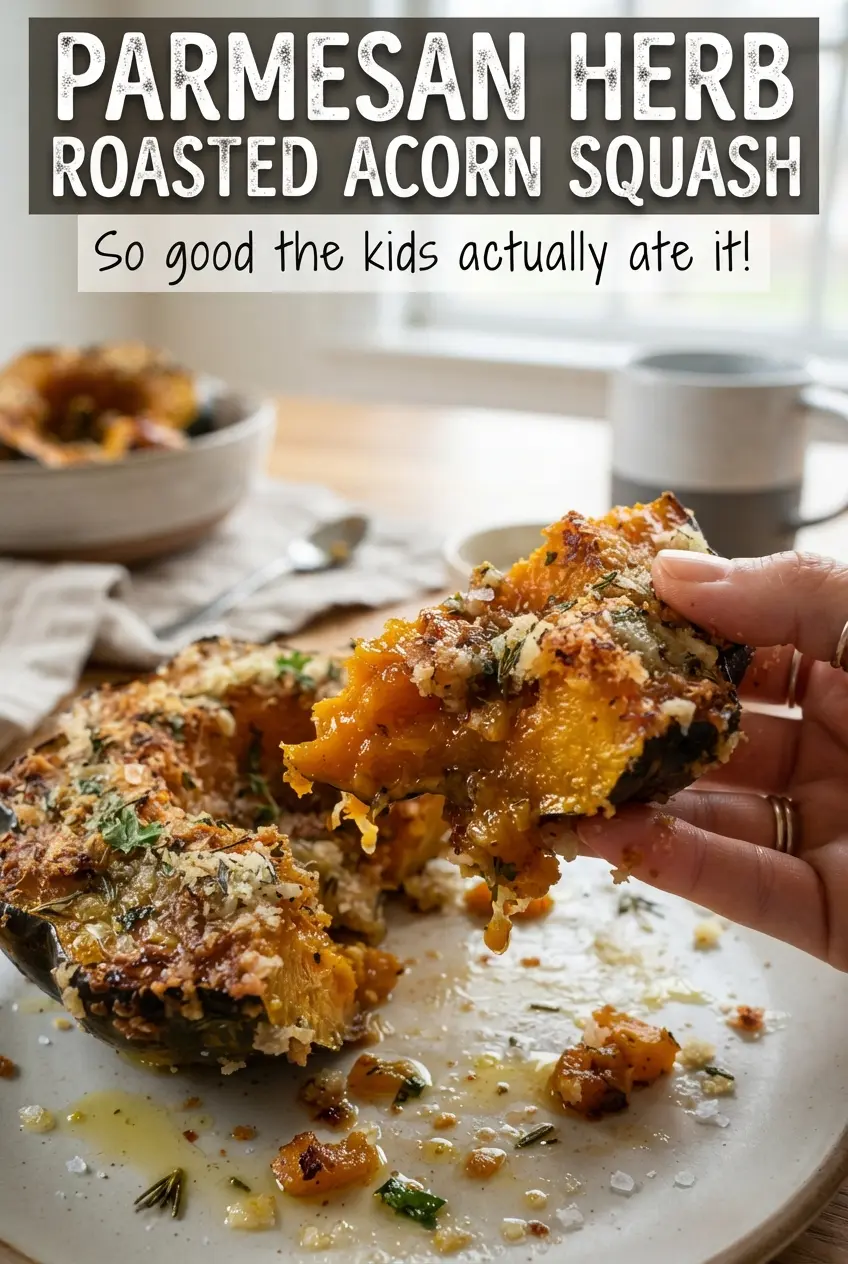
Parmesan herb roasted acorn squash comes out with crisp, bronzed edges, tender centers, and a salty-savory crust that turns an ordinary side dish into the one people reach for first. The squash softens enough to cut with a fork, but the Parmesan bakes into a thin golden layer that gives every bite a little crunch.
The trick is giving the squash a head start before the cheese goes on. Acorn squash holds a lot of moisture, and if you add the Parmesan too early, it steams before it browns. Roasting the slices first lets the natural sugars concentrate, then the cheese lands on top and turns crisp instead of disappearing into the pan.
Below, I’ll walk you through the small details that matter most: how thick to slice the squash, when to flip it, and how to keep the cheese from clumping or burning. There’s also a storage note for leftovers, since this one reheats better than you might expect.
The squash softened perfectly in 35 minutes, and the Parmesan got that crisp edge I never seem to get when I add it too early.
Save this Parmesan Herb Roasted Acorn Squash for the nights when you want a crisp, cheesy side without much effort.
The Reason the Parmesan Stays Crisp Instead of Melting Away
Acorn squash brings enough moisture to soften beautifully, but that same moisture can ruin the topping if the cheese goes on too soon. The first roast drives off surface steam and gives the squash time to start caramelizing, which is what keeps the Parmesan from dissolving into a slick layer. When the cheese hits the pan after the flip, it has a dry, hot surface to cling to, and that’s when you get those crisp, lacey edges.
Cutting the squash into rings instead of wedges matters too. Rings cook more evenly, and the flat sides give you more contact with the pan, which means better browning and fewer underdone spots near the skin. If your slices are too thin, they can collapse before the cheese has a chance to brown; too thick, and the centers stay firm while the top overcooks.
What Each Ingredient Is Actually Doing in This Dish

- Acorn squash — This is the base of the whole dish. Its flesh turns sweet and creamy in the oven, and the ridges in the rings catch little pockets of browned Parmesan. Butternut won’t give the same shape or the same tender bite, so stick with acorn squash if you want the look and texture to match.
- Olive oil — This helps the seasoning stick and encourages browning on the exposed edges. A good everyday olive oil is fine here; save the fancy finishing oil for the table. Don’t skip enough oil to coat each slice lightly, or the herbs and cheese won’t adhere well.
- Garlic, thyme, and rosemary — These build a savory backbone that keeps the squash from tasting flat. Fresh herbs work best because they roast into the oil and perfume the slices without turning dusty or bitter. If you only have dried thyme and rosemary, use about one-third as much and crush them between your fingers first.
- Parmesan — Grated Parmesan is the topping that turns golden and crisp. Use the real grated stuff, not the shelf-stable powder, because you want a cheese that can brown cleanly. A microplane-shaved version will melt faster and give you a thinner crust; a coarser grate gives you more crunch.
Roasting the Squash So It Browns Before the Cheese Burns
Seasoning the Slices Evenly
Toss the squash with the oil, garlic, herbs, salt, and pepper until every ring looks lightly coated. The goal is gloss, not pooling oil in the bowl. If the garlic clumps in one spot, it can scorch on the pan, so break it up with your hands or a spoon before it goes into the oven.
Giving the First Roast Time to Work
Spread the rings in a single layer on parchment so they roast instead of steam. After about 20 minutes, the squash should be starting to soften at the edges, and the undersides should show a little color. If the pan is crowded, you’ll get pale slices and watery results, so use two pans if that’s what it takes.
Adding the Parmesan at the Right Moment
Flip each slice gently, then sprinkle the Parmesan over the top in an even layer. The underside is already seasoned and partially cooked, so this second roast finishes the centers while the cheese crisps on top. Watch the last few minutes closely; Parmesan goes from golden to bitter faster than most people expect.
Knowing When It’s Done
The squash is ready when a fork slides in easily and the cheese looks deeply golden in spots. If the centers still feel firm, give it a few more minutes, but don’t chase perfect browning at the expense of tenderness. The best batch has soft squash, crisp edges, and cheese that lifts in little shattery pieces.
How to Adapt This for a Different Table
Dairy-Free Version with Nutritional Yeast
Swap the Parmesan for a light sprinkle of nutritional yeast after the first roast and finish with a touch more olive oil. You won’t get the same crisp, cheesy crust, but you’ll keep the savory note without dairy. This works best if you accept a softer topping and focus on the roasted squash itself.
Gluten-Free Side Dish for Holiday Menus
This recipe is naturally gluten-free as written, which makes it an easy side to tuck into a bigger menu. Just check that your Parmesan is free of anti-caking fillers if that matters for your table. The texture stays the same, so there’s nothing else to adjust.
Making It More Herby and Less Cheesy
If you want the squash to lean more savory than rich, cut the Parmesan back to 1/3 cup and add an extra pinch of thyme. The topping will be lighter and less crunchy, but the herb aroma will come through more clearly. This is the version I’d serve alongside a heavy main.
Storage and Reheating
- Refrigerator: Store leftovers in an airtight container for up to 4 days. The squash softens a bit, and the Parmesan loses some crunch.
- Freezer: It’s not the best freezer dish. The squash turns watery after thawing, and the cheese topping won’t stay crisp.
- Reheating: Warm it on a sheet pan in a 375F oven until heated through. The oven brings back some of the texture; the microwave will steam the squash and soften the crust.
Answers to the Questions Worth Asking
Parmesan Herb Roasted Acorn Squash
Ingredients
Equipment
Method
- Preheat oven to 400F and line a sheet pan with parchment for easy release and even browning.
- Toss the acorn squash rings with olive oil, minced garlic, fresh thyme leaves, chopped rosemary, salt, and black pepper until evenly coated.
- Arrange squash in a single layer and roast for 20 minutes, looking for edges beginning to caramelize.
- Flip the slices and sprinkle generously with grated Parmesan, then spread them back into a single layer so the crust can crisp.
- Roast 12-15 minutes more at 400F until the squash is tender and the Parmesan is golden and crisp.


