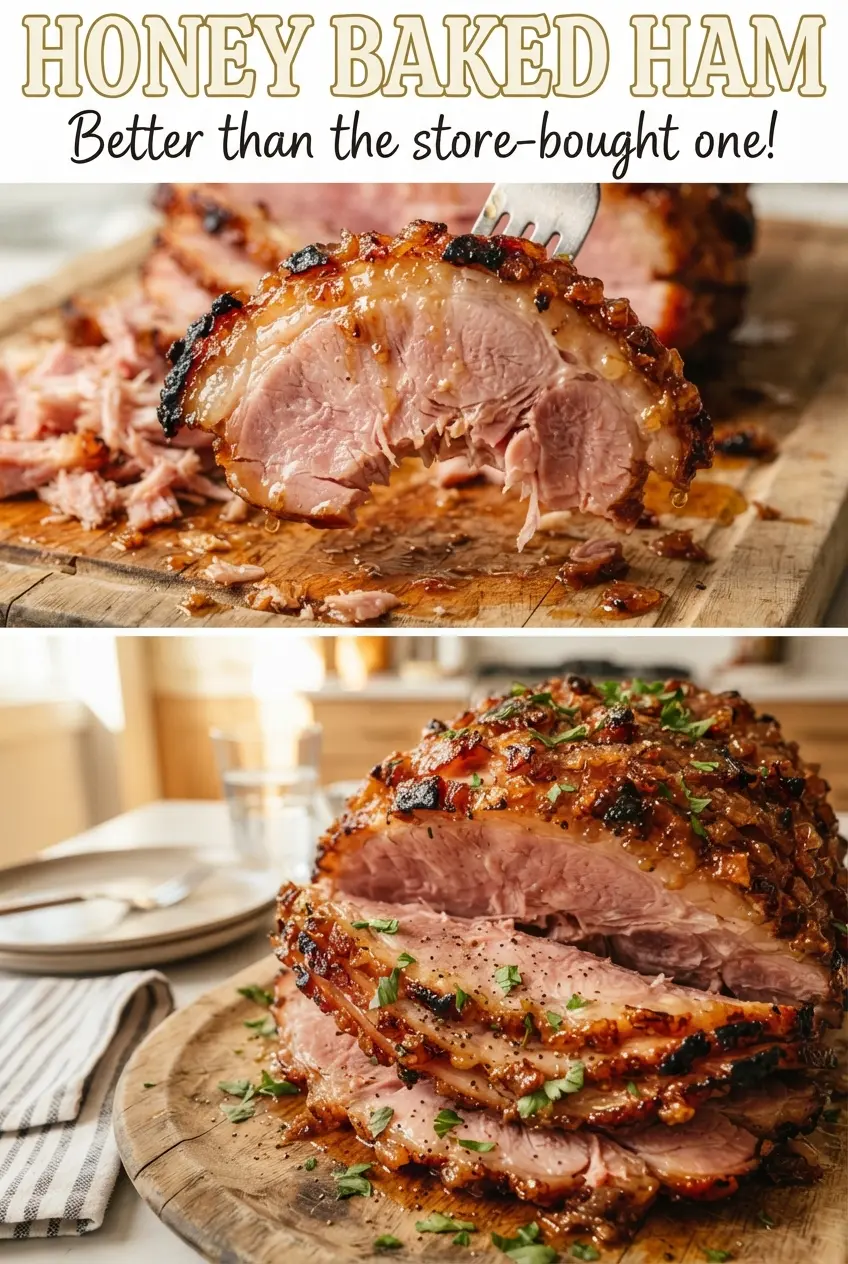
Honey baked ham lands on the table with a lacquered crust that crackles when the knife goes in and salty-sweet slices that stay juicy all the way to the bone. The best versions don’t bury the ham under a thick glaze that runs off into the pan; they build a glossy coating in layers so the sugar can caramelize without burning before the center warms through.
This method leans on a fully cooked spiral-sliced ham, which takes the guesswork out of doneness and lets the glaze work on texture instead. A quick honey-butter brush gives the sugar something to cling to, and the spices keep the sweetness in check with a warm, balanced finish. The repeated glazing at high heat is what creates that crackly shell instead of a sticky, one-note coating.
Below, I’ve included the timing that keeps the ham from drying out, plus the one reheating trick that helps the slices stay tender if you’re serving this for a crowd.
The crust turned out crackly instead of sticky, and the honey-butter glaze soaked into the spiral cuts without making the slices soggy. I followed the last 5-minute blast at 400 and it came out beautifully caramelized.
Save this honey baked ham for a crackly brown sugar crust and juicy spiral slices that hold up beautifully at the holiday table.
The Secret to Keeping the Glaze on the Ham, Not in the Pan
Spiral-cut ham looks like it should take a heavy glaze, but the slices will shed too-thin sauce straight into the roasting pan if you rush this part. The trick is to warm the ham gently first, then switch to a hot oven only for the final glazing passes. That lets the meat heat through without overcooking the cut edges before the sugar has a chance to caramelize.
The other mistake is pouring on a wet glaze and calling it done. Honey and butter give the sugars something sticky to grab, and the dry spice-sugar mix forms the crust. If the coating looks patchy after the first round, that’s normal; the repeated brushing and patting build the shell in layers, which is how you get a deep burnished finish instead of a grainy one.
What Each Ingredient Is Actually Doing in This Ham
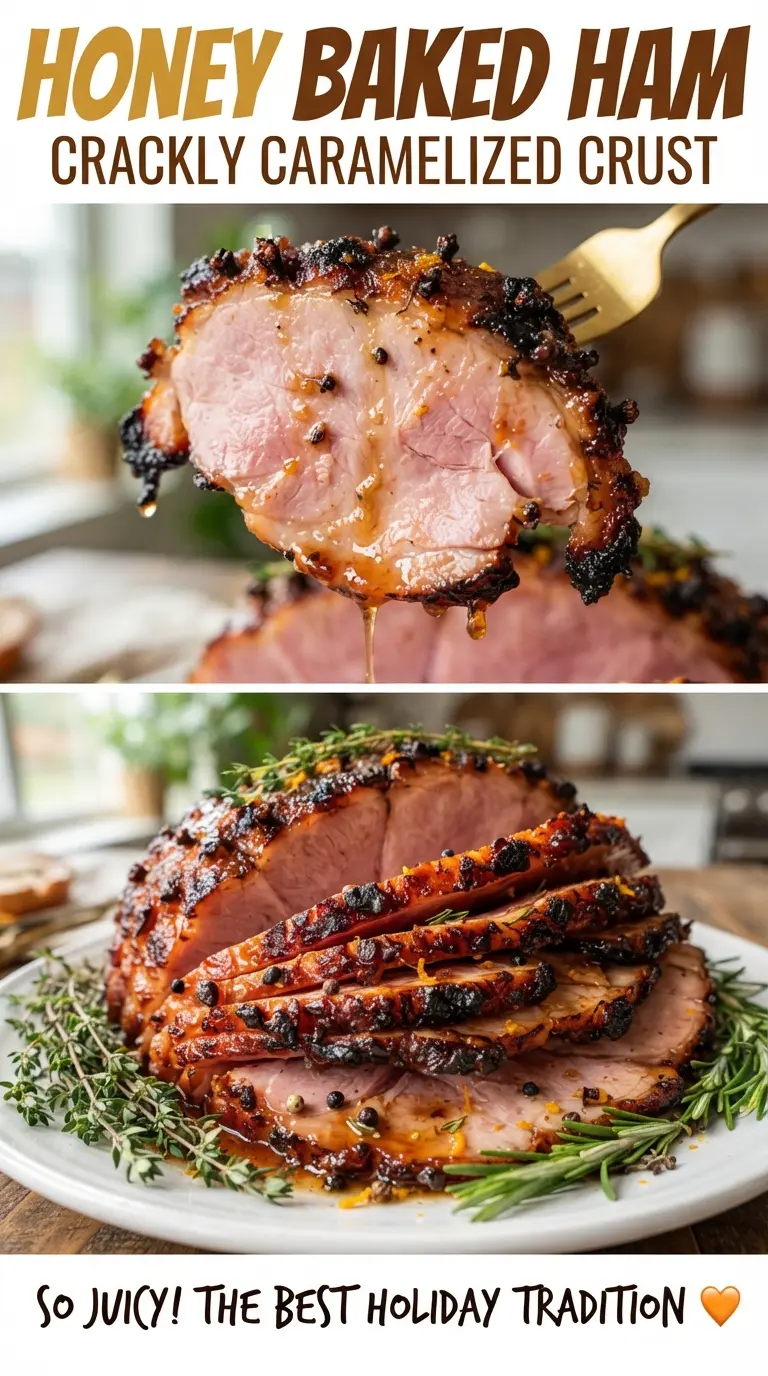
- Bone-in spiral-sliced ham — The bone helps the meat stay juicy, and the pre-sliced cuts let the glaze slip between layers instead of sitting only on the surface. A boneless ham will work, but it won’t catch the glaze as well and it usually loses a little of that classic baked-ham texture.
- Honey — This is the backbone of the glaze and the source of that glossy finish. Use a smooth, pourable honey; if it’s crystallized, warm it first so it brushes on evenly.
- Butter — Butter carries the honey and helps the sugar cling. Don’t skip it unless you have to, because honey alone tends to bead and slide off the ham instead of coating it.
- Brown sugar and granulated sugar — The brown sugar brings deeper molasses notes, while the white sugar helps build a drier, cracklier crust. That mix is what gives you texture instead of a soft, syrupy glaze.
- Cinnamon, cloves, ginger, nutmeg, allspice, and paprika — The spices keep the sweetness warm and layered, and the paprika adds color without making the ham taste smoky. If you’re missing one spice, don’t overcomplicate it; cinnamon, cloves, and ginger do most of the heavy lifting.
Building the Heat in Stages So the Crust Turns Crackly
Warming the Ham First
Set the ham cut-side down in the roasting pan and cover it tightly with foil. The low, covered bake warms the meat through without drying the outer slices, which matters because spiral cuts expose a lot of surface area. Pull the ham at 120F, not 140F, or it’ll overcook during the final glaze.
Making the Honey Butter and Spice Layer
Melt the honey and butter together just until smooth, then mix the sugars and spices in a separate bowl. Keeping them separate gives you more control: the honey-butter helps everything stick, and the dry mix forms the crust. If the honey mixture is scorching hot, let it cool for a minute so it doesn’t melt the sugar on contact and turn sticky instead of crisp.
Caramelizing in Three Passes
Remove the foil, brush on the honey-butter, and pat on a layer of the spiced sugar. Raise the oven to 400F and bake for 5 minutes, then repeat the brushing and sugaring two more times. If the crust starts to look dark at the edges before the ham hits temperature, tent the pan loosely with foil and let the center catch up.
The Rest That Keeps the Slices Juicy
Let the ham rest for 15 minutes before serving. That short pause keeps the juices in the meat instead of running onto the cutting board, and it gives the crust a minute to set so it cracks instead of smearing. Slice along the spiral cuts and spoon any pan juices over the platter if you want extra gloss.
How to Adapt This Honey Baked Ham for Different Tables
Maple-Spiced Glaze
Swap half the honey for maple syrup if you want a darker, rounder sweetness. The glaze will be a little less floral and a touch looser, so brush it on in thinner layers and watch the final high-heat bake closely.
Lower-Sugar Finish
Cut the granulated sugar by a third and rely more on the brown sugar and spices. You’ll get a thinner crust that’s less candy-like, but the ham will still caramelize and brown nicely without turning overly sweet.
Gluten-Free Holiday Ham
This recipe is naturally gluten-free as written, as long as your ham label doesn’t include a glaze packet or seasoning blend with wheat starch. Stick with the homemade coating and you’ll keep the same caramelized texture without any extra substitutions.
Storage and Reheating
- Refrigerator: Store slices in an airtight container for 4-5 days. The crust softens a bit, but the flavor holds.
- Freezer: Freeze wrapped portions for up to 2 months. Wrap tightly in parchment and foil, then seal in a freezer bag so the glaze doesn’t pick up freezer odor.
- Reheating: Reheat covered at 300F with a splash of pan juices or water until just warm. High heat dries spiral ham fast, and that’s the quickest way to ruin the texture you worked to build.
Answers to the Questions Worth Asking
Honey Baked Ham
Ingredients
Equipment
Method
- Preheat the oven to 325F. Place the ham cut-side down in a roasting pan and cover tightly with foil.
- Bake at 325F for 12-14 minutes per pound, until it reaches 120F inside. You should see the foil stay sealed and the ham warming through.
- Melt honey and butter together. Stir until smooth and glossy, then remove from heat.
- Mix granulated sugar and brown sugar with cinnamon, cloves, ginger, nutmeg, allspice, and paprika in a separate bowl. The mixture should look evenly speckled with spices.
- Remove the foil, brush the ham generously with honey butter, and pat on a layer of the spiced sugar. Make sure the surface is evenly coated so it can crust.
- Raise the oven to 400F and bake for 5 minutes. Look for the sugar to melt and start forming a bubbling, caramelized surface.
- Brush with honey butter again and pat on another layer of spiced sugar. Coat the entire top surface and any exposed edges.
- Bake at 400F for 5 minutes again. The glaze should deepen in color and look more crackly.
- Brush with honey butter again and pat on the final layer of spiced sugar. Aim for a thick, even sugar crust.
- Bake at 400F until the crust is deep golden and crackly, and the ham reaches 140F. The center temperature should be 140F while the coating looks crisp.
- Rest the ham for 15 minutes before serving. The glaze should set slightly and stay glossy.


