Butternut squash casserole comes out silky and light underneath, with a crisp pecan topping that breaks apart in buttery little shards. It’s the kind of side dish that quietly steals the table because it lands between savory and sweet without tipping too far either way. The squash bakes into a smooth, custard-like base that holds its shape when scooped, while the streusel stays crisp enough to give every bite a little crunch.
The trick is draining the squash well after boiling and mashing it while it’s still warm enough to go smooth. Too much extra water turns the casserole loose and dulls the flavor. The topping works because the butter and brown sugar coat the flour and pecans before they hit the oven, so it bakes into a crumbly crust instead of melting into the filling.
Below, I’ve included the details that matter most: how to keep the casserole from getting watery, why the topping stays crisp, and a few easy swaps if you need to work with what’s already in your kitchen.
The squash stayed creamy and the pecan topping browned up perfectly without sinking into the filling. I made it the day before and it reheated beautifully for Sunday dinner.
Save this butternut squash casserole for the side dish that brings creamy squash and a crisp pecan streusel together in one pan.
The Secret to Keeping the Casserole Creamy Instead of Watery
The biggest problem with butternut squash casserole is excess moisture. Boiled squash holds more water than people expect, and if you mash it straight into the dish without draining it well, the filling turns loose and can taste flat. Let it sit in the colander for a few minutes after draining, then mash while it’s still warm so it breaks down into a smooth base without needing extra stirring.
The eggs do more than enrich the filling. They help the casserole set, which is why this version slices and scoops cleanly instead of puddling on the plate. The brown sugar and vanilla round out the squash’s earthy flavor, but the salt matters too. Without it, the dish tastes like sweetened puree instead of a proper casserole.
What Each Ingredient Is Doing in This Dish
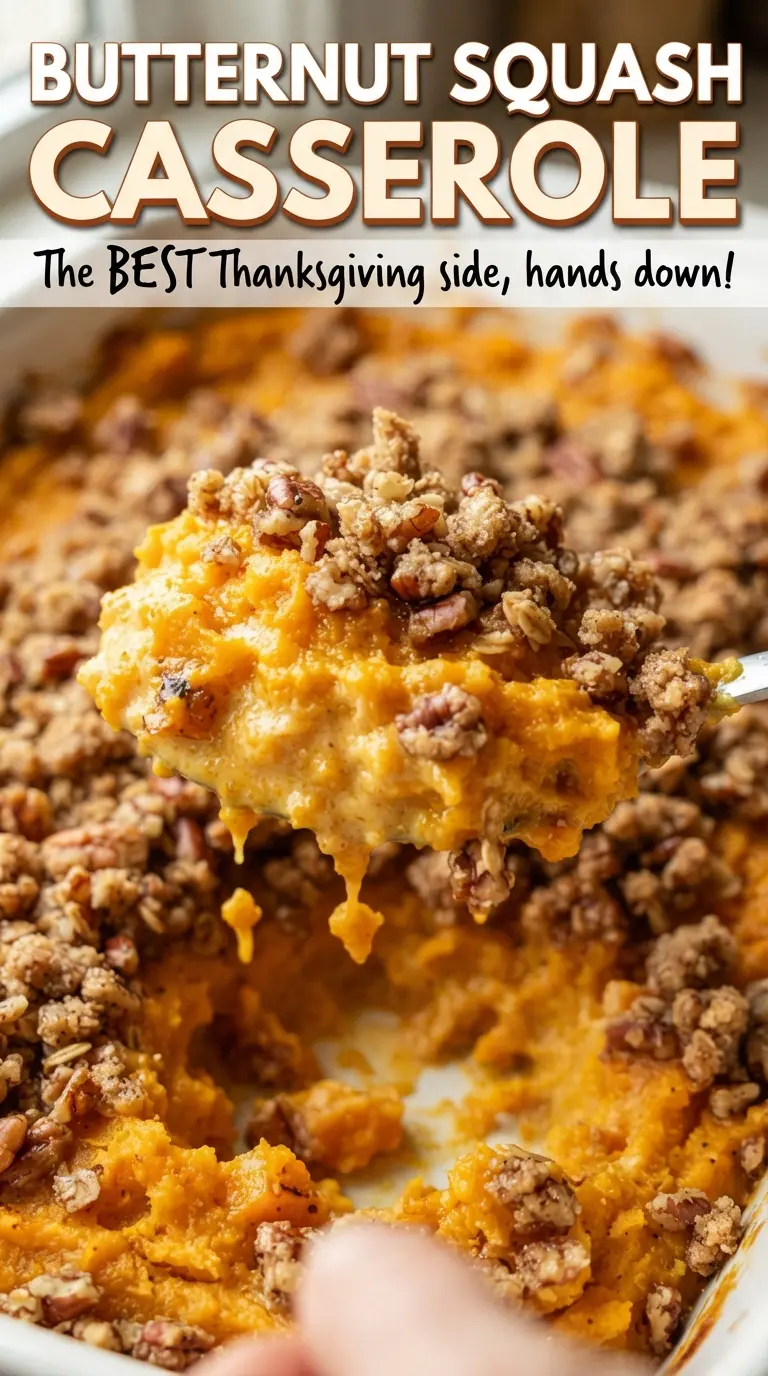
- Butternut squash — This gives the casserole its smooth, velvety body and naturally sweet flavor. Fresh squash works best here because canned purée can be thinner and varies a lot in moisture.
- Butter — Melted butter enriches the filling and binds the streusel. If you use less, the topping won’t crumble as nicely and the casserole tastes lean.
- Brown sugar — This adds caramel depth that white sugar can’t match. A little goes into the filling for balance and the rest goes on top for that crackly, golden finish.
- Eggs — These set the filling so it bakes into a soft custard instead of a loose mash. Don’t skip them if you want clean scoops.
- Pecans — They bring the crunch and a toasty, Southern-style finish. Chop them by hand if you can so some pieces stay chunky and some turn sandy for better texture.
- Flour — This gives the topping structure. If you need a gluten-free version, a good 1:1 gluten-free flour blend works better than almond flour here because it still bakes into crumbs instead of a paste.
Building the Filling and Streusel in the Right Order
Boil, Drain, and Dry the Squash
Cook the squash until it’s very tender, then drain it well. If water pools at the bottom of the bowl, the casserole will bake up loose and the flavor will feel diluted. I like to let the squash sit in the colander while I get everything else ready, then give it a quick mash so any remaining steam can escape before the eggs go in.
Mix the Filling Until It’s Smooth, Not Gummy
Stir the squash with the butter, brown sugar, eggs, milk, vanilla, cinnamon, and salt until it looks creamy and uniform. Don’t beat it hard once the eggs are in or the texture can get a little gluey. The goal is a soft, spoonable mixture that spreads easily across the baking dish.
Keep the Topping Crumbly
Work the flour, pecans, remaining butter, and remaining brown sugar together until you have rough crumbs. If it looks sandy, that’s fine. If it turns into a paste, the butter was too warm or it was mixed too long. Scatter it evenly over the filling so it bakes into a crisp cap instead of a dense layer.
Bake Until the Edges Bubble
The casserole is done when the topping is golden and the edges are bubbling. That bubbling tells you the filling underneath has heated through and set. Pull it from the oven when the top is just deep golden; if you wait for it to get dark, the pecans can turn bitter before the center is ready.
How to Adapt This Butternut Squash Casserole Without Losing the Texture
Make it dairy-free
Use a plant-based butter and an unsweetened milk like almond or oat milk. The filling still sets because the eggs do the heavy lifting, but the flavor will be a little less rich, so keep the vanilla and cinnamon in place.
Make it less sweet
Cut the brown sugar in the filling by 2 tablespoons and leave the topping as written. You’ll get a casserole that leans more savory-sweet and lets the squash flavor come forward without losing the caramelized top.
Swap the pecans
Walnuts work if that’s what you have, though they taste a little sharper and less buttery than pecans. For a nut-free topping, use rolled oats mixed with the flour, butter, and brown sugar; it won’t be as Southern in character, but it will still bake up crisp.
Storage and Reheating
- Refrigerator: Keep leftovers covered for up to 4 days. The topping softens a little, but the flavor stays good.
- Freezer: Freeze the baked casserole in portions or as a whole dish for up to 2 months. Thaw overnight in the refrigerator before reheating so the center warms evenly.
- Reheating: Warm in a 325F oven until heated through. Microwaving works for a serving, but the topping will lose its crunch faster, so the oven is the better choice when you want the streusel to stay crisp.
Answers to the Questions Worth Asking
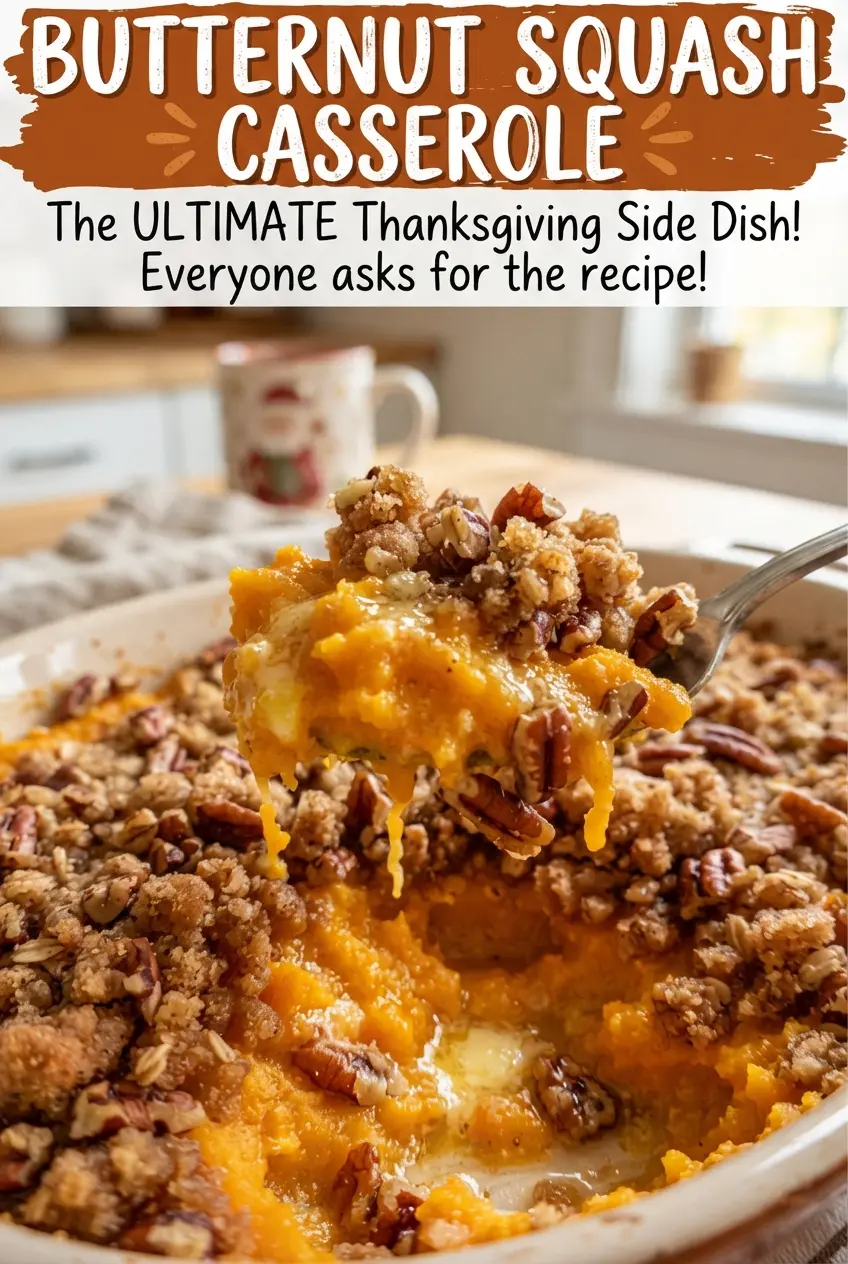
Butternut Squash Casserole
Ingredients
Equipment
Method
- Boil the cubed butternut squash for 15 minutes until very tender, then drain well.
- Preheat the oven to 350F and grease a 9x13-inch baking dish.
- Mash the drained squash with 1/4 cup butter, 1/4 cup brown sugar, eggs, milk, vanilla extract, ground cinnamon, and salt until smooth.
- Spread the smooth squash mixture evenly into the prepared baking dish.
- Mix the flour, chopped pecans, remaining butter, and remaining brown sugar into a crumbly topping.
- Sprinkle the crumbly pecan streusel over the squash in an even layer.
- Bake 35-40 minutes at 350F until the topping is golden and the edges bubble.


