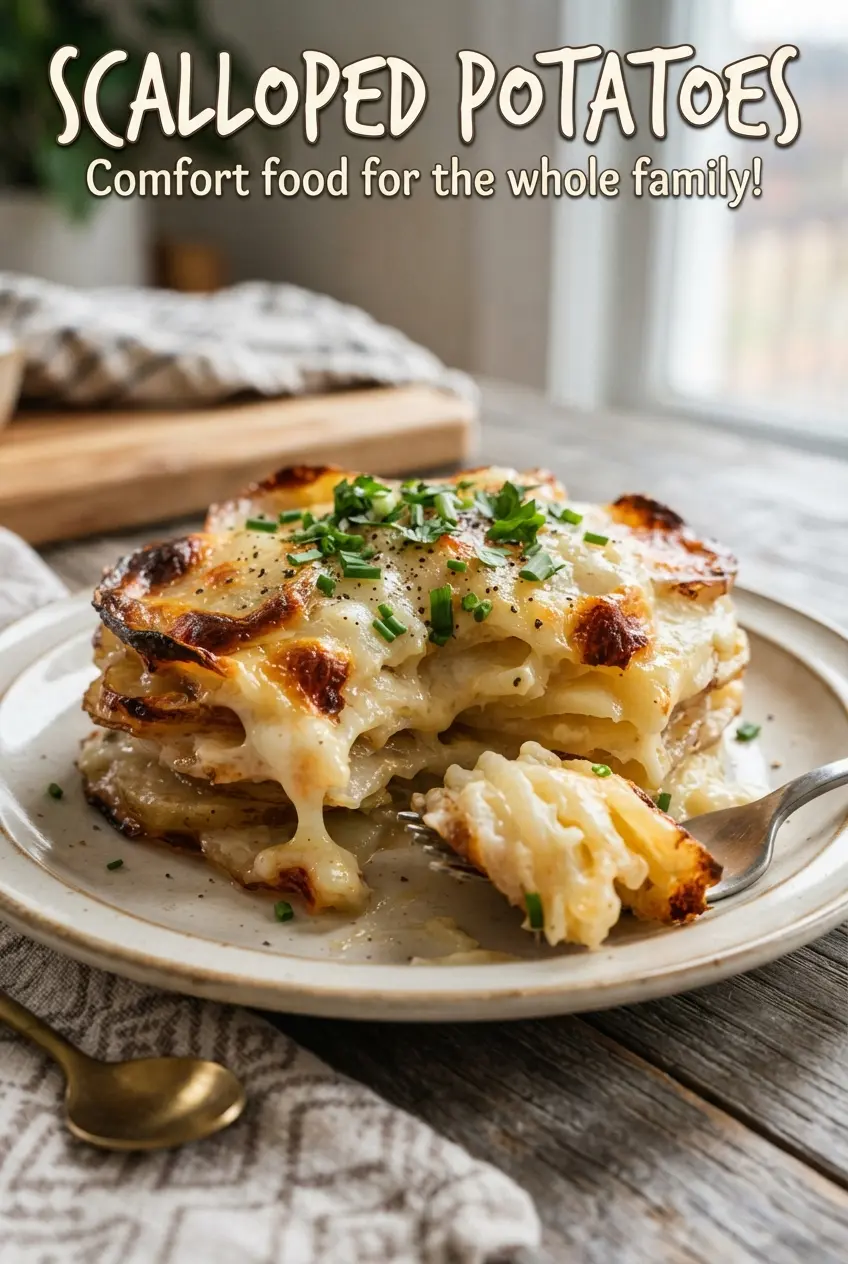
Scalloped potatoes land on the table with tender layers that hold their shape, a creamy sauce that settles into every gap, and a browned top that gives each scoop a little contrast. The best versions don’t turn watery or gluey; they slice cleanly, stay rich, and taste like the potatoes and cream actually had time to become one thing.
The trick is building the sauce before it goes anywhere near the oven. A brief flour cook in the butter takes the raw edge off and gives the milk and cream something to cling to, which keeps the finished dish silky instead of thin. Russet potatoes work here because they soften into the sauce without getting waxy, and the onion layers melt down just enough to sweeten the whole pan.
Below, I’ve added the timing detail that keeps the sauce from breaking, plus a few swaps that still give you a proper casserole texture if you’re working around what’s in the kitchen.
The sauce thickened beautifully and the potatoes were tender all the way through without falling apart. I loved that the top got golden while the middle stayed creamy.
Save these creamy scalloped potatoes for the kind of side dish that slices neatly and bakes up with a golden Parmesan top.
The Reason Scalloped Potatoes Stay Creamy Instead of Turning Gummy
The problem with a lot of scalloped potatoes is heat management. If the sauce goes in too thin, the potatoes release liquid and you end up with a broken, watery pan. If the sauce is cooked too hard after the dairy is added, the flour can clump and the cream can look grainy before the dish even hits the oven.
This version avoids both problems by thickening the milk and cream on the stove before it ever touches the potatoes. The sauce should lightly coat a spoon and leave a clear line when you drag a finger through it. That’s thick enough to cling to the layers, but not so thick that it bakes up stodgy. The rest time at the end matters too; the sauce finishes settling as the pan cools a little.
What Each Ingredient Is Doing In This Dish

- Russet potatoes — These are the right choice because they soften into a tender, layered casserole without holding a waxy bite. Slice them evenly at 1/8 inch so they cook at the same pace; uneven slices are the fastest way to get crunchy edges and a soft center.
- Whole milk and heavy cream — The blend gives you richness without making the sauce feel heavy or greasy. You can swap in more milk if needed, but don’t replace all the cream if you want that classic velvety finish.
- Butter and flour — This is the base that keeps the sauce from separating. Cook the flour for a full minute in the butter so the finished dish doesn’t taste raw or pasty.
- Onion and garlic — The onion softens between the layers and gives the dish a sweet, savory backbone. The garlic only needs a short cook before the flour goes in; if it browns, it turns bitter and takes over the whole pan.
- Parmesan — This finishes the top with saltiness and a crisp, browned edge. Freshly grated Parmesan melts and browns better than the pre-shredded kind, which often has anti-caking starch that can make the top patchy.
Building the Layers So the Middle Cooks Before the Top Burns
Starting the Sauce Base
Melt the butter in a saucepan and cook the garlic for just 30 seconds, only until it smells fragrant. Whisk in the flour and let it bubble for a minute so the raw starch cooks out. The mixture should look pasty and smooth, not dry or browned. If the garlic starts to color, pull the pan off the heat before it turns bitter.
Thickening the Dairy
Add the milk and cream gradually while whisking, not all at once. That slow addition keeps the sauce smooth and prevents flour lumps from forming around the whisk. Let it simmer gently until it thickens enough to coat the back of a spoon; if it boils hard, the dairy can look separated instead of glossy.
Layering the Dish
Arrange the potatoes and onion in three even layers, pouring sauce over each layer as you go. This helps the seasoning reach beyond the top few slices. Press the potatoes down lightly with the back of a spoon so the sauce settles between them, but don’t pack them tight or the center takes too long to soften.
Baking and Finishing
Cover the dish with foil for the first hour so the potatoes steam and become tender before the top starts to brown. Once the foil comes off, add the Parmesan and bake until the surface is golden and the potatoes are fork-tender all the way through. Let the dish rest for 15 minutes before serving; that pause is what lets the sauce thicken enough to slice instead of running across the plate.
How to Adjust These Scalloped Potatoes Without Losing the Creamy Texture
Make Them Gluten-Free
Swap the all-purpose flour for a good 1:1 gluten-free flour blend and keep the same amount. The sauce should still thicken well, but some blends need an extra minute of simmering to lose the sandy texture. Don’t use cornstarch here unless you’re changing the method, because it thickens differently and can turn the sauce glossy in a way that feels less classic.
Go Dairy-Light
You can replace the heavy cream with more whole milk, but the final dish will be a little less lush and a little looser when it comes out of the oven. To keep the sauce from feeling thin, let it thicken a touch more on the stove before layering. I wouldn’t swap in low-fat milk here; it doesn’t give the same body and the sauce can turn watery once baked.
Add Bacon Without Overloading the Pan
A few crisped bacon pieces between the layers work well, but keep the amount modest so the sauce stays front and center. If you add too much, the fat can make the casserole feel greasy and keep the potatoes from absorbing the cream evenly. Crisp the bacon first and drain it well so it doesn’t steam inside the dish.
Storage and Reheating
- Refrigerator: Store covered for up to 4 days. The sauce will firm up as it chills, which is normal.
- Freezer: It freezes, but the texture softens after thawing. Wrap tightly and freeze in portions for up to 2 months if you don’t mind a slightly looser sauce.
- Reheating: Reheat covered at 350F until hot in the center, then uncover for a few minutes to re-crisp the top. Microwaving works for a single serving, but it can make the potatoes a little uneven and the sauce thinner around the edges.
Questions I Get Asked About This Recipe
Scalloped Potatoes
Ingredients
Equipment
Method
- Preheat the oven to 375°F and butter a 9x13-inch baking dish with the butter.
- Melt the butter in a saucepan over medium heat, then cook the minced garlic for 30 seconds.
- Whisk in the all-purpose flour for 1 minute, stirring until smooth and lightly cooked.
- Gradually whisk in the whole milk and heavy cream, then simmer until slightly thickened.
- Season the sauce with salt, black pepper, and fresh thyme leaves, then stir to combine.
- Layer the sliced potatoes and onion in the baking dish in three layers, pouring sauce over each layer.
- Cover the dish with foil and bake for 1 hour at 375°F.
- Uncover, sprinkle the top evenly with grated Parmesan, and bake 25 to 30 minutes until golden and fork-tender.
- Rest the scalloped potatoes for 15 minutes before serving to set the creamy layers.


