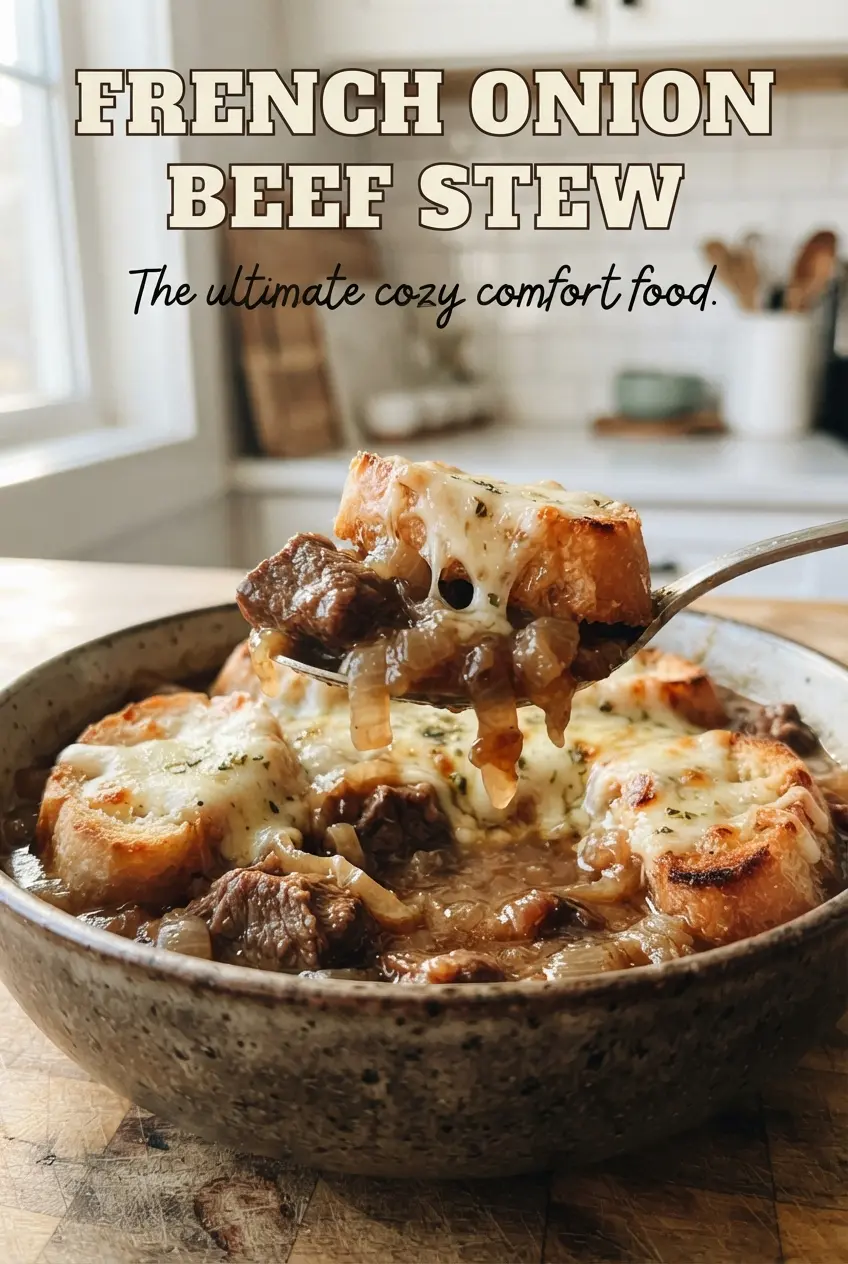
French Onion Beef Stew brings the deep, slow-cooked comfort of classic onion soup into a hearty, spoonable dinner. The broth turns rich and savory, the onions melt down into something almost jammy, and the beef gets tender enough to cut with a spoon. Topped with toasted baguette and bubbling Gruyere, it lands somewhere between stew and bistro supper in the best possible way.
What makes this version work is the patience built into the onions and the sear on the beef. Browning the chuck in batches gives the stew a darker, meatier base, and cooking the onions until they’re truly golden pulls out the sweetness that keeps the broth from tasting flat. The flour gets cooked briefly with the garlic, which helps the broth thicken without turning gluey.
Below, I’ve included the small details that matter here: how dark the onions should get, what to look for before you cover the pot, and how to finish it under the broiler so the cheese melts fast without burning the bread.
The onions cooked down into this deep sweet layer and the broth tasted like it had been simmering all day. I broiled the bowls for two minutes and the Gruyere came out perfectly browned, not oily at all.
Save this French Onion Beef Stew for the nights when you want deeply caramelized onions, tender beef, and a bubbling Gruyere topping.
The Onion Base Has to Go Deeper Than You Think
Most beef stews stop the onions too early. That leaves the broth tasting good but a little one-note, like beef soup with onions in it instead of the round, sweet-savory depth you want from French onion flavors. Here, the onions need time to lose their raw bite and move all the way into a dark golden stage, because that’s where the stew gets its signature background sweetness.
The other key move is scraping the pot after the wine goes in. Those browned bits from the beef and onions are concentrated flavor, and the wine loosens them so they dissolve into the broth instead of staying stuck to the bottom. If you rush this part, the stew still works, but it won’t taste as layered.
What Each Ingredient Is Actually Doing in This Stew

- Beef chuck — This is the right cut because it has enough fat and connective tissue to turn tender during the long simmer. Leaner beef gets dry before the onions have a chance to develop.
- Yellow onions — These do the heavy lifting for sweetness and body. Slice them thin so they collapse evenly; thick slices take longer and don’t melt into the broth the same way.
- Dry white wine — This gives the stew brightness and helps deglaze the pot cleanly. If you don’t want to open a bottle, use extra beef broth plus a small splash of white wine vinegar, but the flavor will be less refined.
- Gruyere — It melts into a nutty, stretchy cap that makes this feel like French onion soup at the table. Swiss cheese works in a pinch, but it won’t have the same depth.
- Baguette — Toast it well before topping the bowls. Soft bread turns soggy fast under the broiler; a real toast gives the cheese something sturdy to cling to.
Building the Stew So It Tastes Like It Simmered All Day
Brown the beef in batches
Season the beef first, then sear it in a hot pan with olive oil until the pieces have a deep brown crust on at least two sides. Crowding the pan steams the meat, which is the fastest way to lose that rich, roasted flavor. Take the time to work in batches, even if it feels slow. The stew is better for it.
Cook the onions past the sweet spot
Melt the butter, add the onions and sugar, and cook them over medium heat until they’re deep golden and jammy, not just softened. Stir often and scrape up anything that clings, because those browned bits help season the broth later. If the onions start to scorch, lower the heat and keep going. Burnt onions taste harsh, while properly caramelized onions taste round and savory-sweet.
Use the flour as a bridge, not a paste
Stir in the garlic and flour and cook for about a minute, just until the raw flour smell disappears. Then add the wine and scrape the bottom immediately so the flour doesn’t clump. This step thickens the stew without turning it heavy. If you dump in the liquid too fast, the flour can streak and leave little lumps behind.
Simmer until the beef gives in
Add the broth, Worcestershire, thyme, bay leaf, and beef, then cover and simmer slowly until the meat is tender and the broth has taken on a darker, fuller taste. Keep the heat low enough that the surface barely blips. A hard boil tightens the beef and makes the broth taste muddy. You want soft movement, not a rolling bubble.
Broil the cheese at the end
Ladle the stew into oven-safe bowls, top each with toasted baguette and Gruyere, then broil just until the cheese is melted, bubbling, and spotted brown. Stay close, because once the cheese starts to color, it can go from perfect to scorched in a minute. The bread should stay visible around the edges, and the topping should look molten, not dry.
How to Adapt This for a Different Table
Gluten-Free Version
Swap the all-purpose flour for a gluten-free flour blend or leave it out and simmer uncovered a little longer to reduce the broth. Use gluten-free bread for the topping, or serve the stew without it and add the cheese directly over the bowls. The flavor stays the same; the broth just ends up a touch lighter unless you give it extra reduction time.
Dairy-Free Version
Use olive oil instead of butter and skip the Gruyere topping. The stew will still have plenty of richness from the beef and onions, but you’ll lose the classic French onion finish. A dairy-free toasted topping can work, but it won’t brown or melt the same way.
Make It Ahead for Better Flavor
This stew tastes even better the next day because the onion flavor settles into the broth. Cook it through the simmer, chill it, then reheat gently and broil the bread and cheese right before serving. Waiting to add the topping keeps the baguette crisp instead of soggy.
Storage and Reheating
- Refrigerator: Store the stew without the bread and cheese for up to 4 days. The broth thickens as it chills, which is normal.
- Freezer: Freeze the stew base for up to 3 months. Leave off the baguette and Gruyere until serving, since both lose their texture after freezing.
- Reheating: Warm it gently on the stovetop over low heat until steaming hot. High heat can tighten the beef and make the broth taste flat, so heat it slowly and add a splash of broth if it has thickened too much.
Answers to the Questions Worth Asking
French Onion Beef Stew
Ingredients
Equipment
Method
- Season beef cubes with salt and black pepper. Heat olive oil in a Dutch oven over medium-high heat, then brown the beef in batches and set aside.
- Melt butter in the Dutch oven. Cook the thinly sliced onions with sugar over medium heat, stirring often for 30-35 minutes, until deep golden.
- Stir in minced garlic and all-purpose flour, cooking for 1 minute. Pour in the dry white wine and scrape the bottom of the pot.
- Add beef broth, Worcestershire sauce, thyme sprigs, bay leaf, and the browned beef. Bring to a simmer, cover, and cook for 2 hours until the beef is tender.
- Ladle the stew into oven-safe bowls and top each with a toasted baguette slice and shredded Gruyere. Broil for 2-3 minutes until the cheese is bubbly and browned.


