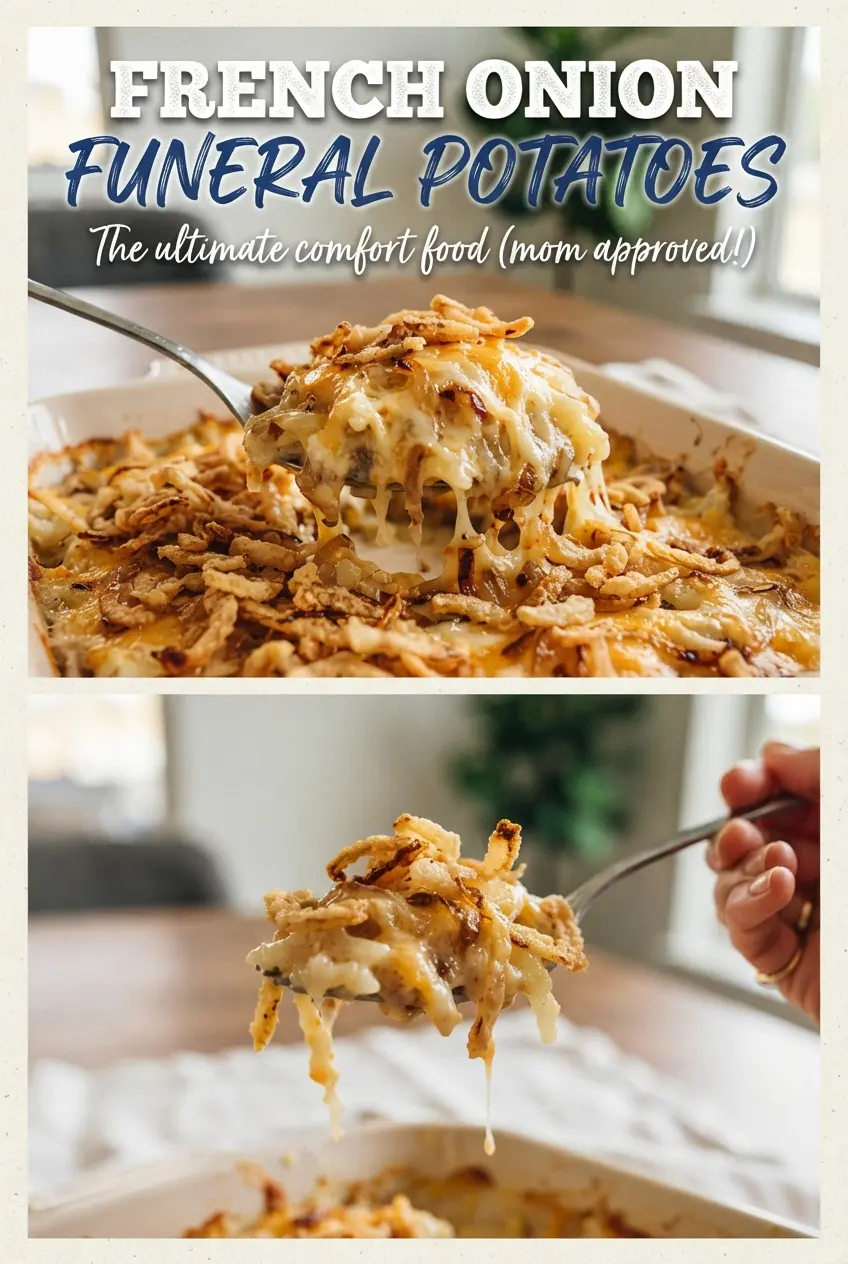
French onion funeral potatoes come out creamy, savory, and deeply browned at the edges, with a cheesy center that stays soft under a shattering layer of crispy fried onions. The French onion dip gives the casserole a built-in onion base without any extra chopping, and the Gruyere adds a nutty finish that keeps the whole dish from tasting flat or one-note. It’s the kind of side dish people go back for before they’ve even finished the first serving.
This version works because the flavors are layered instead of dumped together and forgotten. The sour cream and condensed soup create the creamy backbone, while the French onion dip pulls in that slow-cooked onion taste right from the start. Adding most of the cheese inside the casserole and saving some for the top gives you that stretchy, melty middle and a browned, bubbling lid at the end.
Below, I’ll show you why the casserole stays creamy instead of turning gluey, which cheese swap still gives you the right melt, and how to keep the onion topping crisp after baking.
The casserole baked up creamy all the way through, and the fried onions stayed crunchy on top instead of getting soggy. I brought it to a potluck and the pan was scraped clean.
Save these French onion funeral potatoes for the next potluck or holiday spread when you need a cheesy casserole with a crisp onion topping.
The Trick to Keeping This Casserole Creamy Instead of Dense
Hash brown casseroles can turn heavy fast when the dairy base gets overloaded or the potatoes go in still icy. Thawed hash browns matter here because frozen ice crystals water down the sauce as it bakes, which can leave you with a loose center and a greasy top. The other thing that helps is the mix of sour cream and French onion dip; together they stay tangy and thick without needing extra flour or a long stove-top sauce.
The cheese also needs a little care. Gruyere melts smoothly and brings that sweet, nutty onion-soup kind of flavor, but too much of it can turn the casserole stringy before it turns creamy. Folding in most of the cheese and saving the rest for the top keeps the texture balanced, and baking uncovered at the end gives the fried onions a chance to toast instead of steam.
What Each Ingredient Is Actually Doing in the Pan

- Frozen shredded hash browns — These give you the classic funeral potato texture: tender inside, crisp at the edges. Thaw them first and drain off any extra moisture so the casserole bakes up creamy instead of watery.
- French onion dip — This is the shortcut that makes the onion flavor taste round and savory without caramelizing onions from scratch. A good-quality dip matters here because it carries the seasoning for the whole dish.
- Sour cream — Sour cream keeps the filling tangy and rich. It also helps the casserole hold together without becoming stiff; Greek yogurt can work in a pinch, but it tastes sharper and bakes a little less plush.
- Cream of chicken soup — This adds body and salt and helps the filling set. If you need a gluten-free version, use a gluten-free condensed cream soup or a homemade white sauce with chicken seasoning.
- Gruyere and white cheddar — Gruyere brings melt and depth, while cheddar adds a familiar sharp finish. If Gruyere feels pricey, Swiss is the closest swap, but the flavor will be a little milder.
- Crispy fried onions — These go on at the end for crunch, not flavor alone. Add them too early and they soften in the steam; that’s the most common reason the top goes flat.
Building the Casserole So the Top Stays Crisp
Mix the creamy base first
Stir together the sour cream, French onion dip, cream of chicken soup, melted butter, most of the Gruyere, the white cheddar, salt, and pepper until the mixture looks smooth and evenly speckled with cheese. You want a thick, spoonable base with no streaks of unmixed sour cream. If the mixture looks broken or oily, the butter was too hot when it went in; let it cool for a minute next time before mixing.
Fold in the potatoes gently
Add the thawed hash browns and fold them through until every shred is coated. Don’t beat the mixture hard or it starts to compact, which gives you a dense casserole instead of a light, creamy one. The potatoes should look fully dressed but still distinct, not mashed into the filling.
Bake until the center sets
Spread the mixture into a greased 9×13-inch dish and bake until the edges are bubbling and the middle looks hot all the way through, about 45 minutes. That first bake is what cooks off extra moisture and gives the casserole structure. If the center still looks wet when you add the topping, the fried onions will sink instead of sitting on the surface.
Finish with cheese and onions
Scatter the remaining Gruyere over the hot casserole, then top with the fried onions and return it to the oven. Bake just until the cheese melts and the onions turn deep golden, 10 to 15 minutes. Pull it before the onions burn; they go from toasted to bitter faster than most people expect.
Three Ways to Adapt These French Onion Funeral Potatoes
Make it gluten-free without losing the creamy texture
Swap in a gluten-free condensed cream soup and check that your French onion dip is labeled gluten-free. The texture stays the same, and the onion flavor still comes through, but you don’t want to assume the packaged ingredients are safe without reading the label.
Use a different cheese if Gruyere isn’t in the budget
Swiss is the closest swap, and it still melts smoothly with that mild nutty edge. Mozzarella will melt, but it makes the casserole blander, so I’d only use it if you’re keeping the white cheddar and French onion dip for most of the flavor.
Make it ahead for a potluck or holiday table
Assemble the casserole without the fried onions, cover it tightly, and refrigerate it up to a day ahead. Bake it straight from the fridge, adding a few extra minutes if needed, then finish with the onions at the end so they stay crisp instead of soggy.
Make a lighter version without changing the whole dish
Use light sour cream and reduce the butter slightly, but keep the full amount of cheese and dip. That keeps the casserole flavorful and creamy, though the finished dish will be a little less rich and won’t brown quite as deeply.
Storage and Reheating
- Refrigerator: Store leftovers covered for up to 4 days. The topping softens in the fridge, but the casserole underneath stays creamy.
- Freezer: This freezes well without the fried onion topping. Freeze the baked casserole tightly wrapped for up to 2 months, then add fresh onions after reheating.
- Reheating: Warm in a 325F oven, covered, until hot in the center, then uncover for the last few minutes if you want the top to re-crisp. The microwave works for a single serving, but it softens the onions and makes the edges lose their texture.
Answers to the Questions Worth Asking
French Onion Funeral Potatoes
Ingredients
Equipment
Method
- Preheat the oven to 350F and grease a 9x13-inch baking dish.
- In a large mixing bowl, combine sour cream, French onion dip, cream of chicken soup, melted butter, 1 cup Gruyere, shredded white cheddar, salt, and black pepper until evenly blended.
- Fold the thawed hash browns into the mixture until fully coated and no dry spots remain.
- Spread the potato mixture into the greased baking dish in an even layer.
- Bake at 350F for 45 minutes, until the center is set and the edges look lightly golden.
- Top with the remaining Gruyere and crispy fried onions, covering the surface completely so it bakes into a crust.
- Bake 10-15 minutes more at 350F until golden and bubbling, with the onions visibly crisp at the top.


