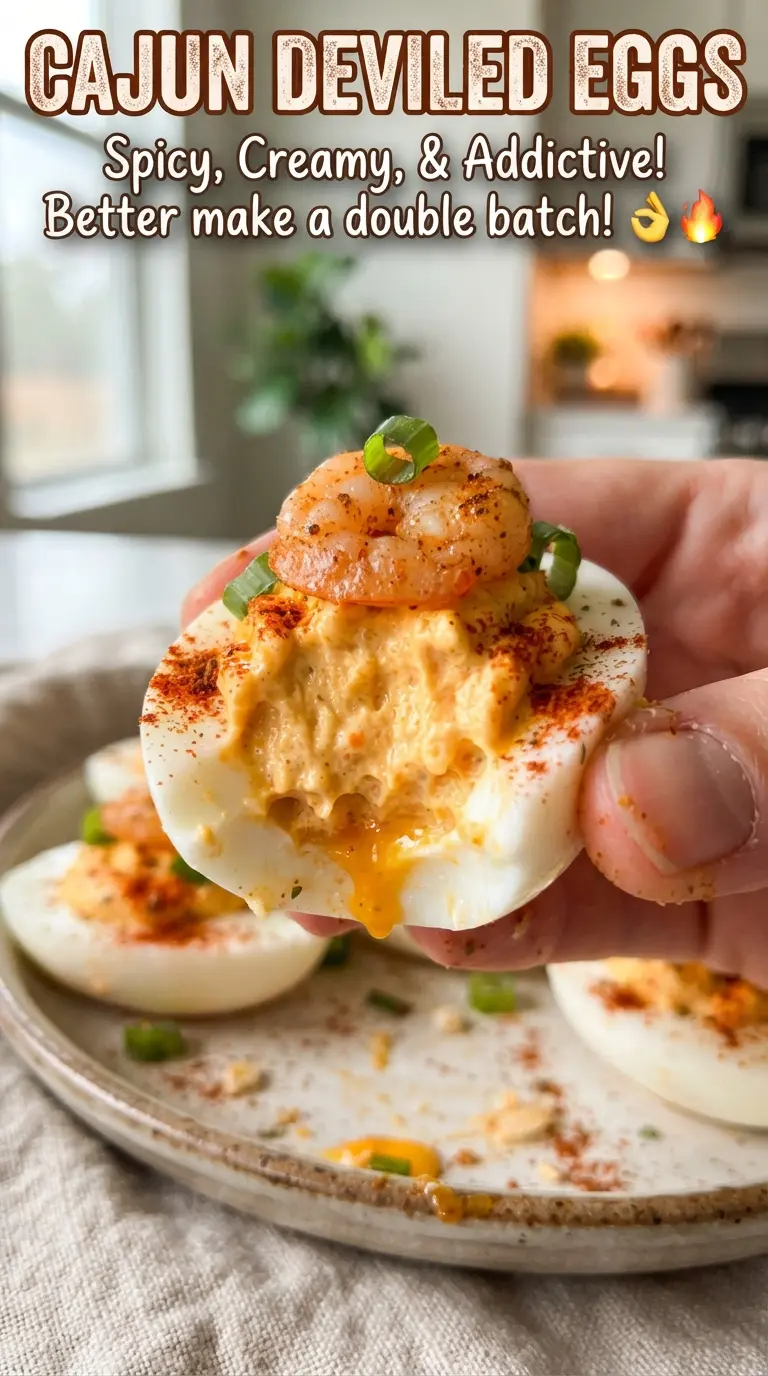
These Cajun deviled eggs disappear fast because they hit all the right notes at once: creamy yolk filling, a little tang from the Creole mustard and relish, and a shrimp topper that turns a familiar appetizer into something people hover over on the platter. The Cajun seasoning doesn’t just add heat; it gives the filling a deeper, savory edge that keeps each bite from tasting flat.
The part that makes this version work is balance. The yolks are mashed until smooth, but not loose, so the filling pipes cleanly and holds its shape under the shrimp. The shrimp get a quick toss in seasoning and a fast sear in butter, which keeps them juicy while giving the outside a little crust. That last step matters more than it looks — undercooked shrimp taste bland, and overcooked shrimp turn rubbery in minutes.
Below, you’ll find the small details that keep the eggs easy to peel, the filling creamy, and the shrimp cooked just right. There’s also a storage note if you want to get a head start before serving.
The filling was silky and held its shape perfectly, and the shrimp stayed tender with a little browned edge. I made them two hours ahead and they still tasted fresh when I put them out.
Cajun deviled eggs with seared shrimp make the kind of appetizer platter people notice first.
The Trick to Keeping the Filling Creamy Instead of Grainy
The filling only stays silky if the yolks are mashed while they’re still warm enough to break down easily. If they’re cold and firm, you end up chasing little lumps with the fork, which makes the mixture look overworked before it’s even smooth. A spoon or fork works here, but pressing the yolks through a fine sieve gives you the cleanest texture if you want a polished finish.
Mayonnaise and Creole mustard do more than add flavor. They loosen the yolks just enough to pipe, while the hot sauce and relish bring enough acidity to keep the filling from tasting heavy. Add the Cajun seasoning a little at a time, because some blends are saltier than others and it’s easy to overshoot if you dump it all in at once.
What Each Ingredient Is Actually Doing in These Eggs
- Eggs — The fresher the egg, the harder it can be to peel, so eggs that have sat in the fridge for a week or so are usually easier to work with. The cold-water start and ice bath matter more than brand names here; they stop the cooking fast and help the shells release cleanly.
- Mayonnaise — This gives the filling its body and creaminess. Use a mayo you already like eating, because the flavor comes through. If you need a lighter version, you can swap in a bit of Greek yogurt, but the filling will taste tangier and less plush.
- Creole mustard — This is the ingredient that gives the filling its backbone. Regular yellow mustard works in a pinch, but it won’t bring the same coarse texture or depth. If you substitute, use a little less at first and taste before adding more.
- Sweet pickle relish — This keeps the filling from feeling one-note. Drain it lightly if yours is very wet, or the filling can loosen too much and slide around on the egg whites.
- Cajun seasoning — This is where the dish gets its signature heat and savory edge. Different blends vary a lot, so taste before adding the full amount if yours is heavy on salt or cayenne.
- Shrimp — The shrimp make these feel like a proper party appetizer instead of a standard deviled egg tray. Halving them lengthwise helps them sit flat and look neat on top. Pat them dry before seasoning so they sear instead of steaming in the butter.
- Butter — Butter gives the shrimp a quick, rich sear and helps the seasoning cling. Don’t crank the heat too high, or the butter browns before the shrimp are done.
How to Build the Eggs So the Shrimp Stay Juicy
Cooking the Eggs Without Overdoing Them
Bring the eggs up in cold water, then cover the pot and pull it off the heat once it boils. That gentle finish gives you cooked yolks without the gray ring that shows up when eggs go too long. The ice bath isn’t optional if you want clean peeling; it stops the carryover heat and tightens the whites away from the shell.
Mixing the Filling to the Right Texture
Mash the yolks with the mayonnaise, mustard, hot sauce, relish, and seasoning until the mixture looks smooth and spoonable. If it seems stiff, add a teaspoon of mayo, not a splash of water, so the filling stays rich and pipes neatly. Grainy filling usually means the yolks weren’t broken down enough before the wet ingredients went in.
Searing the Shrimp Fast
Season the shrimp, then put them in a hot skillet with butter and cook just until they turn pink and curl into a loose C shape. If they tighten into a tight O, they’ve gone too far. They only need a minute or two per side, which is why the shrimp should be prepped before the pan gets hot.
Assembling for a Clean Finish
Pipe or spoon the filling into the egg whites, then top each one with a shrimp half and a few sliced green onions. If you’re serving them on a platter, build the eggs close together so the shrimp stay centered and don’t slide around. A small sprinkle of extra Cajun seasoning at the end gives the tray a finished look and a little more pop.
How to Adapt These Cajun Deviled Eggs for Different Crowds
Dairy-Free Version
Use a dairy-free mayonnaise and cook the shrimp in a neutral oil instead of butter. You’ll still get the creamy filling and bold seasoning, but the shrimp won’t have quite the same round richness from butter, so the seasoning needs to be well balanced.
No-Shrimp Topping
Leave off the shrimp and finish the eggs with extra green onion and a tiny pinch of Cajun seasoning. This turns them back into a classic-style deviled egg with a Cajun accent, and it’s the right move if you need a simpler appetizer tray or want to avoid shellfish.
Milder Version
Cut the hot sauce in half and use a mild Cajun blend. You’ll still get the paprika and garlic notes, but the eggs will lean savory instead of sharp. This is the version to make when you want crowd-pleasing heat instead of a noticeable burn.
Storage and Reheating
- Refrigerator: Store the filled eggs in a single layer in an airtight container for up to 2 days. The shrimp are best within the first day, and the whites can pick up a little moisture after that.
- Freezer: Don’t freeze these. The whites turn rubbery and the filling separates once thawed.
- Reheating: These are meant to be served cold or cool, not reheated. If you made the shrimp ahead, let them come back to room temperature for 10 to 15 minutes before topping the eggs so they don’t taste chilled straight from the fridge.
Answers to the Questions Worth Asking
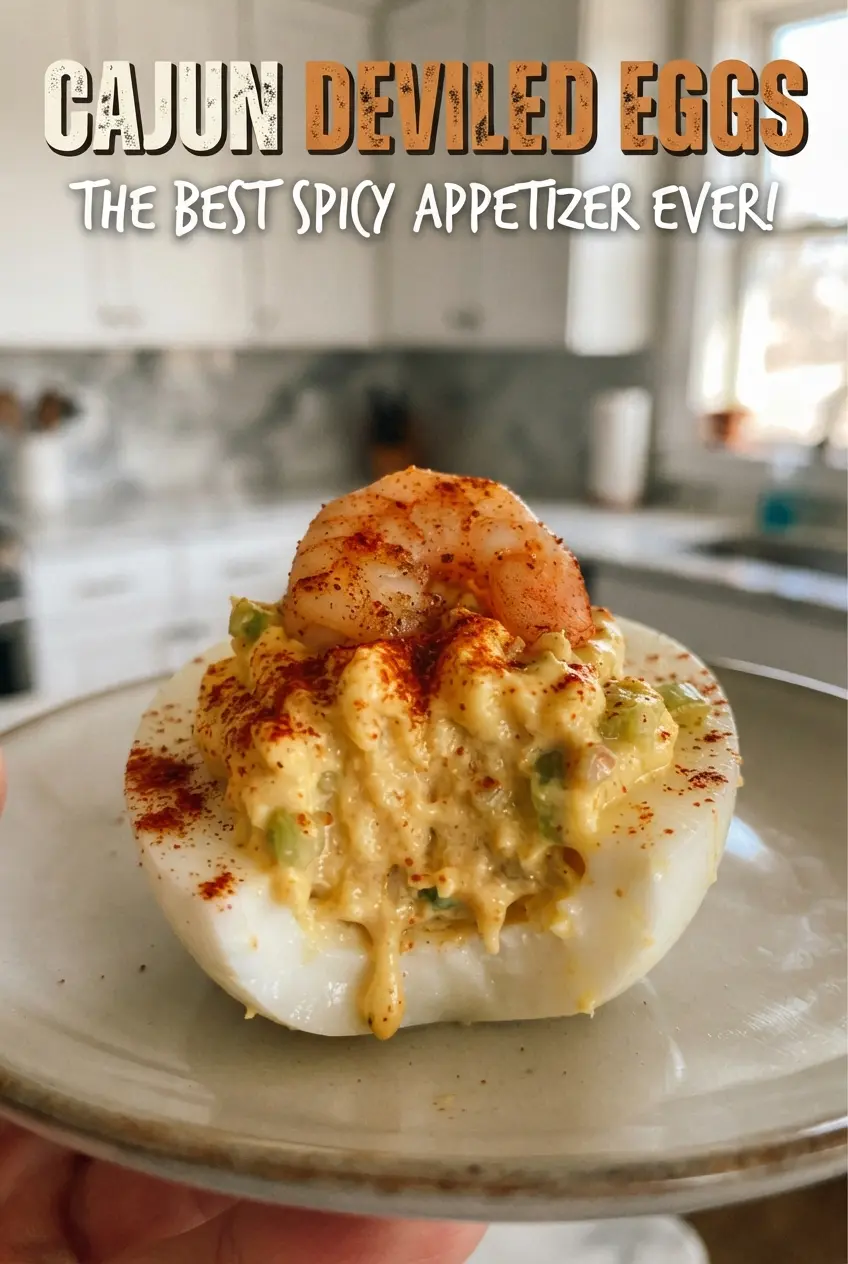
Cajun Deviled Eggs
Ingredients
Equipment
Method
- Place 12 large eggs in a pot, cover with cold water, and bring to a boil. Cover the pot, remove from heat, and let stand 12 minutes.
- Chill the eggs in an ice bath for 10 minutes. Peel and halve them lengthwise.
- Mash the yolks with 1/2 cup mayonnaise, 1 tablespoon Creole mustard, 1 teaspoon hot sauce, 1 tablespoon sweet pickle relish, and 1 teaspoon Cajun seasoning until smooth.
- Toss the shrimp with the remaining Cajun seasoning. Sear shrimp in 1 tablespoon butter for 1–2 minutes per side until pink.
- Pipe the deviled filling into the egg whites. Top each with a shrimp half and sliced green onions.


