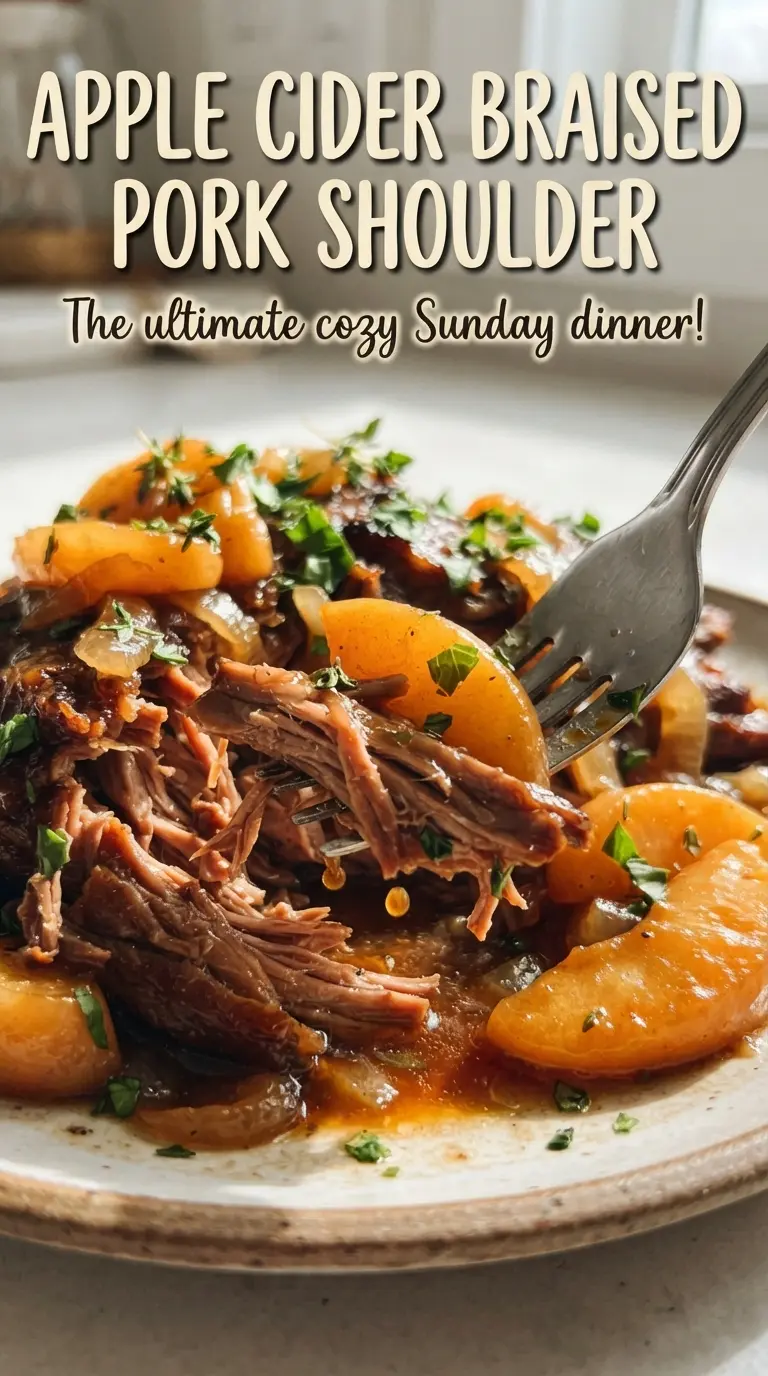
Pork shoulder turns silky and spoon-tender when it’s braised low and slow in apple cider, and this version lands in that sweet spot where the sauce tastes rich without feeling heavy. The apples soften just enough to melt into the cider braising liquid, while the onion and herbs give the pot a savory backbone that keeps every bite grounded.
The trick here is building enough color on the pork before any liquid goes in. That browned crust gives the braise depth, and the little caramelized bits left in the pot turn into the base of the sauce once the cider, broth, Dijon, and vinegar go in. A boneless shoulder is the right cut because it has enough fat and connective tissue to stay juicy through the long cook.
Below, I’ve included the timing that keeps the apples from disappearing, plus a few smart swaps if you need to work with what’s already in the kitchen. The sauce reduces at the end, which is the part that makes the whole dish taste finished instead of just cooked.
The pork shredded with almost no effort, and the reduced cider sauce had just the right balance of tangy and sweet. I loved that the apples stayed intact instead of turning to mush.
Save this Apple Cider Braised Pork Shoulder for a tender Sunday supper with glossy cider gravy and soft braised apples.
The Reason the Pork Stays Tender Instead of Drying Out
Pork shoulder can take a long braise because it’s built for it. The connective tissue slowly melts into the cooking liquid, which is what gives you that pull-apart texture instead of slices that fight back. If the heat is too high, though, the muscle fibers tighten before the collagen has time to relax, and you end up with meat that tastes cooked but not tender.
The other thing that matters is keeping the braise at a gentle simmer once it goes into the oven. You’re not trying to boil the pork. A steady, low oven gives the shoulder time to soften evenly, and adding the apples later keeps them from collapsing into the sauce before the meat is ready.
What the Cider, Mustard, and Herbs Are Each Doing Here
- Boneless pork shoulder — This cut has enough fat and connective tissue to braise for hours without drying out. Pork loin won’t give you the same texture; it goes stringy in a long braise and doesn’t shred in the same lush way.
- Apple cider — Use actual cider, not apple juice, if you can. Cider has a fuller, less candy-sweet flavor that holds up after reducing, which is what keeps the sauce tasting balanced instead of sugary.
- Dijon mustard — Dijon gives the sauce sharpness and helps tie the fat and liquid together. Don’t skip it; that little bite keeps the cider from tasting flat.
- Apple cider vinegar — This is the bright edge in the sauce. It doesn’t make the dish sour; it wakes up the sweetness from the cider and brown sugar so the final sauce tastes layered.
- Fresh thyme and rosemary — Fresh herbs matter here because they perfume the braise without getting muddy. Dried rosemary can work in a pinch, but use less than you think, since it gets stronger as it sits in hot liquid.
- Apples — A firm apple holds its shape best. Granny Smith gives the cleanest contrast, while Honeycrisp turns softer and sweeter. Either works if you add them near the end, after the pork has already had most of its time in the oven.
Building the Braise So the Sauce Tastes Finished
Season and sear the pork first
Pat the pork dry, then season it well before it touches the pan. When the oil is hot, the surface should sizzle immediately and develop a deep brown crust in 4 to 5 minutes per side. If the meat sticks at first, leave it alone; it will release once the browning is deep enough. Pale pork means pale sauce, so don’t rush this part.
Soften the onion and scrape up the fond
Cook the onion until it starts to turn translucent and pick up some color, then add the garlic for just a minute so it doesn’t burn. Once the cider and broth go in, use a wooden spoon to loosen every browned bit from the bottom of the pot. Those bits are the backbone of the sauce. If they stay stuck, they’ll scorch during the braise and leave the whole dish tasting bitter.
Let the oven do the slow work
Return the pork with the thyme and rosemary, cover the pot, and braise at 325F until the meat is starting to yield but isn’t fully falling apart yet. Then add the apples and cook until the pork shreds easily with a fork. The apples go in late on purpose; if they cook the whole time, they disappear.
Reduce the liquid before serving
Once the pork is out, shred it in large pieces and simmer the braising liquid on the stove until it coats a spoon lightly. That final reduction is what gives you a sauce that clings to the meat instead of pooling at the bottom of the bowl. If it tastes flat at this point, it usually needs a pinch more salt, not more sugar.
How to Adapt This Apple Cider Pork for Your Kitchen
Use bone-in pork shoulder
Bone-in pork shoulder works here, too. It usually needs a little longer in the oven, but it gives the braise a deeper pork flavor. Cut the meat into a few large chunks around the bone so the heat can move through the pot more evenly.
Make it gluten-free
This recipe is naturally gluten-free as written if your broth and Dijon mustard are certified gluten-free. That keeps the sauce just as glossy and rich without changing the method at all.
Swap the apples
Pear can stand in for the apples if that’s what you have, but use a firm one and add it at the same stage. It will be a little softer and sweeter than apple, which changes the balance of the sauce without breaking the recipe.
Make the sauce richer
For a more concentrated pan sauce, reduce the liquid a little longer at the end, or whisk in a small knob of cold butter off the heat. Butter isn’t required, but it gives the sauce a softer gloss and rounds out the acidity from the cider vinegar.
Storage and Reheating
- Refrigerator: Store leftovers in an airtight container for up to 4 days. The flavors get even better overnight, and the sauce will thicken as it chills.
- Freezer: This freezes well for up to 3 months. Cool it completely first, then freeze the pork with enough sauce to keep it moist.
- Reheating: Reheat gently on the stove over low heat or in a covered baking dish in the oven. Add a splash of broth or cider if the sauce looks tight, and don’t let it boil or the pork can dry out.
Questions I Get Asked About This Recipe
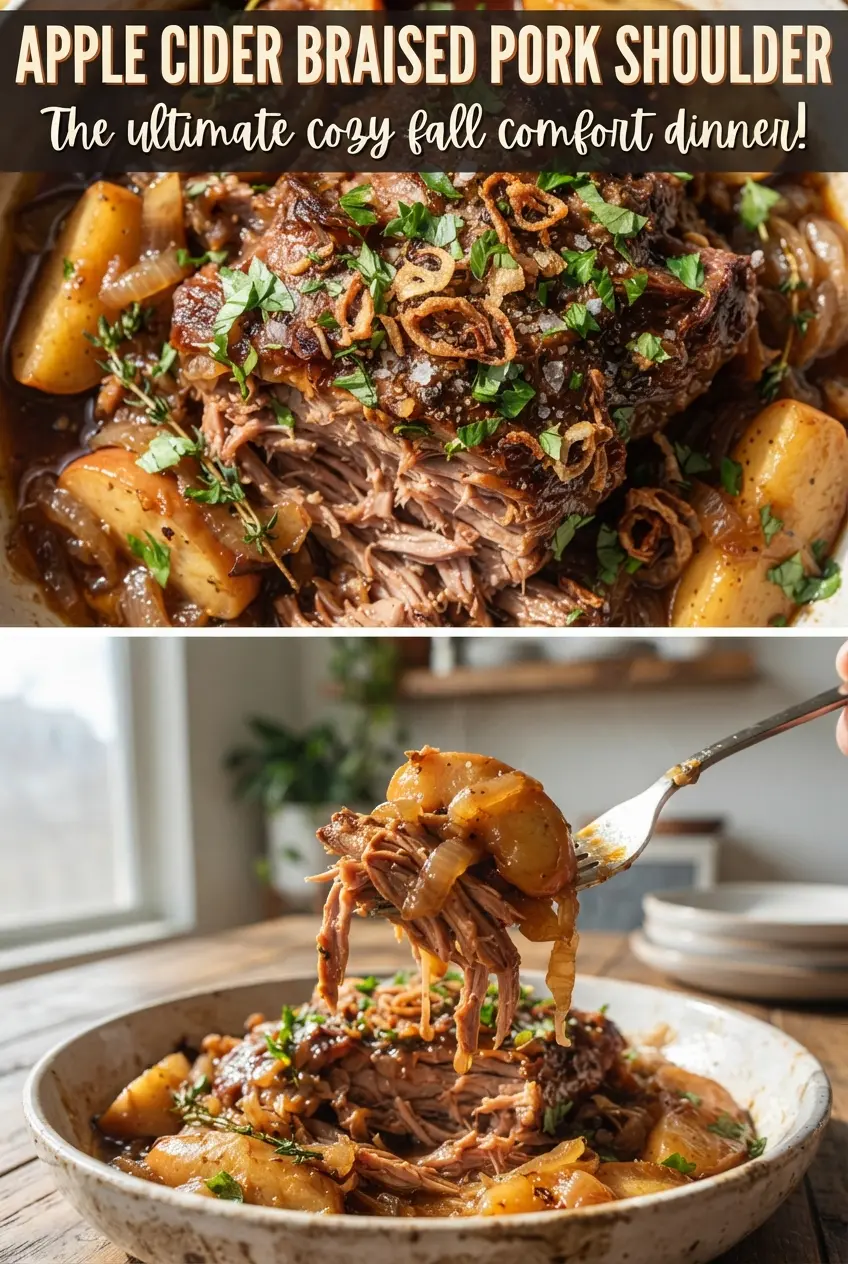
Apple Cider Braised Pork Shoulder
Ingredients
Equipment
Method
- Preheat oven to 325F. Season the pork with salt, black pepper, and smoked paprika.
- Heat olive oil in a Dutch oven over high heat and sear the pork 4-5 minutes per side until well browned, then remove it. The surface should look deeply caramelized.
- Cook the onion in the Dutch oven for 5 minutes. Add the garlic and cook 1 minute until fragrant.
- Stir in apple cider, chicken broth, apple cider vinegar, Dijon mustard, and brown sugar, scraping up the browned bits. Bring the mixture to a simmer so the seasonings dissolve.
- Return the pork to the Dutch oven and add thyme and rosemary. Cover and braise in the oven for 2 1/2 hours at 325F.
- Add the apple wedges and braise covered for 45 minutes more at 325F. Cook until the pork is fork-tender and the apples are soft.
- Shred the pork into large pieces. It should pull apart easily with a fork.
- Simmer the braising liquid on the stove for 10 minutes to reduce. The sauce should thicken slightly and look glossy.
- Serve the shredded pork with the sauce and apples. Spoon the reduced cider sauce over everything before eating.


