Dark beer, tender beef, and soft potatoes give this German beef stew its deep, steady comfort. The broth turns rich and glossy as it simmers, the carrots keep enough shape to add sweetness, and the beef breaks apart with just a fork when everything has done its time. This is the kind of stew that tastes even better after it sits a little while, when the paprika, mustard, and caraway have had a chance to settle into the broth.
What makes this version work is the layering. The beef gets browned in batches first, which builds flavor instead of steaming the meat. Then the onions cook until golden before the garlic, tomato paste, paprika, and caraway go in, so the spices bloom in the fat and never taste raw. The dark beer adds depth, but the broth keeps it from turning harsh, and the vinegar at the end sharpens the whole pot just enough to keep it from tasting heavy.
Below, I’ve included the one step that matters most for a stew with real depth, plus the ingredient choices that make a difference if you want the broth to taste balanced instead of flat.
The sauce got thick and savory without needing extra flour, and the potatoes held their shape instead of turning mealy. My husband went back for seconds and kept talking about the caraway and beer together.
Save this German beef stew for the nights when you want dark beer, tender beef, and potatoes in one deeply savory bowl.
The Step That Keeps This Stew Rich Instead of Watery
The difference between a good beef stew and a thin one comes down to the first 20 minutes. If the beef goes into the pot all at once, it steams. If the onions rush past golden, the base tastes flat. And if the beer is added before the browned bits are loosened, you leave a lot of flavor stuck to the bottom of the pot. This stew gets its body from the flour on the beef, the browned fond in the pan, and the long simmer that gives the broth time to tighten naturally.
Caraway and paprika matter here more than they would in a quick soup. They need a minute in the hot fat so they perfume the onions and tomato paste before the liquid goes in. That short bloom keeps the paprika from tasting dusty and lets the caraway read as warm and earthy instead of sharp.
- Beef chuck — This is the cut that breaks down into spoon-tender pieces without drying out. Leaner stew meat gets stringy before it gets soft.
- German dark beer — Pick a malty, not bitter, beer. It should bring depth and color, not hop bite.
- Tomato paste — This is the quiet backbone of the stew. It deepens the broth and helps the sauce taste cooked, not just combined.
- Caraway seeds — They’re small, but they give the stew its distinctly German edge. If you only have whole caraway, use them as written; ground caraway turns louder and can overpower the pot.
What Each Ingredient Is Actually Doing in This Pot
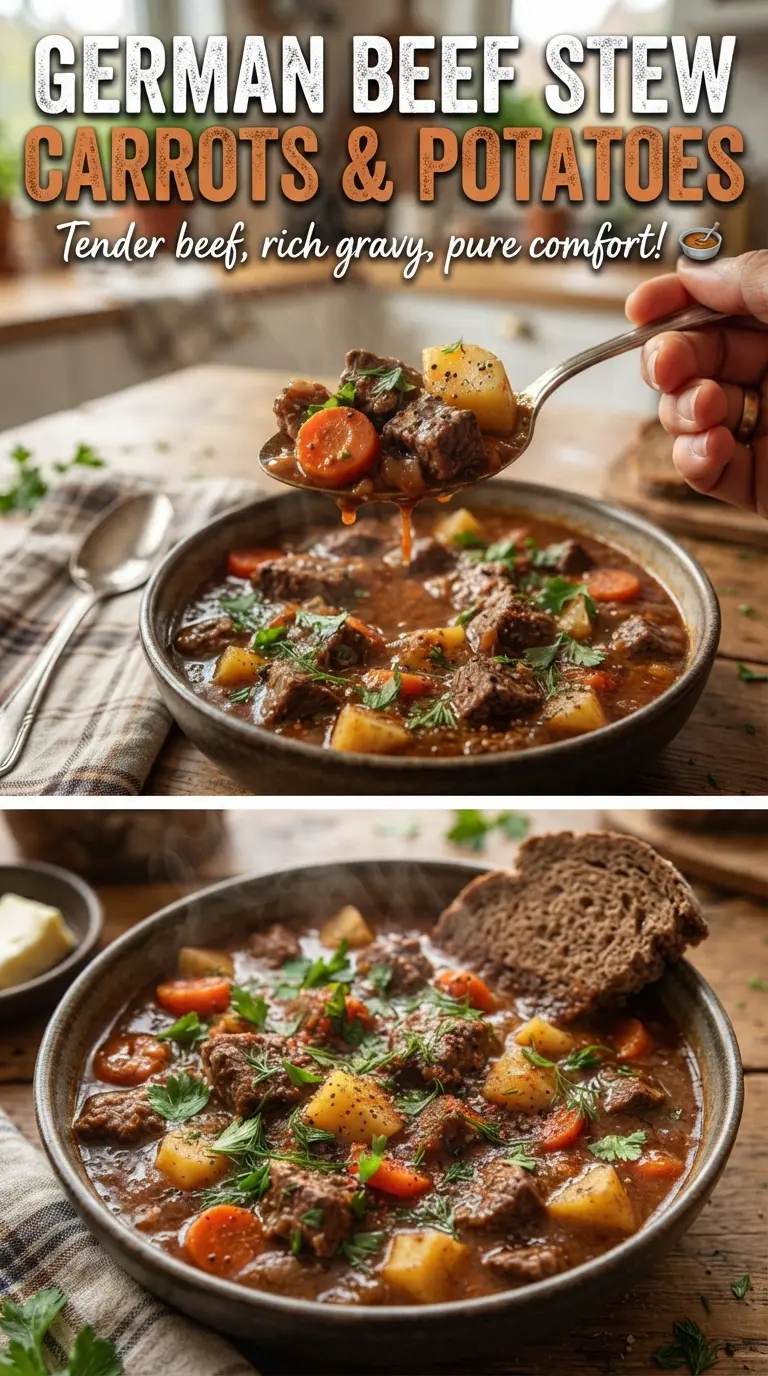
- Beef chuck — The connective tissue is the point. It softens into the broth and gives the stew a fuller mouthfeel than a quick-cooking cut ever could.
- Butter or oil — Butter adds flavor, oil browns a little more steadily. Either works; use oil if your pot runs hot or if you want a slightly cleaner finish.
- Onions, garlic, tomato paste, paprika, and caraway — This is the flavor base. The onions need time to soften and sweeten, and the paste and spices need that brief contact with fat so they taste rounded instead of raw.
- Dark beer and beef broth — The beer brings malt and color, while the broth keeps the stew balanced. A full bottle of bitter beer will dominate, so choose one with a smooth, toasty finish.
- Dijon mustard and red wine vinegar — These don’t make the stew tangy. They wake it up. Without them, the broth can taste heavy after a long simmer.
- Potatoes and carrots — Add them later so they hold their shape. If they go in too early, the potatoes start breaking down before the beef is tender.
Building the Stew in the Right Order
Browning the Beef in Batches
Coat the beef in flour, salt, and pepper, then brown it in a hot pot without crowding the pieces. You want a deep brown crust on the outside, not gray meat sitting in juice. If the pan looks wet, stop and work in smaller batches. Those browned edges are what give the broth its first layer of flavor.
Cooking the Onion Base
Let the onions cook until they turn golden and start to collapse. That step takes longer than most people expect, but it pays off in sweetness and depth. Stir in the garlic, tomato paste, paprika, and caraway for just a minute. If the garlic starts to brown too fast, your heat is too high and the spices will taste bitter instead of fragrant.
Deglazing and Simmering Low
Pour in the beer and scrape the bottom of the pot until every browned bit lifts. Then add the broth, mustard, vinegar, and bay leaves, and return the beef to the pot. Bring it to a gentle simmer, not a hard boil. A hard boil tightens the meat and makes the broth cloudy; a low simmer keeps the beef relaxing into tenderness.
Adding the Potatoes and Carrots at the End
The potatoes and carrots go in after the beef has already had time to soften. That gives the meat a head start while the vegetables cook through without falling apart. Simmer until the potatoes are tender at the center and the carrots give cleanly to a fork. Pull the bay leaves before serving and finish with parsley for a fresh, bright note.
How to Adapt This for a Bigger Crowd or a Lighter Bowl
Make It Gluten-Free
Skip the flour on the beef and use a cornstarch slurry at the end if you want extra thickness. You’ll lose a little of the deep, toasty coating from the flour dredge, but the stew still turns out rich if you brown the beef well and simmer it uncovered for the last few minutes.
Use a Different Beer
If you don’t have German dark beer, use another malty dark lager or a mild stout. Avoid very bitter IPAs or heavily roasted beers, which can make the broth taste sharp. The goal is depth, not hop bitterness.
Make It Ahead for Better Flavor
This stew tastes even better the next day. Chill it after cooking, then reheat gently so the potatoes don’t break apart. The broth thickens as it sits, and the beer, mustard, and caraway settle into a much more rounded flavor.
Storage and Reheating
- Refrigerator: Keeps well for 4 days. The broth thickens as it chills, and the flavors deepen overnight.
- Freezer: Freezes well for up to 3 months. Cool it completely first, then freeze in portions; the potatoes may soften a little after thawing, but the stew still reheats nicely.
- Reheating: Warm it slowly on the stove over low heat with a splash of broth or water if needed. Don’t boil it hard, or the beef can tighten up and the potatoes can break down.
Answers to the Questions Worth Asking
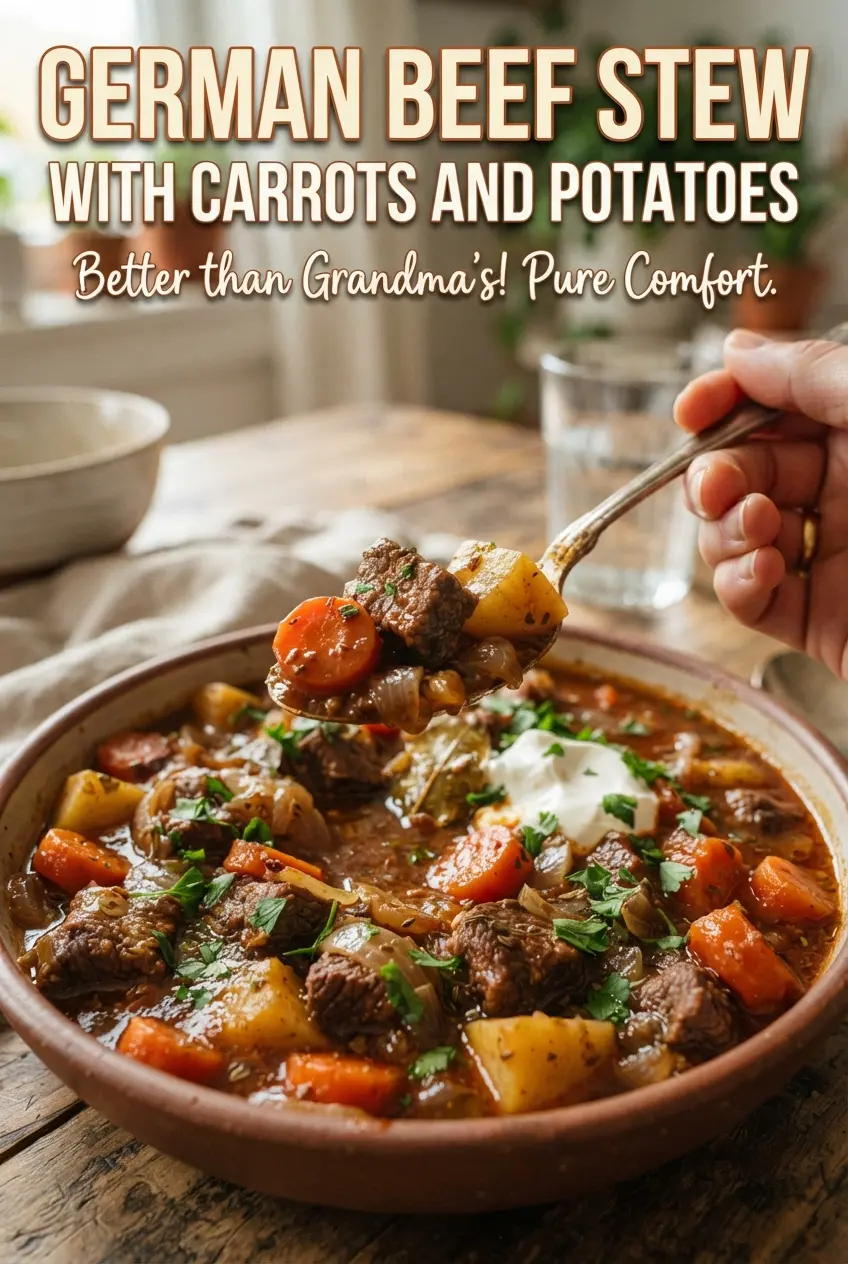
German Beef Stew with Carrots and Potatoes
Ingredients
Equipment
Method
- Season the beef with salt and black pepper, then toss with flour until evenly coated.
- Heat butter or oil in a Dutch oven and brown the beef in batches over medium-high heat until deep golden on the outside, about 3-4 minutes per batch.
- Add sliced onions and cook for 8-10 minutes until golden.
- Stir in minced garlic, tomato paste, sweet paprika, and caraway seeds, and cook for 1 minute to bloom the spices.
- Pour in the German dark beer and scrape up the browned bits from the bottom of the pot.
- Add beef broth, Dijon mustard, red wine vinegar, and bay leaves, then bring the mixture to a simmer.
- Return the browned beef to the pot, cover, and simmer for 1 1/2 hours until the meat is nearly tender, adjusting heat to maintain a gentle bubble.
- Add cubed potatoes and thick-sliced carrots, then simmer uncovered or partially covered for 45-60 minutes until tender.
- Remove the bay leaves and top the stew with chopped fresh parsley just before serving.


