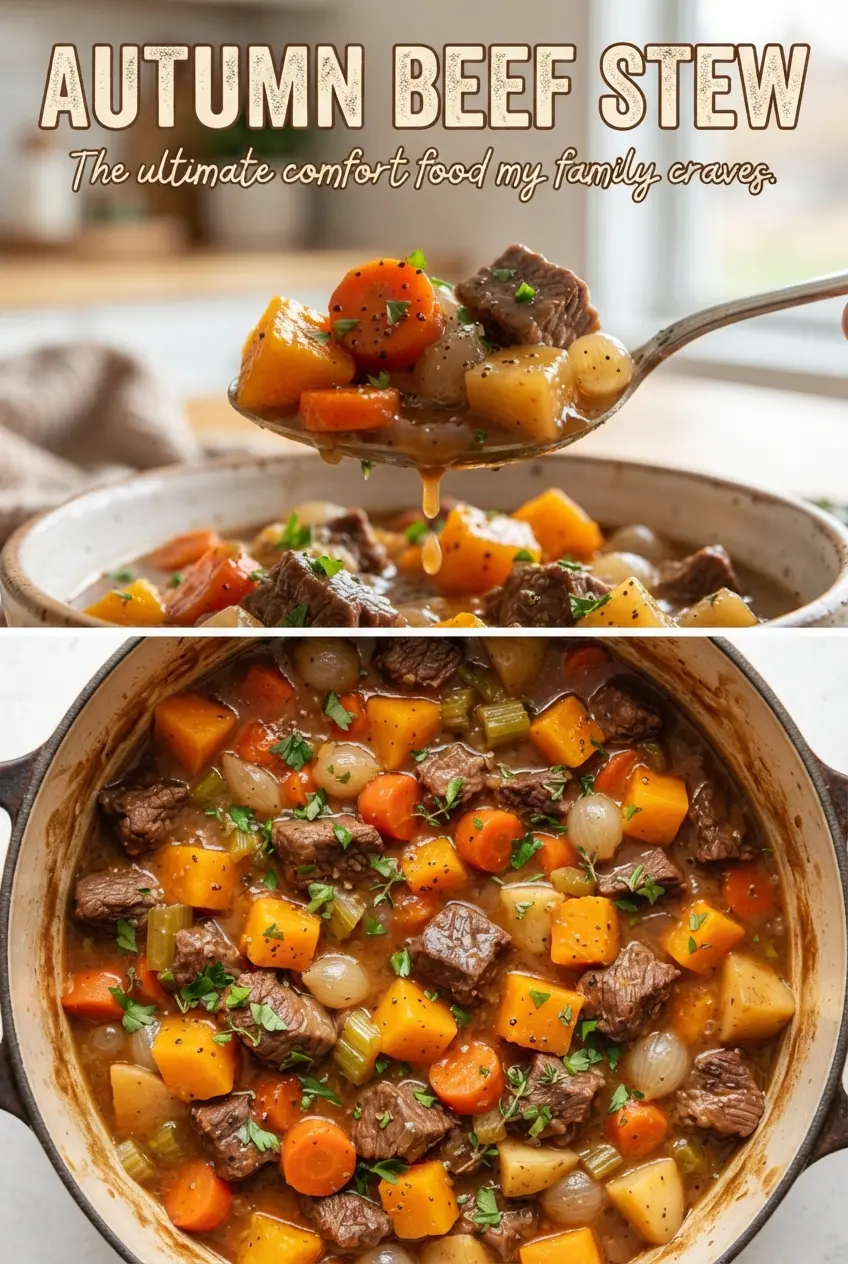
Deep-brown beef, tender root vegetables, and a gravy that carries both savory depth and a quiet hit of maple make this autumn beef stew the kind of dinner that earns repeat requests. The beef goes silky after a long, slow simmer, the squash breaks down just enough to thicken the broth, and the cranberries wake everything up at the end without turning the pot sweet. It tastes layered, not heavy.
The key is building flavor in stages. Browning the floured beef first gives you those dark bits that become the backbone of the stew, and the apple cider adds a gentle tang that keeps the broth from feeling flat. Maple syrup doesn’t make this taste like dessert; it rounds out the cider and plays nicely with sage and thyme, especially once the carrots and parsnips start softening into the gravy.
Below, I’ll show you why the order matters, which ingredient swaps work without wrecking the balance, and how to keep the vegetables tender instead of mushy. If you’ve had beef stew turn bland or muddy before, this version fixes both problems.
The gravy turned glossy after the cider went in, and the cranberries gave the last spoonfuls this bright little pop that kept the stew from tasting one-note. Even my picky eater went back for seconds.
Save this autumn beef stew for a cozy pot of beef, squash, and cranberries with a maple-sage gravy.
The Browning Stage Is What Gives This Stew Its Backbone
Beef stew goes flat when the meat steams instead of sears. Coating the cubes in flour helps them brown faster and gives the broth a little body later, but the real payoff comes from working in batches and leaving space in the pan. If the pieces are crowded, they shed liquid and you lose the dark crust that makes the final gravy taste rich instead of thin.
The second place people lose flavor is right after the onions go in. You want the tomato paste to cook for a full minute until it darkens slightly and smells sweeter, not raw and sharp. That small step gives the stew a deeper color and keeps the cider from tasting like a splash added at the end.
What Each Ingredient Is Doing In This Stew

- Beef chuck — This cut has enough fat and connective tissue to turn spoon-tender during the long simmer. Lean stew meat can work, but it won’t give you the same silky texture or deep beef flavor.
- Apple cider — Cider adds gentle acidity and a hint of fruit that matches the squash and cranberries. Apple juice is the closest substitute, but it’s usually sweeter and less complex, so the stew can taste a little rounder and less bright.
- Maple syrup — The maple doesn’t make the stew sweet; it smooths the cider and softens the savory edges. Use real maple syrup here, not pancake syrup, or you’ll get a fake aftertaste.
- Butternut squash, parsnips, and carrots — These vegetables bring body and a natural sweetness that fits the gravy. Cut them into even pieces so they finish at the same time; uneven chunks lead to mushy squash and underdone parsnips.
- Dried cranberries — Stirring them in at the end keeps them plump and tart. Add them too early and they disappear into the broth instead of giving you those bright pops in each bowl.
- Fresh sage and thyme — Dried herbs can work in a pinch, but fresh herbs keep the stew from tasting dusty. Sage is especially important here because it bridges the beef, cider, and squash in a way dried herbs don’t quite manage.
Building the Stew So the Gravy Stays Rich and the Vegetables Stay Whole
Brown the Beef in Real Batches
Season the beef, toss it with flour, then sear it in hot oil until you get a dark crust on several sides. The flour should look toasted, not pasty, before you move it around. If the pan starts to collect moisture and the meat pales instead of browning, the heat is too low or the pan is too crowded. Pull the finished pieces out as you go and keep going until all the beef has color.
Cook the Aromatics and Tomato Paste Until They Smell Sweet
Once the onions soften, add the garlic and tomato paste and cook them for about a minute. That short cook takes the edge off the garlic and deepens the tomato paste so it blends into the broth instead of floating on top in little red streaks. The pan should smell savory and concentrated before you add the cider. If the paste sticks, your heat is too high; lower it and stir constantly.
Use the Cider to Lift the Brown Bits
Pour in the apple cider and scrape the bottom of the pot until the browned bits release into the liquid. That’s where a lot of the stew’s flavor lives. Let the cider bubble for a minute before the broth goes in so its sharpness softens a little. This is the point where the pot starts tasting like stew instead of just browned meat and onions.
Finish in Two Vegetables Rounds
Let the beef simmer until it’s close to tender before adding the squash, parsnips, and carrots. Root vegetables need enough time to soften, but they’ll turn to paste if they cook for the full beef simmer. Add the cranberries only in the last 10 minutes so they stay bright and chewy. When the stew is ready, the beef should pull apart easily and the vegetables should hold their shape with just a little give at the center.
How to Adapt This Stew When You Want a Different Balance
Gluten-Free Version
Skip the all-purpose flour and brown the beef without it, then thicken the finished stew with a small slurry of cornstarch and cold water if needed. You’ll lose a little of the velvety body that flour gives the broth, but the stew will still be rich and full-bodied if you reduce it gently.
Less Sweet, More Savory
Cut the maple syrup in half and lean on the thyme a little harder. The stew will taste deeper and less rounded, with the cider reading as a sharper note instead of a soft sweet bridge. This is the version I’d make if the squash is especially sweet on its own.
Make It Ahead for Better Flavor
This stew tastes even better the next day because the broth settles and the sage, cider, and beef meld together. Cook it completely, chill it, then reheat it gently and add a splash of broth if it thickens too much. The vegetables soften a bit more in the fridge, so if you want them firmer, undercook them slightly the first time.
Storage and Reheating
- Refrigerator: Store covered for up to 4 days. The broth thickens as it chills, and the vegetables soften a little more each day.
- Freezer: Freezes well for up to 3 months. Cool it completely first and leave a little space in the container for expansion.
- Reheating: Reheat gently on the stove over low heat, stirring occasionally. A hard boil can break down the squash and make the beef stringy, so warm it just until steaming through.
Questions I Get Asked About This Stew
Autumn Beef Stew
Ingredients
Equipment
Method
- Season the beef chuck cubes with salt and black pepper, then toss with the all-purpose flour to coat lightly.
- Heat the olive oil in a Dutch oven over medium-high heat, then brown the beef in batches until deeply browned on the outside.
- Add the diced onion to the Dutch oven and cook for 5 minutes, stirring, until softened.
- Add the minced garlic and tomato paste and cook for 1 minute, stirring, until fragrant and darkened.
- Pour in the apple cider and scrape the bottom of the pot to release browned bits.
- Add the beef broth, maple syrup, chopped fresh sage, thyme leaves, and the browned beef, stirring to combine.
- Cover the Dutch oven and simmer for 1 3/4 hours, maintaining a gentle bubbling so the beef becomes tender.
- Add the butternut squash cubes, sliced parsnips, and sliced carrots, then simmer for 45 minutes until the vegetables are tender.
- Stir in the dried cranberries and simmer for the last 10 minutes so they plump slightly and tint the stew.
- Serve hot from the Dutch oven, keeping the maple-touched gravy thick and glossy.


