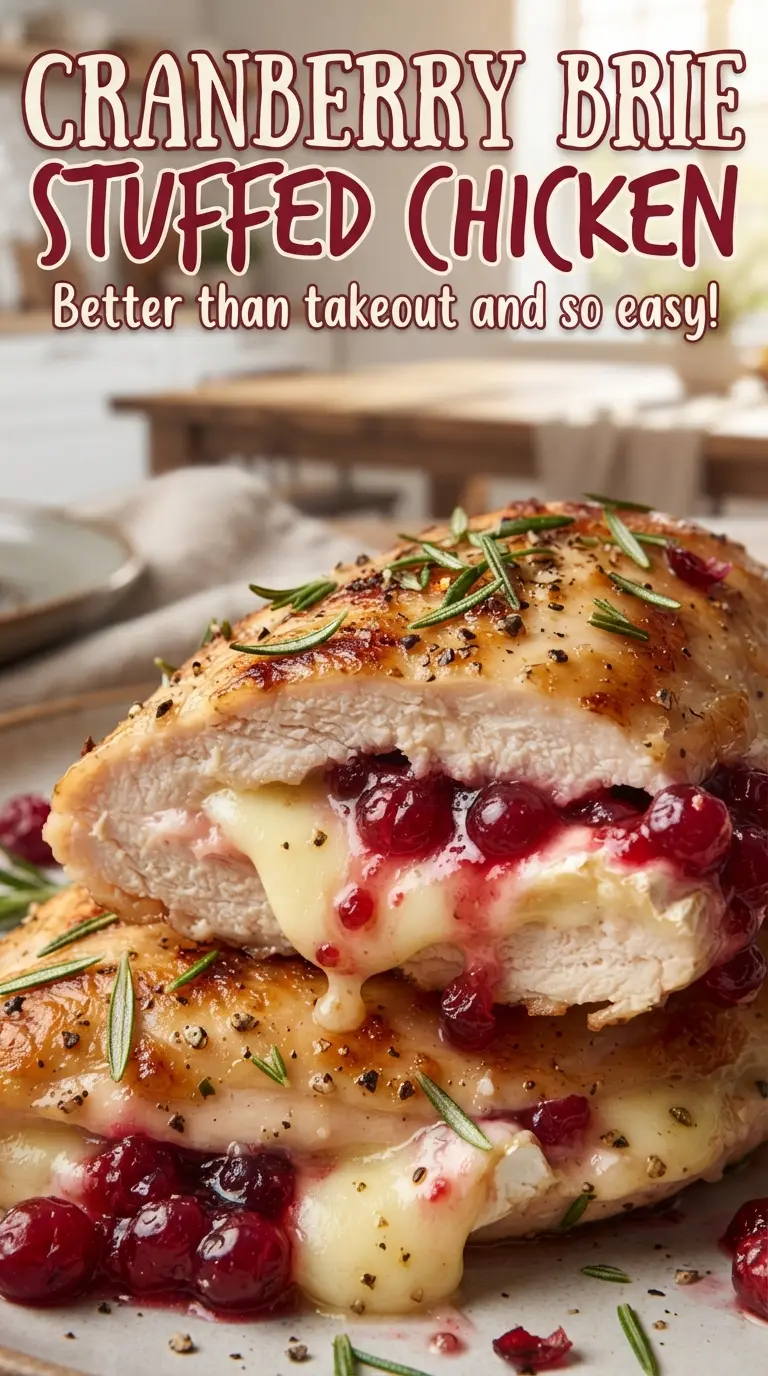
Cranberry brie stuffed chicken lands on the plate with crisp, golden edges, a juicy center, and that moment when the knife cuts through and the filling spills out in a glossy ribbon. The brie melts into the cranberry sauce instead of disappearing into the chicken, so every bite gets creamy, tart, and savory all at once. It looks restaurant-worthy, but it’s built from straightforward steps that work in a real home kitchen.
The trick is giving the chicken a deep enough pocket to hold the filling without tearing through the side, then searing it before it goes into the oven. That sear does two jobs: it builds flavor on the outside and helps the chicken hold its shape while the cheese softens inside. The pan sauce matters too. A quick simmer with broth, cranberry sauce, honey, balsamic, and rosemary pulls up the browned bits from the skillet and turns them into the kind of sauce you’ll want to spoon over everything on the plate.
Below, I’ve included the small details that keep the filling in place, the chicken juicy, and the sauce balanced instead of overly sweet. If you’ve ever had stuffed chicken leak all over the pan, the notes here will help.
The brie melted into the cranberry sauce perfectly, and the pan sauce turned out glossy and balanced instead of too sweet. I cut into one breast and the filling stayed put thanks to the toothpicks.
Cranberry brie stuffed chicken is the kind of dinner worth pinning for when you want a golden sear, a melty center, and a sauce that tastes like it took much longer than 25 minutes.
The Pocket Matters More Than the Stuffing
Stuffed chicken fails in one of two ways: the filling leaks out before the chicken cooks through, or the breast dries out while you’re waiting for the center to hit temperature. A deep pocket solves the first problem, but it has to be cut from the thickest side and kept narrow enough that the chicken still closes around the filling. If you slice too close to the edge, the cheese melts out into the pan before the chicken has a chance to finish.
The other thing worth respecting is the sear. That hot skillet gives you color before the chicken spends time in the oven, which keeps the total cook time short enough for the breast to stay juicy. Don’t move it around once it hits the pan. Let it sit long enough to release on its own, or you’ll tear the surface and lose the crust that gives the sauce something to cling to.
What Each Ingredient Is Doing in This Dish
- Chicken breasts — Use pieces that are close in size so they finish at the same time. If one breast is much thicker, pound the thickest end lightly before cutting the pocket so the outside doesn’t overcook while the center catches up.
- Brie — This is the creamy core of the dish, and it needs to be sliced rather than left as one big wedge so it melts evenly. Rind-on brie is fine here; it softens and helps hold the cheese together instead of turning the filling watery.
- Whole berry cranberry sauce — The whole berries give the sauce body and a little texture, which keeps the filling from feeling flat. Jellied cranberry sauce works in a pinch, but the finished dish loses some of that tart, jewel-like bite.
- Baby spinach — This adds a thin green layer that helps catch melted brie and keeps the pocket from becoming all cheese. No need to cook it first; it wilts in the oven and disappears into the filling.
- Balsamic vinegar and honey — Together they round out the cranberry sauce and keep it from tasting sharp or one-note. If you skip the honey, the sauce reads more tart; if you skip the balsamic, it can taste thin and sweet instead of balanced.
- Fresh rosemary — Just a small amount gives the pan sauce a woodsy edge that works with both the brie and the cranberry. Use fresh here if you can, because dried rosemary stays a little dusty and aggressive in a short sauce.
From Sear to Sauce Without Losing the Filling
Cutting and Stuffing the Breasts
Lay each chicken breast flat and cut a deep pocket into the side, stopping short of the opposite edge so the filling has a pocket to sit in instead of an exit route. Season the outside well before stuffing; once the cheese goes in, it’s harder to get seasoning onto the meat. Add the spinach first, then the brie, then a spoonful of cranberry sauce. Toothpicks matter here, especially if the breasts are on the smaller side, because they keep the seam closed during the sear.
Getting the Golden Sear
Heat the oil until it shimmers, then lay the chicken in the pan and leave it alone until the first side develops a deep golden crust. If it sticks, it’s not ready to turn yet. The goal is color, not cooking through. A good sear should take 3 to 4 minutes per side, and the chicken should lift cleanly when it’s ready to flip.
Finishing in the Oven
Move the skillet straight into the hot oven so the chicken finishes gently and the filling has time to melt without scorching the outside. Pull it when the thickest part reaches 165°F. If you keep baking past that point, the brie can leak out and the breast dries out fast. Let the chicken rest for a few minutes before slicing if you want the filling to stay more contained on the plate.
Building the Cranberry Pan Sauce
Take the chicken out of the skillet, then add the broth, remaining cranberry sauce, honey, balsamic, and rosemary to the same pan. The browned bits left behind are what give the sauce depth, so don’t wipe them out. Simmer just until it thickens slightly and turns glossy. If it looks thin at first, keep it moving gently over medium heat; it will tighten as the liquid reduces. Spoon it over the chicken instead of drowning the whole skillet, because the sauce is meant to accent the brie, not bury it.
How to Adapt This for a Bigger Crowd or a Different Table
Make it gluten-free without changing the texture
This recipe is naturally gluten-free as written, so the only thing to watch is your cranberry sauce and chicken broth. Some brands use thickeners or additives, so check the label if you’re serving someone with a strict gluten-free need. The texture and sear stay exactly the same.
Swap the brie for goat cheese
Goat cheese gives you a tangier filling and a firmer center that won’t ooze quite as dramatically as brie. It still pairs well with cranberry, but the result is less creamy and a little brighter. Use the same amount and keep the cranberry sauce in the pocket so the filling doesn’t turn dry.
Use chicken thighs for a richer dinner
Boneless thighs can work if you butterfly them wide enough to stuff, but they cook differently and won’t give you the same neat, sliced presentation. The upside is juicier meat and a richer bite. The downside is a looser shape, so this version is best when you care more about flavor than a polished stuffed-breast look.
Storage and Reheating
- Refrigerator: Store leftovers for up to 3 days. The brie will firm up, but the flavor holds well.
- Freezer: It freezes, but the cheese texture gets a little grainy after thawing. Wrap portions tightly and freeze up to 1 month if you don’t mind a softer filling.
- Reheating: Warm covered in a 300°F oven until heated through. A microwave can make the cheese separate and the chicken rubbery, so use it only for short bursts if you’re in a hurry.
Answers to the Questions Worth Asking

Cranberry Brie Stuffed Chicken
Ingredients
Equipment
Method
- Preheat oven to 400F and set out an oven-safe skillet for searing.
- Cut a deep pocket into the side of each chicken breast and season the outside with salt, black pepper, garlic powder, and dried thyme.
- Stuff each pocket with baby spinach, sliced brie, and 1 tablespoon cranberry sauce, then secure with toothpicks.
- Heat olive oil in a hot oven-safe skillet and sear the chicken 3-4 minutes per side until golden.
- Transfer the skillet to the oven and bake 15-18 minutes, until the chicken reaches 165F.
- Remove chicken and add chicken broth, remaining cranberry sauce, honey, balsamic vinegar, and chopped rosemary to the skillet.
- Simmer the sauce for 3 minutes, until slightly thickened and glossy.
- Spoon the sauce over the chicken and serve immediately.


