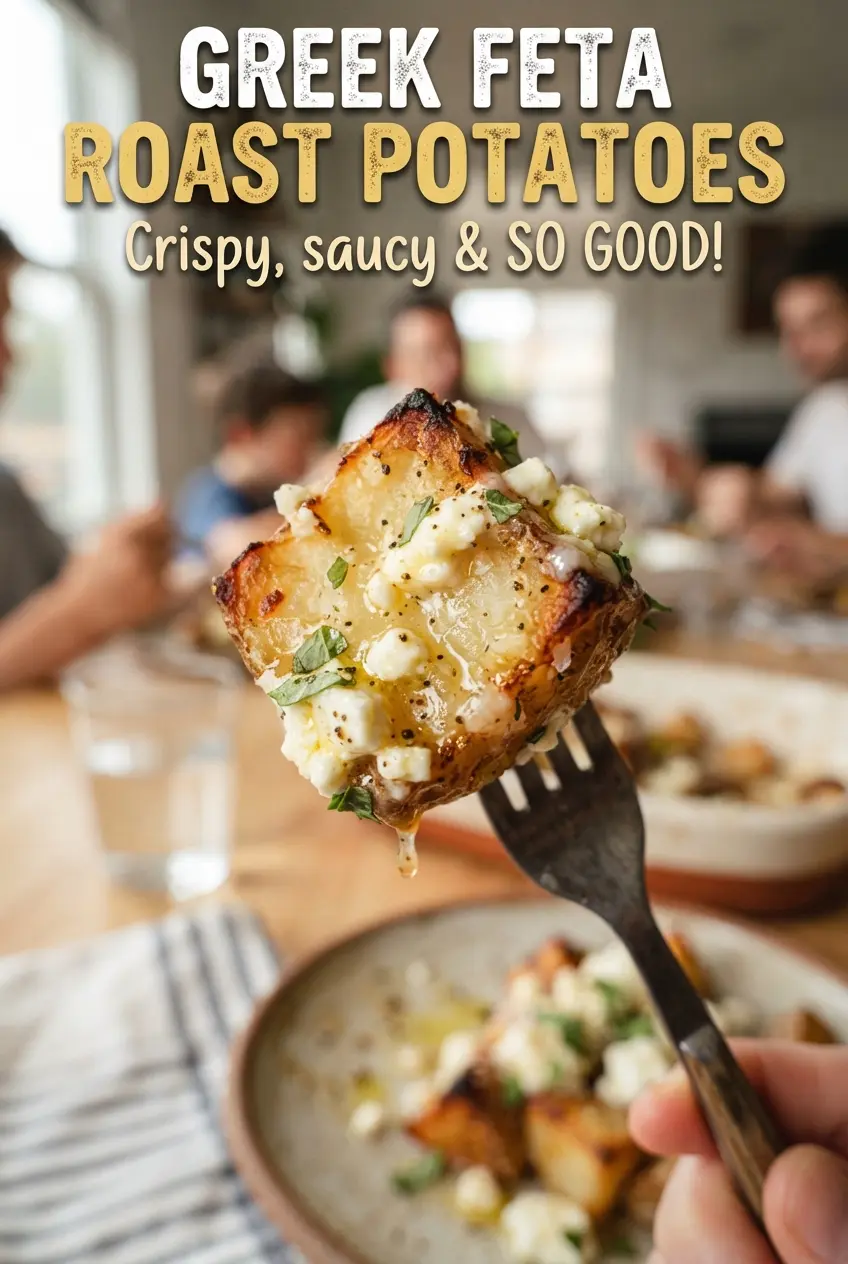
Greek feta roast potatoes come out with the kind of contrast that keeps people reaching back into the pan: crisp, bronzed edges, tender centers, and just enough lemony pan juice left behind to cling to every wedge. The feta goes on at the end, where it softens without melting away, and the fresh dill wakes everything up right before serving.
The trick is roasting the potatoes in their seasoning liquid instead of coating them in oil alone. The broth and lemon juice reduce as the potatoes cook, leaving behind concentrated flavor while the wedges finish with a dry, crackly exterior. Yukon golds hold their shape well here and stay creamy inside, which matters because thin-skinned potatoes can collapse before they pick up enough color.
Below, I’ve included the small details that keep the pan from drying out too soon, plus a few swaps that still give you those salty, tangy Greek-style flavors without losing the crisp edges.
The potatoes came out crisp on the outside and buttery inside, and the lemon-garlic juices at the bottom of the pan were incredible with the feta on top.
Save these Greek feta roast potatoes for the night you want crispy lemon-oregano wedges with a salty feta finish.
The Liquid Is What Makes the Edges Crisp, Not Soggy
Most roast potato recipes lean on oil alone, which works fine, but it doesn’t give you the same deep, concentrated seasoning on the pan side of the potato. Here, the chicken broth and lemon juice reduce as the potatoes roast, and that means the wedges start in a flavorful bath and end with dry, browned edges once the liquid cooks off. The key is the single layer. If the potatoes are crowded, they steam in the pan juices instead of roasting through them.
- Potatoes in wedges — Yukon golds are the right middle ground: creamy enough inside to stay soft, sturdy enough outside to hold a crisp edge. Russets get fluffier and can break down more; waxier potatoes stay too firm.
- Olive oil — This helps the oregano and garlic stick and gives the wedges their first layer of browning. Use a decent-tasting oil here because it’s part of the finished flavor.
- Lemon juice and broth — The acid brightens the potatoes, while the broth keeps the pan from drying out before the centers are tender. If you need a swap, vegetable broth works well; just don’t replace both liquids with water or the seasoning tastes flat.
- Feta and herbs — Add them after roasting so the feta stays crumbly and the herbs stay fresh. If they go in too early, the feta melts into the pan and the dill loses its lift.
Roasting the Potatoes Until the Pan Goes Quiet
Coating the Wedges Evenly
Toss the potatoes with the oil, lemon juice, broth, garlic, oregano, salt, and pepper directly in the roasting pan so every wedge gets coated. The liquid should pool lightly around the potatoes, not drown them. If you see dry spots, toss again before they go into the oven, because uneven coating leaves some pieces pale while others finish early.
Letting the Oven Do the First Half
Roast at 425F until the potatoes start to soften and the liquid is visibly reducing. You’re looking for edges that are taking on color while the pan still has a little movement in the bottom. If the oven runs hot and the liquid disappears too fast, the potatoes can scorch before the centers are tender, so a quick stir and a tighter pan placement helps.
Flipping for the Final Crisp
Turn the wedges halfway through so the underside gets its chance at the hot pan. By the end, the liquid should be absorbed and the potatoes should look deeply golden and crisped at the corners. If they still look pale when the timer goes off, leave them in a few more minutes; the best cue is the sound of the pan going mostly quiet and the potatoes looking dry on the surface.
Finishing with Feta and Herbs
Scatter the feta over the potatoes right after they come out of the oven, then finish with dill or parsley. The residual heat softens the cheese just enough without turning it greasy. Serve right away while the edges are still crisp, because once they sit too long, the steam trapped in the pan starts undoing all that good work.
What to Change When You Need a Different Version of Greek Feta Roast Potatoes
Make Them Vegetarian
Swap the chicken broth for vegetable broth and keep everything else the same. You’ll still get the same reduction in the pan, and the lemon, garlic, and oregano carry the flavor. Water works in a pinch, but the final potatoes taste lighter and less rounded.
Dairy-Free Version
Leave off the feta and finish with extra herbs and a little more lemon zest if you have it. You lose the salty creaminess, so the potatoes need that bright top note to keep the dish feeling complete. A spoonful of capers on top also helps replace some of the briny punch.
Extra-Crispy Edges
Use a wider roasting pan so the wedges aren’t crowded, and let them go the full 50 minutes if needed. If you want even more color, move the pan to the upper third of the oven for the last 5 minutes. Crowding is what steals the crispness here, not the amount of oil.
Storage and Reheating
- Refrigerator: Store leftovers in an airtight container for up to 4 days. The potatoes soften as they sit, but the flavor stays strong.
- Freezer: They freeze, but the texture gets mealy after thawing, so I don’t recommend it for the best result.
- Reheating: Reheat on a sheet pan at 400F until the edges crisp again, about 10 to 15 minutes. The microwave makes them limp, which is the fastest way to lose the texture that makes this dish worth making.
Answers to the Questions Worth Asking
Greek Feta Roast Potatoes
Ingredients
Equipment
Method
- Preheat oven to 425F. Keep the oven fully heated before the pan goes in.
- Toss potatoes with olive oil, lemon juice, chicken broth, garlic, oregano, salt, and black pepper in a roasting pan. Make sure every wedge is coated.
- Spread the potatoes in a single layer on the roasting pan. Avoid overcrowding so the edges can crisp.
- Roast 45-50 minutes, flipping halfway. Roast until the liquid is absorbed and the edges are crispy and golden, with a visible browned surface.
- Top the hot potatoes with crumbled feta and fresh dill or parsley. Let the feta sit on the warm potatoes so it softens slightly.
- Serve hot. Spoon any crisped lemon-oregano pan juices over the wedges.


