Meatball stew lands in that sweet spot between comfort food and a full meal in one pot. The meatballs stay tender, the vegetables cook until they’re soft but not falling apart, and the gravy turns rich enough to coat every bite without feeling heavy. It’s the kind of dinner that fills the kitchen with a deep, savory smell long before it ever reaches the table.
What makes this version work is the order of operations. Browning the meatballs first builds flavor, but the real backbone comes from cooking the onion with flour before the broth goes in. That short minute keeps the stew from tasting raw or thin. Tomato paste and Worcestershire add depth without making it taste like tomato soup, and the peas go in at the end so they stay bright instead of dull and mushy.
Below, I’ve included the small details that matter: how to keep the meatballs tender, what to watch for when the gravy thickens, and a few easy swaps if you need to work with what’s already in your pantry.
The gravy thickened up beautifully and the meatballs stayed soft all the way through the simmer. I used the full 30 minutes, and the potatoes came out perfectly tender without breaking apart.
Save this hearty meatball stew for the nights when you want tender homemade meatballs, thick gravy, and a one-pot dinner that actually eats like a meal.
The Secret to Meatballs That Stay Tender in a Long Simmer
The biggest mistake in stew meatballs is treating them like they need to be cooked through before they ever hit the pot. They don’t. They only need a good brown crust on the outside. The simmer finishes them gently, and that’s what keeps the texture soft instead of tight and bouncy.
The other thing that matters is the binder. Breadcrumbs, egg, and milk work together here to hold moisture inside the meatball while it cooks in the gravy. If you skip the milk or pack the mixture too tightly, the meatballs can turn dense. Mix just until combined, then stop. Overworking ground beef is the fastest way to lose that tender bite.
- Ground beef — Use an 80/20 blend if you can. It gives you enough fat for flavor and juiciness without making the stew greasy.
- Breadcrumbs — They soak up the milk and keep the meatballs soft. Fine, plain breadcrumbs work best; seasoned ones can push the stew in a strange direction.
- Milk — This is what keeps the texture from going dry. Any dairy milk works, and unsweetened plain oat milk can stand in if needed.
- Flour — It gives the gravy body when it hits the hot onion. Don’t add it all at once to the broth or you’ll get a thinner, less stable sauce.
What Each Ingredient Is Actually Doing in This Stew
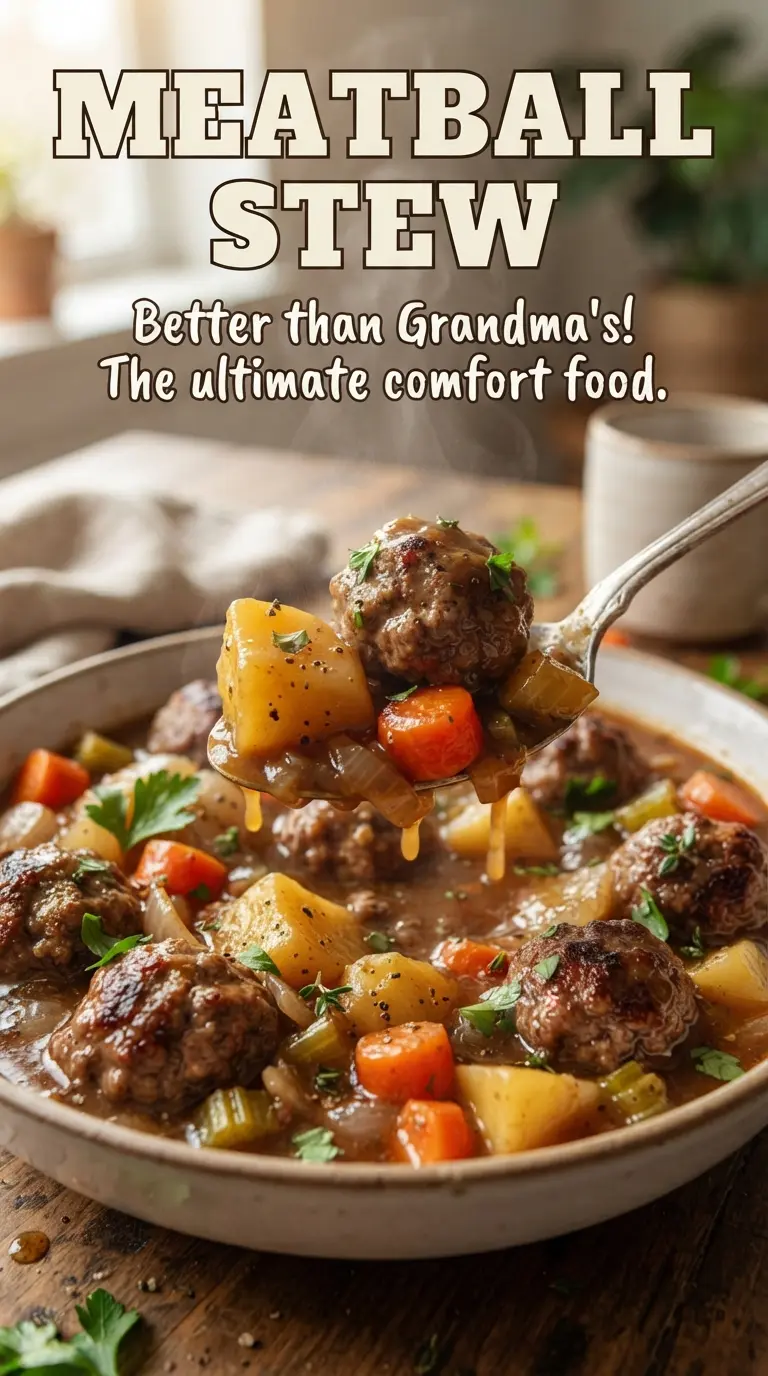
The onion, tomato paste, Worcestershire, and thyme are the quiet builders here. The onion gives the base a little sweetness, the tomato paste deepens the color and rounds out the broth, Worcestershire adds that savory edge, and thyme makes the whole pot taste like it simmered longer than it did. None of those ingredients shout on their own, but together they give the stew its backbone.
Potatoes and carrots need enough time to soften without losing their shape, which is why they go in before the meatballs come back to the pot. Frozen peas are the opposite; they only need the last few minutes. If you add them too early, they go dull and chalky instead of staying sweet and bright.
- Tomato paste — A little goes a long way. Cook it into the onion for a minute so it loses that raw edge and tastes deeper, not sharp.
- Beef broth — Use a broth you’d actually drink from a spoon. A weak broth makes a weak stew, and there isn’t enough time here to build flavor from scratch.
- Potatoes — Waxy or all-purpose potatoes hold their shape best. Russets will soften faster and can start to break apart if simmered too hard.
- Frozen peas — Don’t thaw them first. Straight from the freezer is the right move.
Building the Gravy Before the Meatballs Finish Cooking
Browning the Meatballs
Heat the oil until it shimmers, then brown the meatballs in batches so they sear instead of steam. You’re looking for a deep golden crust on the outside, not a cooked center. If the pan is crowded, the temperature drops and the meatballs turn gray. That means less flavor in the finished stew.
Starting the Base
Cook the onion in the same pot until it softens and starts to turn translucent, scraping up any browned bits as you go. Sprinkle in the flour and stir it for a full minute so it loses its raw taste and coats the onions evenly. If the flour still looks dusty or clumpy, the gravy can turn pasty instead of smooth.
Simmering the Stew
Whisk in the broth slowly, then add the tomato paste, Worcestershire, and thyme. The liquid should thicken slightly as it comes together. Once the potatoes, carrots, and meatballs go back in, keep the heat low enough for a gentle simmer. A hard boil can break the meatballs and make the potatoes fall apart before they’re tender.
Finishing with the Peas
Stir in the peas during the last few minutes, just long enough for them to turn hot and bright green. At this stage, the stew should be thick enough to coat the back of a spoon and the vegetables should yield easily with a fork. Let it sit for a few minutes off the heat before serving so the gravy settles into the meatballs instead of running thin in the bowl.
How to Adapt This Stew When You Need a Different Finish
Gluten-Free Version
Use gluten-free breadcrumbs in the meatballs and swap the all-purpose flour for a cup-for-cup gluten-free blend. The stew will still thicken, though it may look a touch less glossy than the original. Keep the simmer gentle so the starches don’t clump.
Dairy-Free Meatballs
Swap the milk for unsweetened plain oat milk or a little extra beef broth. The meatballs will still hold together, but oat milk gives a softer texture than broth alone. Avoid flavored non-dairy milks, which can leave the stew tasting off.
Use Ground Turkey Instead
Ground turkey works, but it needs the extra moisture from the milk and breadcrumbs more than beef does. The flavor will be lighter and a little leaner, so the Worcestershire and thyme matter even more. Brown the meatballs gently so they don’t dry out before the simmer.
Storage and Reheating
- Refrigerator: Store covered for up to 4 days. The gravy thickens as it chills, and the potatoes will soften a bit more.
- Freezer: This freezes well for up to 2 months, though the potatoes may turn a little softer after thawing. Cool it completely first and freeze in airtight containers.
- Reheating: Warm it slowly on the stove over low heat with a splash of broth if needed. A hard boil can break the meatballs and make the potatoes grainy.
Answers to the Questions Worth Asking
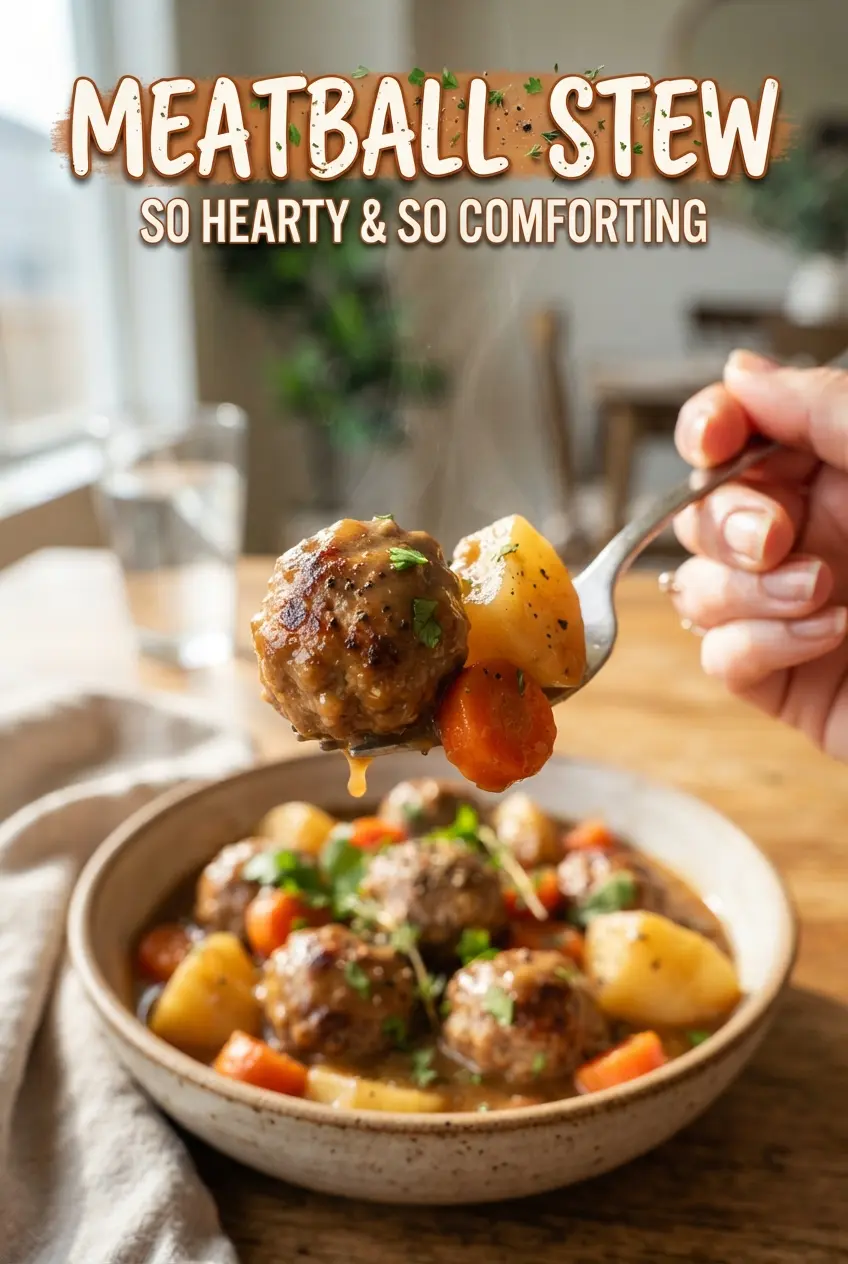
Meatball Stew
Ingredients
Equipment
Method
- In a bowl, mix ground beef, breadcrumbs, large egg, milk, salt, and garlic powder until evenly combined.
- Roll the mixture into 1 1/2-inch meatballs and place on a plate while you brown them.
- Heat vegetable oil in a Dutch oven over medium-high heat and brown the meatballs in batches until well browned; set aside.
- Cook onion for 4 minutes in the same pot, then sprinkle in all-purpose flour and stir for 1 minute.
- Whisk in beef broth, tomato paste, Worcestershire sauce, and dried thyme, then add potatoes and carrots.
- Return the meatballs to the pot and simmer covered for 25-30 minutes, until the vegetables are tender, stirring once halfway through.
- Stir in frozen peas and simmer for 5 minutes, then serve hot.


