Texas Cowboy Stew is the kind of one-pot dinner that lands heavy in the best way: smoky, chunky, and loaded with enough beef, sausage, bacon, and potatoes to count as a full meal on its own. The broth cooks down into something savory and a little spiced, with the tomatoes and Rotel giving it a bright edge that keeps the whole pot from tasting flat or muddy.
What makes this version work is the layering. Bacon goes in first for drippings, then the beef and sausage brown in that fat, which builds a deeper base than just simmering everything together from the start. The potatoes hold the stew together, while the beans and corn give it that classic cowboy-stew heft without turning it into plain chili.
Below, I’ve included the timing that keeps the potatoes tender instead of crumbly, plus a few smart swaps if you want to stretch the pot or adjust the heat. This is the kind of stew that gets even better after a short rest, which makes it a good one for feeding a crowd or planning ahead.
The bacon stayed crisp enough to stir back in at the end, and the potatoes were tender without falling apart. I served it with cornbread and there wasn’t a spoonful left.
Save Texas Cowboy Stew for the nights when you want a smoky, spoonable dinner with beef, sausage, bacon, and potatoes in one pot.
The Reason the Pot Doesn’t Turn Muddy
The biggest mistake with a stew like this is dumping everything in at once and hoping the long simmer sorts it out. It usually does the opposite: the meat tastes flat, the bacon disappears, and the broth turns cloudy without ever getting deep flavor. Browning the beef and sausage after the bacon gives you layered fat and browned bits in the pot, and that’s where the real flavor comes from.
The other thing that matters is when the potatoes go in. They need the full simmer to turn tender, but if they cook too long they start breaking down and clouding the broth. Keep the heat at a true simmer, not a hard boil, so the cubes hold their shape while still getting soft all the way through.
- Bacon drippings — This is the built-in seasoning for the whole pot. If you drain them off, the stew loses that smoky backbone.
- Smoked sausage — The sausage brings salt, spice, and extra body. Any good smoked sausage works here, but a thin, soft link won’t give you the same bite.
- Potatoes — Yukon Golds or russets both work, but Yukon Golds stay intact better. Cut them into even cubes so they finish at the same time.
- Rotel — This adds heat and acidity in one can. If you swap it for plain diced tomatoes, add a pinch of red pepper flakes or a little hot sauce so the stew doesn’t taste one-note.
What Each Ingredient Is Doing in the Pot
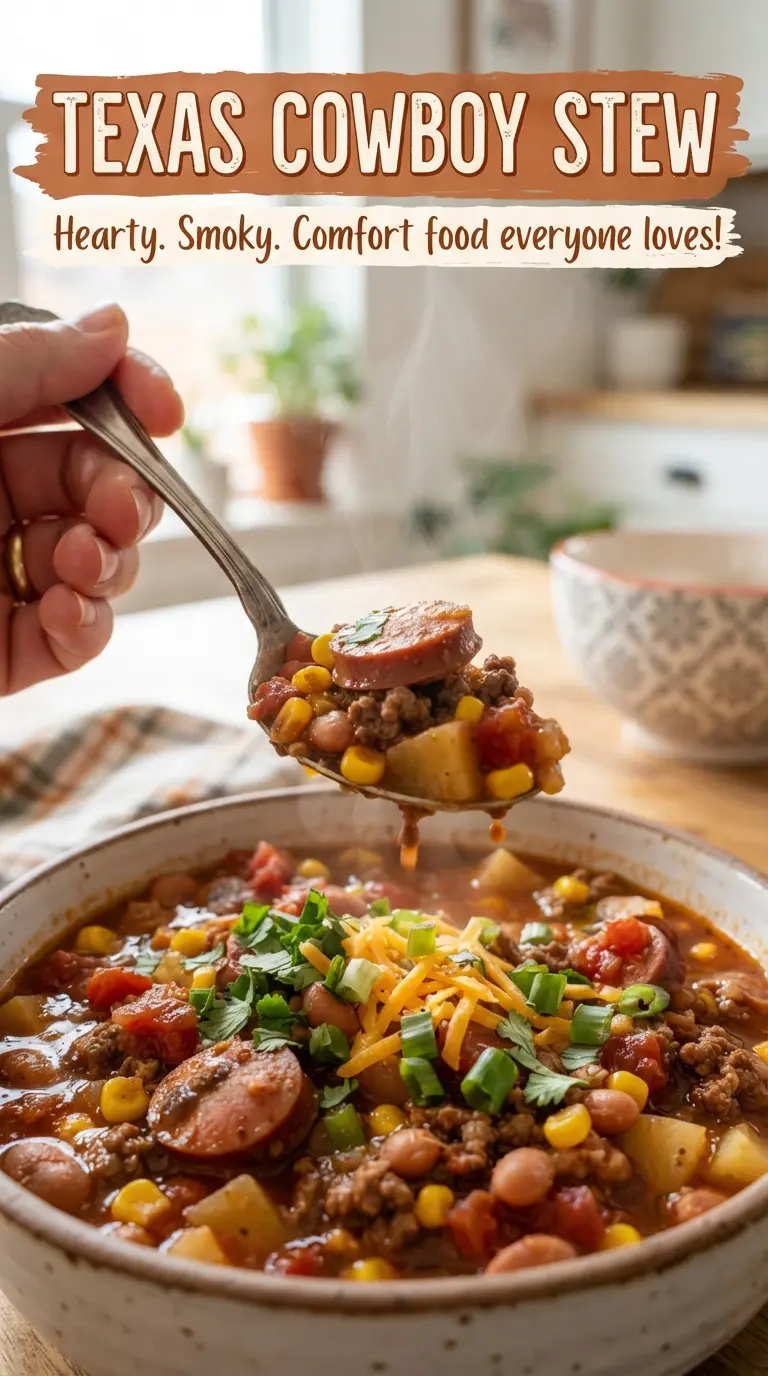
The bacon, beef, and sausage each play a different role, and none of them are interchangeable if you want that classic cowboy-stew character. Bacon gives you the first layer of smoky fat, beef gives you bulk and a meaty base, and sausage brings seasoning that doesn’t need much help. If you skip one, the stew still works, but the depth drops fast.
The beans, corn, and tomatoes keep the pot from being just meat and potatoes. Pinto beans help thicken the broth a little as they simmer, corn adds sweetness, and the tomatoes keep the stew bright enough to eat by the spoonful without feeling heavy. Garlic and onion disappear into the background, which is exactly what they should do here.
- Ground beef — Use 80/20 if you can. Leaner beef works, but it won’t give you as much flavor in the base.
- Smoked sausage — This is not the place for a mild sausage that tastes like filler. Choose one with a clear smoky bite.
- Pinto beans — Drain them well so the broth stays savory instead of starchy. Black beans can stand in, but the result tastes a little different and less classic.
- Beef broth — Use a broth you’d drink from a spoon. If yours is weak, the stew will need extra salt and may still taste thin.
Building the Pot in the Right Order
Cooking Down the Bacon
Start the bacon in a large heavy pot and let it get crisp enough that the fat renders out fully. If it stays chewy, it hasn’t given you enough drippings yet, and that means less flavor for everything that follows. Pull the bacon out and leave the fat behind, but don’t pour it all off unless there’s an obvious puddle. You want a slick, not a shallow fry.
Browning the Meat and Vegetables
Add the beef, sausage, onion, and bell pepper to the hot drippings and cook until the meat has real color and the onion softens. The goal is not to gray everything into one mixture. Let the beef catch a little and stir only enough to keep it from sticking; that browning is what makes the stew taste cooked instead of boiled.
Simmering Until the Potatoes Yield
Once the broth, tomatoes, beans, corn, and seasonings go in, bring the pot to a boil just long enough to get everything moving, then drop it to a steady simmer. A hard boil can break the potatoes before the center turns tender, and it can also make the broth lose its clean, savory edge. After about 30 minutes, the potatoes should pierce easily with a fork but still hold together.
Bringing Back the Bacon
Stir the bacon in at the end so it stays smoky and a little crisp instead of melting into the stew. This is the last thing that makes the dish taste like Texas cowboy stew instead of a standard beef soup. Taste the broth before serving, because the sausage and bacon already bring salt, and you may only need a small adjustment.
How to Adapt This for a Bigger Pot, Less Heat, or No Pork
Dairy-Free and Naturally Gluten-Free
This stew already fits both of those needs as written, as long as your broth and sausage are gluten-free. The only place to watch is the sausage label, since some brands use fillers or seasonings that contain gluten. Serve it with gluten-free cornbread and nothing about the pot needs changing.
Milder Cowboy Stew
If you want less heat, swap the Rotel for plain diced tomatoes and leave out any extra spicy sausage. You’ll lose some of the sharp Tex-Mex edge, so add a little extra cumin and a dash of smoked paprika to keep the stew tasting full instead of bland.
Stretching It for More People
You can add another can of beans and another cup of broth if you need to feed a bigger group. The texture gets a little looser, which is good if you’re serving it with cornbread, but don’t double the tomatoes without also adding more broth or the pot turns too acidic and thick.
No Pork Version
Use turkey bacon and a beef sausage if you need to skip pork completely. The stew will still be hearty, but turkey bacon won’t render as much fat, so add a tablespoon of oil before browning the beef if the pot looks dry. You’ll get the smoky profile back, even if the depth is a little lighter.
Storage and Reheating
- Refrigerator: Store for up to 4 days. The broth thickens as it sits, and the potatoes soften a little more.
- Freezer: Freezes well for up to 3 months, but the potatoes may turn softer after thawing. Cool it completely and freeze in portions for the best texture.
- Reheating: Warm it slowly on the stove over medium-low heat with a splash of broth if needed. A fast boil is the mistake that breaks the potatoes and makes the stew feel greasy instead of hearty.
Answers to the Questions Worth Asking
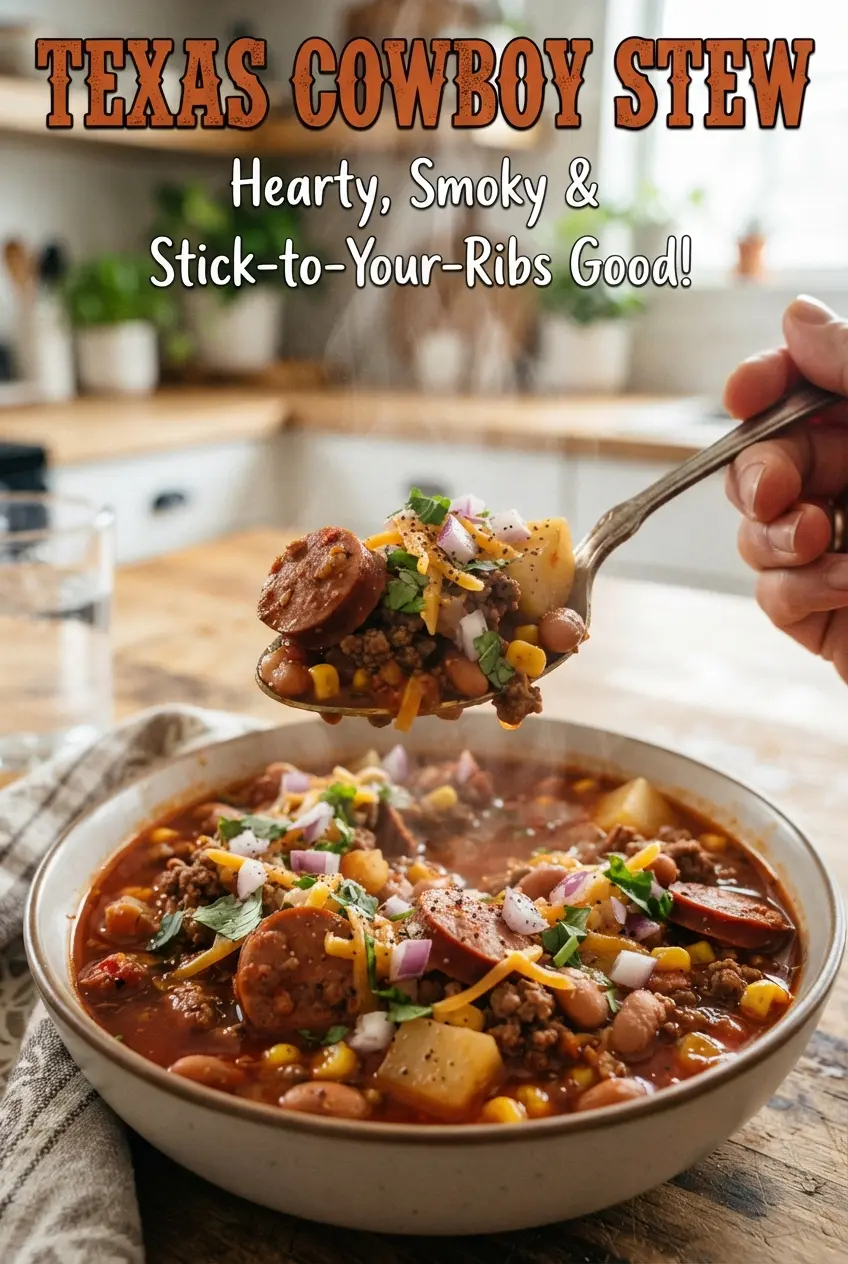
Texas Cowboy Stew
Ingredients
Equipment
Method
- Cook the bacon in a large pot over medium heat until crisp, about 8 to 10 minutes; remove the bacon and keep the drippings in the pot as the visual cue.
- Brown the ground beef, sausage, onion, and bell pepper in the bacon drippings over medium-high heat for 8 minutes, stirring occasionally, then drain excess fat and add the garlic for 30 seconds to 1 minute.
- Add the potatoes, diced tomatoes, Rotel, pinto beans, corn, beef broth, chili powder, cumin, salt, and black pepper to the pot and stir to combine.
- Bring the mixture to a boil, then reduce heat to low and simmer for 30 minutes until the potatoes are tender, stirring once or twice for an even texture.
- Stir the crisp bacon back into the stew so each bowl has savory bites.
- Serve hot with cornbread on the side.


