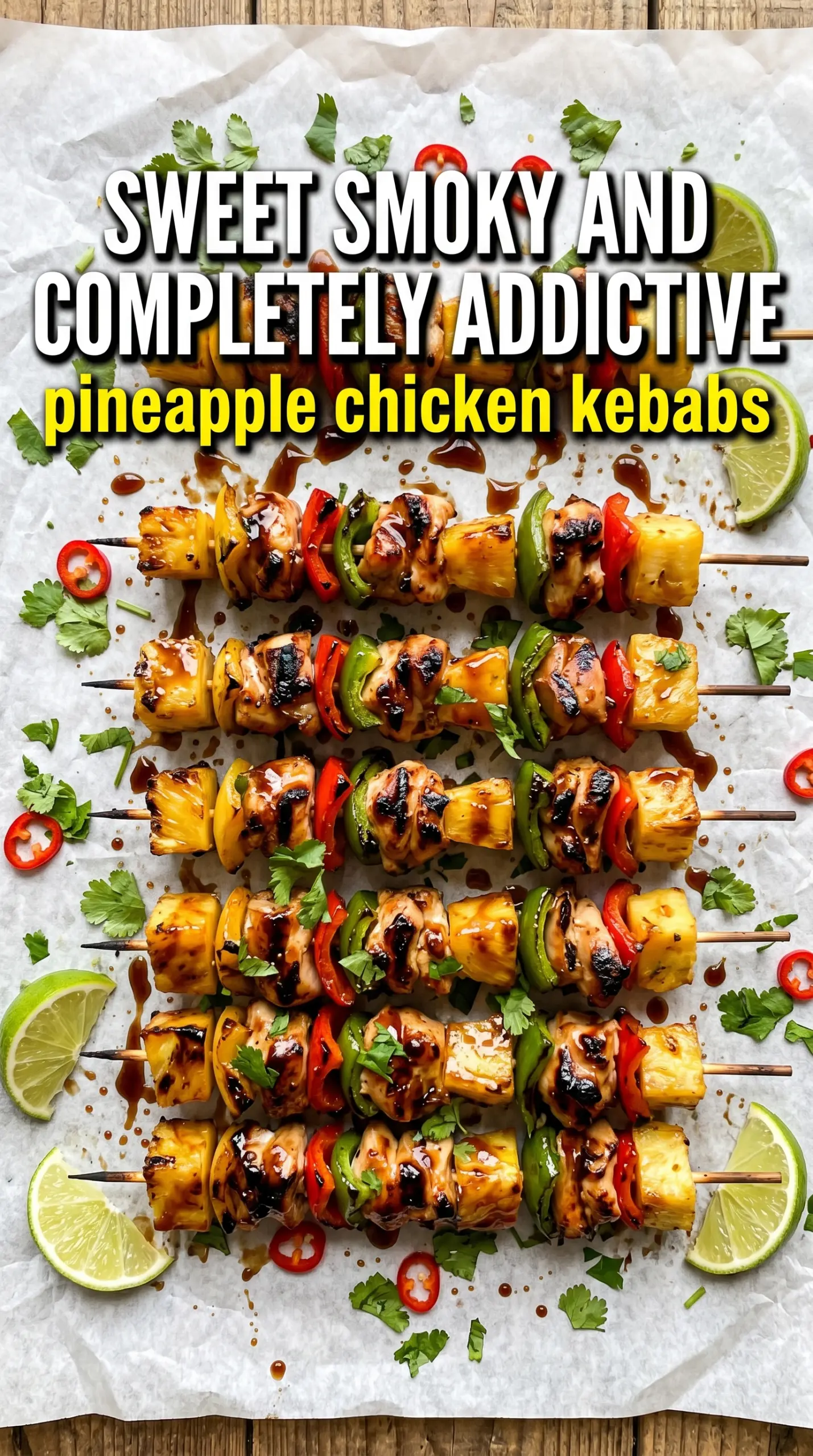
Juicy chicken, caramelized pineapple, and charred peppers make these pineapple chicken kebabs one of those grill recipes that disappears fast. The sweet-tangy glaze clings to the chicken and turns glossy over the heat, while the pineapple softens at the edges and picks up just enough smoke to taste like it belongs there. Every bite hits salty, sweet, and savory at once, which is exactly why this one stays in the rotation.
The key is balance: the marinade needs enough soy sauce to season the chicken properly, enough pineapple juice to echo the fruit on the skewers, and enough honey to encourage browning without burning too early on the grill. I also like to keep the chicken pieces close to the size of the pineapple chunks so everything cooks at the same pace. If the pieces are uneven, the chicken dries out before the vegetables get any real color.
Below, I’ll walk through the one part that matters most for great kebabs — getting the grill heat and the marinating time right — plus a few smart swaps if you want to change the vegetables or make the dish work with what’s already in your kitchen.
The chicken stayed juicy and the pineapple got those little caramelized edges I was hoping for. I marinated it for about 2 hours and the glaze on the grill came out sticky without burning.
Keep these pineapple chicken kebabs in your back pocket for a grill night that tastes sweet, smoky, and bright all at once.
The Marinade Needs Time, But Not Too Much
With kebabs like these, the biggest mistake is treating the marinade like a sauce instead of a seasoning step. Pineapple juice brings acidity and sweetness, but too long in that bath can push chicken breast toward a soft, slightly spongy texture on the outside. One to four hours is the sweet spot here. Long enough for flavor to sink in, short enough to keep the chicken firm and juicy on the grill.
Another thing that matters is heat. If the grill is too cool, the fruit weeps before it chars and the chicken goes pale instead of developing those browned edges that make kebabs taste finished. Medium-high heat gives you quick color and helps the honey in the marinade turn glossy instead of sticky-burnt. You want the skewers to sizzle as soon as they hit the grates.
- Chicken breast — lean and quick-cooking, but it dries out if the cubes are cut too small. Keep them around 1 inch so they stay juicy through the grill time.
- Fresh pineapple — canned pineapple is softer and sweeter, but fresh chunks hold their shape better and caramelize more cleanly. If you use canned, drain it well so the skewers don’t steam.
- Soy sauce — this does the heavy lifting for salt and depth. Use regular soy sauce for balanced seasoning, or low-sodium if you want a little more control.
- Honey — it helps the kebabs brown and gives the glaze that lacquered finish. Sugar can work in a pinch, but honey clings better and brings a softer sweetness.
What Each Ingredient Is Actually Doing in This Recipe
- Primary ingredient (the foundation) — This is the star of the dish and carries most of the flavor. Quality matters here more than anywhere else.
- Salt and pepper (the seasonings that matter most) — These enhance all other flavors without masking them. Apply generously; underseasoned dishes taste flat.
- Fat (butter, oil, or from the meat) — Fat carries flavors and keeps the dish from tasting dry. It’s also what makes food taste delicious and satisfying.
- Acid (lemon, lime, vinegar, or tomato) — Acid brightens the dish and prevents it from tasting one-dimensional or heavy. It also helps balance rich flavors.
- Aromatics (garlic, onion, ginger) — These add depth and complexity. They mellow and become sweet when cooked, different from their raw state.
- Spices or herbs (the personality) — These give the dish its character and make it distinctive. Toast them to bloom their flavors or add fresh ones to finish.
- Supporting ingredients (vegetables, proteins) — These add texture, nutrition, and complementary flavors. They should support the star ingredient, not compete with it.
- Proper cooking technique (heat, time, stirring) — Even with great ingredients, technique determines the final result. Pay attention to temperature and timing.
What Each Ingredient Is Doing on the Skewer
The vegetables aren’t just filler. Bell peppers bring crunch and a little bitterness that keeps the sweetness from taking over, while red onion softens and turns jammy at the edges. I like using both red and green peppers because the mix gives the platter more color and a better flavor contrast. If you only have one color, the kebabs still work; they just lose a little of that bright, tropical look.
The garlic and ginger are small but important. Garlic gives the marinade backbone, and ginger keeps the whole dish from tasting flat or candy-sweet. If you grate the ginger finely, it disappears into the marinade and seasons every piece of chicken instead of landing in one strong bite. Wooden skewers need to be soaked long enough to stay from catching on the grill; if they’re dry, the ends can scorch before the chicken is done.
Getting the Grill Marks Without Drying Out the Chicken
Mix the Marinade Until It Looks Glossy
Whisk the soy sauce, pineapple juice, honey, olive oil, garlic, and ginger until the honey dissolves and the mixture looks smooth and shiny. If the honey sits in streaks at the bottom, it won’t season the chicken evenly. The marinade should smell salty, bright, and a little sharp from the ginger. That balance is what carries through after grilling.
Let the Chicken Absorb Flavor Before Skewering
Marinate the chicken for 1 to 4 hours in the refrigerator. Less than an hour gives you surface flavor only, while much longer can make the texture loose around the edges because of the pineapple juice. Drain the chicken lightly before threading so the skewers don’t drip excessively on the grill. You want them coated, not swimming.
Build the Skewers for Even Cooking
Thread the chicken, pineapple, peppers, and onion in alternating order so each skewer has a mix of sweet and savory bites. Keep the pieces similar in size so nothing burns while something else is still raw in the middle. Leave a little space between pieces instead of packing them tight; that lets the heat move around the food and helps the edges char instead of steaming.
Grill Fast, Then Stop Touching Them
Preheat the grill to medium-high and oil the grates if they tend to stick. Lay the kebabs down and let them cook for 5 to 6 minutes per side, turning only when they release cleanly. If they stick hard, they’re not ready yet. Baste with the remaining marinade during grilling, but stop adding it once the chicken is nearly done so the sugars don’t burn in the final minute.
Pull Them When the Chicken Is Just Done
The chicken is ready when the center is no longer pink and the juices run clear, but it should still look plump. Overcooked breast meat goes stringy fast on skewers, especially over direct heat. Let the kebabs rest for a few minutes before serving so the juices settle back into the meat instead of running onto the plate. Serve them hot with rice while the glaze is still glossy.
How to Change These Kebabs Without Losing the Balance
Make It with Chicken Thighs
Chicken thighs stay juicier on the grill and are more forgiving if your heat runs a little hot. They take the same marinade and cook in about the same time, but they’ll give you a richer, slightly more savory result. Use boneless, skinless thighs cut into even chunks so they thread cleanly and don’t hang loose on the skewer.
Swap in Shrimp for a Faster Grill
Shrimp works well if you want the same sweet-savory profile in a shorter cook. Cut the marinating time down to about 15 to 20 minutes, since seafood picks up acid quickly and can turn mushy if left too long. Grill just until opaque, and watch closely because shrimp go from tender to rubbery in a hurry.
Make It Gluten-Free
Use a gluten-free soy sauce or tamari and the rest of the recipe stays the same. The flavor stays deep and salty, and you won’t lose the glossy finish that makes the marinade cling to the chicken. This is the easiest swap in the whole recipe because the texture doesn’t change at all.
Use Mango Instead of Pineapple
Mango gives a softer, more perfumed sweetness and won’t caramelize quite as sharply as pineapple. It’s a good swap if you want a milder tropical note, but the skewers lose a little of that bright tang. Choose firm mango so it holds up on the grill instead of melting into the marinade.
Storage and Reheating
- Refrigerator: Store leftovers in an airtight container for up to 3 days. The peppers soften a bit, but the flavor stays bright.
- Freezer: The cooked chicken and vegetables can be frozen, but the pineapple and peppers will lose some texture after thawing. Freeze in a sealed container for up to 2 months if you don’t mind a softer finish.
- Reheating: Reheat gently in a skillet over medium-low heat or in a 300°F oven until warmed through. High heat dries the chicken out and makes the fruit collapse, so keep the heat low and just warm the kebabs until the centers are hot.
Answers to the Questions Worth Asking

Pineapple Chicken Kebabs
Ingredients
Equipment
Method
- Whisk together soy sauce, pineapple juice, honey, olive oil, garlic, and ginger until the honey dissolves and the mixture looks uniform.
- Transfer the marinade to a container you can seal and set aside any leftover for basting during grilling.
- Add chicken breasts to the marinade, making sure the cubes are well coated, then cover and refrigerate for 1-4 hours.
- Let the marinated chicken sit at fridge temperature until you’re ready to skewer so the glaze clings during grilling.
- Thread chicken, pineapple, bell peppers, and red onion alternately onto soaked wooden skewers for colorful, even spacing.
- Preheat the grill to medium-high heat so it’s hot enough to caramelize the glaze quickly.
- Grill kebabs for 5-6 minutes per side, basting with the remaining marinade as they cook, until the chicken is cooked through and the edges look caramelized.
- Serve hot with rice, letting the sweet-tangy juices coat the skewers.