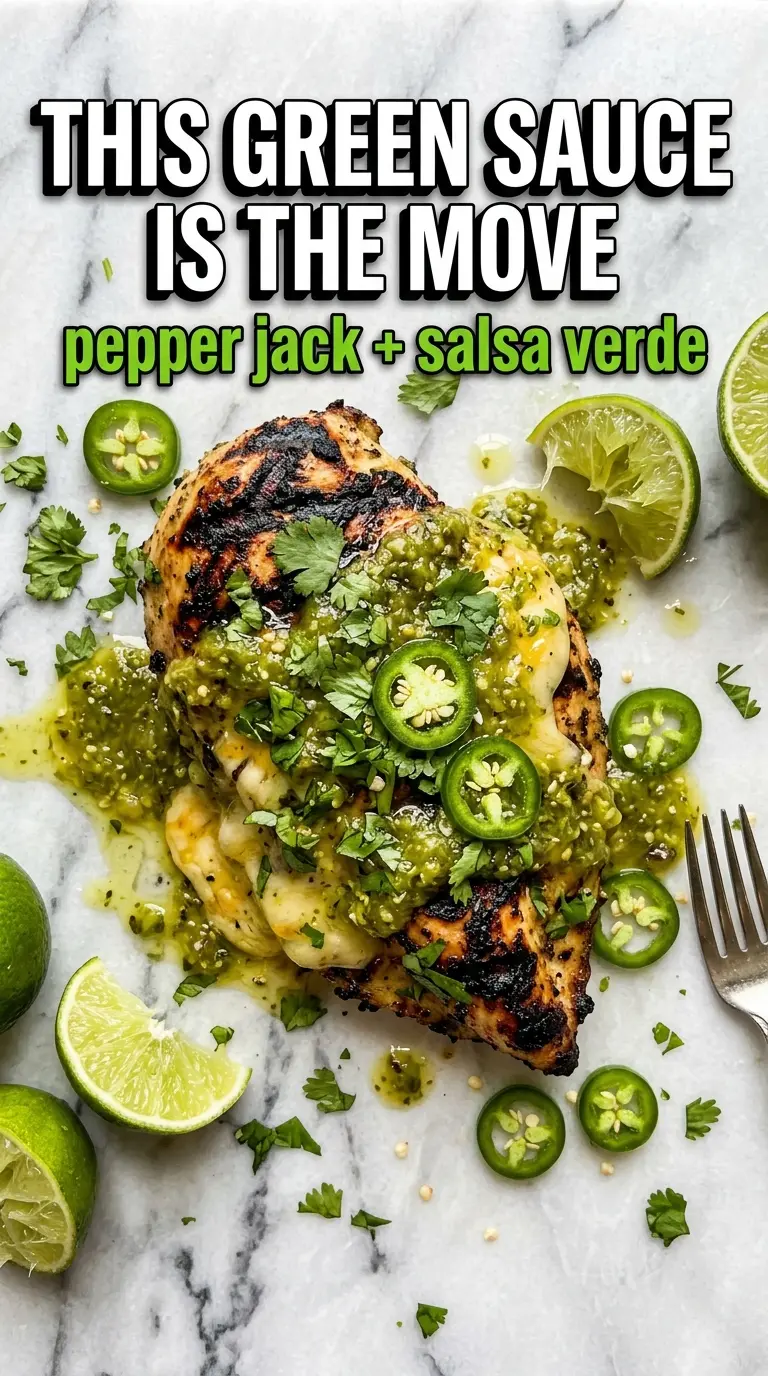
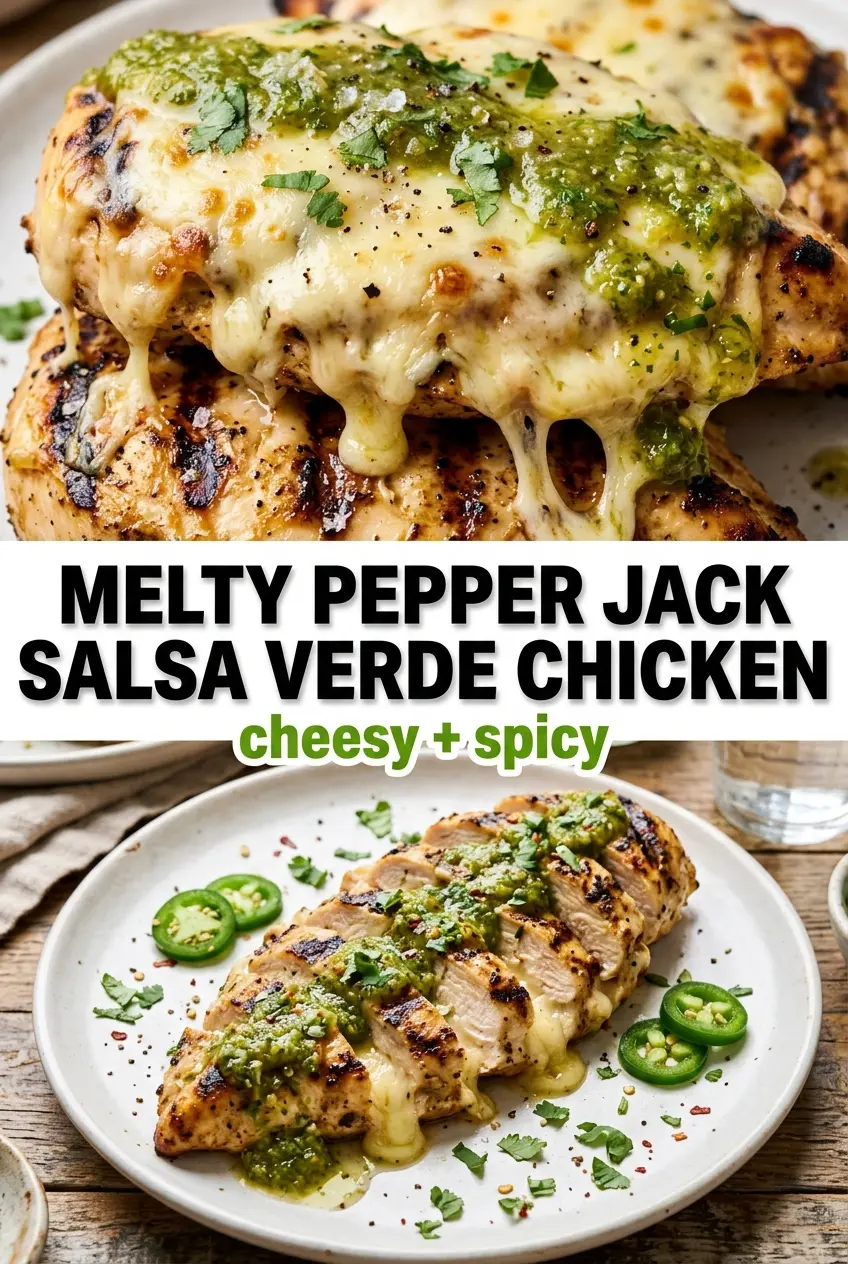
Juicy grilled chicken gets a sharp, tangy lift from salsa verde and a melty cap of pepper jack cheese that clings to every slice. The grill gives the outside a little char while the inside stays moist, and the cheese softens into the salsa instead of sliding off in a greasy layer. It’s the kind of dinner that looks like you worked harder than you did.
The trick here is using part of the salsa verde in the marinade, not just as a topping at the end. That extra step seasons the chicken all the way through and helps the surface stay lively even after grilling. A short marinating window is enough, but if you leave it too long, the acidity in the salsa can start to tighten the meat, so the timing matters.
Below, I’ve included the little details that keep the chicken juicy, the cheese properly melted, and the salsa from burning on the grill. If you’ve ever had grilled chicken turn dry before the center was done, this version is built to avoid that.
The salsa verde kept the chicken from drying out, and the pepper jack melted right into the top without turning oily. I grilled it the full time and it still stayed juicy enough to slice cleanly.
Save this grilled salsa verde pepper jack chicken for a smoky, cheesy dinner with bright lime on the side.
The Part That Keeps Grilled Chicken From Drying Out
Most grilled chicken recipes fail at the same place: the outside looks done before the inside has had time to stay juicy. Here, the marinade does two jobs at once. It seasons the chicken and helps the surface brown without needing a heavy sauce that can scorch on the grill.
The other key move is adding the remaining salsa verde and cheese only near the end. If you pile everything on too early, the salsa gets watery and the cheese goes greasy before the chicken is finished. Waiting until the chicken is nearly cooked through gives you melted cheese on top and a clean, hot finish underneath.
- Chicken breasts — Large breasts work best because they’re sturdy enough for the grill and easy to top with cheese. If yours are very thick, pound them to an even thickness so the centers finish at the same time as the edges.
- Salsa verde — This is the backbone of the flavor here, so use one you actually like tasting on its own. A thinner salsa is fine for marinating, but if it’s extremely loose, spoon the topping on sparingly so it doesn’t run off the chicken.
- Pepper jack cheese — This melts cleanly and brings a little heat without overwhelming the salsa verde. Shred it yourself if you can; pre-shredded cheese often melts less smoothly because of the anti-caking coating.
- Olive oil and garlic — The oil helps the marinade cling, and the garlic rounds out the sharpness of the salsa. Don’t skip the oil, or the seasoning mixture won’t coat the chicken evenly.
What Each Ingredient Is Actually Doing in This Recipe
- Primary ingredient (the foundation) — This is the star of the dish and carries most of the flavor. Quality matters here more than anywhere else.
- Salt and pepper (the seasonings that matter most) — These enhance all other flavors without masking them. Apply generously; underseasoned dishes taste flat.
- Fat (butter, oil, or from the meat) — Fat carries flavors and keeps the dish from tasting dry. It’s also what makes food taste delicious and satisfying.
- Acid (lemon, lime, vinegar, or tomato) — Acid brightens the dish and prevents it from tasting one-dimensional or heavy. It also helps balance rich flavors.
- Aromatics (garlic, onion, ginger) — These add depth and complexity. They mellow and become sweet when cooked, different from their raw state.
- Spices or herbs (the personality) — These give the dish its character and make it distinctive. Toast them to bloom their flavors or add fresh ones to finish.
- Supporting ingredients (vegetables, proteins) — These add texture, nutrition, and complementary flavors. They should support the star ingredient, not compete with it.
- Proper cooking technique (heat, time, stirring) — Even with great ingredients, technique determines the final result. Pay attention to temperature and timing.
Grilling, Topping, and Melting Without Overcooking the Chicken
Building the Marinade
Stir half the salsa verde with the olive oil, garlic, cumin, salt, and pepper until it looks glossy and loose enough to coat the chicken. The oil keeps the mixture from separating and helps the spices spread evenly across the surface. If the marinade looks too thick, it won’t cling well and you’ll end up with uneven seasoning.
Letting the Chicken Take on Flavor
Coat the chicken breasts and marinate them for at least 30 minutes, up to 2 hours. That gives the salsa verde time to season the meat without turning the texture soft. Don’t leave it much longer than that, or the acid can start to make the outside of the chicken a little mealy.
Getting the Grill Ready
Preheat the grill to medium-high and oil the grates lightly so the chicken releases cleanly. The grill should be hot enough to give you good color, but not so hot that the outside chars before the center catches up. If the grates are cool, the chicken is more likely to stick and tear when you try to flip it.
Finishing With Cheese and Salsa Verde
Grill the chicken for 6 to 7 minutes per side, until it’s nearly cooked through and the juices run clear. Spoon the remaining salsa verde over each breast, then top with pepper jack and close the lid for 2 to 3 minutes. Pull it as soon as the cheese melts and the chicken hits 165°F; if you keep cooking after that, the chicken will dry out before the cheese gets any better.
Make It Milder Without Losing the Salsa Verde
Use a mild salsa verde and swap the pepper jack for Monterey Jack if you want the same creamy melt without the extra heat. You’ll keep the tangy, bright finish, but the dish will lean smoother and less sharp.
Dairy-Free Version
Skip the cheese and finish the chicken with extra salsa verde, cilantro, and a squeeze of lime. You lose the creamy melt, but the dish stays bright and satisfying, especially if the chicken is grilled well and sliced before serving.
Grill Pan or Skillet Swap
A grill pan or heavy skillet works when the weather won’t cooperate. You won’t get the same smoky char, but you’ll still get good browning and a reliable cheese melt if you cover the pan for the final minute or two.
Storage and Reheating
- Refrigerator: Store leftovers in an airtight container for up to 4 days. The cheese will firm up, but the flavor holds well.
- Freezer: It freezes decently without the garnish. Wrap portions well and freeze for up to 2 months, then thaw overnight in the fridge.
- Reheating: Reheat covered in a 325°F oven until hot, or warm gently in a skillet with a splash of water and the lid on. High heat dries out the chicken fast and can make the cheese separate.
Questions I Get Asked About This Recipe
Grilled Salsa Verde Pepper Jack Chicken
Ingredients
Equipment
Method
- In a bowl, mix 1/2 cup salsa verde with olive oil, garlic, cumin, salt, and pepper until well combined.
- Mix just until the seasonings are evenly distributed so the marinade clings to the chicken.
- Add chicken to the marinade and turn to coat, then refrigerate for 30 minutes to 2 hours to infuse flavor.
- Cover the container so the marinade doesn’t dry out in the fridge during resting.
- Preheat the grill to medium-high heat so it’s hot before chicken goes on.
- Grill chicken for 6-7 minutes per side until nearly cooked through, then keep a close eye to avoid overcooking.
- Top each breast with the remaining salsa verde and the shredded pepper jack cheese after the first grilling.
- Close the grill lid and cook for 2-3 minutes until the cheese melts and the chicken reaches 165°F.
- Transfer chicken to a plate and serve hot with fresh cilantro and lime wedges for garnish.