Sticky, smoky grilled chicken with a glossy hot honey glaze earns its place on the table fast, and this version gets even better with a fresh sweet corn salad on the side. The chicken comes off the grill caramelized at the edges, juicy in the middle, and just spicy enough to keep you going back for another bite. The corn salad cuts through all that richness with sweet kernels, bright lime, and herbs that still taste crisp and alive.
The trick is keeping the honey in the marinade balanced instead of cloying. Hot sauce brings heat, olive oil helps the glaze coat the chicken evenly, and a short marinade gives the meat flavor without turning the surface sticky before it hits the grill. The corn salad matters just as much: grilling the corn first adds a little char and sweetness that makes the whole plate taste intentional, not like chicken with a side dish.
Below, I’ll walk you through the part that matters most when grilling with honey, plus the small adjustments that keep the chicken from burning before it’s cooked through.
The chicken got that sticky charred glaze without burning, and the corn salad was the perfect fresh contrast. I used the marinade for basting exactly like you said and the flavor came through all the way.
Save these grilled hot honey chicken bowls for the nights when you want sticky heat, charred edges, and a fresh corn salad on the side.
The Honey Glaze Needs the Grill, Not the Pan
Honey behaves differently over direct heat than a plain oil marinade. It goes from glossy to burnt fast, which is why this chicken needs a hot grill and a little restraint on the baste. The goal is caramelization on the surface while the chicken finishes cooking through, not a dark shell before the center is ready.
If the glaze starts to blacken too quickly, the heat is too high or the honey is sitting on the chicken too early. That’s the failure point people run into most. Let the marinade do its job first, then baste during the last few minutes so the sugars have time to set without scorching.
- Hot sauce — This is the main source of heat, and the kind you use changes the result. A vinegar-forward hot sauce gives sharper bite; a thicker sauce adds more body to the glaze.
- Olive oil — It keeps the marinade loose enough to coat the chicken instead of clumping into sticky patches. A neutral oil works too, but olive oil adds a little more roundness.
- Chicken breasts — Breasts stay lean, so they benefit from a shorter grill time and a rest before slicing. If yours are very thick, pound them lightly so they cook evenly and don’t dry out at the edges.
- Corn on the cob — Fresh corn is worth using here. Frozen corn can work in a pinch for the salad, but it won’t give you the same smoky sweetness from the grill.
What the Corn Salad Is Doing Beside the Chicken
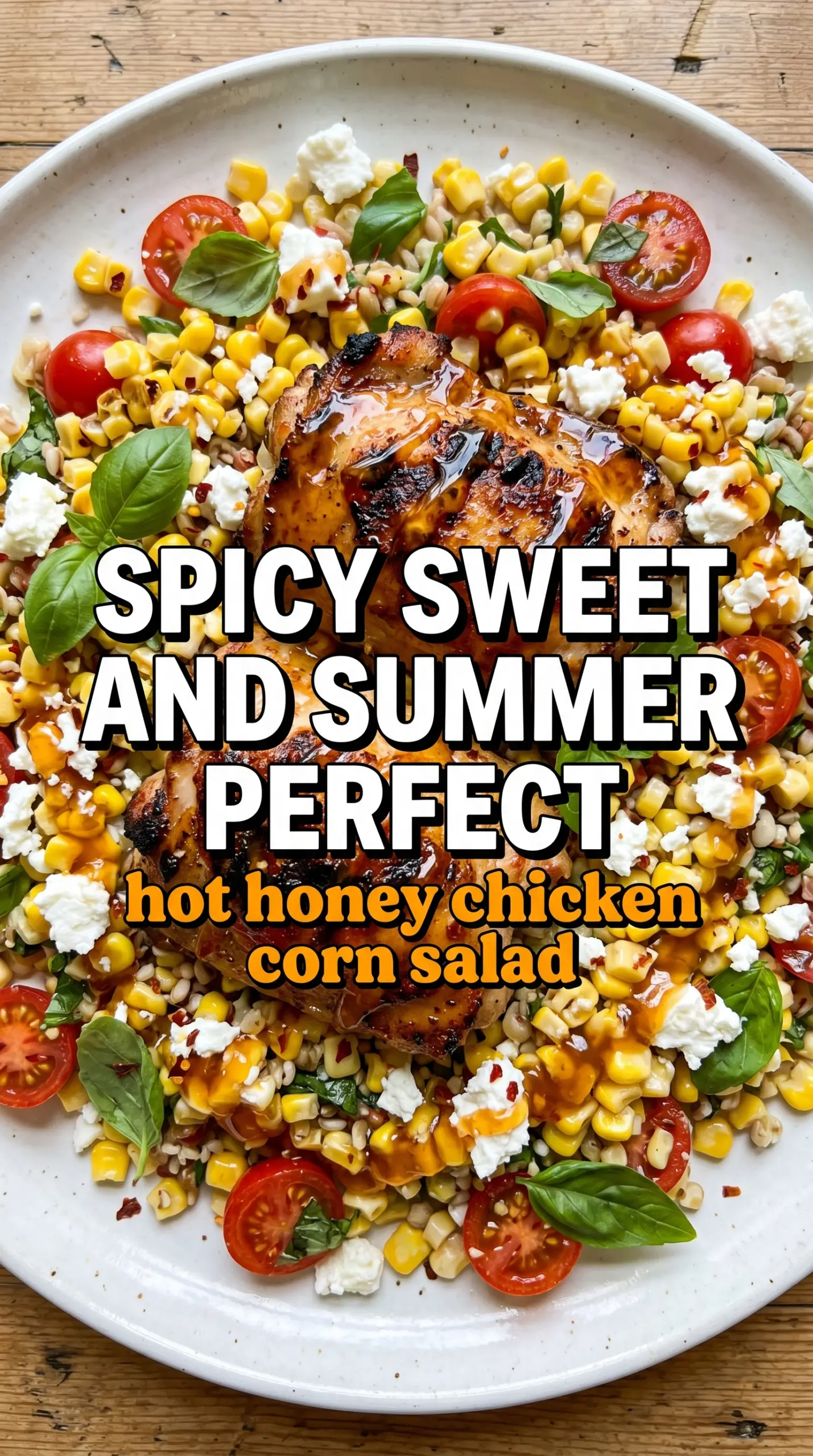
The chicken brings heat and glaze, but the salad keeps the plate from feeling heavy. Grilled corn gives sweetness with a little smoke, cherry tomatoes bring juiciness, and lime juice wakes everything up so the honey doesn’t dominate. Basil is the quiet ingredient that ties it together; it gives the salad a clean herbal finish that tastes especially good against the spicy chicken.
If your salad tastes flat, it usually needs more acid or salt, not more oil. Corn and tomatoes need a good seasoning hand to taste bright. Toss the salad while the corn is still warm so the juices loosen up and the flavors settle together instead of sitting separately in the bowl.
- Honey — This is the glaze and the reason the chicken gets that shiny finish. Use real honey, not a syrup substitute, or the marinade won’t caramelize the same way.
- Lime juice — It sharpens the salad and keeps the whole plate from leaning too sweet. Fresh lime matters here because bottled juice tastes dull against the grilled corn.
- Fresh basil — Basil gives the salad lift and fragrance. If you swap in cilantro, the flavor shifts more savory and a little more southwestern, which still works if that’s the direction you want.
- Cherry tomatoes — Their sweetness and acidity balance the corn and honey. Larger tomatoes can be used, but cut them small and let the juices drain a bit so the salad doesn’t get watery.
Grilling the Chicken Without Losing the Glaze
Mix the Marinade Until It Looks Smooth
Whisk the honey, hot sauce, olive oil, salt, and pepper until the mixture turns loose and glossy. If the honey sits in thick ribbons at the bottom, it won’t coat the chicken evenly. You want a marinade that clings in a thin layer and leaves the chicken covered, not buried.
Let the Chicken Marinate Long Enough to Taste It
Thirty minutes is enough to season the surface, and up to two hours gives you a little more depth. Don’t push it much longer, especially with boneless breasts, or the texture can start to soften in a way that feels a little mushy around the edges. Pull the chicken out of the fridge while the grill heats so it goes on cold, not icy.
Grill and Baste at the End
Lay the chicken on a cleaned, oiled grill over medium heat. Let it cook until it releases without fighting the grates, then turn it and brush on the marinade during the last few minutes. If you baste too early, the sugars can burn before the chicken reaches temperature; the glaze works best as a finish, not a shield.
Toss the Salad While the Corn Is Still Warm
Grill the corn until you get a few charred spots and the kernels smell sweet and toasted. Cut it from the cob, then mix it immediately with tomatoes, onion, basil, lime juice, olive oil, salt, and pepper. Warm corn absorbs the dressing better, and the salad tastes fuller when it isn’t ice-cold.
Make It Less Spicy
Use the lower amount of hot sauce and choose a milder style with more vinegar and less burn. You’ll keep the sticky sweet glaze, but the heat stays in the background instead of taking over the whole plate.
Swap the Chicken for Thighs
Boneless thighs handle the heat a little better and stay juicier if you tend to overcook chicken breasts. They need a few extra minutes on the grill, and the glaze tastes a bit richer because the meat itself has more fat.
Make the Salad Dairy-Free and Gluten-Free as Written
This recipe already fits both diets without any changes, which is part of why it works so well for mixed tables. Just check your hot sauce label if you’re serving someone with allergies, since some brands add unexpected thickeners or flavorings.
Add a Little More Smoke
If you want a deeper grill flavor, leave the corn on the cob over the heat a minute or two longer until the kernels pick up more char. That extra smoke makes the salad taste more savory and balances the honey even better.
Storage and Reheating
- Refrigerator: Store the chicken and salad separately for up to 3 days. The salad softens a bit as it sits, but the flavors stay bright.
- Freezer: The chicken freezes well for up to 2 months. The corn salad doesn’t freeze well because the tomatoes and herbs lose their texture.
- Reheating: Warm the chicken gently in a covered skillet over low heat or in a 300°F oven until just heated through. High heat dries out the breasts and can make the honey glaze turn bitter.
Questions I Get Asked About This Recipe
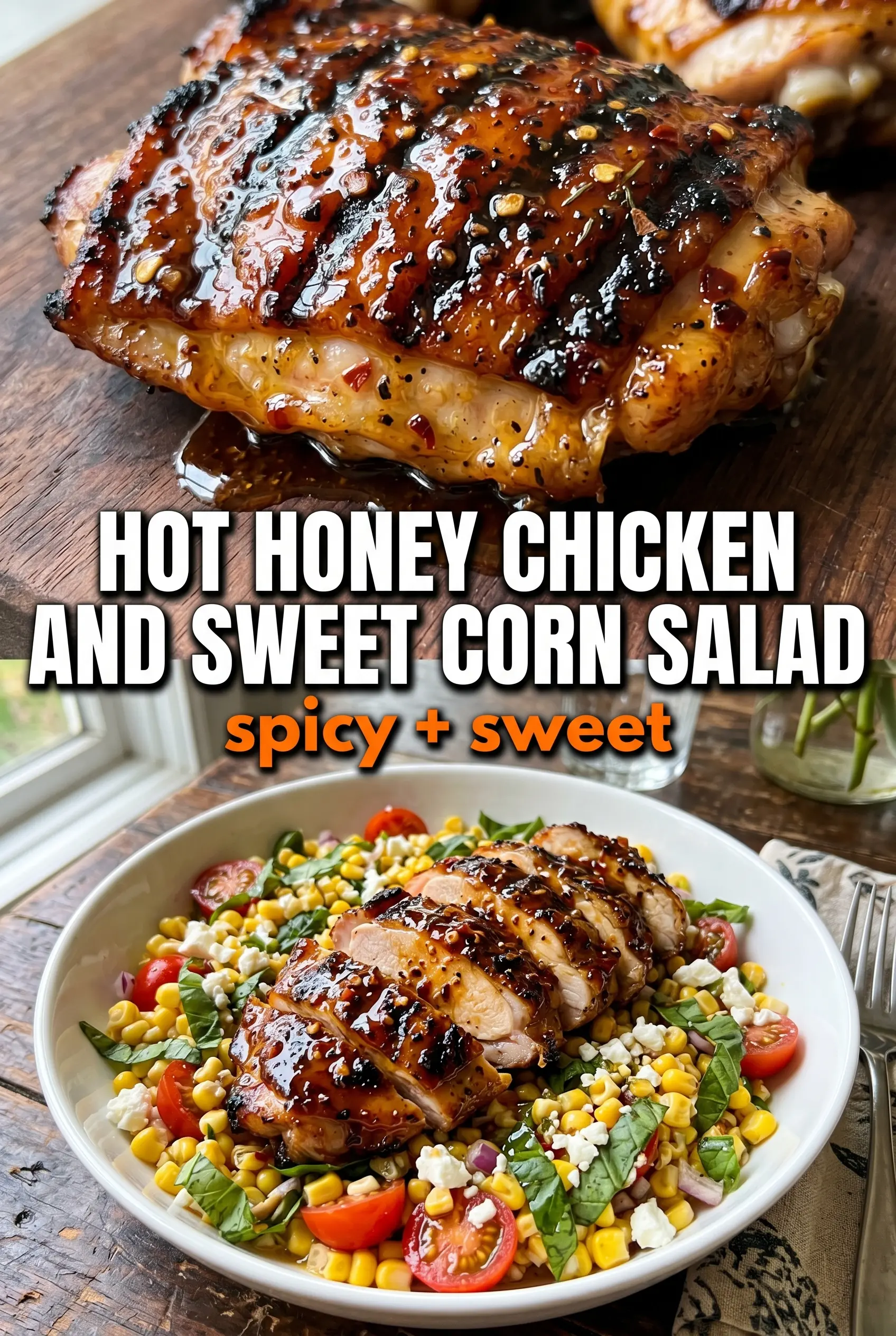
Grilled Hot Honey Chicken with Sweet Corn Salad
Ingredients
Equipment
Method
- In a bowl, mix honey, hot sauce, olive oil, salt, and pepper until glossy and uniform. Visual cue: it should look like a smooth amber glaze.
- Coat the chicken breasts with the marinade, then let them marinate for 30 minutes to 2 hours in the refrigerator. Visual cue: the surface will look darker and sticky as it sits.
- Preheat the grill to 450°F. Place the chicken on the hot grill and cook for 6-7 minutes per side.
- Baste the chicken with the marinade during grilling as it cooks. Visual cue: the glaze will bubble slightly and caramelize at the edges.
- Combine grilled corn, cherry tomatoes, red onion, basil, lime juice, olive oil, salt, and pepper. Visual cue: the salad will look colorful with green, red, and golden corn.
- Serve the hot honey chicken immediately with the sweet corn salad. Visual cue: drizzle extra honey-glaze from the plate so the chicken and salad look vibrant.