Smoky, saucy BBQ chicken earns a permanent place on the grill when the meat stays juicy and the glaze sets up with a sticky, caramelized finish instead of burning into a bitter crust. The best version gives you crisped edges, tender dark meat, and breasts that still slice cleanly without drying out. That balance comes from a simple method: steady indirect heat first, then a short, hot finish with sauce.
The details matter here. Patting the chicken dry helps the skin and surface brown instead of steam, and a little olive oil gives the seasoning something to cling to. The BBQ sauce gets a small boost from apple cider vinegar and smoked paprika, which keeps it from tasting flat and helps it glaze instead of sitting on the chicken like a heavy layer. If you’ve ever had grilled chicken go chalky before the sauce was even close to done, the fix is in the heat management, not more sauce.
Below, I’ve included the exact grilling cues I watch for, the one substitution that still keeps the chicken juicy, and a few ways to adapt this for different cuts and cook setups.
The chicken stayed juicy even on the breasts, and the last few minutes over direct heat gave the sauce that sticky, caramelized edge without burning it.
Save this juicy BBQ chicken for the nights when you want smoky grilled chicken with a sticky sauce and no dry bites.
The Reason BBQ Chicken Stays Juicy Instead of Turning Dry
The biggest mistake with BBQ chicken is rushing the sauce over heat that’s too high. Sugar-heavy barbecue sauce burns fast, and once it scorches, you’ve got bitter edges before the chicken is fully cooked. This method keeps the sauce off the direct flame until the meat is nearly done, which protects the glaze and gives the chicken time to cook through without drying out.
Indirect heat does the heavy lifting. The chicken sits in the grill’s gentler zone first, where it can climb to temperature slowly while the surface stays intact. Then the direct-heat finish tightens everything up and caramelizes the sauce. If you’ve ever had the outside look done while the inside was still undercooked, the grill was too hot from the start.
What Each Ingredient Is Actually Doing in This BBQ Chicken
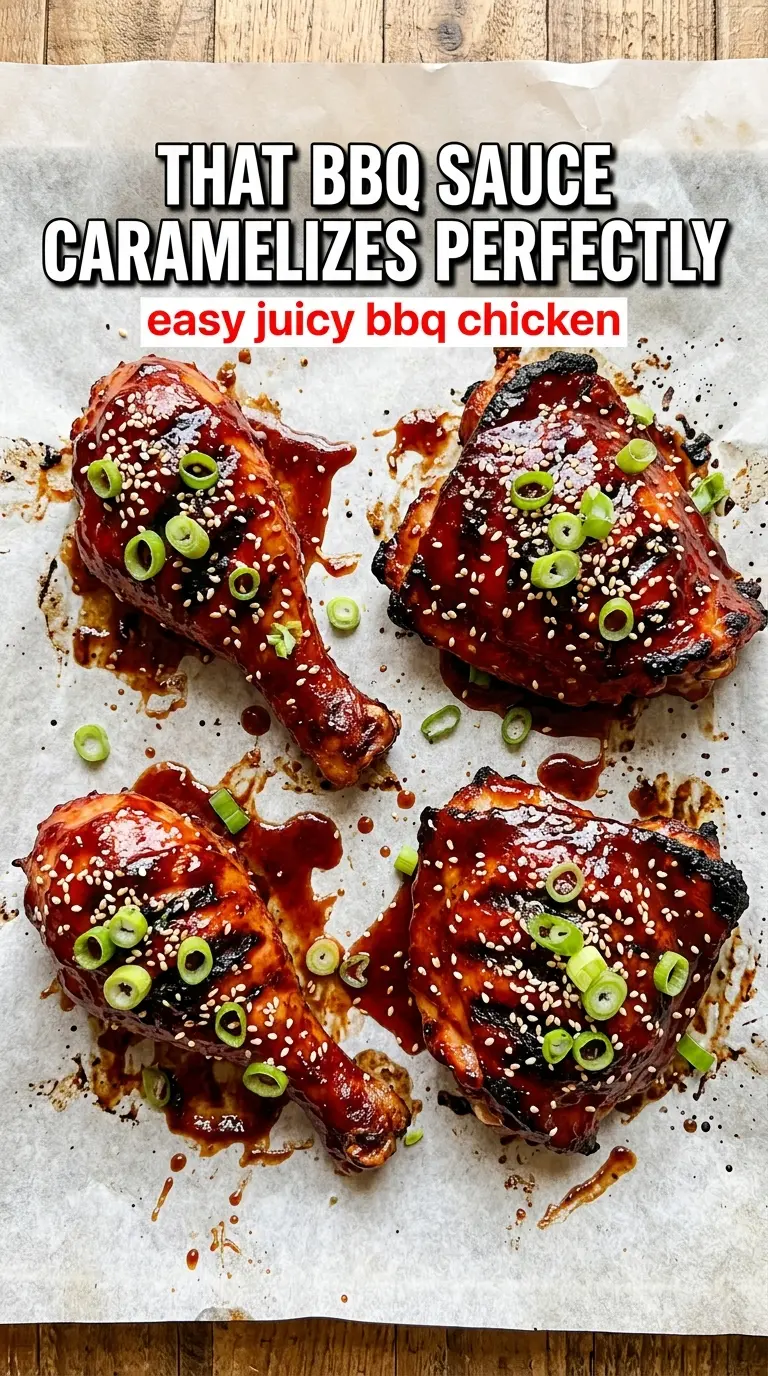
- Chicken pieces — A mix of legs, thighs, and breasts gives you a better range of texture on the grill. Thighs and legs stay forgiving over indirect heat, while breasts need close attention so they don’t dry out. If you use only breasts, choose similar-sized pieces and pull them the second they hit 165°F.
- BBQ sauce — Use a sauce you already like, because it’s the main flavor here. A thicker sauce clings better during the final glaze, while a thin sauce can slide off before it caramelizes. If your favorite sauce is very sweet, the vinegar in this recipe keeps it from tasting one-note.
- Apple cider vinegar — This sharpens the sauce and cuts through the richness of the chicken. It won’t make the chicken taste tangy; it just keeps the glaze lively and helps it brush on more cleanly. Don’t swap in a strong flavored vinegar unless you want that note to show up in the finished sauce.
- Smoked paprika — This adds a gentle smoky layer when you’re grilling over gas or charcoal and want the sauce to taste deeper without more sugar. It matters more than people expect in a simple BBQ chicken recipe because it makes the sauce taste cooked, not just brushed on.
- Olive oil — A light coating helps the seasoning stick and prevents the chicken from grabbing onto the grates too early. You don’t need much, just enough to lightly coat the surface before the salt and pepper go on.
The Grill Timing That Keeps the Sauce from Burning
Season the Chicken Before It Hits the Heat
Pat the chicken dry first. That surface moisture is the difference between a clean sear and a soggy start. Coat the pieces lightly with olive oil, then season with salt and pepper so the skin and surface pick up flavor before the sauce goes anywhere near the grill. If the chicken goes on wet, it’ll steam before it browns.
Build the Sauce While the Grill Preheats
Mix the BBQ sauce with the apple cider vinegar and smoked paprika before you start cooking. That gives the flavors a moment to come together, and it keeps you from trying to measure while the chicken is already on the heat. A quick stir is enough; you’re not marinating here, just loosening and deepening the sauce so it brushes on smoothly later.
Use Indirect Heat for the Long Stretch
Preheat the grill to medium, about 350-400°F, and place the chicken over indirect heat. That slower zone lets the meat cook through without blackening the outside. Turn the chicken every 10 minutes so it cooks evenly and doesn’t dry out on one side. If the grill runs hot, move the pieces a little farther from the flame rather than shortening the cook time.
Finish with Sauce at the End
Brush on the BBQ sauce during the last 10 minutes and move the chicken over direct heat to caramelize it. The sauce should look glossy and sticky, not dark and blistered at once. Keep an eye on it because sugar goes from bronzed to burnt fast. Pull the chicken when the thickest part reaches 165°F, then let it rest for 5 minutes so the juices settle back into the meat.
How to Adapt This BBQ Chicken for Your Grill, Your Crowd, or Your Diet
All-Thigh Version for Extra Juiciness
Use all thighs if you want the most forgiving result. They stay juicy longer than breasts and handle the final saucing step without drying out. The tradeoff is a richer, darker bite and slightly longer cook time if the pieces are large.
Gluten-Free BBQ Chicken
This recipe is naturally gluten-free as long as your BBQ sauce is gluten-free. That’s the one label worth checking, since some sauces use soy sauce, malt vinegar, or thickeners that can sneak in gluten. Everything else here works exactly the same.
Oven Finish When the Grill Isn’t Cooperating
Start the chicken on the grill over indirect heat, then move it to a 425°F oven to finish if the weather or the grill setup is giving you trouble. You’ll lose a little of the smoky edge, but the sauce will still glaze properly and the meat will stay juicy. Use a broiler for the last minute or two if you want a little more color.
Storage and Reheating
- Refrigerator: Store leftover chicken in an airtight container for up to 4 days. The sauce will thicken and cling more firmly as it chills.
- Freezer: It freezes well for up to 2 months. Wrap the pieces tightly or pack them in freezer containers so the sauce doesn’t pick up freezer burn.
- Reheating: Reheat covered in a 325°F oven with a splash of water or extra sauce until warmed through. The mistake to avoid is blasting it in the microwave, which dries the chicken out fast and makes the glaze tough.
Questions I Get Asked About This Recipe
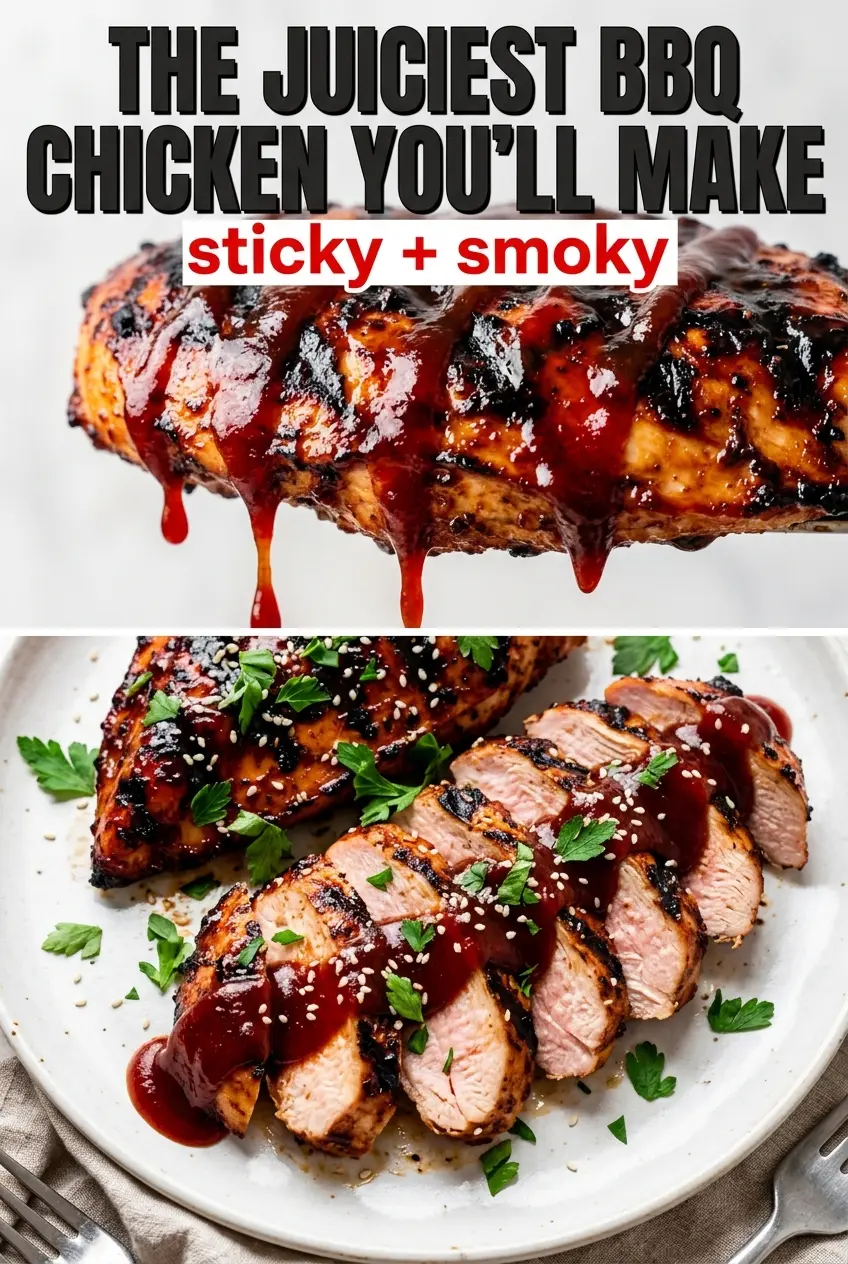
The Best Easy Juicy BBQ Chicken
Ingredients
Equipment
Method
- Pat the chicken dry, then rub with olive oil and season with salt and pepper to taste.
- Mix BBQ sauce with apple cider vinegar and smoked paprika until combined.
- Preheat the grill to medium heat, 350-400°F.
- Grill the chicken over indirect heat for 30-35 minutes, turning every 10 minutes.
- During the last 10 minutes, brush the chicken generously with BBQ sauce and move it to direct heat.
- Continue grilling and basting until the internal temperature reaches 165°F and the sauce is caramelized, watching for deep glaze color.
- Let the chicken rest for 5 minutes before serving so the juices redistribute.