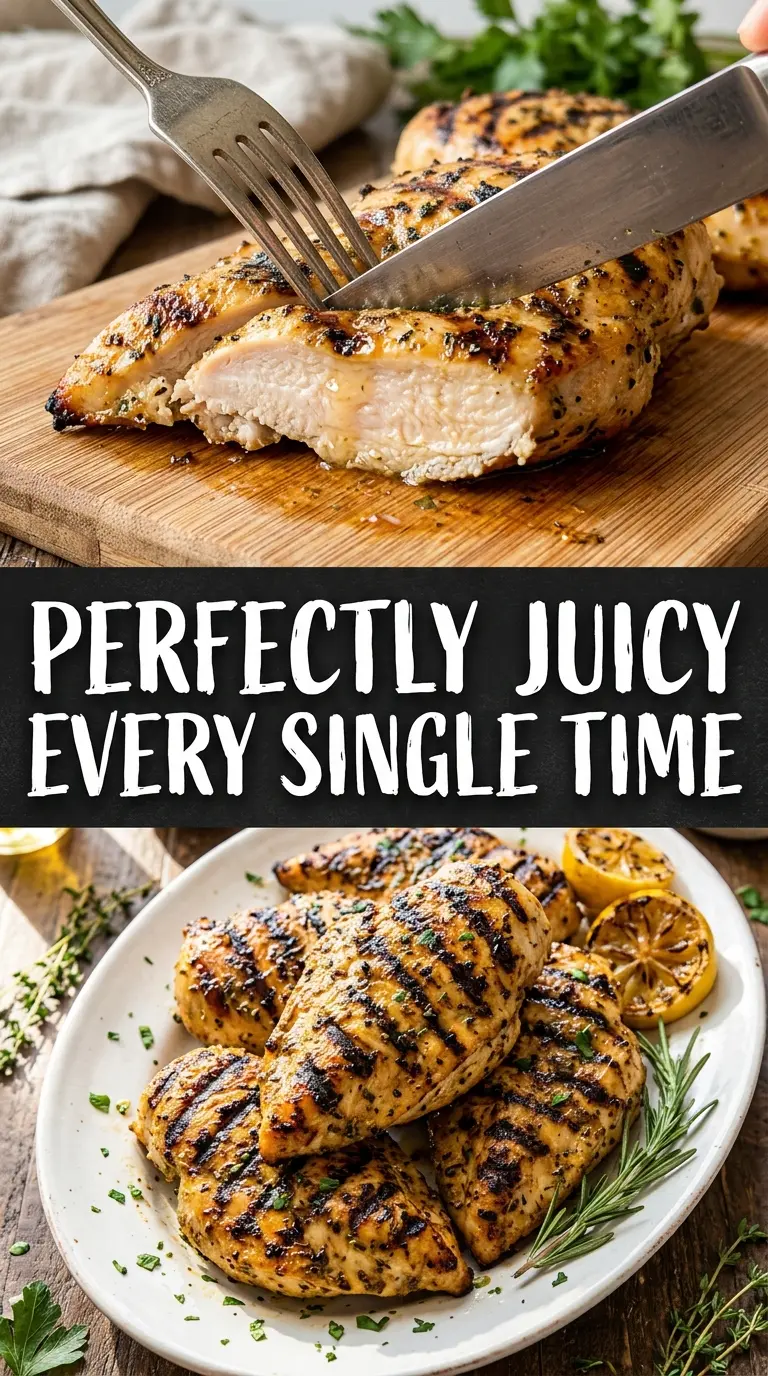
Juicy grilled chicken with deep seasoning and clean, balanced flavor earns its place in the regular rotation fast. The marinade does the heavy lifting here: salty soy sauce, sharp lemon, a little mustard, and brown sugar work together so the chicken comes off the grill with browned edges, a savory crust, and meat that stays tender instead of drying out. It tastes like the chicken everyone reaches for first at a cookout.
The trick is giving the marinade enough time to do its job without pushing it so far that the lemon starts to turn the outside of the chicken mealy. A few hours is the sweet spot for both flavor and texture, and a medium-high grill gives you those clear marks without scorching the sugar in the marinade. Keep the lid moving and watch the temperature more than the clock.
Below, I’ve included the details that matter most: how to keep the chicken juicy on the grill, which swaps work when you’re missing an ingredient, and what to do if you want to prep this ahead for a crowd.
The marinade gave the chicken that salty-savory edge and the grill marks came out perfect. I let it go about 5 hours and it stayed juicy all the way through.
Save this all-star grilled chicken for the cookouts, weeknights, and backyard dinners when you want juicy chicken with a proper char.
The Marinade Timing That Keeps the Chicken Juicy
The biggest mistake with grilled chicken is treating marinating like an all-day requirement. This marinade has lemon juice, soy sauce, and Worcestershire, which means it brings both flavor and some tenderizing power; that’s good, but only up to a point. Two to eight hours is the range that gives you seasoned chicken with a juicy bite. Push it much longer and the outside can take on a soft, cured texture instead of staying clean and meaty.
Another thing that matters here is the balance of sugar and acid. Brown sugar helps the chicken caramelize on the grill, but it also means the fire needs to stay at medium-high, not blasting hot. If the grill is screaming hot, the outside can darken before the inside is done. You want browning, not bitterness.
What Each Marinade Ingredient Is Actually Doing
- Olive oil — Carries the flavors and helps the chicken brown instead of sticking. A standard olive oil is fine here; save the good finishing oil for the table.
- Soy sauce — Gives the marinade its savory backbone and seasons the meat all the way through. If you need a gluten-free version, use tamari in the same amount.
- Lemon juice — Lifts the whole marinade and keeps the flavor from tasting flat. Fresh lemon is worth using because bottled juice can read a little dull once it’s cooked.
- Worcestershire sauce — Adds the deep, beefy note that makes the chicken taste grilled even before it hits the fire. There isn’t a perfect substitute, but a little extra soy sauce plus a splash of vinegar can stand in if needed.
- Dijon mustard — Helps emulsify the marinade so it clings to the chicken instead of sliding off. It also gives a subtle sharpness that keeps the brown sugar in check.
- Brown sugar — Encourages caramelization and rounds out the salt and acid. Light or dark brown sugar both work; dark will taste a touch richer.
- Garlic, black pepper, and paprika — These are the finishing layers that make the marinade taste complete. Garlic should be minced fine so it doesn’t burn in big bits on the grill.
Getting the Grill Marks Without Drying Out the Meat
Whisk the Marinade Until It Looks Unified
Combine the oil, soy sauce, lemon juice, Worcestershire, Dijon, garlic, brown sugar, pepper, and paprika until the sugar starts dissolving and the mixture looks slightly thickened. That Dijon matters more than it gets credit for because it helps the marinade stay blended instead of separating in the bowl. If the sugar is still gritty, give it another minute of whisking before it touches the chicken.
Marinate with the Clock, Not Guesswork
Put the chicken in the refrigerator for at least 2 hours and up to 8. Thicker pieces can handle the longer end of that range, but very thin cuts are better closer to the 2- to 4-hour mark. Too little time and the flavor stays on the surface; too much and the acid starts working against the texture.
Build a Steady Medium-High Fire
Preheat the grill until it’s hot enough that the grates sizzle when the chicken goes down, but not so hot that you can’t hold your hand near the heat for a second or two. Oil the grates if needed and shake off excess marinade before grilling, because dripping sugar can flare and scorch. The chicken should release more easily once it has seared; if it’s sticking hard, give it another minute.
Cook to Temperature, Then Let It Rest
Turn the chicken occasionally until the thickest part reaches 165°F. Pull it a little before that point if you know carryover heat will finish the job, then rest it for 5 minutes so the juices settle back into the meat. Cutting too soon sends those juices onto the cutting board instead of back into the chicken.
Swap in Boneless Chicken for Faster Grilling
Boneless breasts or thighs work well if you want a quicker cook, but the timing changes a lot. Breasts need close watching so they don’t dry out, while thighs stay forgiving and stay juicy even if they go a minute or two long. For either one, pound thicker parts to even thickness so the grill cooks them at the same rate.
Make It Gluten-Free Without Losing the Savory Edge
Use tamari instead of soy sauce and keep everything else the same. You’ll still get the salty depth and browning support, just without the wheat. Check the Worcestershire label too, since some brands include gluten.
Turn It Into a Dairy-Free Crowd Dinner
This recipe is naturally dairy-free as written, which makes it easy to serve with almost anything else on the table. If you’re feeding a bigger group, double the marinade and grill extra chicken for leftovers. The flavor holds up well cold the next day, especially sliced over salad or tucked into wraps.
Use the Same Marinade on Vegetables
Bell peppers, zucchini, and mushrooms can all use a spoonful of the same marinade before they hit the grill. Just keep the vegetables in a separate bowl so they don’t cross-contaminate with the raw chicken. They’ll cook much faster than the chicken, so add them later or use a grill basket.
Storage and Reheating
- Refrigerator: Store cooked chicken in an airtight container for up to 4 days. It stays moist if you slice it only when you’re ready to eat it.
- Freezer: Freezes well for up to 2 months. Wrap tightly and thaw overnight in the refrigerator before reheating so the texture stays closer to fresh.
- Reheating: Reheat gently in a covered skillet with a splash of water, or in a 300°F oven until warmed through. High heat dries grilled chicken out fast, so don’t blast it in the microwave unless you’re in a hurry.
Answers to the Questions Worth Asking

All-Star Grilled Chicken
Ingredients
Equipment
Method
- Whisk together olive oil, soy sauce, lemon juice, Worcestershire sauce, Dijon mustard, minced garlic, brown sugar, black pepper, and paprika until the sugar dissolves and the mixture looks evenly combined.
- Place chicken pieces in a container, pour in the marinade, and cover so all pieces are coated.
- Marinate the chicken in the refrigerator for 2-8 hours, keeping it cold and covered until ready to grill.
- Preheat the grill to medium-high heat so it’s hot enough to create clear grill marks.
- Grill chicken pieces, turning occasionally, until the thickest part reaches 165°F and the outside is browned.
- Let the grilled chicken rest for 5 minutes before serving to keep the juices inside.