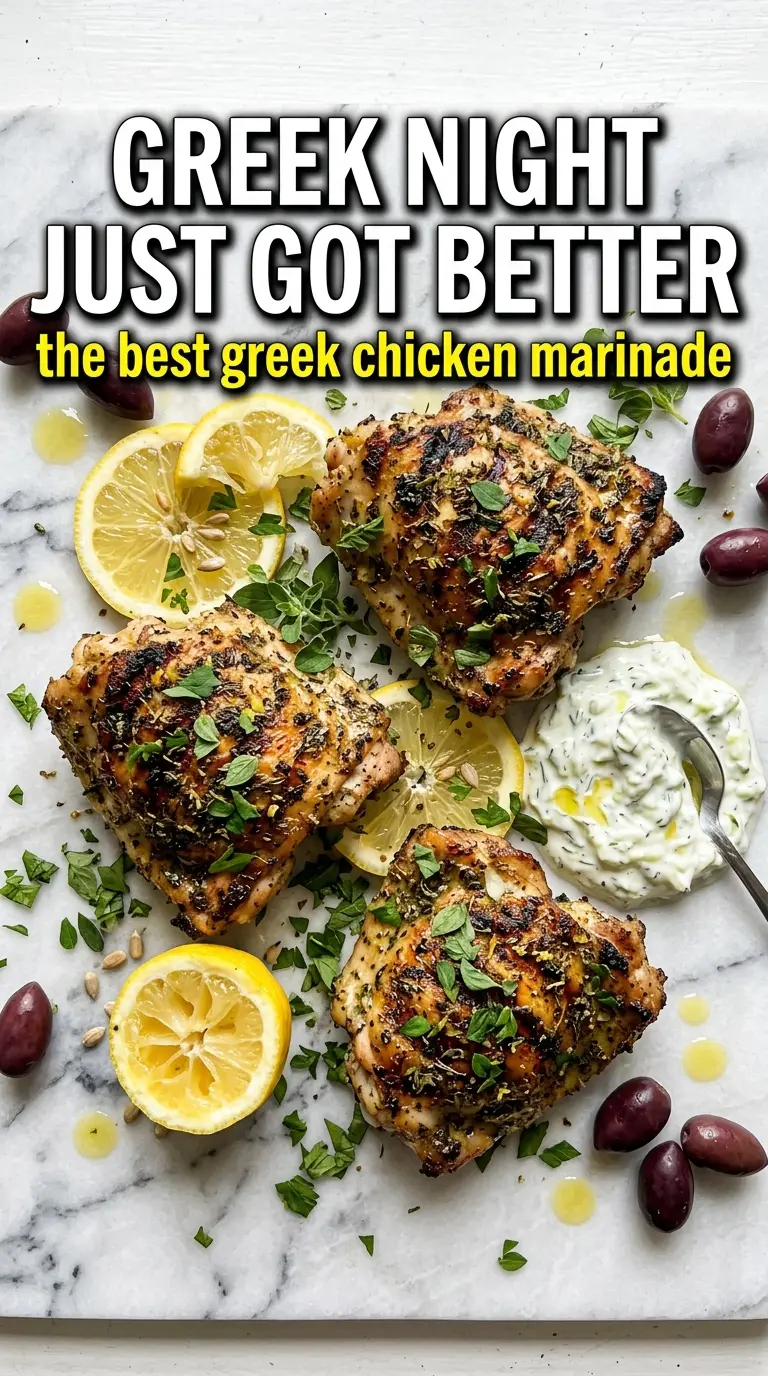
Juicy chicken with a bright lemon-oregano finish is the kind of dinner that gets people hovering near the grill before it’s even done. This Greek chicken marinade hits that balance I’m always chasing: enough acid to wake up the meat, enough olive oil to keep it from tasting sharp, and enough garlic and herbs to make every bite taste layered instead of flat. It works on thighs, breasts, drumsticks, or whatever cut you’ve got on hand, which is why it stays in regular rotation.
The trick is keeping the marinade bold without letting the lemon take over. Olive oil softens the edges, Dijon helps the mixture emulsify so the herbs cling to the chicken, and the oregano and thyme bring that classic Mediterranean backbone. Four hours is the sweet spot for most cuts: long enough for flavor to sink in, not so long that the lemon starts tightening the texture. If you’ve ever ended up with chicken that tasted seasoned on the outside but bland inside, this version fixes that.
Below I’m walking through the parts that matter most — how to keep the marinade balanced, what to change if you only have dried herbs, and how to get the best char without drying the chicken out.
The chicken came off the grill juicy and the lemon-garlic oregano flavor went all the way through. I marinated it overnight and it had that bright Greek taste without being too sour.
Save this Greek chicken marinade for juicy grilled chicken with lemon, garlic, and oregano that tastes bright and balanced every time.
The Reason Lemon Chicken Goes Dry Before It Gets Flavorful
Most marinades for chicken fail in one of two ways: they’re too weak to do much, or they’re so acidic that they tighten the meat before it ever hits the heat. This one stays in the middle. The lemon brings brightness, but the olive oil and Dijon keep the mixture from acting like straight citrus juice, which is what makes the texture stay tender instead of stringy.
Another thing that matters here is surface contact. A zip-top bag helps the marinade coat every piece of chicken instead of pooling at the bottom of a dish. If you’re using thicker cuts, turn the bag once or twice while it marinates so the flavor stays even. For the best result, don’t push the marinating time past a full day. After that, the lemon starts working against you.
- Olive oil — This carries the herb and garlic flavor across the chicken and helps with browning. Use a decent extra-virgin oil if you can taste it later; it gives the finished chicken a rounder, richer edge.
- Lemon juice and zest — The juice gives the marinade its bright bite, while the zest supplies the citrus aroma without adding extra acid. If you only have bottled juice, the chicken will still work, but it loses some of that fresh Greek snap.
- Dijon mustard — This is the quiet helper in the bowl. It helps the marinade emulsify so the oil and lemon stay mixed, which means the herbs cling instead of sliding off.
What Each Ingredient Is Actually Doing in This Chicken Marinade
- Chicken breasts (the lean protein) — Cut evenly so pieces cook at the same rate. Lean chicken picks up marinade flavors quickly without needing long soaking.
- Soy sauce or tamari (the savory base) — This provides umami and salt that seasons the chicken all the way through. Low-sodium versions work if that’s your preference.
- Fresh citrus juice (lime, lemon, or orange) — Acid tenderizes the surface and brings brightness. Fresh juice tastes better than bottled in marinades.
- Olive oil or sesame oil (the carrier) — Oil helps the marinade coat evenly and prevents the chicken from sticking on the grill. It also carries aromatic flavors throughout.
- Garlic and ginger (fresh aromatics) — These add pungent depth that mellows slightly when grilled, becoming sweet and mellow rather than harsh.
- Honey or brown sugar (the caramelizer) — A small amount helps the chicken brown and glaze on high heat. Too much can burn before the chicken finishes cooking.
- Fresh herbs (cilantro, parsley, or basil) — These bring freshness that prevents the marinade from tasting heavy. Add some after grilling to keep the dish bright.
- Proper marinating time (30 minutes to 4 hours) — Longer isn’t always better. Acid can soften the chicken surface if it sits too long, so find the balance between flavor and texture.
Building the Marinade So Every Bite Catches the Herb and Citrus
Whisk the Base Until It Looks Slightly Creamy
Start by whisking the olive oil, lemon juice, zest, garlic, oregano, thyme, Dijon, salt, and pepper until the mixture looks a little thickened and cloudy. That’s the sign the oil and lemon have come together enough to coat the chicken evenly. If you dump everything in and stir once, the marinade separates and the herbs end up floating on top instead of sticking to the meat. A quick whisk now saves you from bland patches later.
Let the Chicken Sit in Full Contact With the Marinade
Put the chicken in a zip-top bag or a shallow dish and press out as much air as you can. The goal is to keep the marinade touching the entire surface, not just bathing the bottom of the container. If you’re using breasts, flattening the thick end slightly helps them marinate and cook more evenly. For bone-in pieces, give the bag a turn halfway through the marinating time so the seasoning doesn’t settle.
Grill Hot Enough to Char, Not Burn
Preheat the grill to medium-high and let the grates get properly hot before the chicken goes on. You want clean grill marks and a little char from the sugar-free marinade, not a blackened outside with a raw center. If the chicken sticks when you try to turn it, it’s not ready to release yet. Let it cook another minute and it will usually lift cleanly.
Rest Before Slicing
Once the chicken reaches 165°F, move it to a plate and let it rest for 5 minutes. That short rest keeps the juices from running all over the cutting board. If you slice too soon, even perfectly grilled chicken will look dry. Serve it with lemon wedges so people can add one last bright squeeze right before eating.
How to Adapt This Greek Chicken Marinade for Different Cuts and Diets
For chicken thighs versus chicken breasts
Thighs can handle the full 24-hour marinate and stay juicy on the grill, while breasts do better in the 4 to 8 hour range. Breasts are leaner, so too much time in the lemon can make them firmer than you want. Thighs bring more flavor and forgiveness; breasts give you a cleaner, leaner result.
Dairy-free and naturally gluten-free
This recipe already works for both without any changes. The Dijon is the only ingredient that can sometimes trip people up, so check the label if you need strict gluten-free mustard. You get full flavor without adding anything extra.
Fresh oregano or dried oregano
Fresh oregano gives a sharper, greener finish, while dried oregano tastes more concentrated and classic in a marinade. If you’re using dried, cut the amount in half from the fresh measure by volume, which is exactly why one tablespoon dried works here instead of two tablespoons. Both versions work, but fresh reads brighter and dried reads more pantry-friendly.
Storage and Reheating
- Refrigerator: Store cooked chicken in an airtight container for up to 4 days. The herbs stay good, though the lemon note softens a little.
- Freezer: Cooked chicken freezes well for up to 2 months. Slice it first if you want quicker thawing, and wrap it tightly so the citrus and garlic don’t pick up freezer flavor.
- Reheating: Reheat gently in a covered skillet over low heat with a splash of water or broth, or warm it in the oven at 300°F. High heat dries out grilled chicken fast, especially lean breast meat.
Questions I Get Asked About This Greek Chicken Marinade
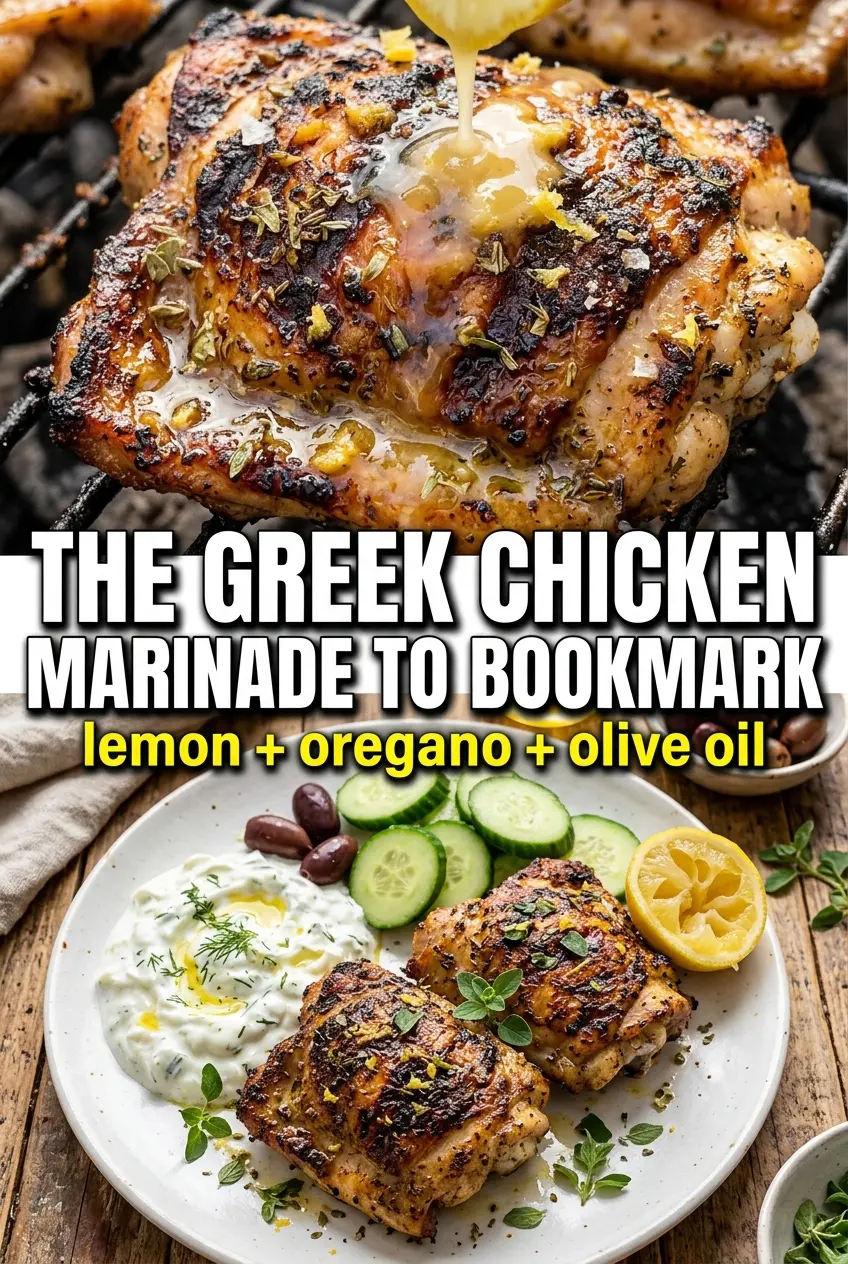
The Best Greek Chicken Marinade
Ingredients
Equipment
Method
- Whisk together olive oil, lemon juice, lemon zest, garlic, oregano, thyme, Dijon mustard, salt, and pepper until evenly combined. Stop when the mixture looks smooth and aromatic.
- Place chicken in a large zip-top bag and pour marinade over chicken. Squeeze out excess air and press marinade onto the surface so the chicken is coated.
- Marinate in the refrigerator for 4-24 hours. Keep the bag flat so the chicken stays evenly in contact with the marinade.
- Preheat the grill to medium-high heat. Aim for steady heat before you add the chicken.
- Grill chicken until internal temperature reaches 165°F, timing varies by cut. Turn or flip as needed for even browning and cook to the thermometer reading.
- Let chicken rest for 5 minutes before serving. This helps the juices settle back into the meat.
- Serve with lemon wedges. Add fresh oregano for a bright finish if you’d like.