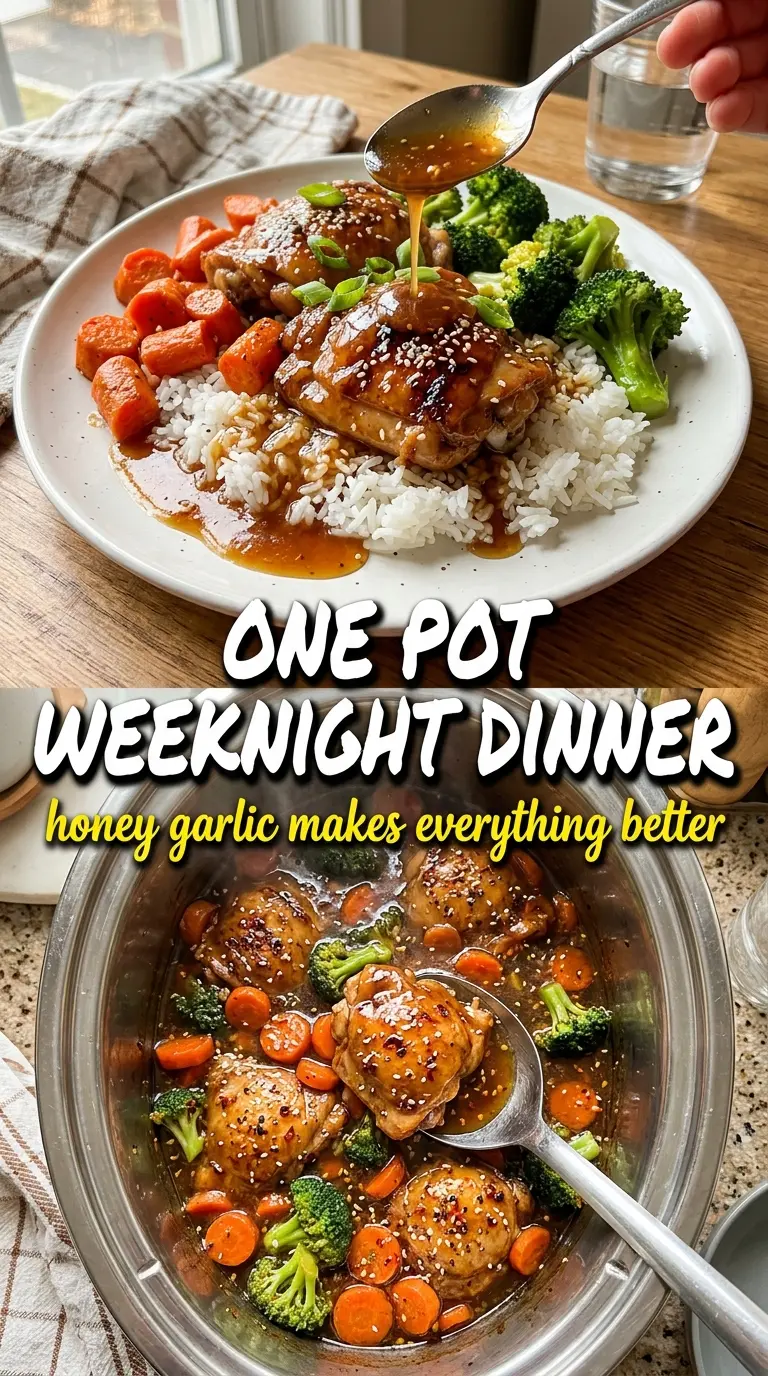
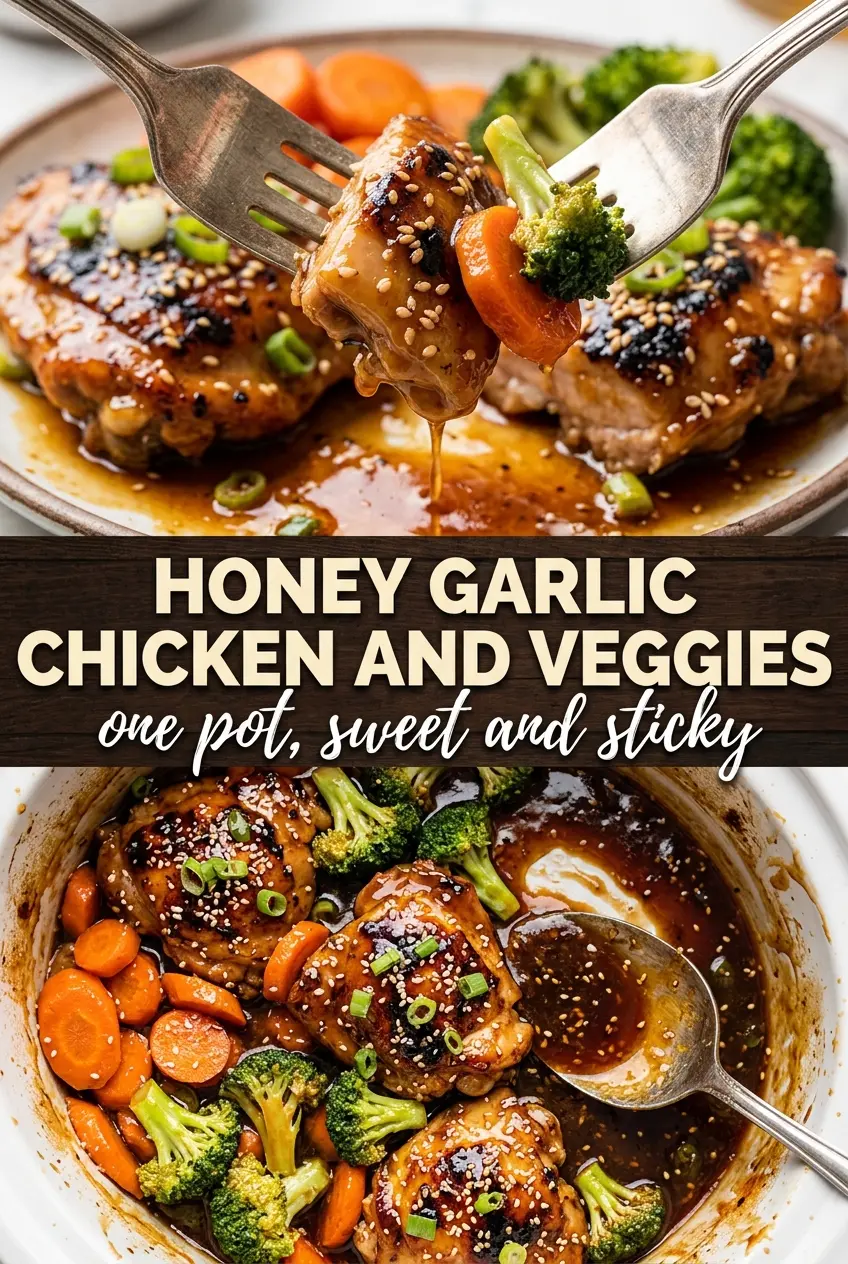
Sticky honey garlic chicken, tender vegetables, and a glossy sauce that clings to every bite make this the kind of slow cooker dinner that earns a permanent spot in the weeknight rotation. The chicken turns rich and savory while the honey and garlic cook down into a sauce that tastes like it took more work than it did. Add the vegetables at the right time and they stay distinct instead of turning soft and muddy.
The trick here is keeping the vegetables in stages. Carrots and mushrooms can handle the long cook, but broccoli and zucchini need a later entrance or they’ll lose their texture. The other piece that matters is the finishing slurry: cornstarch mixed with cold water thickens the sauce cleanly, while adding it at the end keeps the glaze shiny instead of dull.
Below, you’ll find the timing that keeps the chicken juicy, the ingredient swaps that still give you a good result, and the small reheating detail that keeps the sauce from turning thin the next day.
The sauce thickened up beautifully at the end and the chicken stayed juicy all the way through. I loved that the broccoli went in later because it still had a little bite instead of turning mushy.
Save this Slow Cooker Honey Garlic Chicken and Veggies for a glossy, hands-off dinner with tender chicken, carrots, mushrooms, and broccoli.
The Reason the Vegetables Need Staggered Timing
Slow cookers are great at making chicken tender, but they’re not kind to every vegetable. Carrots and mushrooms can spend the full cook in the pot without losing their shape, while broccoli and zucchini collapse if they go in from the start. That’s why this recipe doesn’t treat all the vegetables the same way — the timing is what keeps the bowl looking and tasting fresh.
The other thing that protects the sauce is the chicken skin-on, bone-in. The bones help keep the thighs juicy through a long cook, and the skin gives the dish a little more richness even though it won’t stay crisp in the slow cooker. If you use boneless thighs, cut the cooking time down and watch the texture closely; they’ll dry out before bone-in thighs do.
- Bone-in, skin-on chicken thighs — These hold up best in the slow cooker and add more body to the sauce. Boneless thighs work in a pinch, but they need less time and won’t give you the same richness.
- Broccoli and zucchini — These go in near the end because they cook fast. If they’re added too early, they’ll turn soft and watery and thin the sauce.
- Cremini mushrooms — They add savoriness and hold their shape better than white mushrooms. Slice or halve them depending on size so they cook evenly with the carrots.
- Honey and soy sauce — This is the backbone of the glaze. Honey brings sweetness and gloss, while soy sauce gives it salt and depth; swapping either one changes the balance fast.
- Cornstarch slurry — This is what turns the cooking liquid into a proper sauce at the end. Mix it with cold water first so it disperses smoothly instead of clumping in the pot.
What Each Ingredient Is Actually Doing in This Recipe
- Primary ingredient (the star) — Quality matters most. Choose the best you can find.
- Cooking medium (oil, butter, or broth) — This carries flavors and prevents dryness.
- Seasonings (salt, pepper, spices, herbs) — Layer flavors so nothing overpowers. Build depth gradually.
- Aromatics (garlic, onion, herbs) — Cook with fat to bloom flavors. Become the foundation.
- Supporting ingredients — Complement the main ingredient without overpowering it.
- Sauce or liquid (if applicable) — Brings flavors together. Balance richness with acid.
- Acid (lemon, vinegar, wine, or other) — Brightens and prevents flat-tasting results.
- Final finish (garnish, glaze, or sauce) — Prevents one-dimensional taste and adds visual appeal.
How to Keep the Glaze Thick and the Chicken Juicy
Building the Slow Cooker Base
Set the chicken thighs skin-side up so the top stays exposed and the meat cooks gently underneath. Scatter the carrots and mushrooms around them so everything sits in the sauce without burying the chicken completely. Whisk the honey, soy sauce, garlic, vinegar, ginger, red pepper flakes, and black pepper until the honey loosens and the mixture looks glossy.
Pour the sauce over the top and let it run down into the vegetables. If the honey sits in streaks at the bottom of the bowl, keep whisking — uneven sauce means uneven seasoning in the finished dish. Cook on low for 4 to 5 hours or high for 2 to 3 hours, and stop when the chicken is tender enough to pull apart with a fork but not falling off the bone.
Adding the Fast-Cooking Vegetables
Broccoli and zucchini only need the last 45 minutes. Add them too soon and the broccoli goes olive-colored while the zucchini turns soft enough to disappear into the sauce. Stir them in gently so they settle into the hot liquid without breaking apart.
This is the point where you check the sauce level too. If the slow cooker looks watery, that’s normal because the vegetables release moisture as they cook. The cornstarch will handle that at the end, so don’t try to fix it early by taking the lid off for a long stretch; that just steals heat from the pot.
Finishing with the Cornstarch Slurry
Stir the cornstarch and cold water together until the mixture looks smooth and milky, then pour it into the slow cooker and mix it through the sauce. Turn the heat to high for 15 minutes so the liquid thickens and turns glossy. If you add cornstarch straight to hot sauce, it clumps before it can dissolve, which leaves you with little white bits instead of a clean glaze.
When the sauce coats a spoon and leaves a light trail instead of running off like broth, it’s ready. Spoon everything over rice and finish with sesame seeds. The rice catches the sauce, which is half the reason this dinner feels complete.
How to Adapt This for Different Pans, Different Diets, and Different Leftover Plans
Make It Gluten-Free
Use a gluten-free soy sauce or tamari and keep the rest of the recipe the same. The sauce still thickens the same way, and the finished dish keeps the same sticky-sweet balance.
Make It Without Chicken Skin
Boneless, skinless thighs work, but they cook faster and give up a little richness. Start checking them about an hour earlier on low, because they can go from tender to dry quicker than bone-in thighs.
Swap the Vegetables Around
Snap peas, bell peppers, or green beans can replace the zucchini if that’s what you have. Add the quick-cooking vegetables near the end so they keep some snap, and leave root vegetables in the pot from the start.
Storage and Reheating
- Refrigerator: Store leftovers in an airtight container for up to 4 days. The sauce will thicken as it chills, and the vegetables will soften a bit more.
- Freezer: It freezes well for up to 2 months, though zucchini and broccoli will lose some texture. Freeze the chicken and sauce together, then add fresh vegetables after reheating if you want a better bite.
- Reheating: Warm gently on the stove or in the microwave with a splash of water to loosen the sauce. The common mistake is blasting it too hard, which dries out the chicken and makes the glaze seem sticky instead of silky.
Answers to the Questions Worth Asking
Slow Cooker Honey Garlic Chicken and Veggies
Ingredients
Equipment
Method
- Place chicken thighs skin-side up in the slow cooker. Arrange them so most pieces have space around the edges for veggies.
- Add carrots and mushrooms around the chicken. Spread them evenly so they steam and soften in the glaze.
- Whisk honey, soy sauce, garlic, apple cider vinegar, ginger, red pepper flakes, and black pepper together. Pour the mixture over the chicken and vegetables to coat as much as possible.
- Cook on low for 4–5 hours or high for 2–3 hours. Look for bubbling sauce at the edges and fully cooked chicken when ready.
- Add broccoli and zucchini during the last 45 minutes of cooking and stir into the sauce. You should see broccoli brighten and zucchini turn slightly glossy.
- Whisk cornstarch and cold water together, then stir into the sauce. The mixture should look smooth with no dry cornstarch streaks.
- Cook on high for 15 minutes until thickened. The glaze should cling to a spoon and look glossy rather than watery.
- Serve over rice and garnish with sesame seeds. Spoon sauce and vegetables over the chicken so every serving gets a coating.