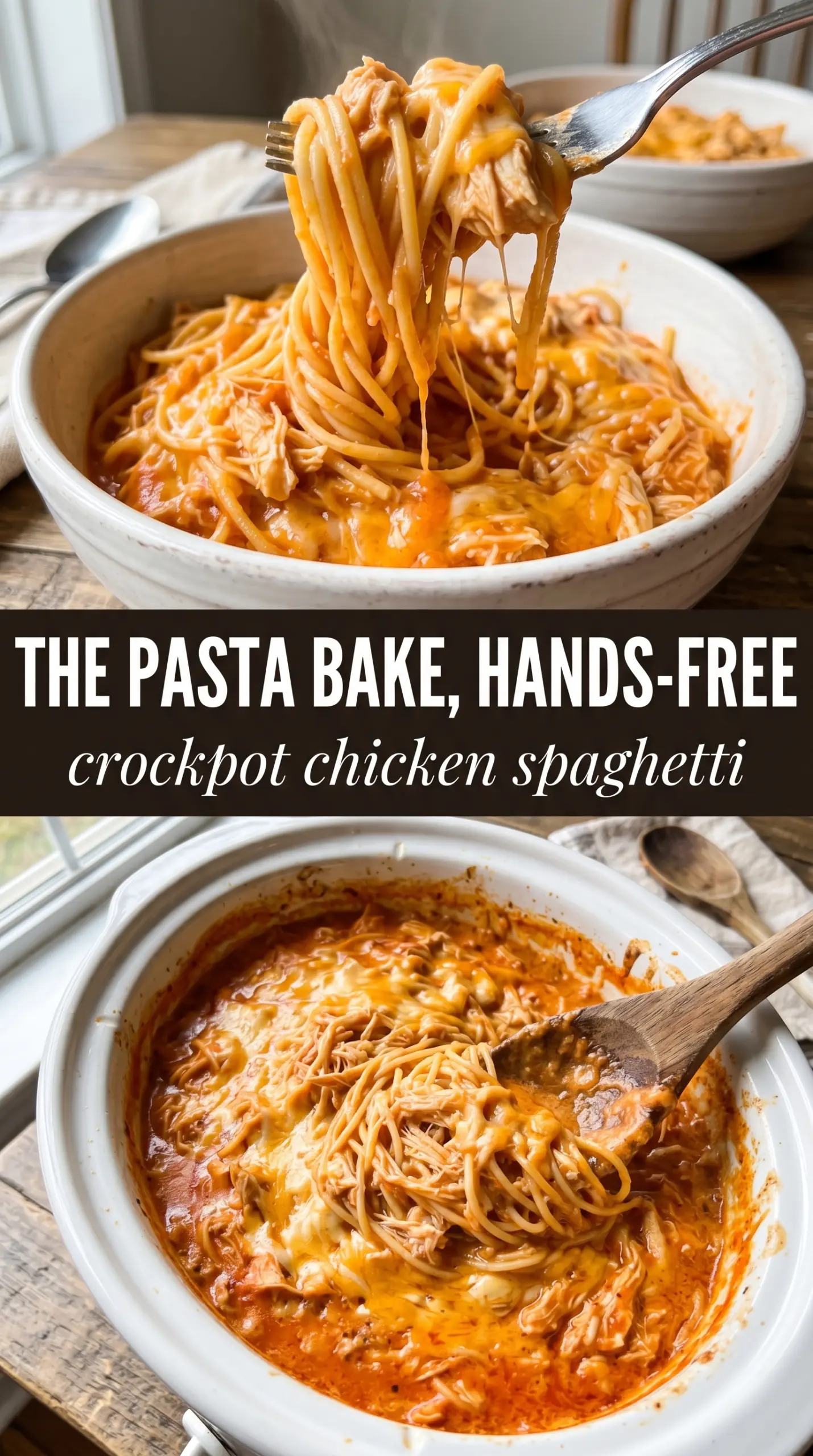
Rich, creamy Crockpot Chicken Spaghetti is the kind of dinner that lands on the table with the right kind of comfort: tender shredded chicken, soft pasta, and a sauce that clings instead of pooling at the bottom of the bowl. The slow cooker does the heavy lifting, but the real payoff is in the finish — when the cheese melts into the sauce and coats every strand of spaghetti without turning gluey.
What makes this version work is the order. The chicken cooks first in the soups, broth, and vegetables, which gives the sauce a built-in savory base before the pasta ever goes in. The spaghetti gets added at the end so it stays intact instead of going mushy, and the cheese melts after the chicken is shredded, which keeps the texture smooth and creamy instead of stringy and broken.
Below, I’ll walk you through the small details that matter most, including the best way to keep the pasta from overcooking and the swaps that still give you a good, hearty finish.
I kept expecting the pasta to turn soft in the slow cooker, but it held up perfectly because it goes in at the end. The sauce was creamy and the chicken shredded right into it without any dryness.
Cheesy Crockpot Chicken Spaghetti is the kind of creamy slow cooker dinner worth pinning for an easy night when you want comfort food that actually comes together cleanly.
The Part That Keeps the Pasta from Going Soft
The biggest mistake with chicken spaghetti in a slow cooker is letting the noodles sit in the sauce for hours. Spaghetti keeps absorbing liquid long after it looks done, which is how you end up with a thick, heavy pot instead of a creamy one. Cooking the chicken first, then adding the pasta only after shredding, keeps the texture where it should be.
Another thing worth paying attention to is the sauce base. The cream soups and broth need the full slow-cooker time to meld into something cohesive, but they don’t need extra stirring early on. Leave the lid closed while the chicken cooks. Every time you lift it, you lose heat and extend the time it takes for the chicken to become tender enough to shred cleanly.
What Each Ingredient Is Actually Doing in This Dish
- Chicken breasts — They shred into long, tender strands that soak up the sauce. Thighs also work if you want a richer result, but breasts give you a lighter texture and hold their shape well after shredding.
- Cream of chicken soup and cream of mushroom soup — This is the base that makes the dish feel creamy without needing a separate roux. If you swap one out for a homemade white sauce, the texture gets looser and you lose some of that slow-cooker convenience.
- Rotel tomatoes with green chilies — These add acidity, a little heat, and enough brightness to keep the dish from tasting flat. Regular diced tomatoes work in a pinch, but the flavor gets softer and less lively.
- Chicken broth — It loosens the soup mixture enough for the chicken to cook evenly. Use low-sodium broth if you can, since the canned soups and cheese already bring plenty of salt.
- Onion and bell pepper — They melt into the sauce as they cook and give the finished dish a little sweetness and body. Dice them small so they disappear into the sauce instead of staying crunchy.
- Velveeta or cheddar — Velveeta gives the smoothest, most stable melt. Cheddar tastes sharper, but it can turn grainy if the heat is too high, so stir it in after the chicken is shredded and the pot has stopped bubbling hard.
Building the Slow Cooker Base Without Breaking the Sauce
Load the Pot in the Right Order
Set the chicken in the slow cooker first, then pour the soups, broth, tomatoes, onion, bell pepper, and seasonings over the top. That lets the chicken sit under the liquid and cook evenly instead of drying out at the edges. There’s no need to stir aggressively at this point; a gentle mix is enough to combine the soups and broth around the chicken.
Cook Until the Chicken Shreds Easily
Use low for 6 to 7 hours if you have the time, because low heat gives the chicken a softer texture and keeps the sauce from tightening too early. The chicken is ready when it pulls apart with almost no effort from two forks. If it still feels springy or resists shredding, give it more time; tough chicken here means it’s undercooked, not overcooked.
Add the Pasta Only at the End
Cook the spaghetti separately, drain it well, and add it after the chicken goes back into the pot. This is the moment that protects the texture. If the pasta sits in the slow cooker too long, it drinks up the sauce and turns bloated, so stir it in just long enough for the cheese to melt and the noodles to get coated.
Finish with Cheese Off the Hard Boil
Stir in the cheese after the pasta is already in the pot and the chicken is shredded. If the sauce is bubbling hard, pull the slow cooker insert out for a minute or let it rest with the lid off before adding the cheese. That keeps the sauce smooth; high heat is what turns melted cheese grainy or greasy.
How to Adapt This for a Different Pantry or Diet
Gluten-Free Version
Use a gluten-free cream soup or make a quick thickened white sauce, then swap in gluten-free spaghetti. The slow cooker part stays the same, but the noodles need close attention because gluten-free pasta can go soft faster once it hits the hot sauce.
Dairy-Free Version
Choose dairy-free condensed soups and a meltable plant-based cheese if you can find one that actually melts smoothly. The finished dish will taste a little less rich and a little less silky, but the chicken, vegetables, and tomato base still give you a solid comfort-food result.
Use Chicken Thighs for a Richer Finish
Boneless skinless thighs stay a little more succulent than breasts and bring a deeper chicken flavor to the sauce. They do release a bit more richness, so the result feels heavier and a little more indulgent.
Storage and Reheating
- Refrigerator: Store in an airtight container for up to 4 days. The pasta will keep absorbing sauce, so expect it to thicken as it sits.
- Freezer: It freezes, but the pasta softens after thawing. For the best texture, freeze the chicken sauce before adding spaghetti, then cook fresh pasta when you reheat.
- Reheating: Warm gently on the stove or in the microwave with a splash of broth or milk. High heat can make the cheese separate and the pasta dry out before the center is hot.
Answers to the Questions Worth Asking
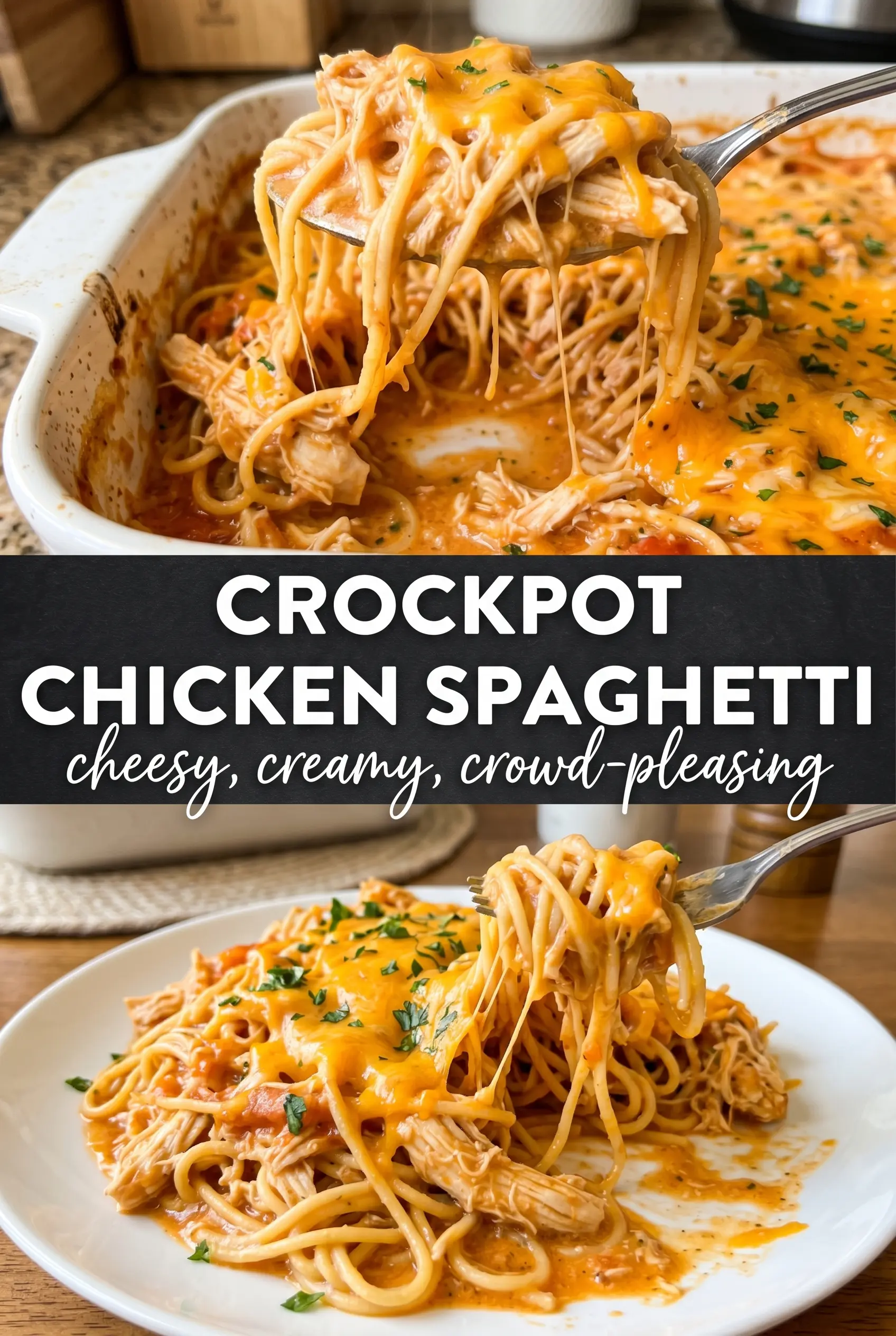
Crockpot Chicken Spaghetti
Ingredients
Equipment
Method
- Place the boneless skinless chicken breasts in the slow cooker. This creates the base layer for slow cooking.
- Add cream of chicken soup, cream of mushroom soup, Rotel diced tomatoes with green chilies, chicken broth, small onion, diced, green bell pepper, diced, garlic powder, onion powder, salt, and black pepper to the slow cooker. Stir just enough to distribute the seasonings.
- Cook on low for 6–7 hours or high for 3–4 hours until the chicken is tender. Keep the lid on for the whole cook time so the mixture simmers and thickens.
- Remove the chicken, shred it with two forks, and return it to the slow cooker. The shredded strands should mix into the creamy base.
- Add spaghetti, cooked and drained and shredded Velveeta or cheddar cheese to the slow cooker. Make sure the pasta is spread out so it warms evenly.
- Stir everything together until the cheese is fully melted and the pasta is coated. Stop when the sauce looks smooth and glossy around the spaghetti.
- Serve hot directly from the slow cooker. The dish should be creamy and steaming in the bowl.


