Crispy air fryer Korean soy garlic chicken thighs hit that sweet spot where the skin turns deeply browned and the glaze clings in shiny, sticky layers. The edges caramelize fast in the air fryer, while the inside stays juicy enough that you don’t need a separate sauce on the side. It’s the kind of chicken that lands on the table smelling like garlic, sesame, and brown sugar, and it never lasts long.
What makes this version work is the balance in the marinade. Soy sauce brings salt and depth, brown sugar helps the glaze lacquer the skin, and gochujang adds enough heat and fermented funk to keep the sweetness from flattening out. Marinating for at least an hour gives the chicken time to absorb flavor all the way through, and the air fryer does the heavy lifting by rendering the skin before the sugars have a chance to burn.
Below, I’ll walk through the small details that matter here: how to keep the chicken from steaming in the basket, why the extra marinade needs to be cooked before you brush it on, and what to change if you want a milder or gluten-free version.
The glaze turned sticky and glossy in the air fryer, and the skin got crisp without drying out the thighs. I simmered the extra marinade like you said and brushed it on at the end — huge difference.
Save these sticky air fryer Korean soy garlic chicken thighs for a fast dinner with crispy edges and that glossy sesame-garlic finish.
The Part That Stops the Glaze From Burning Too Early
The biggest mistake with soy-garlic chicken in the air fryer is letting the sugar-heavy marinade sit on the skin in a thick layer. That looks promising for about five minutes, then it starts to scorch before the chicken is fully cooked. Shaking off the excess marinade before air frying gives the thighs room to crisp instead of steam, and it lets the skin render instead of turning tacky.
The other thing that matters is heat management. Air fryers cook aggressively, so 400F is hot enough to brown the skin fast, but not so hot that the marinade turns bitter before the thighs reach 165F. If your chicken is crowded in the basket, the moisture has nowhere to go and the skin stays soft. Give each piece space and you get that lacquered, caramelized finish instead of a pale coating.
What Each Part of the Marinade Is Doing Here
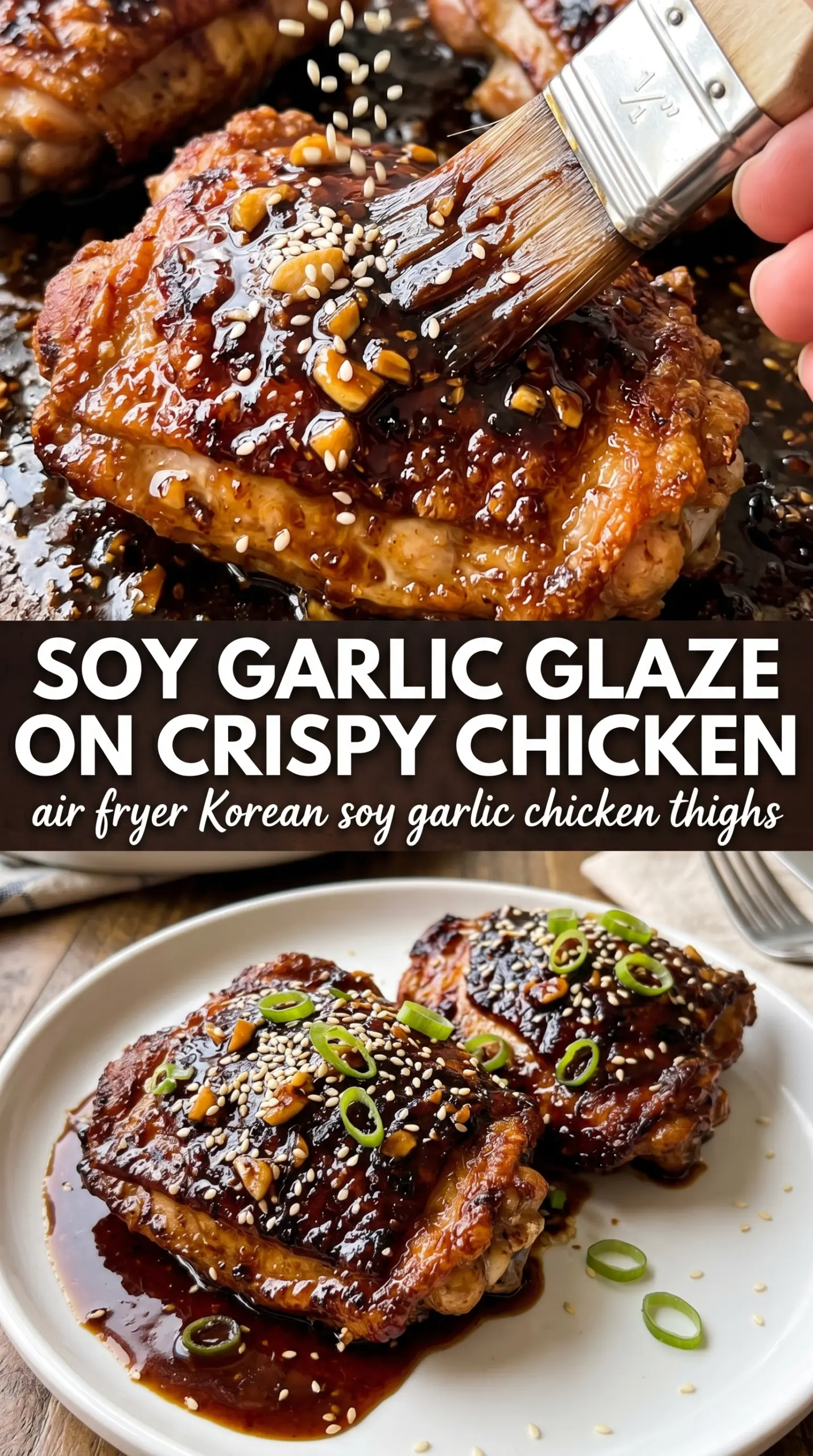
- Soy sauce — This is the backbone of the glaze. It seasons the chicken deeply and gives the finished coating that dark, savory color. Low-sodium soy sauce works if that’s what you keep on hand, but regular soy sauce gives a stronger, more traditional punch.
- Sesame oil — A little goes a long way here. It adds the nutty aroma that makes the chicken taste distinctly Korean-American, and there isn’t a good substitute that brings the same finish. If you skip it, the marinade still works, but it loses part of its character.
- Brown sugar — This helps the glaze caramelize on the skin. Granulated sugar won’t melt and cling quite the same way, so brown sugar is worth using here. It also rounds out the salt and heat so the chicken tastes glossy instead of sharp.
- Mirin or rice vinegar — Mirin gives a softer sweetness and a little shine; rice vinegar gives a brighter, cleaner edge. Either one keeps the marinade from tasting heavy. If you use rice vinegar, don’t add more than the recipe calls for or the glaze can turn too sharp.
- Gochujang — This adds heat, depth, and that slow-building savory note that makes the chicken taste layered instead of just sweet-salty. If you need a milder version, use half the amount. The dish will still work, but it’ll lean more toward garlic-soy than classic spicy-sweet Korean flavor.
- Bone-in chicken thighs — Thighs stay juicy in the air fryer and tolerate the longer cook time needed for the glaze to caramelize. Boneless thighs will work, but they cook faster and can dry out if you follow the same timing. Bone-in, skin-on thighs give you the best contrast between crisp skin and tender meat.
How to Get Sticky Skin Without Overcooking the Thighs
Mix the Marinade Until the Sugar Disappears
Whisk the soy sauce, sesame oil, brown sugar, mirin, garlic, ginger, gochujang, and black pepper until the sugar looks dissolved and the mixture turns glossy. If the sugar stays gritty, it won’t cling evenly to the chicken and you’ll end up with patchy caramelization. The garlic and ginger should look suspended in the liquid, not sitting in clumps at the bottom.
Let the Chicken Sit Long Enough to Pick Up Flavor
Marinate the thighs for at least 1 hour, and overnight if you want the flavor to go deeper into the meat. An overnight marinade won’t make the chicken mushy here because the base isn’t overly acidic. If you’re short on time, even 30 minutes helps, but the glaze tastes fuller when the chicken has had time to absorb the garlic and sesame.
Air Fry in Two Stages for Better Browning
Preheat the air fryer, then arrange the thighs skin-side down first. That gives the skin a chance to start rendering before the top side takes the final blast of heat. Flip them after 10 minutes and cook until the skin looks crisp, the edges are darkened, and the internal temperature reaches 165F. If the glaze is browning too quickly, pull the temperature back a touch rather than leaving undercooked chicken in a dark basket.
Cook the Leftover Marinade Before Brushing It On
Any marinade that touched raw chicken needs to be simmered for at least 3 minutes before you use it as glaze. That extra step gives you a safe, concentrated sauce that can be brushed on without watering down the crispy skin. If you skip the simmer, the glaze can taste raw and thin instead of sticky and finished.
How to Adapt the Chicken When You Need a Different Finish
Gluten-Free Version
Use a gluten-free soy sauce or tamari and check that your gochujang is certified gluten-free. The chicken still turns sticky and savory, but tamari is a little rounder and less sharp than standard soy sauce, so the glaze can taste slightly softer.
Milder, Less Spicy Chicken
Cut the gochujang down to 1/2 tablespoon and add an extra teaspoon of brown sugar if you want to keep the glaze balanced. You’ll lose some heat, but the garlic-soy flavor stays front and center.
Boneless Thighs Instead of Bone-In
Boneless thighs cook faster and can be a good choice for a quick dinner. Start checking them a few minutes early, because they’ll be done before the skin gets as deeply crisp as bone-in pieces. The flavor is still great, but you trade a little of that dramatic caramelized edge for speed.
Storage and Reheating
- Refrigerator: Store leftovers in an airtight container for up to 4 days. The skin softens in the fridge, but the flavor holds well.
- Freezer: The cooked chicken freezes well for up to 2 months. Freeze pieces in a single layer first if you can, then move them to a bag or container so they don’t stick together.
- Reheating: Reheat in the air fryer at 350F until hot and the edges crisp back up. The common mistake is microwaving them until they’re steaming, which makes the skin rubbery and pulls the glaze loose.
Answers to the Questions Worth Asking
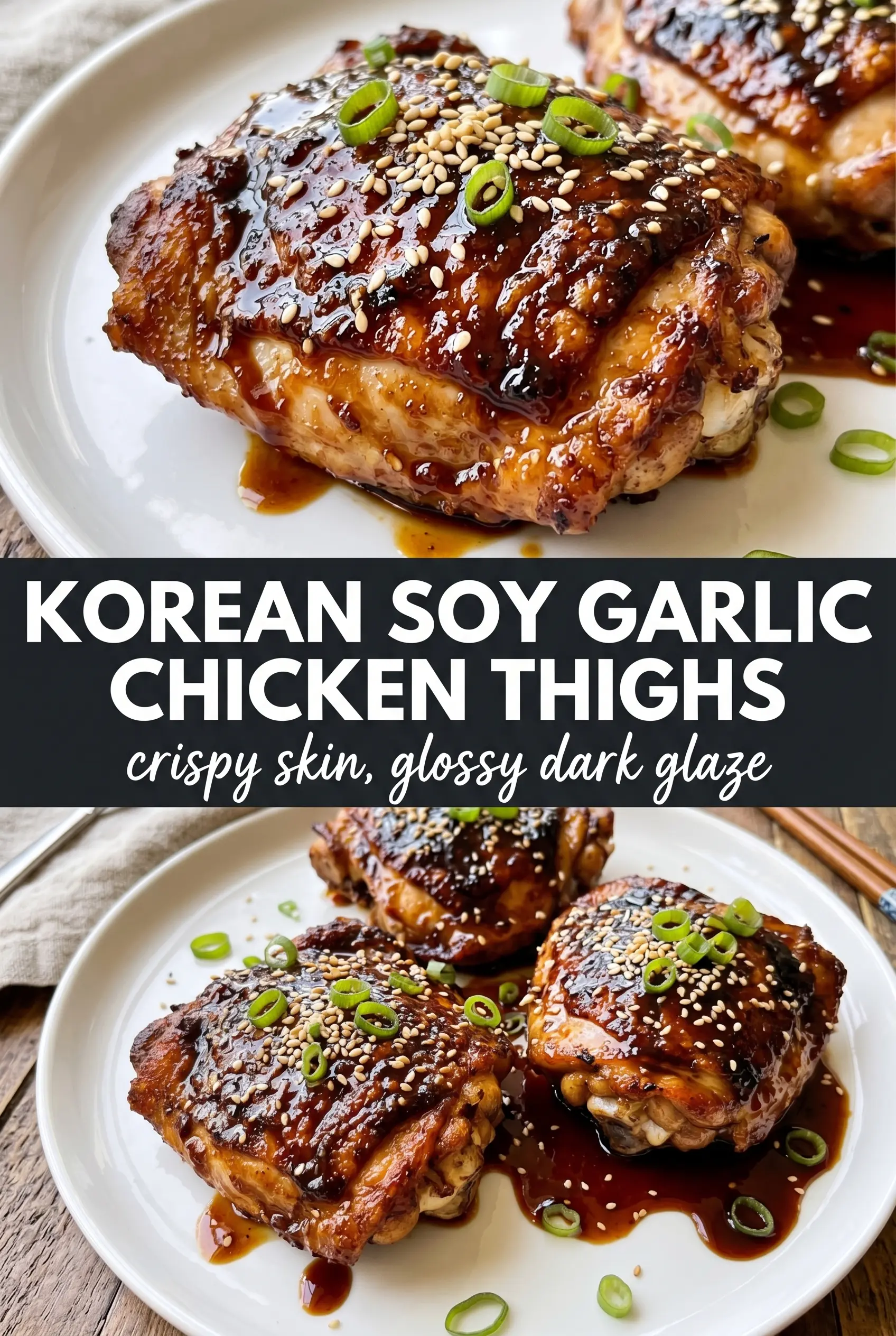
Air Fryer Korean Soy Garlic Chicken Thighs
Ingredients
Equipment
Method
- Whisk together soy sauce, sesame oil, brown sugar, mirin or rice vinegar, minced garlic, grated ginger, gochujang, and black pepper until glossy and fully combined, then set aside.
- Tip: If the mixture feels too thick, whisk another minute so the sugar dissolves before marinating.
- Place chicken thighs in a bowl and coat with the soy-garlic marinade, then cover and refrigerate at least 1 hour or up to overnight for deeper flavor.
- Preheat the air fryer to 400°F, then shake off excess marinade from the chicken to prevent burning.
- Air fry skin-side down at 400°F for 10 minutes, then flip the thighs.
- Air fry at 400°F for 10-12 more minutes until the skin is crispy and caramelized and the internal temperature reaches 165°F (about halfway through, you may rotate the basket if your air fryer heats unevenly).
- Pour any remaining marinade into a pan and simmer for 3 minutes to thicken into an extra glaze.
- Brush or spoon the soy-garlic glaze over the cooked chicken, then garnish with sesame seeds and sliced green onions before serving.