Golden baked boneless skinless chicken thighs are the kind of weeknight dinner that earns repeat status fast: crisp at the edges, juicy in the center, and seasoned all the way through without any fussy marinade or stovetop babysitting. High heat does the heavy lifting here. The thighs pick up a caramelized exterior while staying tender, which is exactly what boneless chicken needs to avoid turning dry and bland in the oven.
The trick is simple but important: dry the chicken well, coat it evenly with oil and spices, and give it space on the pan. That combination lets the seasoning cling instead of sliding off, and it keeps the thighs roasting instead of steaming. Smoked paprika brings a little color and depth, while lemon at the end wakes up everything on the plate.
Below, I’ve included the one oven-temperature detail that matters most, plus the swaps I actually use when I’m cooking with what’s in the pantry.
The chicken came out with browned edges and stayed juicy all the way through. I followed the single-layer pan tip, and it made a big difference — no soggy bottoms at all.
Love these juicy baked chicken thighs? Save this high-heat seasoning method for an easy 30-minute dinner with crispy edges.
The Oven Temperature That Gives You Juicy Chicken Instead of Dry Edges
Boneless skinless chicken thighs can handle heat better than chicken breasts, and that’s the reason 425°F works here. Lower temperatures tend to leave them pale and soft on the outside before the surface ever has a chance to brown. Higher heat gives you those caramelized edges fast enough that the meat inside stays tender instead of overcooking while you wait for color.
The other mistake to avoid is crowding the pan. If the thighs touch or overlap, they trap steam and the seasoning turns damp instead of forming that light crust you want. A foil-lined sheet pan makes cleanup easy, but the real win is the open space around each piece.
- 425°F — hot enough to brown the exterior before the meat dries out.
- Single layer spacing — this keeps the chicken roasting, not steaming.
- Dry chicken — moisture on the surface delays browning and weakens the seasoning crust.
What Each Ingredient Is Actually Doing in This Dish

- Boneless skinless chicken thighs — these stay juicier than breasts in a hot oven and forgive a few extra minutes of cook time. If you swap in chicken breasts, shorten the bake and start checking early because they dry out faster.
- Olive oil — it helps the spices stick and gives the surface enough fat to brown. A neutral oil works in a pinch, but olive oil adds a little more flavor.
- Smoked paprika — this is what gives the chicken that warm, slightly deeper color and a hint of smoky flavor. Regular paprika will work, but the finish will be lighter and less layered.
- Garlic powder and onion powder — they season the meat evenly without burning the way fresh garlic can at this heat. If you only have one, use it, but the combo gives the chicken a rounder savory base.
- Italian seasoning — this adds herby background flavor without needing a long marinade. If your blend is salt-heavy, reduce the added salt a touch.
Baking the Thighs So They Brown Before They Dry Out
Drying and Seasoning the Chicken
Pat the thighs dry first, then toss them with olive oil and the seasoning mix until every surface looks coated. If the chicken is wet, the spices slide off and the oven has to spend time evaporating moisture before browning can start. The coating should look even and a little paste-like, not puddled in the bowl.
Arranging the Pan for Real Browning
Lay the thighs on a foil-lined baking sheet in a single layer with space around each piece. If you cram them together, they release steam and end up gray at the edges instead of caramelized. The pan should look busy but not crowded.
Knowing When They’re Done
Bake for 20 to 25 minutes, then check the thickest part with an instant-read thermometer. You’re looking for 165°F and edges that have darkened slightly from the spice mix. If the surface looks good but the center isn’t there yet, give it a few more minutes instead of raising the heat, which can dry out the outside.
Resting Before You Serve
Let the chicken rest for 3 to 5 minutes before serving with lemon wedges and parsley. That short rest keeps the juices from running out the second you cut in. The lemon is worth using at the table because the acidity lifts the roasted seasoning and keeps the dish from tasting heavy.
How to Change This Chicken Without Losing the Juicy Texture
Gluten-Free and Naturally Low-Carb
This recipe already fits both of those lanes as written. The seasoning mix doesn’t rely on breadcrumbs or flour, so the chicken still browns cleanly and stays light.
Using Chicken Breasts Instead
You can swap in boneless skinless breasts, but cut the bake time back and start checking early. Breasts dry out faster than thighs, so pull them the moment they hit 165°F and let them rest before slicing.
Making It a Little Brighter
Add a pinch of lemon zest to the seasoning mix or finish with extra lemon juice at the table. That keeps the roasted spices but gives the chicken a fresher, sharper finish.
Swapping the Seasoning Blend
If you’re out of Italian seasoning, use dried oregano and thyme instead. You’ll get the same herb backbone, just with a slightly sharper, more rustic flavor.
Storage and Reheating
- Refrigerator: Store in an airtight container for up to 4 days. The seasoning stays good, though the edges soften a bit.
- Freezer: Freeze cooked thighs for up to 2 months. Wrap them well and thaw in the fridge before reheating so they heat evenly.
- Reheating: Warm in a 325°F oven, covered loosely with foil, until heated through. The main mistake is blasting them in the microwave, which dries the leaner outer edges before the center warms up.
Questions I Get Asked About This Recipe
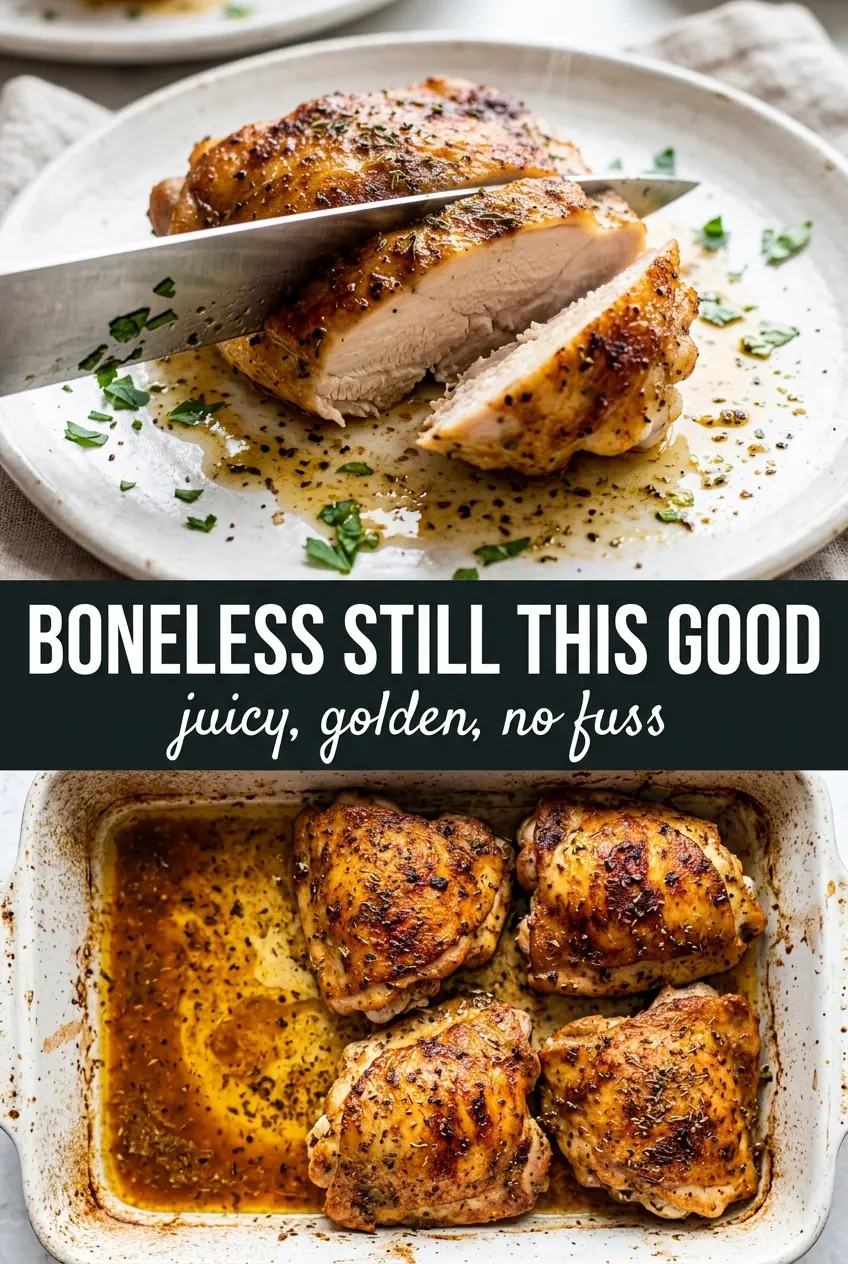
Baked Boneless Skinless Chicken Thighs
Ingredients
Equipment
Method
- Preheat the oven to 425F, then pat the boneless skinless chicken thighs dry so the seasoning adheres and browns well.
- Toss the chicken with olive oil, garlic powder, onion powder, smoked paprika, Italian seasoning, salt, and black pepper until evenly coated.
- Arrange the chicken on a foil-lined sheet pan in a single layer without crowding for even caramelization.
- Bake for 20-25 minutes at 425F until the edges caramelize and the internal temperature reaches 165F.
- Rest the chicken for 3-5 minutes before serving to help juices redistribute, then serve with lemon wedges.