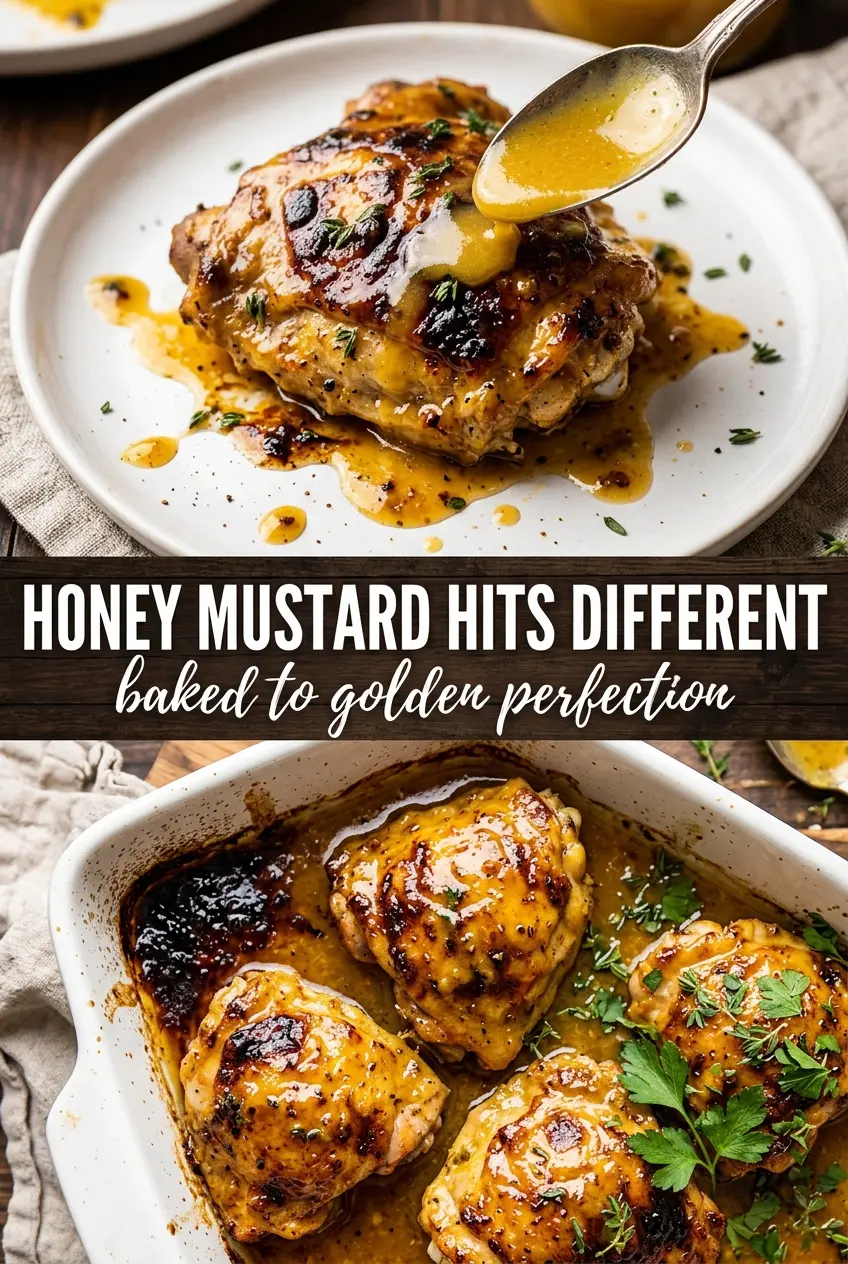
Sticky, caramelized baked honey mustard chicken thighs deliver the kind of weeknight dinner that tastes like it took more effort than it did. The skin turns deeply golden, the glaze clings in a glossy layer, and every bite hits that sweet-tangy balance that keeps people reaching back into the pan for one more piece.
The trick here is using both Dijon and whole grain mustard. Dijon gives the glaze its sharp backbone, while the whole grain mustard adds texture and a deeper mustard flavor that doesn’t disappear in the oven. A little honey is enough to caramelize without turning the chicken cloying, and the olive oil helps the coating spread evenly so it bakes into the skin instead of pooling at the bottom of the dish.
Below you’ll find the part that matters most: how to get the glaze to brown without burning, plus a few smart swaps for boneless thighs, dairy-free cooking, and leftovers that still reheat well.
The glaze thickened up in the oven and the chicken skin came out sticky and crisp instead of soggy. I broiled it for just two minutes at the end and it looked like something from a restaurant.
Save these baked honey mustard chicken thighs for a sticky, caramelized chicken dinner with a sweet Dijon glaze.
The Trick That Keeps the Honey Mustard Glaze from Burning
The biggest mistake with honey mustard chicken is treating the glaze like a marinade and expecting it to behave the same way in the oven. Honey caramelizes fast. If the oven is too low, the chicken steams before the top browns; if it’s too high without enough fat or mustard to buffer it, the sugars can scorch before the thighs are cooked through. That balance is why this version works at 425°F.
Bone-in, skin-on thighs also matter here. They stay juicy through the full bake, and the skin gives the glaze a surface to cling to. The result is a sticky top with browned edges, not a thin sauce sliding off the meat.
- Dijon mustard — This is the sharp, smooth base of the glaze. It emulsifies with the oil and honey so the coating stays cohesive in the oven.
- Whole grain mustard — Use it if you can. The texture keeps the glaze from tasting one-note, and the mustard seeds stay visible after baking.
- Honey — A modest amount is enough. More honey sounds tempting, but too much pushes the glaze toward burning before the chicken finishes cooking.
- Bone-in, skin-on chicken thighs — These hold up best to the longer bake. Boneless thighs work, but they need less time and won’t give you the same crisp, caramelized skin.
What Each Ingredient Is Actually Doing in This Glaze

- Olive oil — It helps the glaze spread in a thin, even layer and keeps the garlic from tasting harsh. You can swap in avocado oil if that’s what you keep on hand.
- Garlic — Fresh garlic gives the sauce a little bite and rounds out the sweetness. Mince it finely so it softens during baking instead of sticking out in raw little bits.
- Lemon juice — This brightens the glaze and keeps the honey from feeling heavy. Don’t skip it unless you have to; even a small amount sharpens the whole dish.
- Fresh thyme — Thyme works because it matches mustard well without overpowering it. Dried thyme can stand in, but use less since it tastes more concentrated.
Getting the Chicken Thighs Glazed and Caramelized in the Oven
Mix the glaze until it looks smooth and loose
Whisk the Dijon, whole grain mustard, honey, olive oil, garlic, lemon juice, thyme, salt, and pepper until the mixture looks glossy and fully combined. If the honey seems thick, keep whisking for a few extra seconds so it doesn’t land on the chicken in streaks. A smooth glaze coats evenly and browns better than one that’s separated.
Coat the chicken in a generous layer
Arrange the thighs in the baking dish first, then spoon the glaze over the top and turn each piece to cover the skin. Don’t drown the bottom of the dish in sauce; you want most of the glaze sitting on the chicken where it can caramelize. The thighs should look well coated, with some mustard flecks and garlic visible on top.
Bake until the top turns deeply golden
At 425°F, the glaze should start bubbling and darkening around the edges by the time the chicken is close to done. Bake until the internal temperature reaches 165°F and the skin looks lacquered and browned, not pale and wet. If the top is still light after the chicken is cooked, broil for 2 to 3 minutes and watch it closely, because honey goes from bronzed to burnt fast.
Finish with a fast broil and fresh thyme
That last blast under the broiler gives the glaze its sticky, slightly crisp finish. Pull the pan as soon as the edges look deep amber and a little charred in spots. Garnish with fresh thyme right after baking so the heat wakes up the herb and the dish smells as good as it tastes.
How to Adapt These Chicken Thighs for Different Nights
Boneless Chicken Thighs
Boneless thighs work well if you want a shorter bake, but they’ll cook faster and won’t need as much broiling time. Start checking them around 22 to 25 minutes so the glaze doesn’t overcook before the meat is done.
Dairy-Free and Naturally Gluten-Free
This recipe already fits both of those needs as written, which is one reason it works so well for a crowd. Just check that your Dijon mustard is labeled gluten-free if that’s a concern for your kitchen.
More Tang, Less Sweetness
If you want the mustard to lead more than the honey, reduce the honey by 1 tablespoon and add an extra teaspoon of lemon juice. The glaze will taste sharper and a little less sticky, but it still browns well.
Storage and Reheating
- Refrigerator: Store leftovers in an airtight container for up to 4 days. The glaze will thicken and the skin will soften, but the flavor stays strong.
- Freezer: Freeze cooked thighs for up to 2 months. Wrap them well and thaw in the refrigerator before reheating so the glaze doesn’t separate.
- Reheating: Warm uncovered in a 350°F oven until heated through. Microwaving works in a pinch, but it softens the skin and can make the glaze greasy.
The Things That Trip People Up With This Dish
Baked Honey Mustard Chicken Thighs
Ingredients
Equipment
Method
- Preheat oven to 425F, then arrange bone-in skin-on chicken thighs in a baking dish or on a sheet pan in a single layer.
- Whisk Dijon mustard, honey, whole grain mustard, olive oil, garlic, lemon juice, fresh thyme leaves, salt, and black pepper until smooth and well combined.
- Coat the chicken thighs generously with the honey mustard mixture so the glaze clings to the skin.
- Bake at 425F for 30-35 minutes, until the glaze is deeply caramelized and the internal temperature reaches 165F.
- Broil for 2-3 minutes to add extra caramelization to the glaze.
- Garnish with fresh thyme and let the chicken rest for 2-3 minutes before serving.