A good quiche should slice cleanly, hold its shape, and still taste like someone cared when it went in the oven. This one does all three. The sweet, silky squash, jammy onions, and tangy goat cheese hit different parts of the palate, and the custard stays tender instead of turning rubbery. Every bite feels balanced: rich, savory, a little sweet, and anchored by a crust that actually stays crisp underneath.
The trick is in how the filling is built. The onions need a full caramelization so they bring depth instead of sharpness, and the squash needs to be roasted first so it doesn’t water down the custard. Goat cheese gets scattered in crumbles rather than blended in, which keeps little pockets of tangy creaminess throughout the slice instead of disappearing into the filling.
Below, I’ll walk through the small choices that make this quiche worth repeating, including what to watch for when the custard is almost set and how to keep the bottom crust from going soggy.
The custard set beautifully and the crust stayed crisp underneath, even after the quiche cooled. The caramelized onions and goat cheese made every slice taste rich without feeling heavy.
Save this butternut squash goat cheese and caramelized onion quiche for a crisp crust and silky custard that slices like a dream.
The Custard Sets Cleanly When the Filling Is Dry Before It Goes In
A soggy quiche usually starts before the egg mixture ever hits the pan. Butternut squash holds onto moisture, and onions can do the same if they’re cooked too fast or piled in while still steaming. Roast the squash until the edges pick up a little color and the onions until they’re fully sweet and reduced; that way the custard thickens around the filling instead of thinning out around it.
Blind baking matters here too. A 12-minute head start gives the crust enough structure to resist the custard, which is especially important with a filling this rich. If you skip it, the bottom can turn pasty before the center has any chance to set.
- Roasted butternut squash — roasting concentrates the sweetness and drives off surface moisture. Cubes that are tender but not mushy hold their shape best.
- Caramelized onions — this is the ingredient that gives the quiche its depth. Don’t rush them; pale onions taste sharp and can throw off the balance of the whole dish.
- Goat cheese — use a tangy, fresh-style goat cheese for the cleanest contrast. It softens into pockets, which is what you want here.
- Heavy cream and whole milk — the cream gives body, while the milk keeps the custard from feeling too dense. Using all cream makes the slice heavier and less elegant.
What Each Ingredient Is Actually Doing in This Quiche

- Pie crust — a pre-made crust works fine here if it bakes up cold and blind-baked. A homemade shortcrust gives a richer, sturdier base, but either one needs that initial bake so it doesn’t slump.
- Butternut squash — roast it until a fork slips in easily but the cubes still hold their edges. If the squash is undercooked, it stays firm in the finished quiche and feels out of place against the soft custard.
- Onion — thin slices cook down into a jammy layer that makes the whole quiche taste deeper and more finished. Butter is the right fat here because it supports browning and adds sweetness, but keep the heat low enough that the onions color slowly instead of scorching.
- Goat cheese — crumbling it over the filling instead of whisking it into the custard gives you distinct tangy bites. A softer goat cheese melts more readily; a firmer log-style cheese stays more defined.
- Thyme and nutmeg — thyme keeps the filling savory and earthy, while nutmeg adds just enough warmth to round out the cream and squash. Don’t overdo either one; they should support the filling, not announce themselves.
Building the Quiche So the Crust Stays Crisp
Blind Bake First, Not Later
Fit the crust into the pan, dock it lightly if needed, and blind bake until it looks set but still pale. You’re not trying to brown it fully at this stage; you’re giving it a head start so the custard doesn’t soak into raw dough. If the crust shrinks, it was probably too warm going into the oven, so chill it first next time.
Cook the Onions Until They Turn Sweet and Soft
Keep the onions over medium-low heat and stir them now and then as they soften into a deep golden mass. They should taste sweet, not sharp, and there should be almost no loose moisture left in the pan. If the heat is too high, they’ll brown on the outside before they’ve actually caramelized inside.
Assemble in Layers, Not by Stirring
Scatter the squash and onions over the crust before you add the custard, then crumble the goat cheese over the top. That keeps the filling evenly distributed and prevents the cheese from disappearing into the eggs. Pour the custard slowly so it settles around the vegetables instead of pushing them around.
Bake Until the Center Still Moves a Little
The quiche is done when the edges are set and the center has a slight wobble when you nudge the pan. Pull it before the middle looks fully firm, because residual heat finishes the job during the rest. If you wait until the whole surface is stiff in the oven, the eggs will overcook and turn grainy.
Dairy-Free Crust and Filling Swap
Use a dairy-free pie crust and replace the cream and milk with full-fat canned coconut milk or an unsweetened barista-style oat cream blend. The texture will be a little softer and the flavor less rich in the classic French sense, but the squash, onion, and thyme still carry the dish well.
Make It a Little Lighter
Swap part of the heavy cream for more whole milk if you want a lighter custard. The quiche will still set, but it won’t have quite the same velvet texture, so bake just until the center wobbles and stop there.
Swap the Goat Cheese for Something Milder
If goat cheese isn’t your thing, use feta for a saltier finish or ricotta salata for a gentler, drier crumble. You’ll lose some of that tangy creaminess, but the squash and onions will still taste balanced and complete.
Storage and Reheating
- Refrigerator: Store covered for up to 4 days. The crust softens a little, but the flavor holds up well.
- Freezer: Freeze slices wrapped tightly for up to 2 months. The texture is best when thawed overnight in the fridge before reheating.
- Reheating: Warm in a 325F oven until heated through. The mistake people make is microwaving it hard, which turns the custard rubbery and makes the crust soggy.
Answers to the Questions Worth Asking
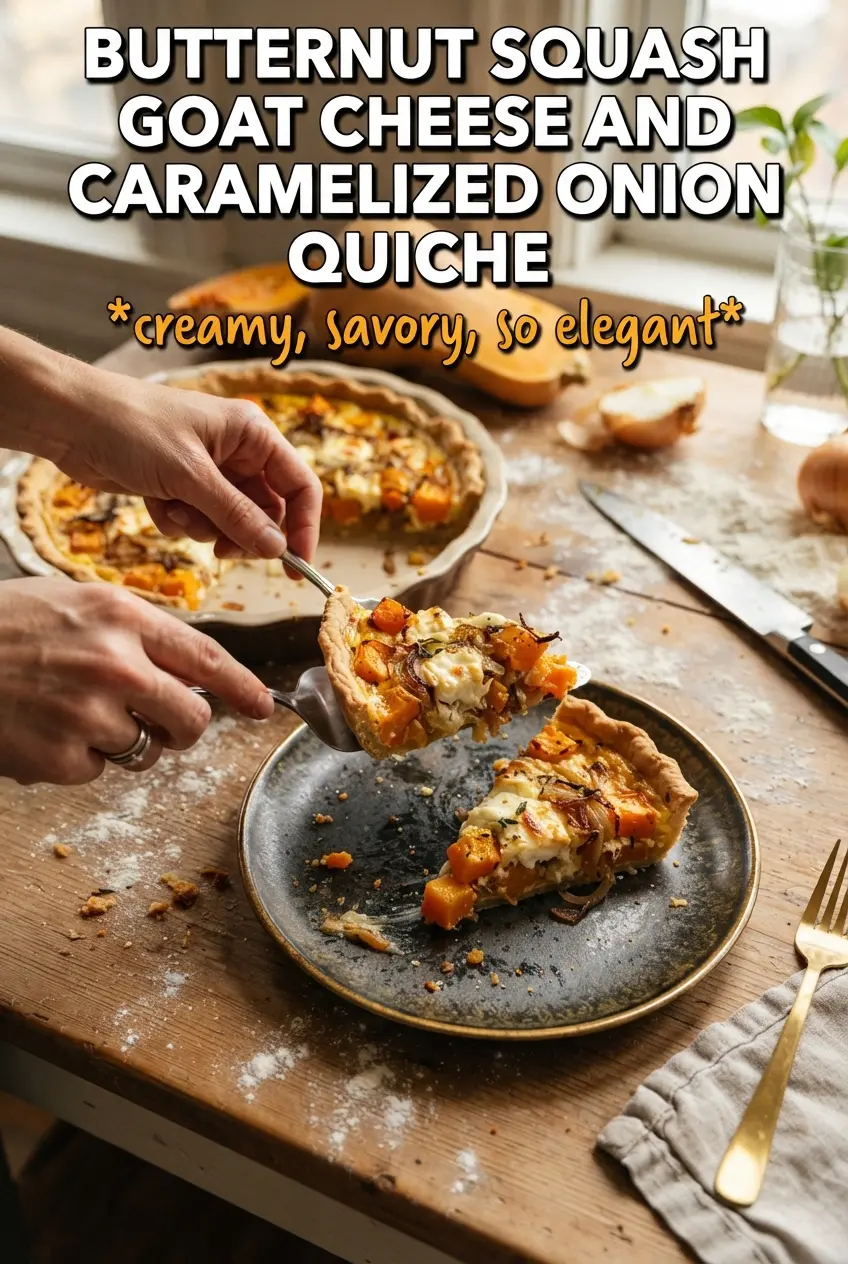
Butternut Squash Goat Cheese And Caramelized Onion Quiche
Ingredients
Equipment
Method
- Preheat the oven to 375F, then fit the crust into a 9-inch tart or pie pan and blind bake for 12 minutes until set but not browned.
- Heat the unsalted butter in a skillet over medium-low heat and cook the thinly sliced onions for 30 minutes until golden and sweet, stirring as needed so they don’t burn.
- Whisk the eggs, heavy cream, whole milk, fresh thyme, nutmeg, salt, and black pepper until smooth and evenly combined.
- Scatter the caramelized onions and roasted butternut squash over the blind-baked crust in an even layer.
- Crumble the goat cheese evenly over the filling so it distributes through the custard.
- Pour the custard over everything, filling the tart pan evenly.
- Bake at 375F for 40-45 minutes until just set with a slight wobble in the center.
- Rest the quiche for 10 minutes before slicing so the custard firms up.


