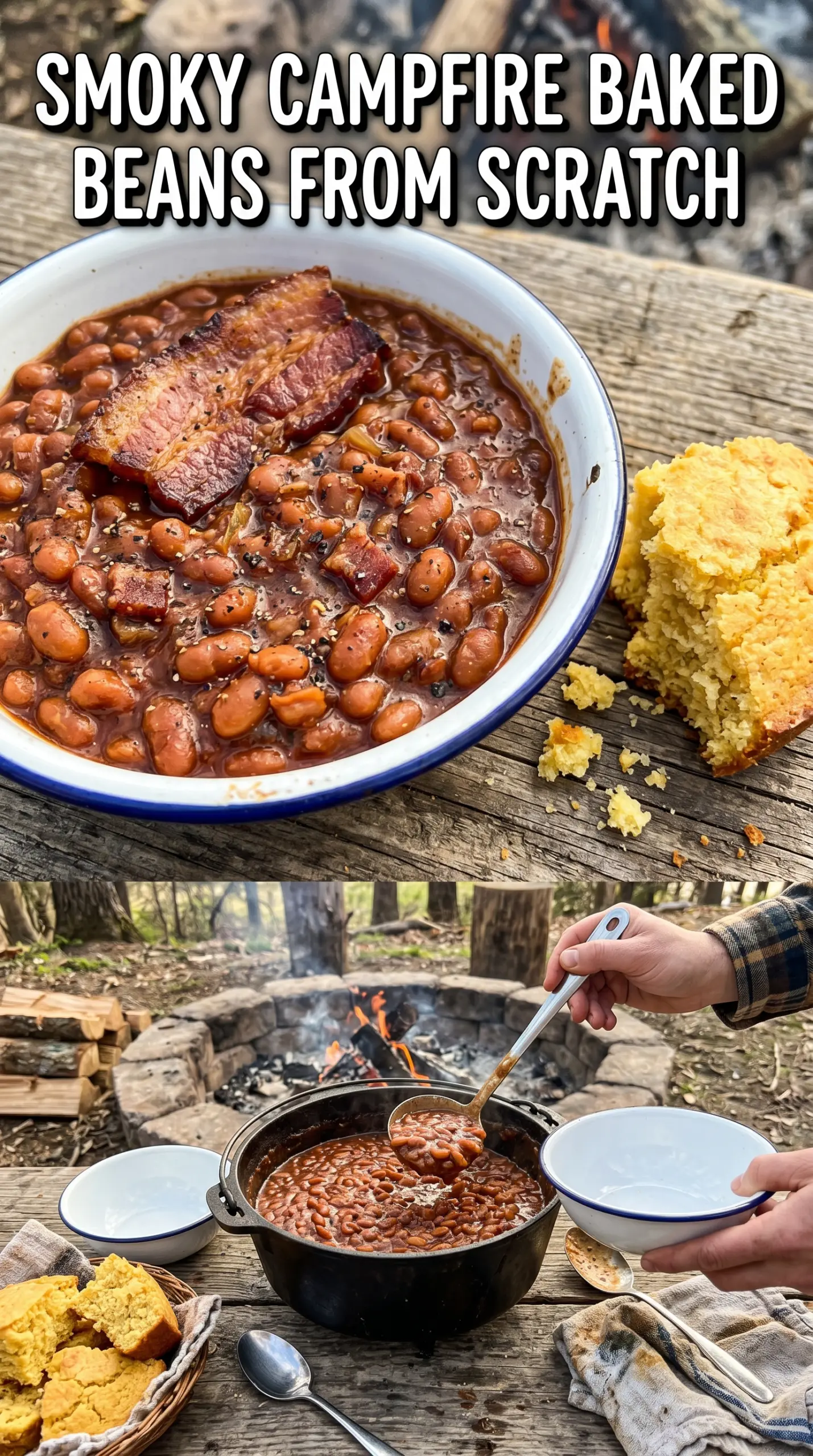
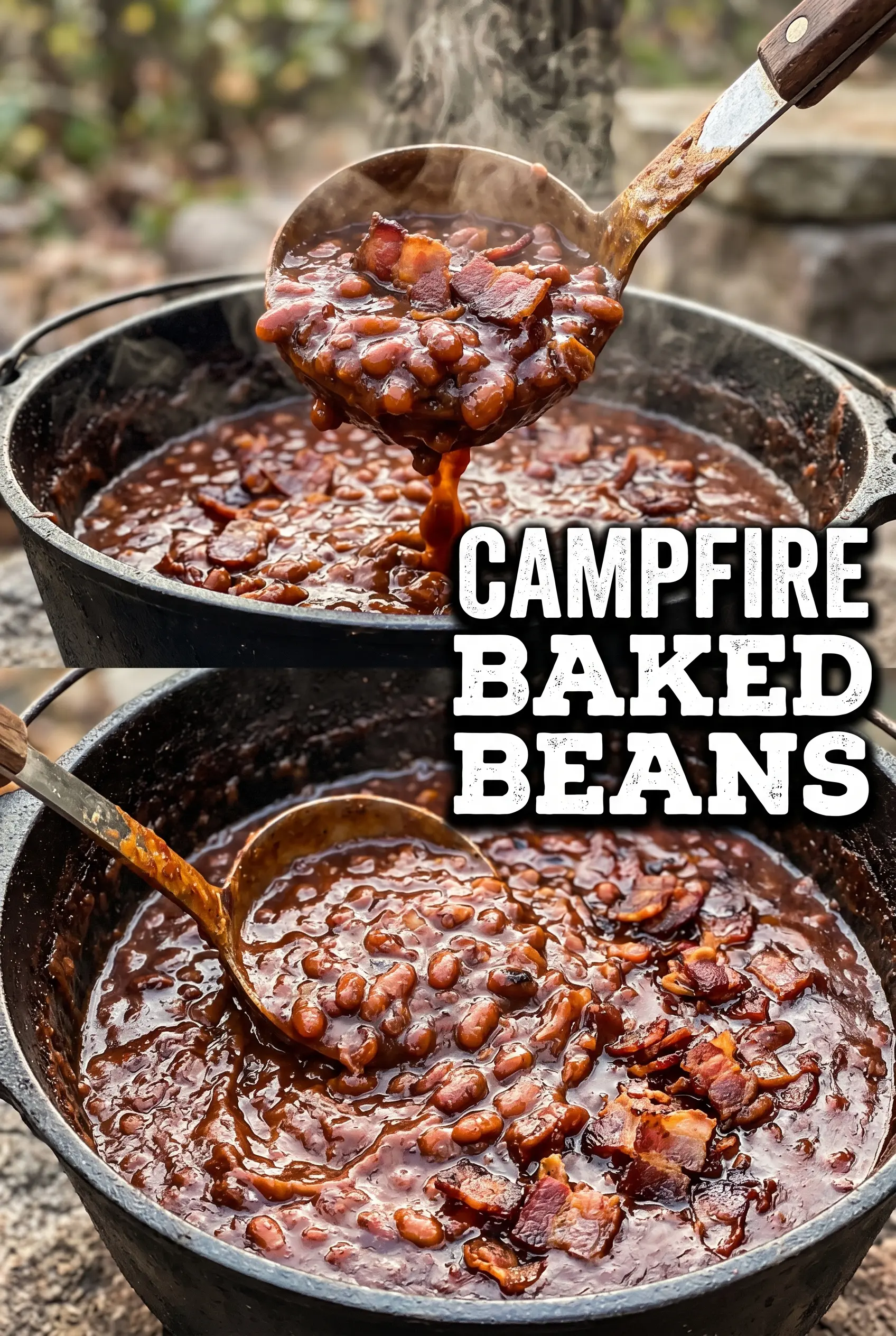
Campfire baked beans come out smoky, thick, and glossy, with bacon in every bite and just enough sweetness to stand up to grilled meat. The pot bubbles down into something richer than the canned beans you started with, and the sauce clings to a spoon instead of running off it. That’s the whole point here: humble ingredients, cooked long enough for the onion to soften and the sauce to tighten.
This version works because it keeps the balance steady. BBQ sauce and ketchup bring body and tang, brown sugar rounds out the edges, and mustard plus Worcestershire keep the beans from tasting flat. The canned beans already have a soft texture, so the job is mostly about building a sauce around them without letting the whole pot turn watery or scorched.
Below you’ll find the small details that matter most, including how to keep the bottom from catching over campfire heat and what to swap if you’re cooking without bacon.
The beans thickened up exactly right over the fire, and the bacon stayed crisp enough to add texture instead of disappearing into the sauce. I stirred them every few minutes and they came out smoky, sweet, and just a little tangy.
Save these campfire baked beans for your next cookout when you want a smoky, thick side dish that holds up on the table.
The Part That Keeps Campfire Beans Thick Instead of Soupy
The biggest mistake with baked beans over a fire is treating the pot like a slow cooker. Campfire heat is uneven, and if you cover the pot or walk away too long, the sauce stays loose while the bottom has every chance to scorch. Uncovered cooking lets steam escape, which is what gives you that sticky, spoon-coating finish.
The other thing that matters is timing. The onion needs enough time to soften and the brown sugar needs enough heat to melt into the sauce, but the beans themselves are already cooked, so there’s no benefit to a long boil. You want a gentle simmer, not a rolling one. If the surface is spitting hard, lift the pot a little higher off the heat or move it to a cooler part of the grate.
- Uncovered simmering — This is what thickens the beans. Lids trap moisture, and moisture is the enemy of a glossy campfire bean sauce.
- Frequent stirring — Stir from the bottom every few minutes so the sugar and ketchup don’t settle and burn where the heat hits hardest.
- Cooked bacon — Already crisped bacon keeps its texture longer. If you add soft bacon, it tends to disappear into the sauce instead of giving you those salty bites.
What Each Ingredient Is Actually Doing in the Pot
- Canned baked beans — These give you the creamy bean base without waiting hours. The style you use matters less than the fact that they already have some sauce, which helps the finished pot stay rich.
- Bacon — Bacon brings smoke, salt, and texture. Cook it first so the fat renders and the pieces stay distinct in the final dish.
- BBQ sauce — This is the main flavor driver. A thicker sauce works best because it helps the beans cling together as they cook down.
- Brown sugar — It smooths out the acidity from the ketchup and mustard. Dark brown sugar gives a deeper molasses note, but light brown sugar works just fine.
- Mustard and Worcestershire sauce — These are small amounts, but they keep the beans from tasting one-note. They add sharpness and depth without making the dish taste like condiment soup.
- Onion — Diced onion softens into the sauce and gives the beans a little bite. If you want a gentler texture, dice it small so it practically melts by the time the pot is done.
Getting the Beans to Bubble Down Without Burning
Building the Pot
Combine everything in a Dutch oven or sturdy pot before it goes over the fire. Stir until the brown sugar starts to disappear and the bacon is evenly distributed, because any clumps left now will stick later. If your pot is thin, it will scorch faster than you expect, so choose heavy cookware if you have it.
Finding the Right Heat
Set the pot over a gentle campfire, not directly in the hottest flames. You want steady bubbling around the edges, with a few lazy pops across the surface. If the sauce boils hard, it will reduce too fast and may catch before the onions are fully softened.
Cooking It Down
Cook uncovered for 25 to 30 minutes, stirring every few minutes and scraping the bottom well. As the beans thicken, the sound changes from loose bubbling to a heavier, slower plop. That’s your cue that the sauce is tightening; if it still looks watery at 30 minutes, give it another few minutes rather than cranking the heat.
Serving at the Right Texture
Pull the pot once the beans look glossy and the sauce coats a spoon in a thick layer. They’ll thicken a little more as they sit. If you serve them the moment the fire comes off, they’ll still be a touch looser than they will be five minutes later, which is normal.
Make Them Meat-Free
Skip the bacon and add a teaspoon of smoked paprika plus a little extra salt. You’ll lose the salty chew, but you’ll keep the campfire-leaning smoky backbone, especially if your BBQ sauce already has a strong molasses note.
Use Homemade Beans Instead of Canned
If you’ve already cooked plain beans from scratch, use about 6 to 7 cups and add a little extra BBQ sauce or ketchup because homemade beans won’t bring their own seasoned liquid. The texture ends up great, but the final pot needs more seasoning and a touch more sugar to mimic the canned base.
Make Them Less Sweet
Cut the brown sugar back to 2 tablespoons and use a tangier BBQ sauce. That keeps the beans balanced for people who don’t want the classic sweet profile, but it still gives you the sticky finish that makes baked beans feel complete.
Make a Bigger Batch for a Crowd
Double everything and move up to a wider pot if possible so the beans reduce evenly. A taller pot traps moisture and slows the thickening, which is the opposite of what you want when cooking for a group.
Storage and Reheating
- Refrigerator: Store in an airtight container for up to 4 days. The sauce thickens as it chills.
- Freezer: Freeze for up to 2 months in a freezer-safe container. The texture softens a little after thawing, but the flavor holds up well.
- Reheating: Warm gently on the stove over low heat with a splash of water if needed. High heat can make the sugars stick and scorch before the beans are hot through.
Answers to the Questions Worth Asking
Campfire Baked Beans
Ingredients
Equipment
Method
- Add the baked beans, bacon, BBQ sauce, brown sugar, ketchup, onion, mustard, and Worcestershire sauce to a Dutch oven and stir to combine evenly. Keep the mixture well mixed so the sauce clings to the beans.
- Place the Dutch oven over a campfire grate and bring the beans to a simmer, watching for steady bubbling around the edges. Adjust the heat to maintain a gentle simmer rather than a rolling boil.
- Simmer uncovered for 25-30 minutes, stirring occasionally, until the beans look thicker and bubble actively in the pot. Keep the surface glossy and bubbly as the sauce reduces.
- Serve the campfire baked beans hot as a side dish straight from the pot. Spoon a little sauce over the beans so every bite is coated.