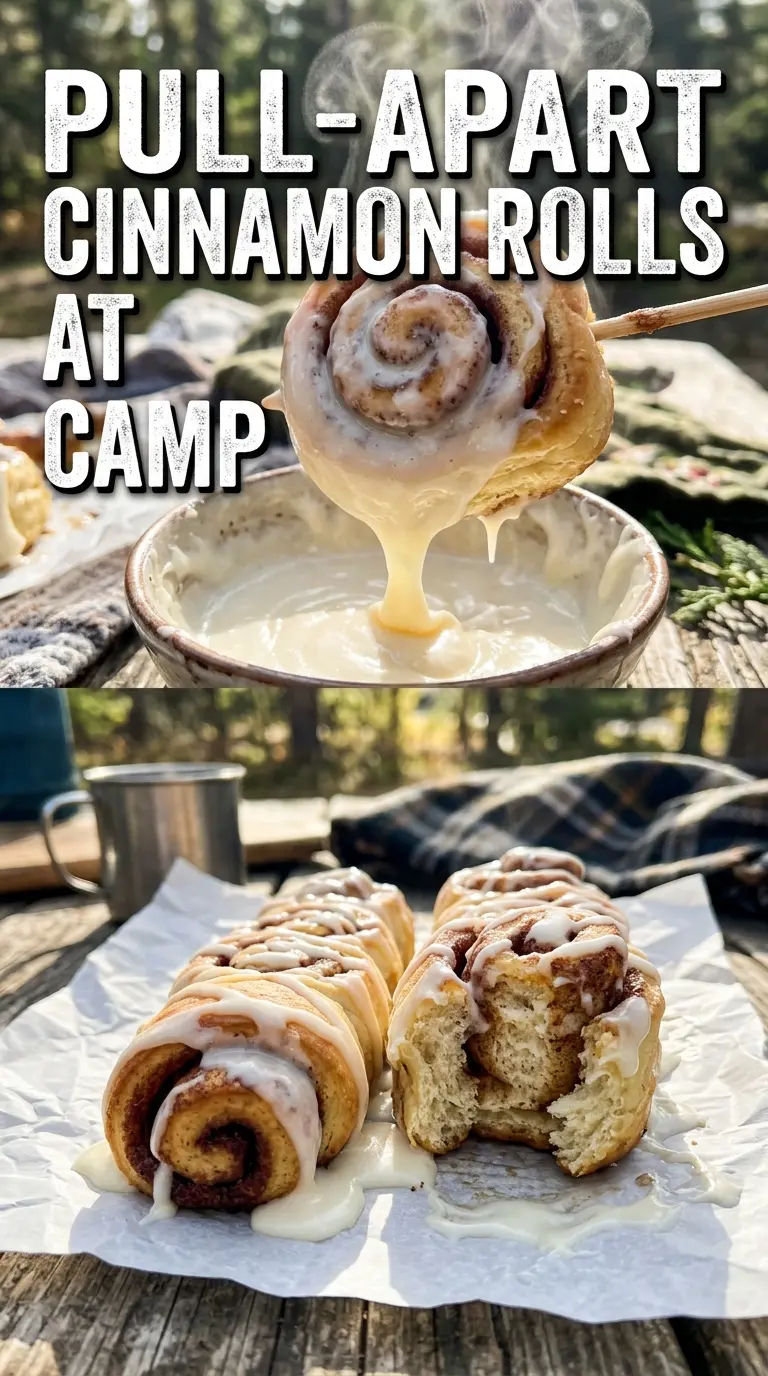
Campfire cinnamon rolls on a stick hit that sweet spot between playful and practical: warm, spiraled pastry with a crisp, toasted outside and a soft center that peels apart as you bite in. The icing melts into the ridges instead of sitting on top, and that little bit of fire-kissed flavor makes them taste like more than just a shortcut breakfast.
What makes this version work is the method. Unrolling the dough into long strips gives you more surface area, so the roll cooks evenly instead of going doughy in the middle. Keeping the sticks over coals, not licking flames, is what protects the outside from burning before the center has a chance to set. A tight spiral matters here too; loose wraps slump and tear when the dough starts to puff.
Below, I’ve included the small details that keep the rolls from sticking, splitting, or browning too fast. If you’ve ever tried to roast dough over a campfire and ended up with one side charred and the other still raw, this method fixes that.
The outside got beautifully golden while the middle stayed soft, and the icing melted right into the spirals. We made these at the campsite and they disappeared before the coffee was even ready.
Save these campfire cinnamon rolls on a stick for an easy fire-roasted breakfast with golden edges and dripping icing.
The Trick to Cooking Dough Over Coals Without Burning the Outside
Campfire baking fails for one reason more than any other: the heat is too aggressive. Flames scorch the outside before the dough has time to cook through, and that leaves you with a shell that looks done but tastes raw where it matters. Coals give steady heat, which is exactly what these rolls need. Rotate them constantly and keep them a little above the hottest part of the fire so the spiral browns evenly instead of blackening on one side.
The other mistake is wrapping the dough too loosely. A loose spiral slips as the dough warms, and once it starts sliding, the thinner spots burn fast. Tight, even coils hold their shape better and cook through at the same rate, which is how you get a roll that pulls away cleanly from the stick.
- Roasting sticks — Use sticks that are long enough to keep your hand well away from the heat. If they’re wooden, soak them first so they don’t scorch; if they’re metal, they’ll cook faster at the base, so keep a little more distance from the coals.
- Refrigerated cinnamon rolls — The canned dough is the whole point here. It has enough structure to wrap and puff without collapsing, which homemade enriched dough doesn’t always do well over open fire.
- Aluminum foil — Not for wrapping the rolls fully, but useful for shielding the stick handle or creating a quick resting spot while the rolls cool. It also helps if you need to keep finished rolls warm for a minute before icing.
- Included icing — That little packet thins out from the heat of the roll and turns glossy in the spirals. If you swap it for a thicker frosting, it won’t drizzle into the grooves the same way.
What Each Ingredient Is Actually Doing in This Campfire Dessert
- Sugar or sweetener (the flavor and texture) — Sugar caramelizes and browns the dessert while adding sweetness. Proper caramelization creates depth, not just sweetness.
- Chocolate (the richness and comfort) — Good chocolate makes the dessert luxurious. Lower-quality chocolate tastes waxy and doesn’t melt as smoothly.
- Butter (the binding and texture) — Butter keeps desserts tender and moist. It also carries vanilla and spice flavors throughout.
- Eggs or binding agent (the structure) — These create texture and help the dessert hold together. Proper ratios are important or the dessert can be too dry or too dense.
- Flour or crust (the foundation) — A proper crust or base keeps the filling contained and provides textural contrast to soft, rich fillings.
- Vanilla or spices (the aromatics) — These add complexity and prevent the dessert from tasting one-dimensional. They should complement the main flavor, not compete with it.
- Careful fire management (gentle, indirect heat) — Desserts need lower heat than savory dishes. High heat burns the outside before the inside cooks through.
- Rest time (letting it cool slightly) — Warm desserts are comforting, but letting them cool for a few minutes helps them set and makes them easier to serve without falling apart.
Wrapping the Spirals So They Stay Put Over the Fire
Unroll and stretch the dough. Pull each cinnamon roll into one long strip before wrapping. That gives you a more even spiral and helps the dough cook through without raw pockets between layers. If a strip tears, pinch it back together; small seams disappear once the dough puffs.
Building the Spiral
Start at the end of the roasting stick and wrap the dough in a tight coil with slight overlap. The goal is even thickness from the top of the spiral to the bottom, not a tall twist that hangs off the stick. Press the tail end gently against the roll so it doesn’t unfurl as the dough warms. If the spiral feels loose before it goes over the fire, it will only loosen more once the butter melts inside the dough.
Roasting Over Coals
Set the roll over hot coals, not open flames, and turn it slowly and constantly. You’re looking for a deep golden color all the way around and a dry, set surface that springs back when touched lightly. If the outside is browning too fast, move it farther from the heat and keep rotating. The center should be cooked through before you pull it off; a pale, doughy seam means it needed more time, not more icing.
Cooling and Finishing
Let the roll rest for about 2 minutes before sliding it off the stick. That short cooling time helps the spiral set enough to release without tearing, and it keeps the icing from melting straight off into the fire. Drizzle while the roll is still warm so the glaze sinks into the ridges. Serve immediately, while the edges still have that toasted snap.
What to Change When You Want a Different Kind of Campfire Roll
Make it dairy-free
Use a refrigerated cinnamon roll brand that doesn’t contain dairy, then swap in a dairy-free glaze or simple powdered sugar icing. The texture stays nearly the same, but the glaze will taste a little less rich and a little more straightforwardly sweet.
Use foil if you don’t have roasting sticks
You can shape the strips around a folded foil-wrapped utensil or a clean green branch wrapped in foil, but the spiral won’t be quite as sturdy. The key is creating a firm core so the dough has something to cling to while it roasts.
Turn it into a campfire dessert
After roasting, add a pinch of cinnamon sugar or a spoonful of crushed nuts before icing. That makes the finished roll a little more dessert-like and adds crunch, but it also makes the surface slightly less clean for sliding off the stick.
Storage and Reheating
- Refrigerator: Best eaten right away, but leftovers can be stored covered for 1 day. The dough softens as it sits.
- Freezer: Not a great freezer recipe once baked. The texture turns dense after thawing, and the spiral loses the toasted edges that make it worth making.
- Reheating: Warm leftovers wrapped loosely in foil over low coals or in a low oven until just heated through. High heat makes the outside dry before the center softens.
Questions I Get Asked About This Recipe
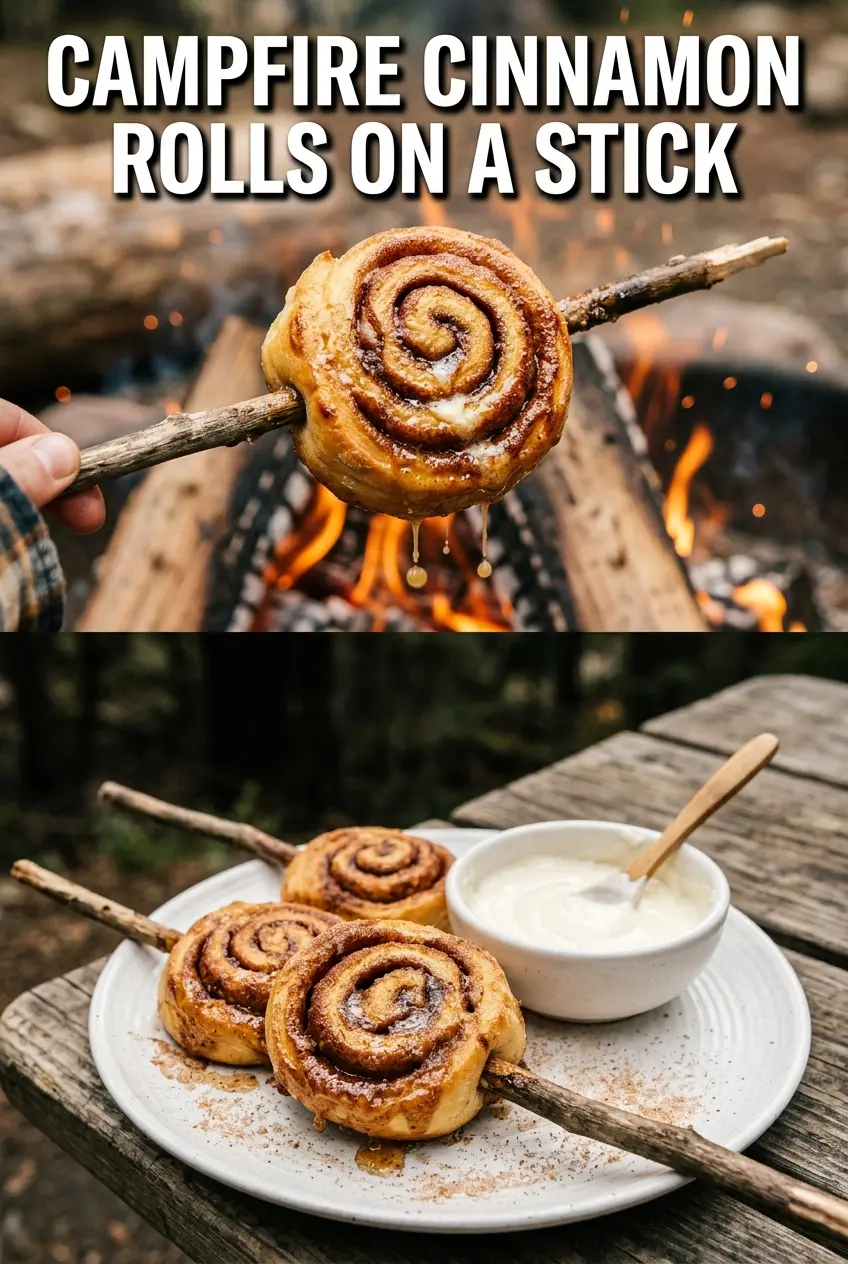
Campfire Cinnamon Rolls on a Stick
Ingredients
Equipment
Method
- Separate the refrigerated cinnamon rolls and unroll each into a long strip.
- Wrap each strip around the end of a roasting stick in a tight spiral, keeping the dough snug with no gaps.
- Hold each spiral over campfire coals (not flames) and rotate constantly for 10-12 minutes until golden brown and cooked through, with the dough visibly puffed and set.
- Remove from heat and let cool for 2 minutes so the spiral firms up and releases cleanly.
- Slide the roll off the stick and drizzle with the included icing, letting it run in thin ribbons down the sides.
- Serve warm while the icing is still soft.