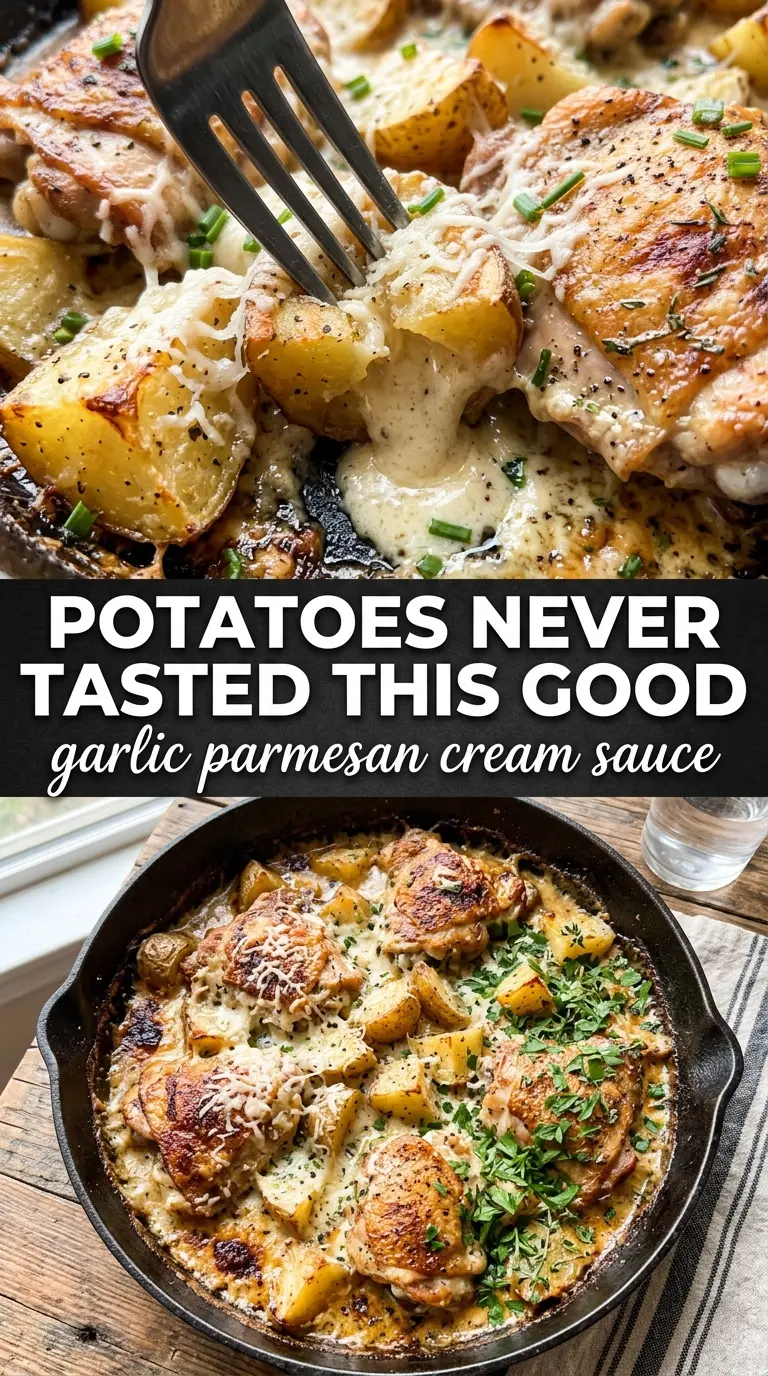
Golden chicken thighs, tender Yukon gold potatoes, and a garlicky parmesan cream sauce make this the kind of skillet dinner that disappears fast. The chicken stays juicy because it’s seared first, then finished in the oven where the skin can stay crisp while the sauce bubbles around it. The potatoes pick up the browned bits from the pan and turn them into something richer than they have any right to be.
What makes this version work is the order. The chicken gets a hard sear before it ever sees the cream, which builds flavor in the pan and keeps the sauce from tasting flat. The potatoes start in butter with garlic, then the broth and cream go in together so the sauce has enough liquid to thin out at first and enough body to thicken as the parmesan melts.
If you’ve had creamy chicken dishes turn grainy or watery before, the process below will help you avoid both. I’ve also included the small details that keep the potatoes tender and the sauce glossy all the way to the table.
The sauce thickened right in the oven and coated every potato cube without turning gluey. My husband kept saying the chicken skin stayed crisp even with all that cream underneath.
Save this garlic parmesan chicken and potatoes skillet for nights when you want a rich one-pan dinner with crisp chicken skin and a creamy sauce.
The Reason the Sauce Stays Creamy Instead of Breaking
The biggest mistake with a dish like this is rushing the cream over high heat. Heavy cream and parmesan want gentle heat, not a boil. Once the dairy goes in, the sauce should move from thin to silky as the parmesan melts and the starch from the potatoes helps it settle into a glossy coating.
The second piece is the chicken skin. If you skip the sear or crowd the pan, you lose the browned fond that gives the sauce depth, and the skin steams instead of crisping. A good sear also gives you a head start on color, which matters because the oven finish is more about cooking through than building surface texture.
- Chicken thighs — Bone-in thighs stay juicy through the full bake and keep their flavor in a creamy sauce better than leaner cuts. Chicken breasts can work, but they need a shorter oven time and are easier to overcook.
- Yukon gold potatoes — These hold their shape and turn creamy in the center without falling apart. Russets break down too much here and won’t give you the same skillet texture.
- Parmesan — Use finely grated parmesan, not the dry shelf-stable kind in a shaker. Freshly grated cheese melts smoother and gives the sauce body instead of graininess.
- Heavy cream — This is what keeps the sauce stable in the oven. Half-and-half can work in a pinch, but the sauce will be thinner and less likely to cling to the potatoes the way it should.
What Each Ingredient Is Doing in the Skillet
Olive oil and butter work together here because oil handles the sear and butter gives the potatoes flavor once the chicken comes out. If you only use butter, it can brown too fast before the chicken gets color.
Garlic and garlic powder give you two kinds of garlic flavor. The minced garlic perfumes the sauce, while the garlic powder seasons the chicken from the start so every bite tastes complete.
Chicken broth loosens the pan and carries the browned bits into the sauce. You can use low-sodium broth if that’s what you keep on hand; just taste before adding more salt at the end because parmesan brings plenty on its own.
Italian seasoning doesn’t shout in this dish, but it keeps the cream from tasting one-note. A small amount of dried thyme and oregano would work too if that’s what you have.
Building the Skillet So Nothing Turns Pale or Mushy
Searing the Chicken First
Season the chicken well, then place it skin-side down in hot oil and leave it alone for the full six minutes. You want a deep golden crust that releases cleanly from the pan; if it sticks, it needs another minute. Pull it out once the skin is browned, not cooked through, because the oven will finish the job later.
Softening the Potatoes in the Pan
Add the potatoes to the butter and let them pick up a little color before the garlic goes in. That short head start matters because it keeps the potatoes from turning soft before the sauce has a chance to thicken. When the garlic hits the pan, stir constantly for about a minute so it smells sweet, not sharp.
Turning Broth and Cream Into Sauce
Pour in the broth and cream, then stir in the parmesan a little at a time while the heat stays at a steady medium. If you dump the cheese in all at once or crank the heat too high, the sauce can go grainy. It should look loose at first, then begin coating the spoon as the cheese melts and the potatoes release a little starch.
Finishing in the Oven
Set the chicken back on top skin-side up so it stays above the sauce and can keep its texture. Bake until the chicken registers done and the potatoes are tender when pierced with a fork. If the sauce looks too thin at the end, let the skillet sit for five minutes before serving; it thickens as it rests.
How to Adjust This Without Losing the Creamy Texture
Make It Gluten-Free Without Changing the Method
This recipe is naturally gluten-free as written, as long as your chicken broth is certified gluten-free. The sauce gets its body from cream, parmesan, and potato starch, not flour, so there’s nothing extra to replace.
Swap the Chicken Thighs for Breasts
Chicken breasts will work if that’s what you have, but they need less oven time and dry out faster. Sear them the same way, then start checking a little earlier so they come out just cooked through instead of stringy.
Use Half-and-Half for a Lighter Sauce
Half-and-half can replace the heavy cream, but the sauce won’t be as rich and it will tighten up less in the oven. Keep the heat gentle and expect a looser finish; the parmesan will still give it some body, but not the same velvet texture.
Add Spinach or Mushrooms for a Bigger Pan Dinner
A few handfuls of baby spinach can go in near the end and wilt right into the sauce, while sliced mushrooms should be browned with the potatoes so they don’t water everything down. Both additions make the dish heartier without changing the creamy base.
Storage and Reheating
- Refrigerator: Store leftovers in an airtight container for up to 3 days. The sauce will thicken and the potatoes will soften a bit as they sit.
- Freezer: I don’t recommend freezing this one. Cream sauces can separate after thawing, and the potatoes turn mealy.
- Reheating: Warm it gently on the stove over low heat with a splash of broth or cream to loosen the sauce. The biggest mistake is blasting it in the microwave until the dairy breaks and the chicken dries out.
Answers to the Questions Worth Asking

Chicken and Potatoes With Garlic Parmesan Cream Sauce
Ingredients
Equipment
Method
- Preheat the oven to 400F, and season the chicken thighs with salt, pepper, and garlic powder.
- Confirm the potatoes are cubed so they cook tender in the skillet.
- Heat the olive oil in a large oven-safe skillet over medium-high heat, then sear the chicken skin-side down for 6 minutes until golden.
- Remove the chicken from the skillet and reserve on a plate while you cook the potatoes.
- In the same skillet, sauté the potato cubes in the butter over medium heat for 5 minutes, stirring until the edges start to turn golden.
- Add the minced garlic and cook for 1 minute, until fragrant.
- Pour in the chicken broth and heavy cream, then stir in the parmesan and Italian seasoning until the sauce begins to thicken.
- Nestle the chicken skin-side up into the potatoes and sauce, spreading everything evenly in the skillet.
- Bake for 30-35 minutes at 400F until the chicken is cooked through and the potatoes are tender.
- Garnish with fresh parsley and extra parmesan before serving.